
Nature's Palette: Abbott Thayer and the Fascinating World of Animal Coloration
From Counter Shading to Glass Frogs and Yellow Penguins, Unraveling the Art of Camouflage and Signaling in the Animal Kingdom
Abbott Thayer, a renowned portrait painter extraordinaire, had a profound fascination with the colors of the natural world. While he was celebrated for his artistic prowess, he also delved into the realm of animal coloration, developing remarkable theories that remain relevant to this day. One of his most famous theories, known as counter shading, unveiled the ingenious way in which animals blend into their environment. According to Thayer, animals are "painted by Nature" in a manner that darkens the parts that receive the most light from the sky and vice versa, resembling a perfectly tailored outfit.
Counter shading, far from being limited to fashion-savvy animals, also found practical applications in other domains. Thayer and his friend even obtained a patent for this concept, which was adopted by ships as a means of avoiding detection. Inspired by Nature's artistry, Thayer extended his theories to propose the idea of background blending. This technique involves animals or objects being painted to match the colors of their surroundings, akin to a natural camouflage suit.
But Thayer's innovative ideas did not stop there. He also put forth a theory on disruptive or dazzle camouflage, wherein objects are painted with intricate patterns to confound observers' judgments of distance or speed. This concept can be likened to the challenge of hitting a pinata that moves unpredictably, making timing difficult. Thayer provided an example of how this theory applies to aquatic animals. When a shark swims beneath the ocean's surface and looks up, it sees the bright sky and lighter-colored ocean surface. On the other hand, a prey animal swimming on the surface will have a lighter belly blending with the bright sky and a darker back merging with the deeper water. Counter shading proves beneficial not only for aquatic animals but also for land creatures like deer and rabbits, whose lighter bellies and darker backs help them blend into the dappled light of the forest floor.
Nature's creativity knows no bounds when it comes to aiding animal adaptation and survival in the wild. Yet, there are extraordinary creatures that stand out as the weirdest of them all. Take, for instance, the glass frog, which allows us to peer through layers of protection to glimpse its internal organs. These tiny frogs, found in the lush rainforests of Central and South America, possess translucent skin that aids in camouflage. When light shines from above, their silhouette becomes distorted, making it challenging for predators to discern their shape. Moreover, transparent legs further blur their body's outlines, enhancing their protection. These adaptations exemplify how these frogs seamlessly blend into their vibrant green surroundings.
In a surprising encounter, a wildlife photographer stumbled upon a yellow king penguin on a remote island in the southern Atlantic Ocean. Amidst a crowd of 120,000 birds, this unique yellow specimen stood out dramatically. Scientists theorize that this yellow coloration is a result of luteism, wherein an animal's inability to produce proper pigments leads to an alternative coloration.
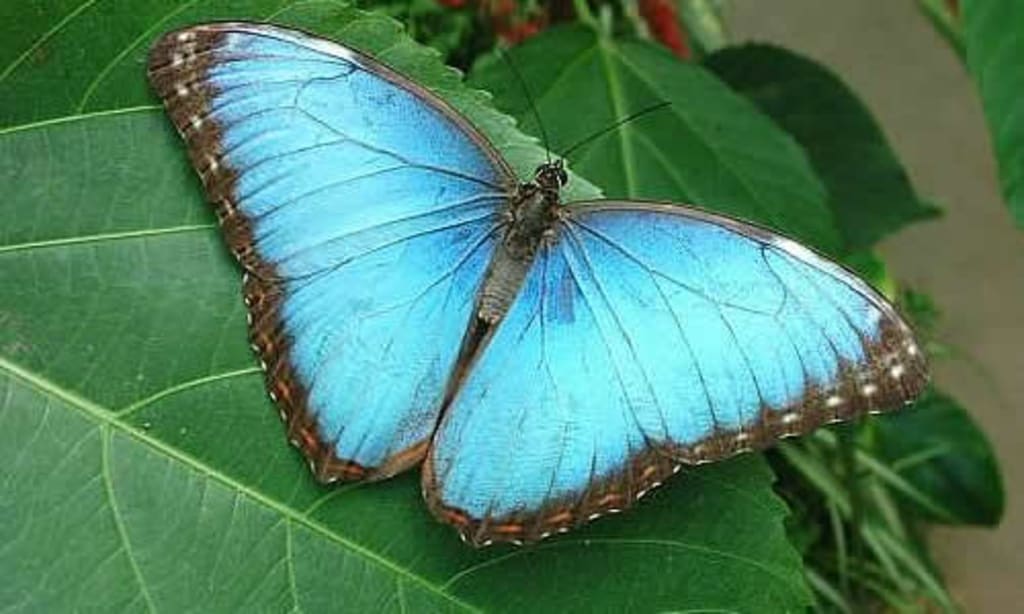
While vibrant colors abound in the animal kingdom, true blue remains elusive for most species. Unlike humans, who can acquire pigments through their food, animals lack true blue pigments in their diet. Consequently, they have devised ingenious strategies to achieve a blue appearance. Some animals possess structures that alter the wavelength of light, enabling them to reflect only the blue color. The blue morpho butterfly exemplifies this adaptation, with wing scales shaped in ridges that create the mesmerizing blue hue. The precise structure of these scales is crucial, as any deviation would result in the loss of the butterfly's striking blue coloration.
In the vast and diverse realm of animal coloration, Abbott Thayer's theories on counter shading, background blending, and disruptive camouflage continue to resonate. His insights into the mechanisms of natural camouflage and animal signaling have provided invaluable knowledge, allowing us to appreciate the intricate ways in which animals adapt to their environments. From the practical applications of counter shading in ship camouflage to the remarkable adaptations of creatures like glass frogs and yellow king penguins, the animal kingdom's diverse palette of colors and patterns continues to inspire awe and spark scientific inquiry.
About the Creator
Enjoyed the story? Support the Creator.
Subscribe for free to receive all their stories in your feed.
Comments
There are no comments for this story
Be the first to respond and start the conversation.