
Nature-Based Carbon Credits Are the Linchpin of Credible Net-Zero Strategies
As engineered solutions remain in their infancy, the restoration of global ecosystems offers the only scalable mechanism to close the gap between corporate ambition and atmospheric reality.

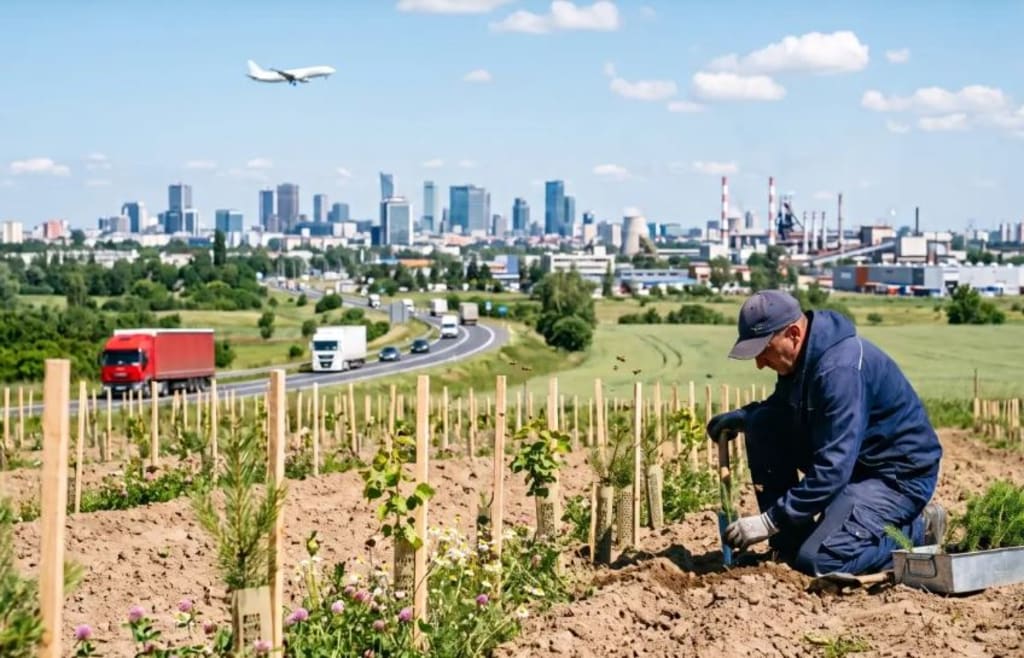
The concept of net zero has evolved from an aspirational corporate buzzword into a rigorous scientific mandate, yet a profound misunderstanding of its mechanics continues to plague global climate strategy. True net zero is not merely the cessation of new emissions; it is a state of equilibrium achieved only when an organization has reduced its carbon output to the absolute minimum and permanently removed an equivalent volume of historical or residual carbon from the atmosphere. The Intergovernmental Panel on Climate Change has stripped away the illusion that emission reductions alone can secure our climate future, explicitly stating that carbon dioxide removal is unavoidable. This is not a concession of defeat, but a recognition of physical reality. Hard-to-abate sectors such as cement manufacturing, steel production, aviation, and complex agricultural supply chains currently lack viable, cost-effective zero-carbon alternatives. For these industries, a strategy that relies solely on internal reductions will inevitably fall short. Removing carbon from the atmosphere is the architectural necessity that closes the gap, and high-integrity carbon credits remain the primary mechanism through which global enterprises finance this vital work.
Within the voluntary carbon market, a critical distinction must be drawn between avoidance and removal. Avoidance credits, which fund projects that prevent future emissions such as renewable energy installations or energy-efficiency upgrades, play a valuable role in the global transition but do not extract existing carbon from the sky. Removal credits, conversely, actively draw down atmospheric CO2. This removal category is further bifurcated into engineered solutions, like direct air capture, and nature-based solutions, which leverage the biological processes of forests, soils, and wetlands. While engineered removal promises exceptionally long-term carbon storage, it currently operates at a nascent scale and at a prohibitive cost. Nature-based removal, by contrast, is available today at a meaningful scale and a fraction of the price. A landmark study in the Proceedings of the National Academy of Sciences underscored this reality, concluding that natural climate solutions could deliver up to thirty-seven percent of the cost-effective mitigation required by 2030 to keep the Paris Agreement goals within reach, with forests alone accounting for over two-thirds of that potential.
Yet, the efficacy of this market hinges entirely on the integrity of the credits traded. A credible net-zero strategy demands a strict sequence: reduce emissions relentlessly first, and only then compensate for the unavoidable remainder. The Science Based Targets initiative, the preeminent arbiter of corporate climate action, codifies this sequence by requiring a ninety percent reduction across all emission scopes by 2050, leaving only the final ten percent to be balanced by permanent removals. To ensure these compensatory credits are legitimate, they must survive the crucible of rigorous quality metrics. The two foundational pillars are additionality proving the carbon benefit would not have occurred without the specific finance provided by the credit, and permanence, ensuring the carbon remains sequestered over time. Furthermore, these claims must be anchored by independent verification against recognized global standards, such as Verra, which provides the transparent measurement necessary to prevent greenwashing and allows sustainability leaders to report their progress with absolute confidence.
It is within this framework of high-integrity removal that nature-based solutions emerge not merely as an alternative, but as the definitive answer for the current decade, largely due to their profound multiplier effect. Restoring an ecosystem does far more than sequester carbon; it rebuilds the living infrastructure of the planet. When executed correctly, nature-based projects yield a cascade of co-benefits that engineered solutions simply cannot replicate, including water regulation, soil stabilization, biodiversity conservation, and the creation of sustainable livelihoods for local communities. Organizations like Green Earth have built their operational models on this precise intersection of carbon removal and ecological restoration. In the Kyzylorda Region of Kazakhstan, for instance, their Greening of the Dried Aral Sea project utilizes carbon finance to plant saxaul, a hardy, salt-tolerant tree that stabilizes the toxic dust of the former seabed, directly improving regional air quality and public health. Similarly, in western Uganda, the Bulindi Agroforestry and Chimpanzee Conservation Project restores degraded farmland to rebuild critical forest corridors for endangered chimpanzees while simultaneously providing sustainable income streams for thousands of local farming families. From the regenerative agroforestry initiatives in Cameroon to the soil-restoring tree-planting programs on Mount Kenya, these projects demonstrate that carbon finance can be a powerful catalyst for holistic planetary healing.
Ultimately, the journey to net zero is an exercise in both technological innovation and ecological humility. While the distant future may rely heavily on synthetic carbon capture, the immediate survival of our climate depends on the biosphere we already possess. By prioritizing high-quality, verified nature-based carbon credits, corporations can transform abstract targets on a spreadsheet into tangible restoration on the ground. This nature-first approach ensures that the pursuit of net zero does more than just balance a corporate ledger; it leaves the physical world demonstrably richer, more resilient, and more biodiverse than it was before. In an era defined by ecological fragility, investing in the restorative power of nature is not just a strategic compromise; it is the most profound and scalable climate action available to us today.
About the Creator
Mark Lim
Hi I am mark an automotive student and a car, tech and food enthusiast ! Im gonna try and post daily & hope you enjoy what I write and do share my page with people you know. I would gladly appreciate it! Cheers
Enjoyed the story? Support the Creator.
Subscribe for free to receive all their stories in your feed.
Comments
There are no comments for this story
Be the first to respond and start the conversation.