
Natural Phenomenon: The Red Tide

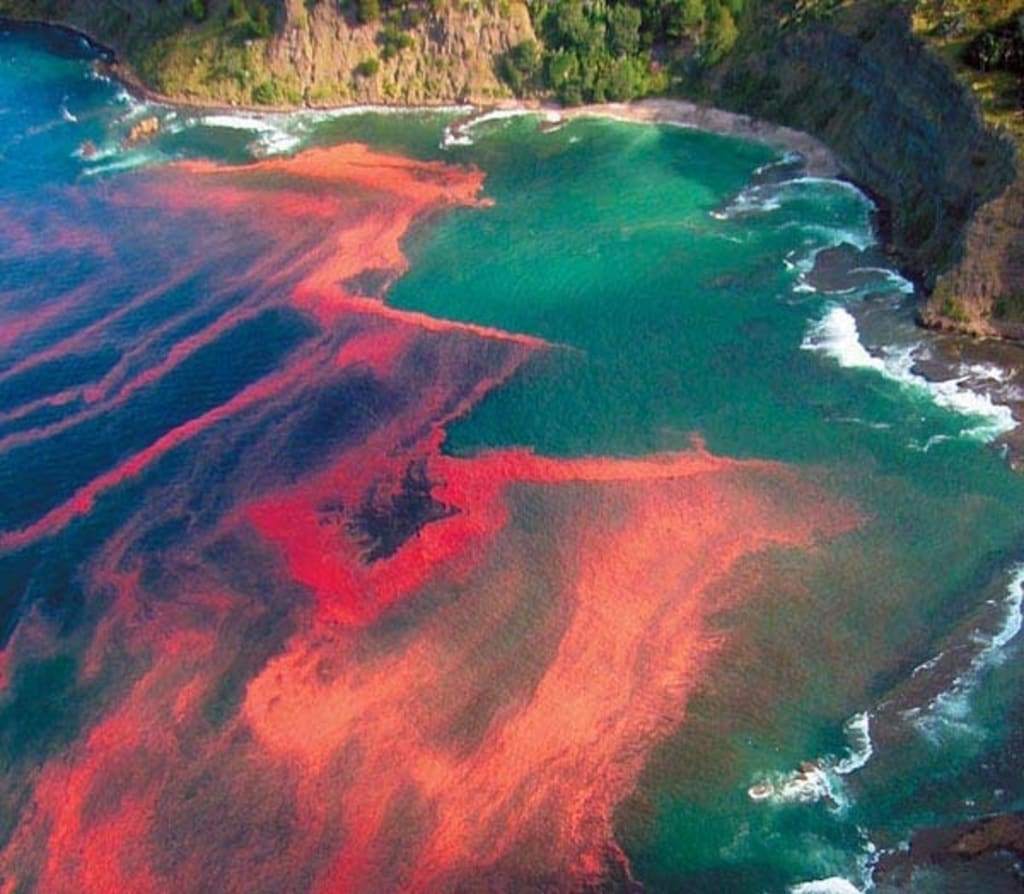
Also known as harmful algae blooms, red tides are beginning to show along coastal waters more often than they used to. These red tides contain harmful algae blooms that cause the water to turn red or brown. The first official reporting of red tide was in Florida in 1844. Government officials documented this as a discoloration in the water and massive amounts of fish dying.
The red tides are going global and have been around for a while but in recent years, they are beginning to spread and show up more frequently despite the fact that the red tides have nothing to do with the tidal movement of the water. Scientists are closely monitoring the red tide outbreaks for a reason that could explain why they cause not only harm to organisms land or water, but also to the economy. These outbreaks usually last for a few months, they but are patchy and spontaneous.
Moreover, they are events where an alga rapidly reproduces in a water column, such as oceans, bays, and even fresh water. Overpopulation of these algae can and will cause harm to the water surrounding them including the organisms that are living in the water. On the other hand, some of the red tides are harmless due to the alga that has "bloomed". "Major factors influencing red tide events include warm ocean surface temperatures, low salinity, high nutrient content, calm seas, and rain followed by sunny days during the summer months" (Red Tide - A Harmful Algae Bloom). With many factors that may cause these red tides, currently it is impossible to predict when a red tide may occur.
Additionally, the red tides, though not always red, also can be yellow, purple, brown, or orange just depending on the alga that is produced. Overproduction of phytoplankton, autotrophic component of the plankton community, which contains the pigments for photosynthesis, dinoflagellate, a tiny single-celled sea organism, or diatoms, are a major type of algae, are what usually will cause the red tides. Whereas some may typically happen annually, some can happen spontaneously.
In addition, most of the alga that occurs contains the red pigment, peridinin. Thus causing the water to turn a reddish color, hence them being called "red tides." A few different factors play a role in these algae blooms. Although scientists are still trying to determine and pin point the exact cause and hazards for the blooms, science has more technological advances that allow the scientists to know more about the red tides. As well as why the "bloom" occurs.
Furthermore, the alga that produces the red tides contains potent natural toxins that are indeed harmful, while a small percentage of the red tides do not contain these toxins. Although not harmful to all organisms that are exposed to these algae, some are. "Grazers such as fish and krill are unaffected by the toxins, so as they eat the algae the toxins are concentrated and accumulate to a level that is poisonous" (Red Tide - A Harmful Algae Bloom) so when other organisms feed on them, they will ingest the poison, contracting it, and may be even becoming sick. For example, during a red tide, a shellfish can obtain the toxins without harm occurring, when a human or mammal eats that shellfish, they will ingest the toxin, and the consequences will begin!
With these harmful toxins, many different species of fish, mammals, and other organisms, marine or land, can become sick and in the worst case, begin die off. Specifically fish that ingest either the algae or infected organisms usually die. The algae can cause damage in several ways such as oxygen depletion in the water making the marine organisms unable to breathe, direct poisoning, indirect poisoning, or physical damage where as the concentration of the alga is so much that they can clog the gills or irritate them.
Also, some of the indirect poisonings are diseases that are harmful to humans. These diseases can be contracted during the algae blooms the four known different types of the indirect poisoning are Aerosol (air-born) Toxins, Diarrhetic Shellfish Poisoning (DSP), Neurotoxic Shellfish Poisoning (NSP), Amnesic Shellfish Poisoning (ASP), and Paralytic Shellfish Poisoning (PSP). During the blooms, swimming is usually safe although cases have been reported of skin irritation and burning.
In addition, respiratory infections have also been reported. Symptoms of possible respiratory infection include shortness of breath, coughing, wheezing, sneezing and irriation of eyes, nose, or throat. Individuals with existing respiratory illnesses can have more serve symptoms when around the algae blooms. So usually, people with a respiratory illness are encouraged to stay out of the red tides; many people still enjoy swimming in the ocean during a red tide. Generally, the symptoms tend to depleat after a few hours after exposure is discontinued.
Along with the red tides being harmful, the public are generally warned that certain filter-feeding organisms can accumulate these poisons from the algae that are causing the red tides. In addition to shellfish, mussels, clams, and oysters can as well contain the toxins.
In conclusion, with red tides becoming more recent throughout the current years, it has become more of awareness due to the health hazard of human beings. While it still may be a mystery of why red tides appear and what the causes of the algae to bloom and form along the surface, scientists are conducting research to figure the red tides out. Without a great amount of knowledge on the ever occurring red tides of the blooming algae, it will be a while before we totally understand these natural phenomenons.
Work Cited
Red Tide - A Harmful Algae Bloom. Microbial Life, 28 Jul 2008. Web. 1 January 2013.
About the Creator
Mel's Mom Life
This blog is all about real mom life — simple meals, kid activities, honest moments, and the animals that are part of our family story. If you want warm, helpful, down‑to‑earth content, you’re in the right place.
Enjoyed the story? Support the Creator.
Subscribe for free to receive all their stories in your feed.
Comments
There are no comments for this story
Be the first to respond and start the conversation.