
Natural History and Preservation
Explore the emotional significance of preserving fossils like Tristan Otto, their importance in understanding Earth's history, and the responsibility to protect such invaluable relics for future generations
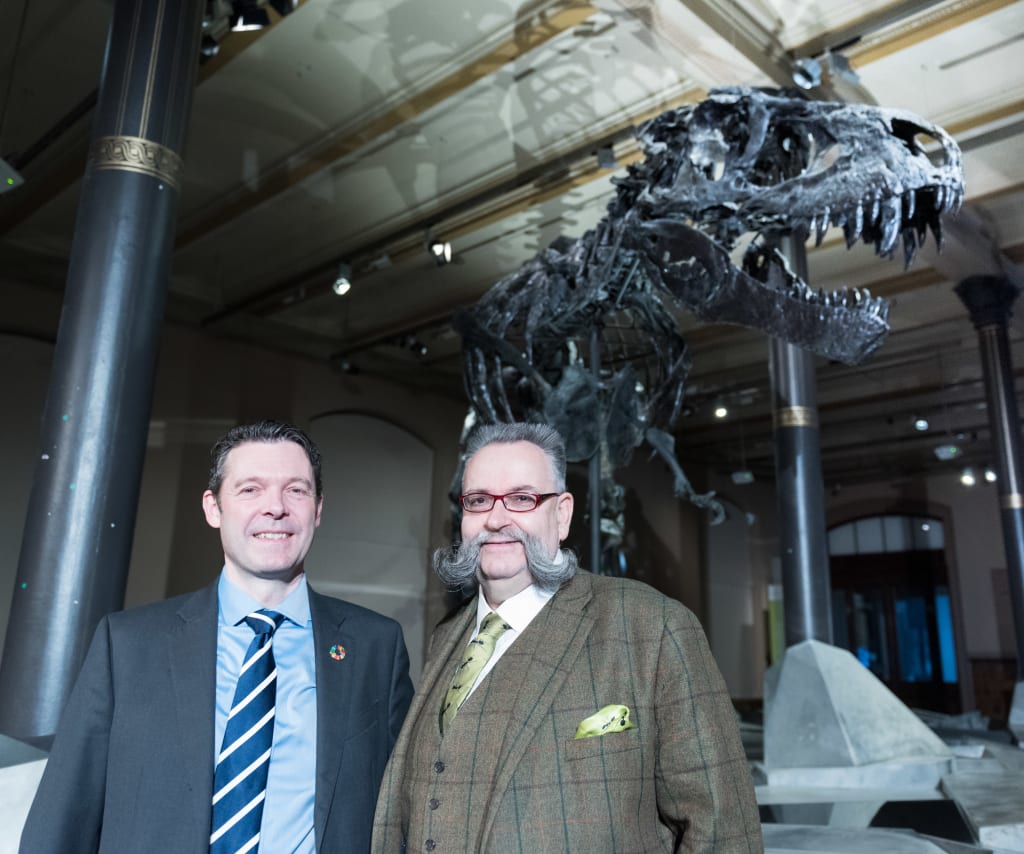
In the quiet expanse of a windswept desert, where the sun scorched the earth and whispered secrets of epochs gone by, lay the remnants of an ancient giant—Tristan Otto, a relic woven into the very fabric of Earth's history. It wasn't just bones encased in stone; it was a chronicle of a lost world, an emotional conduit to understanding the majesty and mysteries of our planet.
Amidst the shifting sands and endless horizons, a young girl named Maya stumbled upon this monumental piece of antiquity. Her small hands traced the fossil's curves, feeling the weight of time pressing against her fingertips. To her, Tristan Otto wasn't just a skeleton; it was a doorway to a realm she yearned to explore, a tangible link to an era she had only read about in books.
Maya sat cross-legged beside the fossil, her imagination ablaze with visions of a world teeming with creatures long extinct. In Tristan Otto's weathered bones, she found echoes of a past that stirred emotions she couldn't quite fathom—an overwhelming sense of awe and humility at the grandeur of time's passage.
Across the globe, in bustling cities and serene countrysides, others too were touched by Tristan Otto's story. Carlos, an aspiring scientist, saw within those fossilized remains a roadmap to decipher the enigmas of evolution. His heart resonated with the responsibility to preserve this heritage, to glean insights that could shape our understanding of life itself.
In a quiet village nestled amidst verdant hills, an elderly woman named Mrs. Thompson sat by the fireside, reminiscing about her childhood adventures. She recalled the day she first heard tales of these ancient giants from her grandfather—a storyteller who spun vivid yarns about mighty creatures that once roamed the earth. Tristan Otto's discovery reignited a passion within her, a yearning to ensure that future generations could experience the same sense of wonder and connection to the past.
But amidst the wonder and reverence for Tristan Otto's legacy, a storm brewed on the horizon. Developers, blinded by visions of progress, saw the land housing the fossil as an untapped resource—a place ripe for expansion, a canvas for modernization.
Maya, now a determined teenager with dreams as vast as the skies, rallied her friends and community. They protested, held signs painted with heartfelt pleas to preserve the land, and shared Tristan Otto's story with fervor, hoping to ignite the same emotional connection they felt with this relic of the past.
Carlos, armed with knowledge and fervent conviction, penned impassioned letters to authorities, emphasizing the emotional and scientific importance of preserving Tristan Otto. He articulated the significance of this fossil in understanding our planet's evolution and pleaded for its protection for the benefit of generations to come.
Mrs. Thompson, her wrinkled hands clasped with a lifetime of memories, joined the cause. She became a beacon of wisdom, sharing personal anecdotes that kindled empathy in those who held the power to decide the fossil's fate.
Their efforts echoed across continents, resonating with people from all walks of life. Petitions flooded in, impassioned speeches echoed through halls of power, and a global outcry swelled, each voice a testament to the emotional significance of preserving Tristan Otto's legacy.
In the end, the world listened. Laws were enacted, protections put in place. Tristan Otto's resting place became a sanctuary, safeguarded from the encroachment of progress. It wasn't just a victory for preservation; it was a triumph of emotions—a testament to the power of collective love, respect, and the profound importance of cherishing our planet's natural history.
For Maya, Carlos, Mrs. Thompson, and countless others, Tristan Otto wasn't just a fossil—it was a story of unity, perseverance, and a reminder that our responsibility to protect Earth's treasures transcends generations. It was a pledge to safeguard these relics so that future dreamers, scientists, and storytellers could forge their own emotional connections with the mysteries of our past.
In the sprawling halls of a natural history museum, amidst the hushed whispers of visitors and the echo of footsteps on marble floors, stood a magnificent testament to evolution's grandeur—Tristan Otto, the Tyrannosaurus rex. Encased in glass, its colossal form captured the imaginations of all who crossed its path, a fossilized titan that spoke volumes about the marvels of life's diversity and the wondrous dance of evolution.
Among the throng of visitors, a young girl named Lily stood transfixed before Tristan Otto's towering skeleton. Her eyes, wide with curiosity, traced the fossil's contours, each bone a chapter in a tale written by millions of years. To her, Tristan Otto wasn't just a relic; it was a doorway to understanding life's intricate tapestry—an emotional journey that unfolded in the labyrinth of time.
Lily's mind swirled with questions that echoed the sentiments of countless others who stood before this ancient behemoth. How did life sculpt such magnificent creatures? What forces of nature and time shaped their existence? These inquiries weren't just scientific ponderings; they were windows to a deeper emotional connection with the world around her.
Across the room, Professor Jacobs, an esteemed evolutionary biologist, stood, observing the myriad expressions that danced upon the faces of museum-goers. For him, Tristan Otto was more than a skeleton frozen in time—it was a key to unlocking the emotional essence of evolution.
He approached Lily, noticing the spark of wonder in her eyes, and began to weave a tale—a narrative that transcended scientific jargon, painting evolution as a mesmerizing symphony, each note a species, each crescendo a milestone in life's journey.
"Imagine," Professor Jacobs began, "a world cloaked in mystery, where life emerged from primordial seas and embarked on an odyssey of adaptation and survival. Tristan Otto, the mighty T. rex, was but a single chapter in this epic saga."
Lily's imagination ignited as the professor's words wove vivid landscapes where creatures evolved and adapted to the changing rhythms of their environments. She envisioned prehistoric jungles bustling with life, skies filled with winged behemoths, and oceans teeming with ancient leviathans.
With each narrative stroke, Professor Jacobs unveiled the emotional implications of evolution—the awe-inspiring resilience of life, the intricate dance between predator and prey, and the ceaseless pursuit of survival imprinted in Tristan Otto's fossilized bones.
Their conversation drew the attention of other visitors, each drawn into the emotional tapestry of evolution. There were elderly couples reminiscing about their own evolutionary journey, parents weaving tales for wide-eyed children, and students absorbing knowledge that expanded their worldview.
As Lily listened, a profound sense of interconnectedness enveloped her—a realization that she was but a fleeting chapter in a story that stretched across eons. Tristan Otto, with its fossilized gaze, bore witness to this magnificent narrative, a testament to life's enduring quest for existence and adaptation.
For Professor Jacobs, seeing the emotional impact of evolution's tale on each visitor's face was a triumph—a testament to the universal wonder and curiosity that transcended age, background, and beliefs. It wasn't just about understanding fossils; it was about grasping the emotional depth behind life's diversity, fostering a reverence for the intricacies of our planet's history.
As Lily left the museum that day, Tristan Otto's legacy remained etched in her heart—a reminder that life's diversity wasn't merely a scientific phenomenon, but a captivating, emotional odyssey that continues to shape our understanding of existence and our place within the vast mosaic of life.
About the Creator
Enjoyed the story? Support the Creator.
Subscribe for free to receive all their stories in your feed.
Comments
There are no comments for this story
Be the first to respond and start the conversation.