
Exciting news has arrived as the James Webb Space Telescope captures its inaugural image of an exoplanet. This groundbreaking snapshot, long-awaited by space enthusiasts, unveils HIP 65426 b, a youthful gas giant residing 355 light years away. Admittedly, at first glance, it appears somewhat indistinct—a fuzzy celestial body. While the JWST's capabilities are undeniably impressive, it's important to clarify that it cannot provide the level of detail exhibited in this astonishing depiction. Pictured here is one of the most intricate images of Earth ever taken, showcasing discernible landmasses, oceans, clouds, and clear signs of habitability. So, how can we bridge the gap from this magnificent image to a closer approximation of this Earth-like exoplanet?
NASA has assigned a dedicated team to explore a potential mission that might represent a significant stride in this direction—a mission with the potential to address the ultimate question: Are we alone in the universe? However, it's essential to acknowledge that no existing or future instrument will grant us direct, Earth-like exoplanet imagery. The size of the lens required to achieve such a feat is immensely challenging to construct. To put it in perspective, if Earth were relocated 100 light years away, a telescope with a 90-kilometer diameter would be needed to capture a one-pixel image of our planet. To obtain a ten-pixel image, an astonishing 900-kilometer telescope would be necessary—equivalent to the distance between New York City and Bridgeport, Connecticut, or Los Angeles and San Bernardino.
Intriguingly, scientists like Slava and his team have turned to a fascinating quirk of physics to tackle this predicament—a phenomenon known as the solar gravitational lens. Although gravitational lensing might be perplexing, it can be simplified. To witness this phenomenon, three elements are required: a distant object, like an exoplanet, a massive entity, such as a star, and an observing device, like a telescope. When light interacts with gravity, it bends or refracts, akin to how a straw in a glass of water causes light to bend. In the case of space, the curvature of spacetime due to massive objects serves as a natural lens, magnifying distant light sources. This phenomenon enables the formation of an Einstein ring—an essential element in capturing exoplanet images.
While capturing an Einstein ring is a formidable challenge due to precise positioning requirements, meticulous planning can overcome this obstacle. The proposed strategy is to locate an exoplanet, deploy a telescope, and utilize the Sun as a gravitational lens, bending light around it to create an Einstein ring. This magnified light, when collected and deconvolved from multiple angles, will yield a clear, high-resolution image. The potential benefits of this approach are staggering—it could reveal continents, oceans, weather patterns, and even the telltale signs of intelligent life, such as city lights at night.
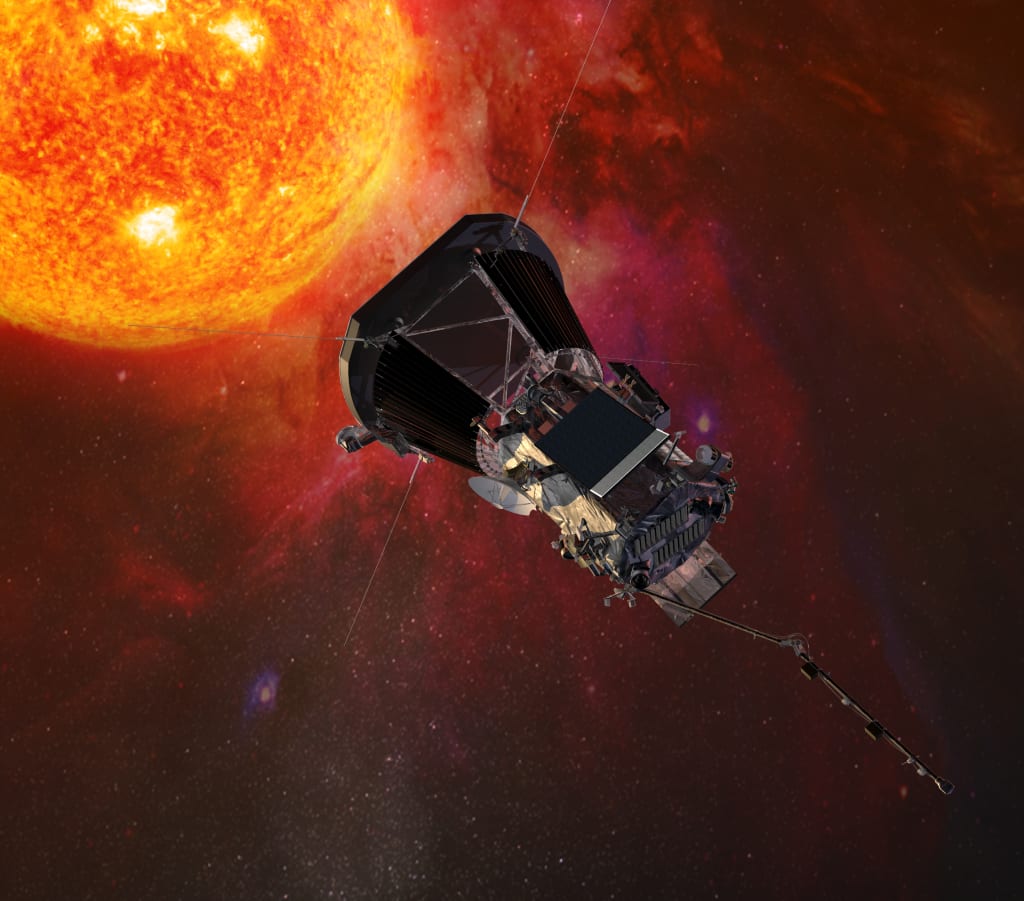
However, reaching the necessary observation distance of approximately 550 astronomical units (AU) presents a significant challenge, as current propulsion technology cannot transport us there within a reasonable timeframe. Dr. Turyshev and his team are exploring solar sails as a solution to enhance propulsion capabilities, though this technology is still in development. Once positioned along the optimal focal plane, the telescope can capture images over an extended period, provided the satellite remains operational. However, repositioning the telescope to observe another target would require an immense journey, equivalent to the distance from Earth to Saturn.
Remarkably, these telescopes are relatively small, only one meter in size. This opens the possibility of deploying numerous cube-set telescopes to different sweet spots in the universe, effectively maximizing their observation potential. Dr. Turyshev remains optimistic about the feasibility of this concept, emphasizing the profound implications it holds for answering the age-old question: Are we alone in the universe? While this mission is still in the research phase without concrete launch plans, it offers a tantalizing glimpse into the potential future of exoplanet exploration, with the prospect of obtaining Earth-like images by the 2060s—a mere century after the iconic Blue Marble photograph of our own planet was taken in 1972. The journey to these monumental discoveries is undoubtedly a source of excitement for all space enthusiasts.
About the Creator
Enjoyed the story? Support the Creator.
Subscribe for free to receive all their stories in your feed.
Comments
There are no comments for this story
Be the first to respond and start the conversation.