
NASA's Lucy Spacecraft: Unveiling the Binary World of Dinkinesh and the Path to Jupiter's Trojans
Exploring the Dual Mysteries of Dinkinesh and Paving the Way to Jupiter's Trojans with NASA's Lucy Spacecraft

Introduction
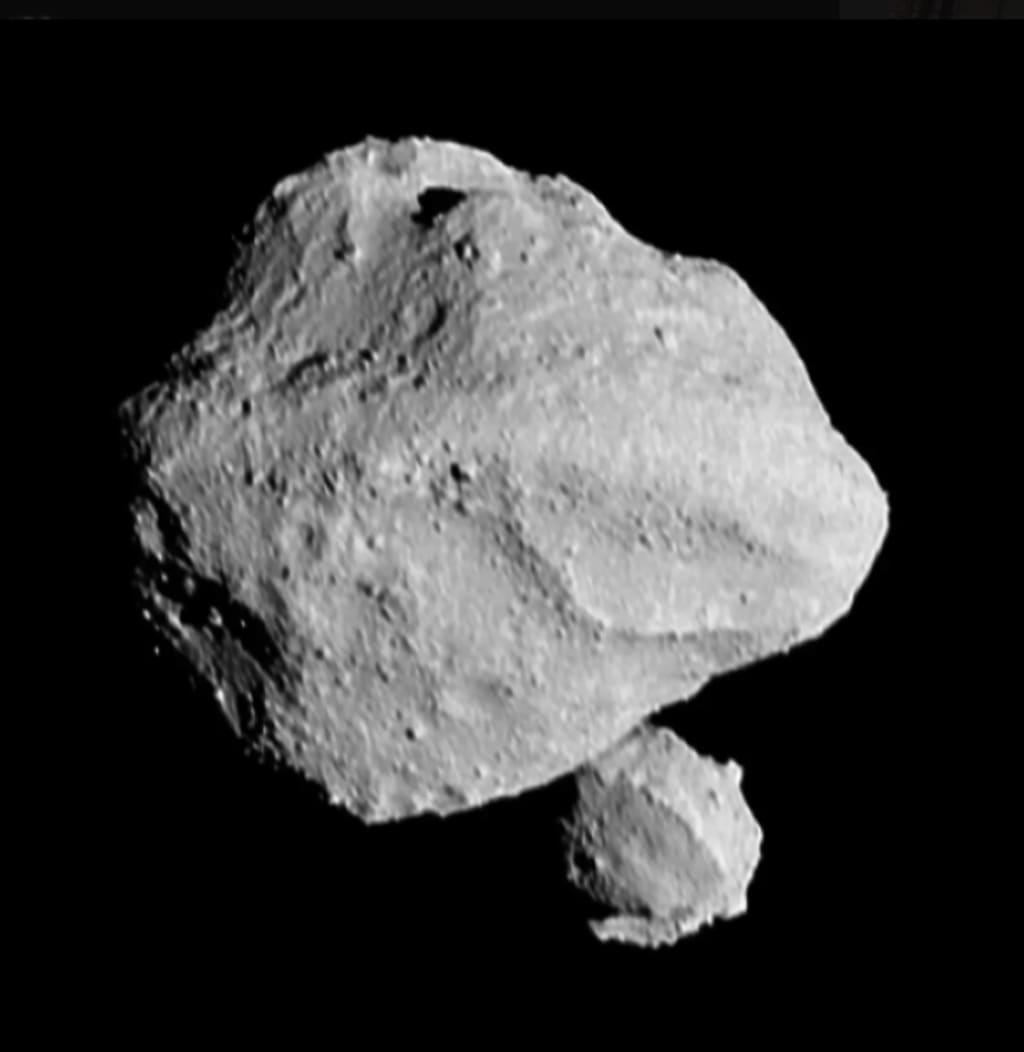
In the boundless expanse of space, NASA's Lucy spacecraft continues its extraordinary journey, unveiling hidden celestial wonders and pushing the boundaries of our understanding of the solar system. On November 1, Lucy marked a significant milestone as it embarked on its first close encounter with an asteroid, revealing a remarkable secret about the small main belt asteroid Dinkinesh. Dinkinesh, it turns out, is not alone in its cosmic travels; it is part of a binary system. This discovery, combined with the successful testing of Lucy's terminal tracking system, provides a tantalizing glimpse of the mission's ultimate objective: to explore the enigmatic Jupiter Trojan asteroids. In this in-depth exploration, we will delve into the intricate details of Lucy's historic flyby, examine the significance of Dinkinesh's binary nature, and discuss the broader implications for future missions.
Dinkinesh: A Marvelous Binary System
The name "Dinkinesh" is derived from the Amharic language, and it fittingly translates to "marvelous." As Lucy approached this intriguing asteroid, the spacecraft's instruments quickly unveiled the asteroid's true nature – it is a binary system composed of two celestial bodies engaged in an elegant celestial dance. Principal investigator Hal Levison described the discovery as a testament to the mission's expanding scope, which now includes a total of 11 encounters, surpassing its original plan of seven.
The Discovery of a Binary System
In the lead-up to Lucy's rendezvous with Dinkinesh, the mission team was rife with anticipation. Observations of the asteroid's changing brightness hinted at the possibility of it being a binary system. The first images from the encounter unequivocally confirmed this hypothesis, revealing Dinkinesh to be a close binary. Preliminary analysis estimated the larger body to be about 0.5 miles wide, while the smaller counterpart measured approximately 0.15 miles.
Testing the Terminal Tracking System
The flyby was not merely a scientific spectacle but also a rigorous test of Lucy's capabilities, focusing primarily on the terminal tracking system. This system allows Lucy to autonomously track an asteroid as it speeds by at 10,000 mph. It proved to be a resounding success, even in the face of the unexpected challenges posed by Dinkinesh.
Scientific Excitement and Future Missions
While the flyby was engineered as an in-flight test, its scientific implications are no less exciting. The gathered data offers scientists an unprecedented opportunity to glean insights into the nature of small asteroids. Keith Noll, Lucy's project scientist, highlighted the significance of this encounter, emphasizing the uniqueness of Dinkinesh as the smallest main belt asteroid ever observed up close and as a binary system. Comparisons to near-Earth asteroid binaries Didymos and Dimorphos add to the intrigue, with subtle differences sparking further investigation.
The Path Forward
As the Lucy team prepares to downlink the remaining encounter data from the spacecraft, the evaluation of the mission's behavior during this landmark event takes center stage. Looking ahead, the spacecraft is poised for its next close-up examination, scheduled for 2025, with the main belt asteroid Donaldjohanson as the focal point. This endeavor will serve as a crucial stepping stone toward the mission's primary objective: the exploration of the Jupiter Trojan asteroids, slated to commence in 2027.
Conclusion
The flyby of Dinkinesh by NASA's Lucy spacecraft is a testament to human curiosity and scientific innovation. It is a reminder of our relentless quest to explore the mysteries of the cosmos. The binary nature of Dinkinesh, the triumph of Lucy's terminal tracking system, and the wealth of data collected all contribute to a brighter future for space exploration. As Lucy continues its odyssey, each encounter unveils new facets of our solar system's history and evolution, one asteroid at a time. In the end, we are left with a profound sense of wonder and anticipation for what Lucy will reveal as it journeys deeper into the cosmos.
About the Creator
Raiana Jalal Oyishee
Hi, this is Raiana Jalal Oyishee. As a Vocal writer, I offer diverse themes, thought-provoking content, and evocative storytelling. Join my community for insight, inspiration, and captivating narratives. Explore my Vocal work today.
Enjoyed the story? Support the Creator.
Subscribe for free to receive all their stories in your feed.
Comments
There are no comments for this story
Be the first to respond and start the conversation.