
I've rewritten the original sentences to improve clarity, flow, and impact:
I feel relieved, joyful, and excited.
This breakthrough will revolutionize the field.
For the first time, we'll finally be able to start answering some of those longstanding questions.
NASA has just unveiled the first full-color images from the James WSpace Telescope.
The whole world is watching with bated breath.
Are you ready to display the first image?
- Yes, let's do it!
And these images offer just a glimpse of JWST's true capabilities.
It took over two decades to construct and launch the largest, most advanced space telescope ever built - the James Webb Space Telescope.
Unlike the Hubble, Webb can observe much deeper into the infrared spectrum, allowing it to peer further back in time at the earliest galaxies formed after the Big Bang.
The telescope will help us tackle profound questions, like how our universe began and whether we are truly alone.
Since its launch in December, JWST has had a busy schedule and encountered a few surprises.
Originally projected for a 10-year lifespan, the telescope's fuel efficiency has doubled that estimate to 20 years.
For the past six months, the telescope has been in its commissioning phase - deploying, cooling, aligning, and prepping its instruments.
So far, everything has been operating flawlessly.
And now, we arrive at the main event: the first imagery from JWST.
First, we have the deepest, sharpest infrared view of our universe ever captured.
It reveals a region full of thousands of distant galaxies, as they appeared less than a billion years after the Big Bang.
At first glance, it may not seem drastically different from Hubble's work. But then you realize this is a whole new spectrum of colors, peering deeper than ever before.
Then there's the Carina Nebula, a stellar nursery. This image provides an unprecedented glimpse into stellar formation. (Clearer, more concise description)We see intriguing new structures and phenomena that we've never witnessed before. And with JWST, we'll be able to scrutinize these star-forming regions in even greater detail, peering through the dusty cocoons.
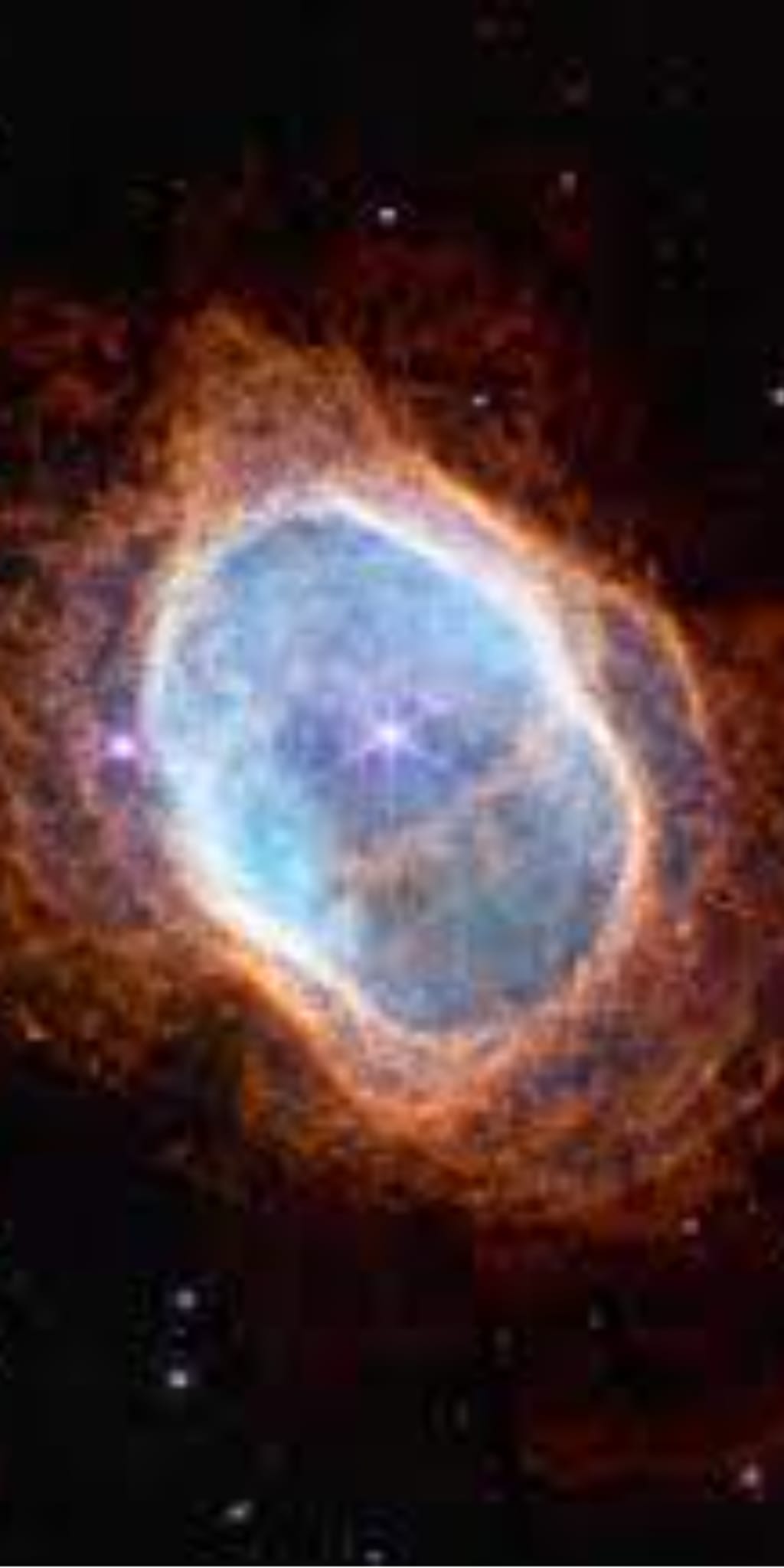
The Southern Ring is a region of cosmic dust and gas surrounding a dying star, located at the opposite end of the stellar life cycle. The telescope captured two infrared views of this nebula, revealing a clearer look at the binary star at its center.
Stephan's Quintet, a compact group of five galaxies, is another highlight - showcasing two galaxies in the process of merging, as well as a region of extremely bright gas being pulled into a black hole.
The team also released the telescope's first spectrum of an exoplanet's atmosphere, providing data on its atmospheric composition. This groundbreaking information can reveal whether a distant world may be capable of sustaining life, as evidenced by the telltale signs of water vapor detected.
The director emphasized that these initial observations are just the start of something spectacular. With over 20 years left in the telescope's lifespan, the team expects a flurry of revolutionary discoveries that will fundamentally change our understanding of distant worlds and the cosmos. As one scientist noted, the JWST has already exceeded expectations, delivering incredible detail that wasn't possible even 50 years ago in infrared astronomy. The future holds endless possibilities, and the team eagerly awaits the unexpected breakthroughs that may emerge in the coming year.
About the Creator
Enjoyed the story? Support the Creator.
Subscribe for free to receive all their stories in your feed.
Comments
There are no comments for this story
Be the first to respond and start the conversation.