
NASA Astronauts Set to Make History with Unique Spacecraft Shuffle on ISS
A historic docking maneuver aboard the ISS will make NASA astronauts Butch Wilmore and Suni Williams the first to fly on both Boeing's Starliner and SpaceX's Crew Dragon.
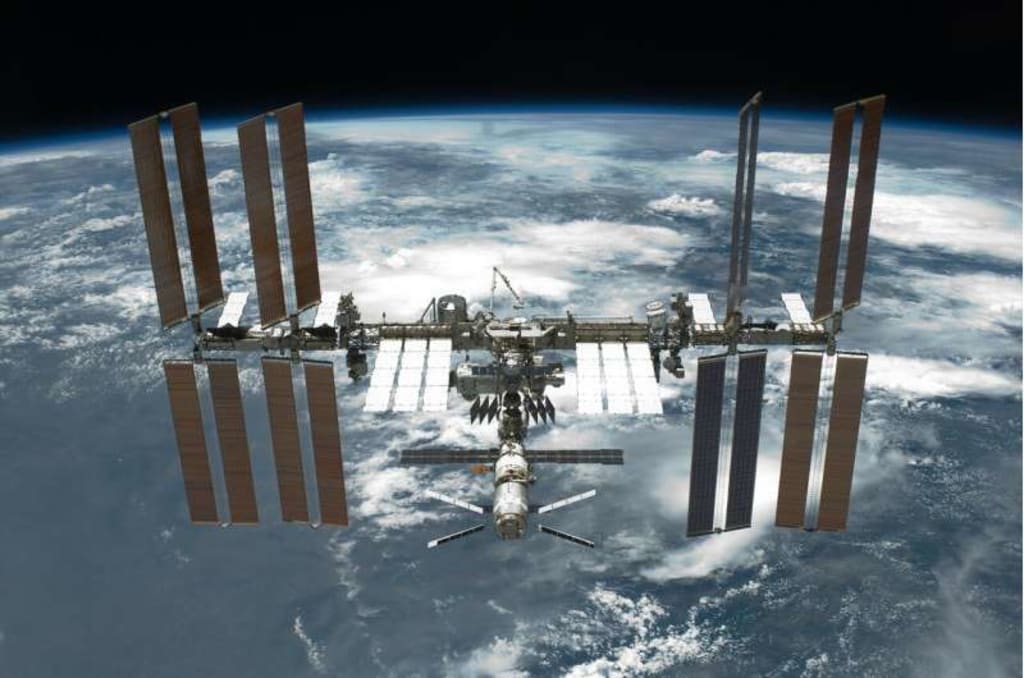
This weekend, high above Earth, a fascinating maneuver will unfold aboard the International Space Station (ISS). NASA astronauts Butch Wilmore and Suni Williams are preparing for a unique, history-making feat as they shift parking positions for the SpaceX Crew Dragon, marking the first time two astronauts have flown in both Boeing's Starliner and SpaceX's Crew Dragon spacecraft. This orbital shuffle, set to unfold over 250 miles above Earth, will pave the way for a new SpaceX cargo mission while cementing new milestones in spaceflight.
The story of Wilmore and Williams’ journey began with NASA’s partnership with Boeing, aiming to send crews to the ISS aboard Boeing’s Starliner. Wilmore and Williams were initially assigned to fly up in the Star liner, marking a crucial moment in Boeing’s bid to provide reliable transport for NASA under the Commercial Crew Program. However, technical issues ultimately prevented Star liner from returning to Earth with a crew, prompting Wilmore and Williams to remain on the ISS. Now, as part of the ISS’s Expedition 72, both astronauts are preparing to return home on the SpaceX Crew Dragon Freedom, scheduled for February 2025.
Crew Dragon Freedom, which arrived at the ISS on September 29, currently hosts just two crew members—NASA astronaut Nick Hague and Roscosmos cosmonaut Aleksandr Gorbunov. The unusual arrangement left room for Wilmore and Williams, who will join the other two astronauts for the flight home next year. But before that journey, an essential task lies ahead. With limited parking ports on the ISS, all four crew members will board Freedom this Sunday for a short but critical trip, moving from the forward-facing docking port on the Harmony module to the space-facing port. This quick jaunt, lasting less than an hour, will be powered by Crew Dragon’s own propulsion system, marking another first for Wilmore and Williams as they experience the spacecraft’s capabilities up close.
This maneuver will open up the forward-facing docking port on the Harmony module, making room for the launch of the SpaceX Cargo Dragon on the CRS-31 mission. Scheduled to launch as early as 9:29 p.m. on Monday from Kennedy Space Center, the cargo mission will deliver an impressive 6,000 pounds of essential supplies and scientific equipment to the ISS, further supporting the station’s continuous operations.
The ISS itself is a complex puzzle of ports and docking stations. Only two docking spots on the station’s U.S. side can accommodate either a SpaceX Dragon or Boeing Star liner spacecraft. On the Russian side, there are specialized docking stations reserved for Soyuz crewed spacecraft and Progress cargo vehicles. Meanwhile, the Northrop Grumman Cygnus cargo spacecraft docks at the Unity module, leaving the Harmony module as the sole docking point for the Commercial Crew Program. Every time a new spacecraft arrives, NASA prefers to dock it at the forward-facing port, meaning that any occupied spacecraft must be repositioned—a process that has become a routine yet delicate operation on the ISS.
For both Wilmore and Williams, the Crew Dragon journey will be especially notable. After flying on both the Space Shuttle and Russia’s Soyuz spacecraft, Crew Dragon will become their fourth spacecraft, a rare achievement among astronauts. This milestone brings them into the elite company of NASA’s John Young, who famously flew on four different spacecraft over his career. Young’s journeys included two Gemini missions, two Apollo missions (including a landing on the Moon, which also required him to pilot the Apollo lunar lander), and two flights on the Space Shuttle, including the Shuttle Program’s inaugural mission.
Young’s unique record of launches from a planetary surface remains unchallenged, as he achieved liftoff from both Earth and the Moon. Nonetheless, Williams and Wilmore’s versatility in adapting to multiple spacecraft technologies symbolizes the evolution of modern space exploration and highlights NASA’s growing roster of multi-vehicle-trained astronauts.
In recent years, NASA has expanded its astronaut training programs to prepare for the diverse array of spacecraft. This adaptability is increasingly essential, with NASA and Roscosmos continuing their seat-swap missions that allow U.S. astronauts to ride on Soyuz spacecraft while cosmonauts travel on Crew Dragon. NASA astronaut Bob Hines was the first to board a Boeing Star liner in space during the uncrewed Orbital Flight Test-2 in 2022, marking another achievement for the Commercial Crew Program and demonstrating the increasing integration of various spacecraft at the ISS.
SpaceX and Boeing’s roles are pivotal to NASA’s Commercial Crew Program, tasked with providing consistent transportation between Earth and the ISS. SpaceX, which has completed nine rotational missions since its Demo-2 mission in 2020, is already scheduled for Crew-10 in February and Crew-11 by next July. Boeing, on the other hand, has faced delays but is aiming to begin operational missions in late 2025 following its Crew Flight Test. These partnerships ensure that as long as the ISS remains in orbit, astronauts will have reliable access to the station.
With continuous innovation in space technology, milestones like Wilmore and Williams’ upcoming journey demonstrate the remarkable flexibility and capability of the Commercial Crew Program and the astronauts who make it possible. As NASA and its partners look forward to decommissioning the ISS in the coming decade, these achievements serve as stepping stones for future human exploration missions, ultimately aiming beyond low Earth orbit to the Moon, Mars, and beyond.
About the Creator
Enjoyed the story? Support the Creator.
Subscribe for free to receive all their stories in your feed.
Comments
There are no comments for this story
Be the first to respond and start the conversation.