
Scientists have made remarkable discoveries, uncovering the existence of species once thought to be long extinct, spanning across different regions of the world. Fascinatingly, they have even identified various marine creatures that thrived in the ancient oceans alongside dinosaurs. Among the locations rumored to harbor these extraordinary beings is the Democratic Republic of the Congo, which can be likened to a real-life Jurassic Park on Earth.
The Congo jungle, also referred to as the Congo Basin or Congo rainforest, is an expansive and densely packed tropical rainforest that spans a significant portion of central Africa. This region boasts an astonishing level of biodiversity, hosting thousands of plant species, animals, and insects. In fact, it is estimated that the Congo rainforest is a sanctuary for approximately 10,000 plant species, 1,000 bird species, and 400 mammal species.
Despite its immense importance and expanse, much of the Congo jungle remains unexplored. The dense vegetation, challenging terrain, and lack of infrastructure present formidable obstacles for scientific exploration. Moreover, the instability in the region has further complicated matters, impeding the access of scientists and researchers to many parts of this remarkable forest.
according to estimates by the wildlife
conservation Society only about 10 of
the Congo Basin has been explored by
scientists
however efforts are underway to increase
exploration and research in the region
including the establishment of several
protected areas and the use of new
technologies like satellite imaging and
remote sensing
[Music]
when translated means the one who stops
the flow of rivers
it's a mysterious creature that has been
mentioned in different stories by the
people who live in the Congo River basin
these people have the most contact with
this creature and are said to have
encountered it many times
is often described as a half dinosaur
half elephant and is claimed by people
to live in Lake tele near the Congo
River in Africa
it's used as a reference by some
researchers to prove that a small
population of dinosaurs live in remote
regions of our planet
[Music]
has been described as an elephant-sized
creature with smooth brownish gray skin
a long flexible neck and a long tail
that is as powerful as a crocodile's
tail
however most of the locals who live in
the region and who have allegedly
encountered the creature describe it as
looking very similar to that of a
miniature sauropod a group of
long-necked herbivorous dinosaurs that
lived during the Mesozoic Era
sauropods had small heads long necks massive bodies and thick pillar-like
legs their most distinctive feature was their
long necks which they used to reach up
into the trees and strip the leaves from
branches
is perhaps best known for leaving behind
its large Footprints which are known for
having three Claws and leaving deep
impressions in the ground
these can be found throughout the swampy
jungles of Africa with the locals using
these Footprints as proof that the
creature is genuine
over the past three centuries native
pygmies and Western explorers have
described how the creature used to live
this animal fed on the nut-like fruit of
a riverbank plant and kept to the deep
pools and subsurface areas like the
underwater caves and the unexplored
regions of the forests
a recent Expedition has shown that these
stories have been told for many decades
and that the locals very much believe
that this creature is real and not a
myth
one of the researchers on the team said
that it may have been a dinosaur like
brontosaurus which modern science says
has been extinct for over 70 million
years
the same researcher Roy macal had gone
deep into the central swamps of the
Congo where it was believed that the
animal lived
interestingly he was able to come back
with a photograph of a footprint that is
believed to belong to the mokeli in
bembe
The Forbidden swamp region is located in
the center of the Congo and it covers an
average area of 49 000 square miles
which is as large as New York
the natives told the missionaries where
the sauropod dinosaur lived after the
missionaries had shown them pictures of
various animals and interestingly when a
photograph of a sauropod dinosaur was
shown to the natives they said that this
image matched the creature's description
they had known about the mysterious
animal that lived along the rivers and
deep swamp pools but did not know what a
sauropod was until the missionaries told
them
this dinosaur-like creature is said to
Feast on the vegetables and fruits of
the jungles
one thing that's been noted is that it
doesn't get along with hippos and
various tribe members have seen these
two animals battle
back in 1999 the Sunday Times of London
reported that the people of the kabonga
tribe had managed to take down one of
these creatures and said that once it
was captured they ended its life with
their hunting tools
in the fall of 1981 Hermann registers
led a team in Lake tele and is said to
have returned with items belonging to
this ancient creature
this included things like footprint
casts droppings and a mysterious sound
which couldn't be pinned to any local
wildlife
reports of mckellenbembe go all the way
back to the 18th century and since 1980
over 25 Expedition teams have searched
for the mysterious animal
in 2018 another expedition was sent with
DNA experts to look for clues of the
creature
they found nothing that could help them
pinpoint the animal but interestingly
they did discover a new kind of algae
some have said that there's still many
creatures and organisms on this planet
that we don't know about
discover Africa purchased a documentary
from an independent crew in 2016 and the
documentary showed how the crew spent
four weeks gathering information from
different tribes and Villages about the
existence of such an animal
numerous natives believed in its
existence while some said that the last
of the species passed away at least a
decade ago
eyewitness reports
Gathering evidence of this creature has
been tough
the tribe native to the Congo region
that reported the creature claimed to
have purposefully hunted them further
saying they wanted to eradicate them
from the area due to their growing fears
its aggressions and history of attacks
further information about the creature
has not been released and the only
reliable information that can be found
on it is evidence and work gathered by
Dr Roy P McCall who describes the
creature in his 1987 book a living
dinosaur
with that being said locals still talk
about the creature and To This Day
stories are still coming out of this
region
one of the most interesting things about
this report is that the locals didn't
know what a dinosaur was but yet when
shown an image of a sauropod this is
what they said the creature looked like
the locals weren't going around claiming
that dinosaurs were still alive but
rather describing a creature they had
seen on numerous occasions
it wasn't until the guides and
researchers explained to them that
dinosaurs were no longer alive that they
understood why the researchers were so
interested
regardless they didn't tell them this
information until after they had drawn
the image
the image in question cannot be confused
with any other animal and the drawing
included a large bulky body a long neck
a long tail and also had large
sauropod-like feet
after this drawing and after talking to
the locals this only caused more
confusion with the team of researchers
saying that they were hoping to go to
the region and easily explain what the
natives were encountering
the team of researchers said that they
thought the tribe was just encountering
local and everyday wildlife
however one of the tribe members said
that they know the wildlife here and
that they wouldn't confuse it with
another animal
the evidence
some of the best pieces of evidence we
have of the creature are those of the
giant Footprints which are known for
having three Claws and leaving deep
impressions in the ground
various locals have reported finding
these throughout the Congo and say that
they can't match them to any of the
local wildlife
the reports follow a similar theme a
local or an Expedition stumbling across
large tracks that usually measure around
40 to 95 centimeters or 1.5 to 3.5 feet
in diameter
the creature's Footprints are also
spread out showing that this creature is
large
what could the McAllen bembe be
the locals are perhaps some of the best
people to talk to about the local
Wildlife as they are the ones that have
spent the most amount of time in the
region
they seem to be under the impression
that this creature resembles that of a
small sauropod a large dinosaur that
lived millions of years ago even going
on to say that every so often they
discover large footprints that they
attribute to it
Skeptics have said that such a large
creature wouldn't be able to live in
this region without being easily
detected
however those who ventured into the
Congo jungle have said that it's very
dense and that much of it hasn't been
explored by humans
as of right now according to the native
tribes in the region Legends and
sightings of the creature go back
thousands of years with even a group of
French priests that traveled through the
region confirming the sighting of this
modern day creature
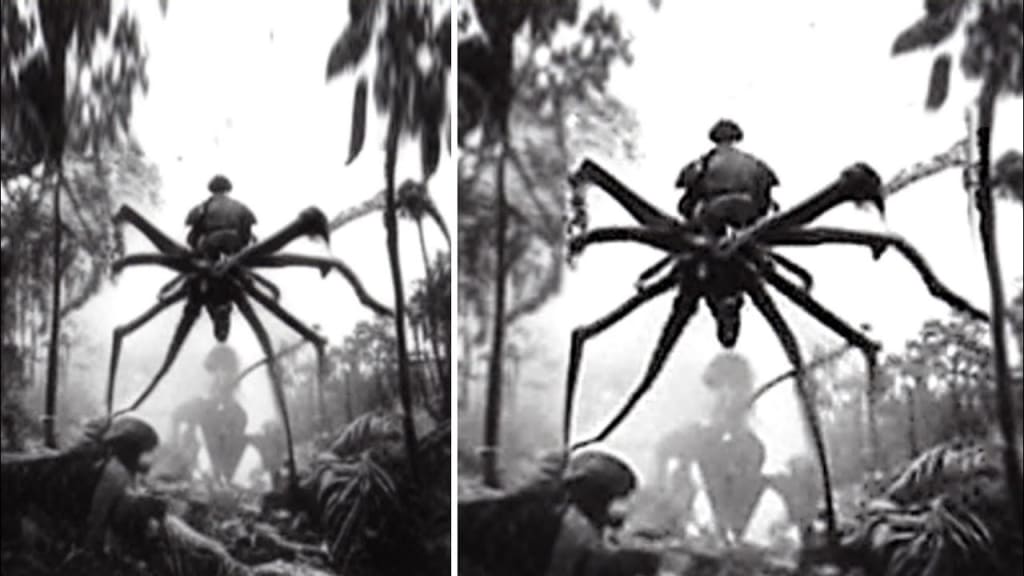
the mysterious spider
the mysterious Jabar fofi more commonly
known as the Congolese giant spider is
that of a large undiscovered species of
spider that is reportedly the size of a
man and has survived from larger
arachnid species found in ancient
prehistoric times well into the modern
day
though large spiders have been reported
all across the continent of Africa it
appears that within the Congo there are
native tribes known as the Baka that
refer to the spider as the Jabar faux
fee and have a reported leg span of
roughly four feet long
this was uncovered after a number of
African reports began telling of a
massive spider infesting different
African countries at different times of
the year
one of the first reported sightings of
such a creature occurred back in the
1890s when a missionary from England
ventured into the country of Uganda and
discovered a massive web located near
Lake nyasa
he then writes that as they were looking
at the web and getting closer to try to
understand what it was given its massive
size stretching between two larger
standing trees several of his companions
became trapped
as they began to move in the webs
sticking to the strings they claimed
spiders with legs longer than four feet
began to come out and bite into the men
later Expeditions in 1938 would lead
researchers to Consulting with local and
native tribes in the Congo the told of
the Congolese giant spider that was
believed to have a matching leg span of
four feet in length had thousands of
eggs described as being the size of
peanuts and would Nest nearby villages
in efforts to trap Birds large animals
and even humans
a second encounter was reported by r.k
Lloyd and his wife while they were in
the Congo
they were on a dirt path when they saw a
large creature run across the road
they stopped in order to get a better
look at it initially thinking that the
animal in question was a monkey due to
how large it was but after approaching
it they soon realized that this creature
was a giant spider
as more and more strange reports begin
to surface from the Democratic Republic
of Congo it becomes apparent to many
different researchers that the country
seems to be a lost world full of
impossible to explain sightings and
Supernatural occurrences
this is due to the fact that the entire
country seems to be filled with a number
of strange creatures and reports that
fit that of an ancient prehistoric time
with claims of dinosaur-like creatures
still roaming the denser areas of the
Congo jungle
when early explorers were hiking through
these regions local tribe members would
warn them about giant spiders that liked
to prey on men
they said to the explorers that if they
came across giant webbing then they
should leave the area immediately as
this was proof that these giant Congo
spiders were close by
One Tribe described these spiders as
being able to jump from tree to tree and
that even though they were bright in
color they were hard to see in the
backdrop of the jungle
they said that this species of spider
also builds mound like structures and
warned that if they saw one they should
stay clear of it
explorers who have heard about the giant
Congo spider or who have encountered it
have suggested it could be a new species
of arachnid
most of the local Tales describe the
spider's digging shallow holes close to
tree roots and then camouflaging it with
nearby leaves
researcher William J Gibbons was another
person who had a run-in with this
mysterious creature
the naturalist detailed that while on
the hunt for the mysterious mokai Lim
bembe his expedition team encountered
natives who told them about their
experiences with giant spiders
amazed at what he was hearing he was
excited to share their stories with
others when he returned to Canada
he said the following
on this third expedition to equatorial
Africa I took the opportunity to inquire
if the pygmies knew of such a giant
spider and indeed they did
they speak of the giant or great spider
they described a spider that is
generally brown in color with a purple
abdomen
they grow to quite an enormous size with
a leg span of at least five feet
the giant arachnids weave together a
lair made of leaves similar in shape to
a traditional pygmy Hut and spin a
circular web said to be very strong
between two trees with a strand
stretched across a game Trail
these giant ground-dwelling spiders prey
on the forest Antelope birds and other
small game and are said to be extremely
dangerous not to mention highly venomous
end quote
although his team didn't see one of the
giant spiders he said that the local
tribe members warned them about the area
and that they should be on high alert
William believed that the locals were
telling the truth about what they had
seen and that when talking about the
spiders they even seemed scared
there's been some debates whether the
creature would be able to exist
spiders belong to a group of animals
called arthropods which also includes
insects Crustaceans and millipedes
one of the key factors that limit the
size of arthropods including spiders is
the way that they breathe
arthropods have a respiratory system
that consists of a network of tubes or
trachea that carry oxygen directly to
their cells
this system is very efficient for small
animals but as an arthropod gets larger
the trachea become less effective at
transporting oxygen to all of the cells
in the body
this is because the diffusion of gases
becomes less efficient over long
distances
so oxygen cannot be delivered as quickly
to cells that are far from the surface
of the body
as a result larger arthropods have to
work harder to get enough oxygen and
they have to have larger respiratory
structures to compensate
this is why many larger arthropods such
as crabs and lobsters have gills or
other respiratory structures that are
more complex than simple trachea
however spiders do not have these more
advanced respiratory structures which
means that they are limited in size by
their ability to get enough oxygen
through their trachea
another factor that may limit the size
of spiders is their exoskeleton which
provides support and protection for
their bodies
as spiders grow their exoskeleton must
also grow which requires them to molt or
shed their old exoskeleton periodically
however as spiders get larger the
molting process becomes more difficult
and risky as their exoskeleton becomes
thicker and harder to shed
this may also limit the maximum size
that spiders can reach
some of the largest spider species alive
today such as the Goliath bird eater and
the Huntsman spider have a leg span of
up to 30 centimeters or 12 inches
however if these factors were not
limiting some scientists have suggested
that spiders could theoretically grow to
be as large as small dogs with leg spans
of up to two meters or six and a half
feet
the amelan Tuka
ml antuka also known as killer of
Elephants or the Behemoth is a legendary
creature that is said to inhabit the
dense rainforests of central Africa
primarily in the Republic of Congo
the creature is described as a large
semi-aquatic reptile with a heavy
armored body a long neck and a single
horn on its forehead
is said to be extremely aggressive and
Territorial and is known to take out any
creature that enters its territory
including elephants
according to local Legends the MLA in
Tuka is often cited near rivers or water
sources suggesting that it may be a
semi-aquatic creature
some reports also suggest that the
creature may have a distinctive roar or
Bellow that can be heard from a distance
those who have seen it have described it
as looking similar to a triceratops
interestingly when shown photographs the
local tribes of the Congo said it looked
very similar to the Triceratops
Gathering evidence of this creature has
been tough
the tribes native to the Congo region
have claimed that they are tough and
that they fear nothing
one of the last reported sightings of
the creature was seen in Kenya though
many experts believe that if the
creature did at one time exist then it
has long been extinct
interestingly the tribe reports that one
of the last remaining creatures was
taken out during the 1930s with the
tribe reporting that a man had removed
the horn from the body of the creature
and currently holds it in his possession
however this man has not come forward
with the horn due to fears it will be
taken away from him
the emelantuka is said to be a hostile
creature and has allegedly been
witnessed attacking local wildlife
the locals of the Congo have observed
this creature taking down fully sized
elephants noting that the elephants
can't defend themselves against the
emila and tuka's large horn
what's interesting is that tribes have
said you can't find large animals where
this creature lives and they say this is
because the local Wildlife fears the
emelantuka the MLA antuka has been
reported by local people for centuries
and some believe it may be a surviving
dinosaur or prehistoric reptile
however no physical evidence of its
existence has been found
as of right now explorers continue to
search for evidence of the MLA and
tuka's existence and it remains a
popular subject of folklore and
speculation
the 50-foot Congo snake
definitely seen as one of the most
unexplained incredible creature
encounters is that of the account made
by Colonel Remy van leider
back in 1959 when the Belgian Air Force
occupied the Democratic Republic of the
Congo a colonel by the name of Remy van
lider made a startling Discovery as he
was flying overhead the rainforests of
the Congo
there were three people on the flight
himself a pilot and a photographer
as they were attempting to get
surveillance information of the forest
below them on their journey to another
military base they made an incredible
discovery
suddenly the colonel noticed what
appeared to be a large snake over 50
feet in length and noted that it was
lifting its body more than 10 feet high
the colonel reportedly told the pilot to
turn around so they could get better
photographs of the creature and so they
hovered for a while in the helicopter
before they realized they were low
enough to be within Striking Distance of
the snake
the photographs are impressive and seem
to match what the colonel reported
interestingly those who've studied the
image as well as the area where the
creature was encountered have said that
this isn't the first time that someone
has encountered a giant snake in the
Congo and suggest that this creature
might actually be a Titanoboa
this giant snake is an extinct genus of
very large snakes that lived during the
paleocene epoch approximately 60 to 58
million years ago
the name means titanic boa and it is
appropriately named as it is the largest
snake ever discovered
it was first described in 2009 from
fossils found in the cerejon formation
in Colombia the snake measured between
45 to 50 feet in length and weighed
approximately 2 500 pounds
its body was about three feet or one
meter in diameter and it had a head that
was about two feet or 60 centimeters
long
this giant snake lived in a humid
tropical environment with temperatures
averaging about 30 degrees Celsius
it was a constrictor and likely preyed
on large animals such as crocodiles and
turtles its massive size allowed it to
overpower even the largest prey
it is also believed that this giant
snake was able to regulate its body
temperature much like modern day snakes
which would have given it a significant
advantage in its environment
the discovery has provided scientists
with important insights into the
evolution of snakes and the ecosystems
in which they lived
it has also sparked the imagination of
the public who are fascinated by the
idea of a giant snake that once roamed
the Earth
the snake was able to grow so big
because of the favorable environmental
conditions of the paleocene epoch which
occurred approximately 66 million years
ago
during this time the Earth was much
warmer and the oxygen levels were higher
than they are today creating an ideal
environment for the snake to thrive
the warmer temperatures allowed for a
higher metabolic rate meaning the giant
snake could consume more food and grow
faster
Additionally the higher oxygen levels
allowed it to extract more oxygen from
the air which in turn allowed them to
grow to massive sizes
studies suggest that it was able to grow
to sizes of up to 50 feet long and weigh
over a ton
the snake was also able to adapt to its
environment by evolving unique physical
features that helped it survive
for example it had a wide flat head with
large teeth that allowed it to consume
larger prey
it also had a flexible spine that helped
it move efficiently on land and in water
these adaptations coupled with the
favorable environmental conditions
allowed it to become one of the largest
snakes to ever exist
the giant snake went extinct along with
other giant animals that roamed the
Earth during the paleocene eocene
thermal maximum which occurred about 56
million years ago
during this time the Earth's temperature
Rose rapidly causing massive changes in
the climate and environment
It is believed that the extinction of it
and other giant animals was caused by a
combination of factors including changes
in temperature precipitation and food
availability
the paleocene eocene thermal maximum led
to a decrease in the amount of oxygen in
the atmosphere which would have made it
harder for large animals to breathe and
may have contributed to their demise
in addition the changing climate would
have altered the snake's habitat and
food sources making it more difficult
for them to survive
with The Disappearance of their
preferred prey the snake and other giant
animals would have struggled to find
enough food to sustain their massive
bodies
interestingly this isn't the first time
that explorers have detailed
encountering a giant snake and it's led
to researchers suggesting that perhaps a
small group of these giant snakes live
within the dense unexplored regions of
the Congo jungle
the mahamba
believed to be a possible surviving
member of the dinosaur species the
mahamba is believed to be a massive
50-foot long crocodile that has
elongated forearms and hind legs
allowing it to run at speeds that can
top that of a human
according to myths and legends the
creature will float in the rivers
similar to that of a crocodile hiding
underneath the waters until a large
creature or boat passes overhead
it has been reported to have swallowed
entire canoes whole and run onto land to
devour and attack any tribes passing by
the native tribes believe that the
creature feeds on the other species of
monsters and dinosaurs in the region and
will usually stick to the deeper waters
running through the rainforest
however not much else is known about the
behaviors of the creature as the tribe
claims few if any survivors Live to Tell
the tale of their encounters with the
creature
the last known sighting of the mahamba
was back in 1930 but since then there
have been no reported claims of the
creature
despite not seeing or encountering for
almost a hundred years the tribes still
tend to ignore and prevent visiting
certain areas of the rainforest
altogether in fear of the massive
potentially encountering the creature
some have suggested that the mahamba is
actually a surviving Deinosuchus
Deinosuchus is an extinct genus of giant
crocodilian that lived during the late
Cretaceous Period around 73 to 82
million years ago
it was one of the largest crocodilians
ever to exist with some individuals
estimated to have been up to 40 feet or
12 meters in length and weighed up to 8
000 pounds or 3600 kilograms
Deinosuchus had a broad flat skull that
was elongated and had many teeth that
were adapted for crushing and gripping
its jaws were very powerful allowing it
to take down large prey such as
dinosaurs which it likely ambushed at
the water's edge
the teeth of Deinosuchus were also quite
large with some measuring up to six
inches long
Dina sukis lived in freshwater
environments and is thought to have
preyed on dinosaurs as well as other
animals such as Turtles and fish
its distribution ranged from what is now
Montana and South Dakota in the United
States to Northern Mexico
the name Deinosuchus means Terra
crocodile in Greek and this animal
certainly lived up to its name
its powerful jaws and massive size would
have made it a formidable predator in
the late Cretaceous ecosystems it
inhabited
the Deinosuchus was able to grow so big
due to several factors
firstly during the late Cretaceous
Period the climate was warmer than today
and the oxygen content of the air was
higher which may have contributed to the
growth of animals
Additionally the dinasukas had a very
powerful bite with jaws that could exert
a force of up to 23 000 pounds per
square inch
this allowed it to prey on large animals
such as dinosaurs and other reptiles
the Deinosuchus also had a unique
adaptation in its skull with a flat
snout and large teeth that were designed
for crushing bones
this allowed it to consume its prey more
efficiently including the hard-shelled
turtles that were abundant during the
late Cretaceous Period
overall the dinasukis was a formidable
Predator that was able to grow so big
due to a combination of environmental
factors and unique adaptations that
allowed it to thrive during the late
Cretaceous Period
like many other large reptiles of the
late Cretaceous the dinosaurs went
extinct about 66 million years ago at
the end of the Cretaceous Period
the cause of the dinosaurus's extinction
is not entirely clear but it is thought
to be related to the same event that
caused the extinction of the dinosaurs a
large asteroid impact that created a
Global Environmental catastrophe
including wildfires tsunamis and drastic
changes in climate and sea level
this would have led to widespread
Extinction of many species including the
dinosaurs
so what do you make of these Congo
Mysteries and discoveries be sure to
leave your questions and answers in the
comments section below and help us to
grow this community while working to
solve these Unexplained Mysteries
thank you for watching and don't forget
to subscribe for more videosScientists have made remarkable discoveries, uncovering the existence of species once thought to be long extinct, spanning across different regions of the world. Fascinatingly, they have even identified various marine creatures that thrived in the ancient oceans alongside dinosaurs. Among the locations rumored to harbor these extraordinary beings is the Democratic Republic of the Congo, which can be likened to a real-life Jurassic Park on Earth.
The Congo jungle, also referred to as the Congo Basin or Congo rainforest, is an expansive and densely packed tropical rainforest that spans a significant portion of central Africa. This region boasts an astonishing level of biodiversity, hosting thousands of plant species, animals, and insects. In fact, it is estimated that the Congo rainforest is a sanctuary for approximately 10,000 plant species, 1,000 bird species, and 400 mammal species.
Despite its immense importance and expanse, much of the Congo jungle remains unexplored. The dense vegetation, challenging terrain, and lack of infrastructure present formidable obstacles for scientific exploration. Moreover, the instability in the region has further complicated matters, impeding the access of scientists and researchers to many parts of this remarkable forest.
according to estimates by the wildlife
conservation Society only about 10 of
the Congo Basin has been explored by
scientists
however efforts are underway to increase
exploration and research in the region
including the establishment of several
protected areas and the use of new
technologies like satellite imaging and
remote sensing
[Music]
when translated means the one who stops
the flow of rivers
it's a mysterious creature that has been
mentioned in different stories by the
people who live in the Congo River basin
these people have the most contact with
this creature and are said to have
encountered it many times
is often described as a half dinosaur
half elephant and is claimed by people
to live in Lake tele near the Congo
River in Africa
it's used as a reference by some
researchers to prove that a small
population of dinosaurs live in remote
regions of our planet
[Music]
has been described as an elephant-sized
creature with smooth brownish gray skin
a long flexible neck and a long tail
that is as powerful as a crocodile's
tail
however most of the locals who live in
the region and who have allegedly
encountered the creature describe it as
looking very similar to that of a
miniature sauropod a group of
long-necked herbivorous dinosaurs that
lived during the Mesozoic Era
sauropods had small heads long necks
massive bodies and thick pillar-like
legs
their most distinctive feature was their
long necks which they used to reach up
into the trees and strip the leaves from
branches
is perhaps best known for leaving behind
its large Footprints which are known for
having three Claws and leaving deep
impressions in the ground
these can be found throughout the swampy
jungles of Africa with the locals using
these Footprints as proof that the
creature is genuine
over the past three centuries native
pygmies and Western explorers have
described how the creature used to live
this animal fed on the nut-like fruit of
a riverbank plant and kept to the deep
pools and subsurface areas like the
underwater caves and the unexplored
regions of the forests
a recent Expedition has shown that these
stories have been told for many decades
and that the locals very much believe
that this creature is real and not a
myth
one of the researchers on the team said
that it may have been a dinosaur like
brontosaurus which modern science says
has been extinct for over 70 million
years
the same researcher Roy macal had gone
deep into the central swamps of the
Congo where it was believed that the
animal lived
interestingly he was able to come back
with a photograph of a footprint that is
believed to belong to the mokeli in
bembe
The Forbidden swamp region is located in
the center of the Congo and it covers an
average area of 49 000 square miles
which is as large as New York
the natives told the missionaries where
the sauropod dinosaur lived after the
missionaries had shown them pictures of
various animals and interestingly when a
photograph of a sauropod dinosaur was
shown to the natives they said that this
image matched the creature's description
they had known about the mysterious
animal that lived along the rivers and
deep swamp pools but did not know what a
sauropod was until the missionaries told
them
this dinosaur-like creature is said to
Feast on the vegetables and fruits of
the jungles
one thing that's been noted is that it
doesn't get along with hippos and
various tribe members have seen these
two animals battle
back in 1999 the Sunday Times of London
reported that the people of the kabonga
tribe had managed to take down one of
these creatures and said that once it
was captured they ended its life with
their hunting tools
in the fall of 1981 Hermann registers
led a team in Lake tele and is said to
have returned with items belonging to
this ancient creature
this included things like footprint
casts droppings and a mysterious sound
which couldn't be pinned to any local
wildlife
reports of mckellenbembe go all the way
back to the 18th century and since 1980
over 25 Expedition teams have searched
for the mysterious animal
in 2018 another expedition was sent with
DNA experts to look for clues of the
creature
they found nothing that could help them
pinpoint the animal but interestingly
they did discover a new kind of algae
some have said that there's still many
creatures and organisms on this planet
that we don't know about
discover Africa purchased a documentary
from an independent crew in 2016 and the
documentary showed how the crew spent
four weeks gathering information from
different tribes and Villages about the
existence of such an animal
numerous natives believed in its
existence while some said that the last
of the species passed away at least a
decade ago
eyewitness reports
Gathering evidence of this creature has
been tough
the tribe native to the Congo region
that reported the creature claimed to
have purposefully hunted them further
saying they wanted to eradicate them
from the area due to their growing fears
its aggressions and history of attacks
further information about the creature
has not been released and the only
reliable information that can be found
on it is evidence and work gathered by
Dr Roy P McCall who describes the
creature in his 1987 book a living
dinosaur
with that being said locals still talk
about the creature and To This Day
stories are still coming out of this
region
one of the most interesting things about
this report is that the locals didn't
know what a dinosaur was but yet when
shown an image of a sauropod this is
what they said the creature looked like
the locals weren't going around claiming
that dinosaurs were still alive but
rather describing a creature they had
seen on numerous occasions
it wasn't until the guides and
researchers explained to them that
dinosaurs were no longer alive that they
understood why the researchers were so
interested
regardless they didn't tell them this
information until after they had drawn
the image
the image in question cannot be confused
with any other animal and the drawing
included a large bulky body a long neck
a long tail and also had large
sauropod-like feet
after this drawing and after talking to
the locals this only caused more
confusion with the team of researchers
saying that they were hoping to go to
the region and easily explain what the
natives were encountering
the team of researchers said that they
thought the tribe was just encountering
local and everyday wildlife
however one of the tribe members said
that they know the wildlife here and
that they wouldn't confuse it with
another animal
the evidence
some of the best pieces of evidence we
have of the creature are those of the
giant Footprints which are known for
having three Claws and leaving deep
impressions in the ground
various locals have reported finding
these throughout the Congo and say that
they can't match them to any of the
local wildlife
the reports follow a similar theme a
local or an Expedition stumbling across
large tracks that usually measure around
40 to 95 centimeters or 1.5 to 3.5 feet
in diameter
the creature's Footprints are also
spread out showing that this creature is
large
what could the McAllen bembe be
the locals are perhaps some of the best
people to talk to about the local
Wildlife as they are the ones that have
spent the most amount of time in the
region
they seem to be under the impression
that this creature resembles that of a
small sauropod a large dinosaur that
lived millions of years ago even going
on to say that every so often they
discover large footprints that they
attribute to it
Skeptics have said that such a large
creature wouldn't be able to live in
this region without being easily
detected
however those who ventured into the
Congo jungle have said that it's very
dense and that much of it hasn't been
explored by humans
as of right now according to the native
tribes in the region Legends and
sightings of the creature go back
thousands of years with even a group of
French priests that traveled through the
region confirming the sighting of this
modern day creature
the mysterious spider
the mysterious Jabar fofi more commonly
known as the Congolese giant spider is
that of a large undiscovered species of
spider that is reportedly the size of a
man and has survived from larger
arachnid species found in ancient
prehistoric times well into the modern
day
though large spiders have been reported
all across the continent of Africa it
appears that within the Congo there are
native tribes known as the Baka that
refer to the spider as the Jabar faux
fee and have a reported leg span of
roughly four feet long
this was uncovered after a number of
African reports began telling of a
massive spider infesting different
African countries at different times of
the year
one of the first reported sightings of
such a creature occurred back in the
1890s when a missionary from England
ventured into the country of Uganda and
discovered a massive web located near
Lake nyasa
he then writes that as they were looking
at the web and getting closer to try to
understand what it was given its massive
size stretching between two larger
standing trees several of his companions
became trapped
as they began to move in the webs
sticking to the strings they claimed
spiders with legs longer than four feet
began to come out and bite into the men
later Expeditions in 1938 would lead
researchers to Consulting with local and
native tribes in the Congo the told of
the Congolese giant spider that was
believed to have a matching leg span of
four feet in length had thousands of
eggs described as being the size of
peanuts and would Nest nearby villages
in efforts to trap Birds large animals
and even humans
a second encounter was reported by r.k
Lloyd and his wife while they were in
the Congo
they were on a dirt path when they saw a
large creature run across the road
they stopped in order to get a better
look at it initially thinking that the
animal in question was a monkey due to
how large it was but after approaching
it they soon realized that this creature
was a giant spider
as more and more strange reports begin
to surface from the Democratic Republic
of Congo it becomes apparent to many
different researchers that the country
seems to be a lost world full of
impossible to explain sightings and
Supernatural occurrences
this is due to the fact that the entire
country seems to be filled with a number
of strange creatures and reports that
fit that of an ancient prehistoric time
with claims of dinosaur-like creatures
still roaming the denser areas of the
Congo jungle
when early explorers were hiking through
these regions local tribe members would
warn them about giant spiders that liked
to prey on men
they said to the explorers that if they
came across giant webbing then they
should leave the area immediately as
this was proof that these giant Congo
spiders were close by
One Tribe described these spiders as
being able to jump from tree to tree and
that even though they were bright in
color they were hard to see in the
backdrop of the jungle
they said that this species of spider
also builds mound like structures and
warned that if they saw one they should
stay clear of it
explorers who have heard about the giant
Congo spider or who have encountered it
have suggested it could be a new species
of arachnid
most of the local Tales describe the
spider's digging shallow holes close to
tree roots and then camouflaging it with
nearby leaves
researcher William J Gibbons was another
person who had a run-in with this
mysterious creature
the naturalist detailed that while on
the hunt for the mysterious mokai Lim
bembe his expedition team encountered
natives who told them about their
experiences with giant spiders
amazed at what he was hearing he was
excited to share their stories with
others when he returned to Canada
he said the following
on this third expedition to equatorial
Africa I took the opportunity to inquire
if the pygmies knew of such a giant
spider and indeed they did
they speak of the giant or great spider
they described a spider that is
generally brown in color with a purple
abdomen
they grow to quite an enormous size with
a leg span of at least five feet
the giant arachnids weave together a
lair made of leaves similar in shape to
a traditional pygmy Hut and spin a
circular web said to be very strong
between two trees with a strand
stretched across a game Trail
these giant ground-dwelling spiders prey
on the forest Antelope birds and other
small game and are said to be extremely
dangerous not to mention highly venomous
end quote
although his team didn't see one of the
giant spiders he said that the local
tribe members warned them about the area
and that they should be on high alert
William believed that the locals were
telling the truth about what they had
seen and that when talking about the
spiders they even seemed scared
there's been some debates whether the
creature would be able to exist
spiders belong to a group of animals
called arthropods which also includes
insects Crustaceans and millipedes
one of the key factors that limit the
size of arthropods including spiders is
the way that they breathe
arthropods have a respiratory system
that consists of a network of tubes or
trachea that carry oxygen directly to
their cells
this system is very efficient for small
animals but as an arthropod gets larger
the trachea become less effective at
transporting oxygen to all of the cells
in the body
this is because the diffusion of gases
becomes less efficient over long
distances
so oxygen cannot be delivered as quickly
to cells that are far from the surface
of the body
as a result larger arthropods have to
work harder to get enough oxygen and
they have to have larger respiratory
structures to compensate
this is why many larger arthropods such
as crabs and lobsters have gills or
other respiratory structures that are
more complex than simple trachea
however spiders do not have these more
advanced respiratory structures which
means that they are limited in size by
their ability to get enough oxygen
through their trachea
another factor that may limit the size
of spiders is their exoskeleton which
provides support and protection for
their bodies
as spiders grow their exoskeleton must
also grow which requires them to molt or
shed their old exoskeleton periodically
however as spiders get larger the
molting process becomes more difficult
and risky as their exoskeleton becomes
thicker and harder to shed
this may also limit the maximum size
that spiders can reach
some of the largest spider species alive
today such as the Goliath bird eater and
the Huntsman spider have a leg span of
up to 30 centimeters or 12 inches
however if these factors were not
limiting some scientists have suggested
that spiders could theoretically grow to
be as large as small dogs with leg spans
of up to two meters or six and a half
feet
the amelan Tuka
ml antuka also known as killer of
Elephants or the Behemoth is a legendary
creature that is said to inhabit the
dense rainforests of central Africa
primarily in the Republic of Congo
the creature is described as a large
semi-aquatic reptile with a heavy
armored body a long neck and a single
horn on its forehead
is said to be extremely aggressive and
Territorial and is known to take out any
creature that enters its territory
including elephants
according to local Legends the MLA in
Tuka is often cited near rivers or water
sources suggesting that it may be a
semi-aquatic creature
some reports also suggest that the
creature may have a distinctive roar or
Bellow that can be heard from a distance
those who have seen it have described it
as looking similar to a triceratops
interestingly when shown photographs the
local tribes of the Congo said it looked
very similar to the Triceratops
Gathering evidence of this creature has
been tough
the tribes native to the Congo region
have claimed that they are tough and
that they fear nothing
one of the last reported sightings of
the creature was seen in Kenya though
many experts believe that if the
creature did at one time exist then it
has long been extinct
interestingly the tribe reports that one
of the last remaining creatures was
taken out during the 1930s with the
tribe reporting that a man had removed
the horn from the body of the creature
and currently holds it in his possession
however this man has not come forward
with the horn due to fears it will be
taken away from him
the emelantuka is said to be a hostile
creature and has allegedly been
witnessed attacking local wildlife
the locals of the Congo have observed
this creature taking down fully sized
elephants noting that the elephants
can't defend themselves against the
emila and tuka's large horn
what's interesting is that tribes have
said you can't find large animals where
this creature lives and they say this is
because the local Wildlife fears the
emelantuka the MLA antuka has been
reported by local people for centuries
and some believe it may be a surviving
dinosaur or prehistoric reptile
however no physical evidence of its
existence has been found
as of right now explorers continue to
search for evidence of the MLA and
tuka's existence and it remains a
popular subject of folklore and
speculation
the 50-foot Congo snake
definitely seen as one of the most
unexplained incredible creature
encounters is that of the account made
by Colonel Remy van leider
back in 1959 when the Belgian Air Force
occupied the Democratic Republic of the
Congo a colonel by the name of Remy van
lider made a startling Discovery as he
was flying overhead the rainforests of
the Congo
there were three people on the flight
himself a pilot and a photographer
as they were attempting to get
surveillance information of the forest
below them on their journey to another
military base they made an incredible
discovery
suddenly the colonel noticed what
appeared to be a large snake over 50
feet in length and noted that it was
lifting its body more than 10 feet high
the colonel reportedly told the pilot to
turn around so they could get better
photographs of the creature and so they
hovered for a while in the helicopter
before they realized they were low
enough to be within Striking Distance of
the snake
the photographs are impressive and seem
to match what the colonel reported
interestingly those who've studied the
image as well as the area where the
creature was encountered have said that
this isn't the first time that someone
has encountered a giant snake in the
Congo and suggest that this creature
might actually be a Titanoboa
this giant snake is an extinct genus of
very large snakes that lived during the
paleocene epoch approximately 60 to 58
million years ago
the name means titanic boa and it is
appropriately named as it is the largest
snake ever discovered
it was first described in 2009 from
fossils found in the cerejon formation
in Colombia the snake measured between
45 to 50 feet in length and weighed
approximately 2 500 pounds
its body was about three feet or one
meter in diameter and it had a head that
was about two feet or 60 centimeters
long
this giant snake lived in a humid
tropical environment with temperatures
averaging about 30 degrees Celsius
it was a constrictor and likely preyed
on large animals such as crocodiles and
turtles its massive size allowed it to
overpower even the largest prey
it is also believed that this giant
snake was able to regulate its body
temperature much like modern day snakes
which would have given it a significant
advantage in its environment
the discovery has provided scientists
with important insights into the
evolution of snakes and the ecosystems
in which they lived
it has also sparked the imagination of
the public who are fascinated by the
idea of a giant snake that once roamed
the Earth
the snake was able to grow so big
because of the favorable environmental
conditions of the paleocene epoch which
occurred approximately 66 million years
ago
during this time the Earth was much
warmer and the oxygen levels were higher
than they are today creating an ideal
environment for the snake to thrive
the warmer temperatures allowed for a
higher metabolic rate meaning the giant
snake could consume more food and grow
faster
Additionally the higher oxygen levels
allowed it to extract more oxygen from
the air which in turn allowed them to
grow to massive sizes
studies suggest that it was able to grow
to sizes of up to 50 feet long and weigh
over a ton
the snake was also able to adapt to its
environment by evolving unique physical
features that helped it survive
for example it had a wide flat head with
large teeth that allowed it to consume
larger prey
it also had a flexible spine that helped
it move efficiently on land and in water
these adaptations coupled with the
favorable environmental conditions
allowed it to become one of the largest
snakes to ever exist
the giant snake went extinct along with
other giant animals that roamed the
Earth during the paleocene eocene
thermal maximum which occurred about 56
million years ago
during this time the Earth's temperature
Rose rapidly causing massive changes in
the climate and environment
It is believed that the extinction of it
and other giant animals was caused by a
combination of factors including changes
in temperature precipitation and food
availability
the paleocene eocene thermal maximum led
to a decrease in the amount of oxygen in
the atmosphere which would have made it
harder for large animals to breathe and
may have contributed to their demise
in addition the changing climate would
have altered the snake's habitat and
food sources making it more difficult
for them to survive
with The Disappearance of their
preferred prey the snake and other giant
animals would have struggled to find
enough food to sustain their massive
bodies
interestingly this isn't the first time
that explorers have detailed
encountering a giant snake and it's led
to researchers suggesting that perhaps a
small group of these giant snakes live
within the dense unexplored regions of
the Congo jungle
the mahamba
believed to be a possible surviving
member of the dinosaur species the
mahamba is believed to be a massive
50-foot long crocodile that has
elongated forearms and hind legs
allowing it to run at speeds that can
top that of a human
according to myths and legends the
creature will float in the rivers
similar to that of a crocodile hiding
underneath the waters until a large
creature or boat passes overhead
it has been reported to have swallowed
entire canoes whole and run onto land to
devour and attack any tribes passing by
the native tribes believe that the
creature feeds on the other species of
monsters and dinosaurs in the region and
will usually stick to the deeper waters
running through the rainforest
however not much else is known about the
behaviors of the creature as the tribe
claims few if any survivors Live to Tell
the tale of their encounters with the
creature
the last known sighting of the mahamba
was back in 1930 but since then there
have been no reported claims of the
creature
despite not seeing or encountering for
almost a hundred years the tribes still
tend to ignore and prevent visiting
certain areas of the rainforest
altogether in fear of the massive
potentially encountering the creature
some have suggested that the mahamba is
actually a surviving Deinosuchus
Deinosuchus is an extinct genus of giant
crocodilian that lived during the late
Cretaceous Period around 73 to 82
million years ago
it was one of the largest crocodilians
ever to exist with some individuals
estimated to have been up to 40 feet or
12 meters in length and weighed up to 8
000 pounds or 3600 kilograms
Deinosuchus had a broad flat skull that
was elongated and had many teeth that
were adapted for crushing and gripping
its jaws were very powerful allowing it
to take down large prey such as
dinosaurs which it likely ambushed at
the water's edge
the teeth of Deinosuchus were also quite
large with some measuring up to six
inches long
Dina sukis lived in freshwater
environments and is thought to have
preyed on dinosaurs as well as other
animals such as Turtles and fish
its distribution ranged from what is now
Montana and South Dakota in the United
States to Northern Mexico
the name Deinosuchus means Terra
crocodile in Greek and this animal
certainly lived up to its name
its powerful jaws and massive size would
have made it a formidable predator in
the late Cretaceous ecosystems it
inhabited
the Deinosuchus was able to grow so big
due to several factors
firstly during the late Cretaceous
Period the climate was warmer than today
and the oxygen content of the air was
higher which may have contributed to the
growth of animals
Additionally the dinasukas had a very
powerful bite with jaws that could exert
a force of up to 23 000 pounds per square inch
this allowed it to prey on large animals
such as dinosaurs and other reptiles
the Deinosuchus also had a unique
adaptation in its skull with a flat
snout and large teeth that were designed
for crushing bones
this allowed it to consume its prey more
efficiently including the hard-shelled
turtles that were abundant during the
late Cretaceous Period
overall the dinasukis was a formidable
Predator that was able to grow so big
due to a combination of environmental
factors and unique adaptations that
allowed it to thrive during the late
Cretaceous Period
like many other large reptiles of the
late Cretaceous the dinosaurs went
extinct about 66 million years ago at
the end of the Cretaceous Period
the cause of the dinosaurus's extinction
is not entirely clear but it is thought
to be related to the same event that
caused the extinction of the dinosaurs a
large asteroid impact that created a
Global Environmental catastrophe
including wildfires tsunamis and drastic
changes in climate and sea level
this would have led to widespread
Extinction of many species including the
dinosaurs
so what do you make of these Congo
Mysteries and discoveries be sure to
leave your questions and answers in the
comments section below and help us to
grow this community while working to
solve these Unexplained Mysteries
thank you for watching and don't forget
to subscribe for more videos
About the Creator
Enjoyed the story? Support the Creator.
Subscribe for free to receive all their stories in your feed.
Comments
There are no comments for this story
Be the first to respond and start the conversation.