

99% of all species that ever lived were wiped out in a series of global catastrophes disasters that push life to the edge of Extinction but without them we simply wouldn't be here just after its birth a violent event in the solar system changed the Earth forever two planets collide in the cold void of space and one of them was ours the impact nearly destroyed our world but instead made it a [Music] [Applause] home our planet is around 4 and 1/2 billion years old during that time it has lurched from
one terrible disaster to the next it's tough to get a handle on the enormous time scale of the events that shaped [Music] us to put it in perspective imagine the whole of Earth's violent history compressed into the 24 hours of a single day the clock started ticking at midnight and the first catastrophe was just minutes away our solar system hadn't even finished forming 20 infant planets circled a new star our sun one of them was Earth its surface was a vision of Hell there was no water no oxygen and
the entire planet was shrouded in toxic volcanic gases but now before the Earth had a chance to stabilize it collided with another infant planet circling the sun in an impact of biblical proportions the Collision was so catastrophic that it nearly annihilated the young Earth but instead of destroying it it set up a chain of events that transformed the planet and triggered the birth of life itself without This Disaster no life including us would be here but how do we know what happened and how did this Collision set the stage
for life to evolve astronomer Bill Hartman has spent his life studying the events of the early solar system but it's tough with so little evidence around the record of the very first part of the Earth's history all of that is wiped away on the Earth itself because we have erosion and rain and continental drift and continents colliding and mountains coming up and so on it turned out the best way to study Earth's earliest days was actually to look at the surface of neighboring planets on nearby Mercury and Mars the
surfaces of the planets are covered with impact craters the craters date back over 4 billion years and like time capsules gave Hartman Priceless data on conditions faced by the young Earth you start looking at those craters and you discover that there are not only 100 mile craters and 200 mile craters there's 600 mile features I mean some very large objects these craters paint a picture of a very violent period of a solar system littered with Cosmic debris where millions of asteroids and comets smashed into the young
planets nowhere was safe the Earth would also have been bombarded it was a window into the early history of the earth and it made us realize that the Earth itself has had this tremendous history of impacts enormous impacts that could have really damaged the whole planet it got people thinking about what would be the effects of giant impacts on the earth Hartman realized that it wasn't just small asteroids hitting the planets there were much larger objects too and the larger the asteroid the more
dramatic the consequences so the impact process it's it's wonderful kind of paradox on the one hand the small impacts tend to make everything the same millions and millions of impacts averaged out but the big impacts give individual personalities to the planet take our planet for example it tilts at an angle of 23° with a nearby orbiting satellite the [Music] moon these two traits were Clues to Hartman who proposed a radical theory he suggested the earth had been hit by something the size of of another planet
creating that tilt and the moon the key to our idea was that as the planets grew you had the finished planets but you still had leftover bodies if one of those crashes into the Earth just as the Earth has finished forming that can blow out material from which the moon could form in orbit around the Earth Hartman built up a picture of the moment Earth collided with another planet imagine the scene the newly formed Earth hurdling around the solar system and 20 other planets doing exactly the same
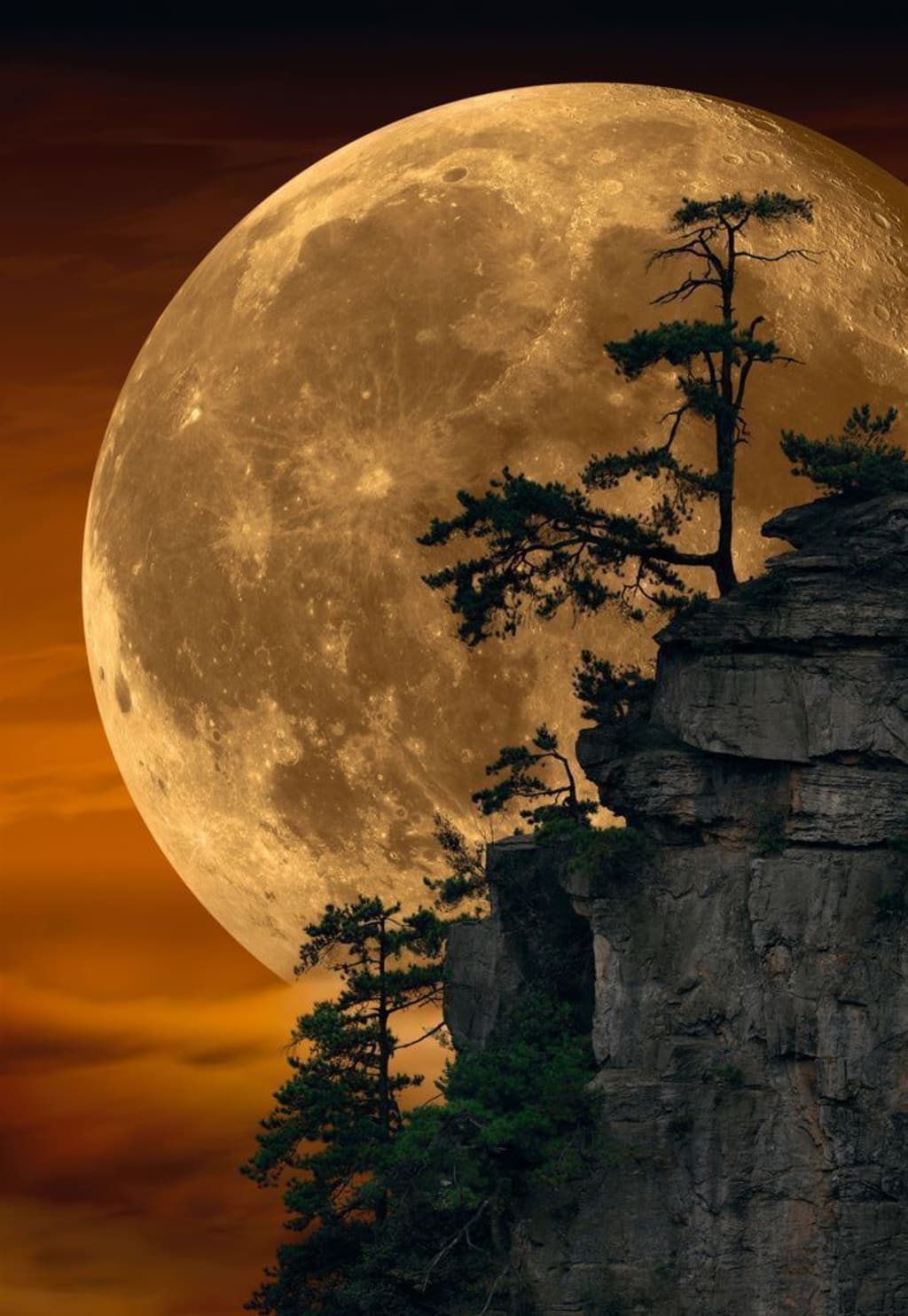
thing one of them Thea was about the size of Mars and it was orbiting the Sun at exactly the same distance as the Earth the two planets were on a collision course Thea hit the Earth at 25,000 M an hour with the force of billions of Megaton bombs the impact ripped off huge sections of the Earth's crust billions of tons of debris blasted into space a ring of red hot dust and rock formed around the [Music] earth over the next 100 years the rocks and dust slowly clumped together into a ball 150th the size of
[Music] Earth we call it the moon when Hartman suggested the idea in the 1960s people had a tough time accepting it scientists were thinking of everything in terms of slow geologic processes one grain of sand at a time you know wearing down mountains to think of something as colossal as the moon forming as a result of a single event was hard for people to swallow off but Hartman's Theory got a boost from NASA in 1969 the Apollo landing craft Eagle touched down on the surface of the Moon that's one small step for
man one Le American astronauts made six visits to the [Music] Moon they explored its surface drove around its craters and they brought back 840 lb of moon rock for the first time scientists could find out what the moon was actually made of the results were surprising the lunar samples had a remarkably similar chemistry to the outermost layer of the Earth's crust most researchers found this discovery interesting but to Hartman it was vital new evidence so you have crustal rocks you have rocks on the surface and a big
impact comes in and blows all those crustal rocks away and that material goes into space and forms the moon but many scientists were still skeptical they couldn't see how a cosmic impact could create the Moon and Earth as they are today I actually had people telling me we should exhaust every other Theory first because this was such an outlandish idea Hartman finally got the proof he wanted after a chance meeting at a conference with astrophysicist Robin canop she was using computer models to
study Saturn's moons Bill Hartman came up to me after my talk and asked me have you ever thought about applying your models about how moons form within and near Saturn's rings to the origin of the Moon and I said no so she tried the same modeling software to recreate the early solar system then she plotted a planetary collision of the kind Harman was suggesting one that would leave the Earth and Moon as they are today so we're 4 and a half billion years ago at the end of the Earth's formation and
we're in space and we're watching as a small planet the planet on the right is about to hit the young Earth represented by the larger planet on the left the Collision takes place and as we see it hit it hits in a glancing blow and you can see the impactor is completely destroyed by the Collision canop models demonstrated what might have happened during the Collision Thea the impactor was completely annihilated Earth survived but only just the impact was so powerful it distorted the planet
shape the Earth responds to this impact like a molten blob of rock and as the impactor comes in in this grazing blow it generates something like a wave that you would get when you throw a rock at an oblique angle into a lake and that wave propagates around the surface of the Earth the Collision created a tidal wave of molten lava now this Collision is incredibly violent so violent that there's enough energy to completely melt the Earth and in fact at the end of this impact the Earth is surrounded by an
atmosphere of vaporized Rock trillions of tons of debris blasted out into space here we see part of the impacting Planet sheared out into this long arm of material that produces a dis that we're seeing almost Edge on in this View and it's from that dis that the moon later coalesces canop model backs up Hartman's Theory and shows that the moon is made of debris from both Thea and Earth so I actually called my colleague and said you're not going to believe this but I tried I tried this Mars siiz
impactor case with about a 45° impact angle and everything worked and he said you better check it again and so I did check it again and did many more of these simulations and sure enough that type of impact is the one that uh gives us the Earth Moon system today canop work was further evidence that Hartman's wild theory was right so it was very exciting as Robin did her models and they started to say yes there can be Moon forming debris left in orbit around the Earth and the moon would form from
that debris Hartman and canop work proved that our moon was the result of a violent cataclysmic collision between Earth and Thea the Earth narrowly escaped complete destruction but the Collision triggered a remarkable series of events that transformed the planet it became a climate hell hole with extreme weather conditions and giant Tides but these deadly conditions also created the building blocks for life itself to evolve just 10 minutes have passed on our clock of Earth's history 30 million years in real
time the single most important period in the life of our planet the earth started to recover from its collision with Thea and debris from the disaster formed the [Music] moon the massive impact very nearly destroyed our planet but out of this catastrophe came a new beginning it set in motion a chain of events that would transform the Earth from a vision of Hell to the blue green Oasis we now call home the Collision was so huge that it altered the rotation of the entire planet to understand how scientists set
out to reconstruct those events starting with the moments immediately after the impact Ithaca Upstate New York paleontologist Judith Neal Meers hunts for clues that might reveal what the Earth was like just after the impact no evidence remains on Earth from the period just after the Collision so scientists are constantly searching for new ways to look back in time Nagel Meers uses fossilized corals this area was once an ancient sea the fossilized corals are just 400 million years old but they hold a vital
clue to what conditions were like on Earth 4 and2 billion years ago when the moon first formed course we love about fossils that um you find them and they open up a window in time just by looking at their remains and their skeletons you can um reconstruct the um environment that was here before long before humans are even on the earth the coral fossils have an unusual property that allows them to capture a day byday snapshot of conditions on early Earth corals build layers of limestone as shelters a new layer for every day of
the year you can see the same process in every Reef including today's Coral if you actually look closely at these modern corals you can see Tiny lines that they built while they're growing they're kind of similar like growth rings on trees we know nowadays that one of these lines represent a day the daily growth layers build up to create a larger annual ring if you count these daily growth rings you can actually um in modern corals um count 365 growth lines per year and that's the key the 400 milliony
Old fossilized corals don't have 365 growth lines per year they have [Music] 410 when these corals were alive in the ancient oceans 400 million years ago a year didn't last 365 days it lasted 410 but whether you measure it in days or hours the Earth's orbit around the sun always takes the same amount of time a year is constant the only explanation for more days in a year had to be that millions of years ago each day was shorter that means that back in the day when this animal was actually living in
the in the ocean that the um day days had less hours than they have today 400 million years ago a day lasted just 21 hours and if days were shorter then the Earth must have been spinning faster scientists used the rotation rate from 400 million years ago to figure out how fast the Earth was spinning just after the planetary collision 4.4 billion years ago a day lasted just 6 hours the massive impact that created our moon set the Earth spinning four times faster than today it was the first step towards the
hospitable Earth we live on today but you'd never know it the rapid rotation unleashed the worst weather the planet has ever seen Mega storms and hurricanes tore across the land it looked as though the collision with Thea had left the Earth an uninhabitable World 12 minutes past midnight on our clock 4.5 billion years ago icy comets were smashing in from space it was a Savage bombardment but it wasn't a disaster in fact it was a blessing the ice melted and combined with water condensed from inside the
planet created the first oceans but the young Earth was still a violent and hostile place it was spinning four times faster than today rain and 500 mph winds whipped across the surface the atmosphere was a lethal cocktail of carbon dioxide and acid rain it seemed that there was no way life could ever have started were it not for one thing overhead the moon Rose this was not the familiar Moon we see today for a start it was 10 times closer it dominated The Horizon it's another result of that huge
Collision and this time it's good news because the moon was so much closer its gravitational pull on the Earth was much stronger and the things it pulled hardest on were Earth's new oceans huge Tides ripped across the planet at hundreds of miles an hour you might think that made it tough tough for life to get going but you'd be wrong it actually helped life on Earth get [Music] started this is the Bay of funi Canada it has the largest title range on the planet Tides here can reach as high as
50 ft it's like a scale model of the huge tides that swept over the early Earth physicist Neil cumins is here to study what happens when the tide comes in today and what that can tell us about tides in our planet's distant past what I would expect to see here is a huge wave maybe five six feet high called a tidal boore cumins believes that due to the moon's close proximity to the Earth billions of years ago the ancient Tides would have crested faster and higher than Fundy he's waiting for the title boore
so he can see firsthand the kind of forces that shaped the ancient landscape and created the conditions for life to begin right up here actually in the middle of Channel you can start to see the title Bo you can see the wave curling over yep see white water it's absolutely fascinating sounds like you can actually start to hear it a little bit you have a feeling that there's a there's an action here that you don't see anywhere else should we go and meet it well that was something 100 billion tons of seawater
Rush In And Out Of The Bay every 24 hours making the title bore at fundi one of the world's largest the rushing waters smash into the edge of the bay they rip sand minerals and other material away from the shore and carry them out to sea cummin leaves the erosive action here recreates in miniature what happened when the huge Tides ruled the ancient oceans the ancient Tides would have been at least a thousand times higher a tremendous amount of power in these Tides but nothing compared to what it
was this boar is traveling about 12 km an hour the ancient Tides would have been traveling on the order of 100 to 300 M an hour and they would have gone much farther in land much faster and would have done much more damage but did this damage help or hinder the dawn of Evolution 4 billion years ago when the moon was much closer the tides would have smashed Inland at hundreds of miles an hour each new tide tore up millions of tons of debris from the land when it retreated it left a devastated Coastline the young planet was being
devoured by its oceans and for us living things that was good news because what the tide stripped from the land they gave to the oceans creating the perfect environment for the emergence of life to get life started you need a huge amount of minerals in the oceans that are free to mix and interact the only way that the Earth could have gotten that was from the huge tides that the moon gave when it was much much closer the tides ripped minerals and nutrients from the land and mixed them into the oceans creating a primordial
[Music] soup the Seas were now full of crucial chemicals all mixed together scientists think that chemical interactions in that soup created the very first amino acids and basic proteins the building blocks of life from these ingredients the first primitive cells would eventually emerge so a Titanic Collision that nearly destroyed the Earth in fact may be the reason all of us are here it gave us the moon and the moon gave us tides and without those life might never have evolved if this process hadn't existed
then there would have been very little erosion of the of the ground near the oceans it would have been much much harder for to free to have gone into the oceans in enough quantity to allow the primordial soup to have been created and therefore allow life to have evolved here as early as it [Music] did the promise of life now rested in the oceans in the form of simple strings of molecules the precursors of life but the world above the surface remained hostile the planet was spinning violently the climate was chaotic and
the tides too brutal for life to begin unless the moon loosened its grip on the earth evolution would stay on hold forever 3:20 a.m. on our clock of Earth's history half a billion years have passed since the Collision created the Moon the first building blocks of life have formed deep in the oceans thanks to the moon's monster Tides but the Seas were too violent for even single celled organisms to evolve something must have happened to calm the planet and allow early life to take the next step if it hadn't we
simply wouldn't be here [Music] this is quulo natal in South Africa paleontologist Nora Noka studies how life got its first tow hold here in this ancient Gorge she's discovered fossils that might hold the answer they are some of the earliest forms of life on the planet what they reveal is astonishing 3 billion years ago when this Gorge was part of the seafloor the waters teemed with bacteria a billion years after the catastrophe that nearly destroyed our planet life on Earth was in full
bloom it was really one of the Great Moments in my career we were searching for fossils the whole day long and then in the uh late afternoon when the Sun was shining in the right angle suddenly we saw the fossils popping out everywhere it was just unbelievable the fossils were the remains of vast colonies of bacteria that grew in mats in ancient shallow oceans and they were some of the first living cells to inhabit the [Music] planet there are bacteria almost identical still alive today those are living bacterial
colonies we term them microbial mats and you can easily see why um those mats look like little greenish carpets they occur today everywhere the Sandy reaches the similarities between ancient and modern are striking you can see the rock surface is greenish colored just as the living microbial mat as well you follow my finger now I show you the edge of the fossil microbial mat here and here you see the sand underneath is such a microbial mat like this piece here but it's fossilized and it's 3 billion years
old the Rocks all over the gorge were packed with an astonishing diversity of microbial communities ecosystems of bacteria as complex then as they are [Music] today but the Rocks reveal something else they show not only when bacterial life took hold but also how it became possible etched into their surface is evidence of the ancient Seas but not the violent oceans left behind by the collision with Thea this was calm shallow water came first into this outcrop into the side I saw all those different
Ripple marks and they look just as they do nowadays if you walk along a beach you can see the same structures in the sand so the preservation of those structures is just outstanding here it looks as if the tide has just gone out except these ripples are 3 billion years old the fossilized snapshot of an ancient ocean gently lapping the shore with no sign at all of giant Tides or hurricane [Music] winds the site shows that at least 3 billion years ago the living conditions were normal this is a peaceful
environment here so life could evolve something had changed the planet's extreme climate in brutal Tides making it hospitable for life and again that something was the moon and its gravitational effect on the oceans the tides since they've started forming have acted as a break to slow the Earth's spin uh you can almost think of it as the brakes on a car pressing on the the tire and causing the two to slow down together that's what's happening and has happened from the tides it's a process called
tidal friction when the tides and the continents meet the water pushing against the land a cre friction and that friction is literally slowing the Earth down over millions of years tidal friction slowed down the spin of the Earth as a result the days became longer and the chaotic hurricane winds subsided it was a step in the right direction but on its own it wasn't enough to create the calm seas we saw fossilized in quulo Natal the moon was still too close to the Earth its gravitational pull on the
oceans too strong for the oceans to come to a gentle Ripple something major must have happened the evidence to what did can be found in NASA's Apollo program in the final leg of man's mission to the [Music] moon the McDonald Observatory in West Texas here 40 years after man first landed on the moon the Apollo mission is still going [Music] strong NASA engineer Jerry Wyant makes a daily commute to his laser telescope to continue the job begun by astronauts decades [Music] ago his mission to measure the moon's
distance from Earth we're the last living piece of the Apollo project and most of the public thinks it's oh the PO projects they're they're dead and gone and so they're surprised when I tell them what I do send a laser to the moon when astronauts landed on the moon they left behind the American flag and something else reflectors almost daily Jerry Wyant and his colleague aim their laser at one of the lunar reflectors they're measuring the precise distance between the Moon and the
[Music] Earth this is a 1 billion watt laser we direct it at the reflector on the moon and we measure how long it takes for this light to go from here to the moon and back and that's our [Music] data the laser measures the time it takes light to travel to the Moon and back to a trillionth of a second but first they've got to find the reflector each panel is about the size of of this uh map right here so if you think about it we're trying to hit something this size about 240,000 m miles away it's not
easy they need a clear night then they need to locate the target yeah they all look alike don't yeah since he get lost sometimes it takes up to 4 hours to pinpoint the reflector well that right there that's that's that would be the reflector on the moon right there tonight the laser beam takes 23967 seconds to travel to the Moon and back when I see the moon in the sky instead of thinking romantic thoughts I think gee I hope the laser is working okay it may not be romantic but it is amazing each year wyant's laser beam
takes a little longer to bounce back because each year the Moon is a little further away one of the reasons that uh scientists want our data is to confirm their suspicion that the moon really is moving away from the earth and they've used our data to to report back to us uh the value of that in fact is yes it really is the moon is spinning away from us by 1 and 1/2 in per year and it's this that holds the key to understanding why the oceans calmed and life emerged 3 and2 billion years ago
the moon was only 15,000 mi from Earth resulting in mountainous Tides but these Tides were pushing the Moon away they were so huge they had a gravitational pull of their own and that began to affect the Moon that had created them the Gravity from the water is is acting back on the moon which raised the water up in the first place and this water is pulling the moon forward giving the moon energy as the Earth spins it slings the moon further away like an athlete throwing a hammer you can think of the Earth Moon
system as Waltzing together as the moon creates the tides on earth the earth is slowing down and the tides are causing the moon to gain energy and spiral away the two have been doing this dance for 4 and A2 billion years so the catastrophe that nearly ripped our planet apart before life even started actually ended up making life possible violent Tides filled the sea with vital chemicals then the earth spin slowed and the moon drifted away the nutrient Rich Seas calmed and life got started but just as life started to
flourish it faced a new disaster it was a catastrophe that would wipe out much of the life on the planet but without it we would not be here some bacteria started to release a deadly poisonous gas oxygen 810 a.m. on our planetary clock of Earth's history over a billion years since a violent collision with another planet came close to destroying the Earth the impact created the moon and triggered a chain of events that led to bacterial life taking hold in the Seas some of these bacteria developed a
new process that would affect all life on Earth it would wipe out many species but without it complex life wouldn't be here at all [Music] [Music] this Barren landscape is the high desert in northern Mexico it's a window into the past it's one of the only places in the world where we can get a glimpse of what the Earth might have been like 2 billion years ago a planet at the crossroads of evolution biologist Janet Seaford studies the bacteria that live in these pools they give her a unique insight
into how ancient bacteria changed the Earth forever you can walk out to the pools and you can see evidence of microbial communities with the naked eye now that's very similar to what early Earth was like early Earth was certainly dominated by bacteria there were no large animals or plants so we can use this as a proxy for early Earth Seaford is interested in these curious lumps of [Music] limestone so this is actually quite remarkable I know it doesn't look remarkable this looks like just a rock
found in the bottom of this little river here but this is actually a complex community of microbial life These Lumps are called stromatolites they're made of bacteria that deposit Limestone building up to form these many reefs it was organisms almost identical to these that populated the early Earth these fossilized drates in the Flinders ranges in Southern Australia are 3 billion years old there's virtually no difference between these and the structure seir finds in Mexico today each stromatal contains millions
of blue green organisms called cyan bacteria and 3 billion years ago their ancestors evolved an ingenious means of obtaining energy one branch of bacteria actually learned how to do one thing they they they just used the sunlight for energy but as it turned out when they did that they did it in such a a way that they could split water and create and give off as a byproduct something they didn't want oxygen these ancient microscopic cyan bacteria evolved a chemical process called photosynthesis it converts sunlight into
chemical energy with oxygen as a byproduct it was a biological Revolution and it changed the planet forever s a bacteria pumped oxygen into the oceans then the atmosphere if they hadn't evolved photosynthesis 3 billion years ago there would be almost no oxygen in today's atmosphere at all without cyanobacteria we could never have evolved they are the reasons why we breathe oxygen today once the cob bacteria figured out how to produce oxygen as a byproduct it changed our planet forever it changed
the way biology was going to evolve and it changed the atmosphere completely the production of oxygen 3 billion years ago changed the planet forever and the bacteria that started the process are still doing it today I remember the first time I was swimming around down here and you could see the small little bubbles uh accumulating underneath of the ledge of the stromatolite it was quite amazing to think that that process that we were actually visualizing in that way is what's creating the atmosphere
today and those ancient cyano bacteria are the ancestors of every plant in the world today photosynthesis was incredibly successful the bacteria flourished and evolved we always think about microbes being something bad and giving you strep throat but if bacteria hadn't been able to harness the Sun and then a byproduct produce oxygen you and I probably wouldn't be here now because it's what allowed complex uh animal Evolution to occur but for those organisms unable to adapt oxygen was a death
sentence when it first happened that byproduct oxygen was poisoned to most of the life on the planet so it was a devastating thing that happened all of life had to actually acclimate to the fact that there was going to be that there was oxygen in the atmosphere but a few bacteria learned how to handle it and it's those survivors that led to things like us actually I feel pretty lucky because that bad poisonous gas that that CYO bacteria you had as a byproduct if it hadn't accumulated in the atmosphere
then I wouldn't be here so as far as one of the the major biological innovations that happened in 3.8 billion years it has to be up at the top of the list of one of the best ones for us as [Music] humans by 8:12 in the morning on our clock the atmosphere had oxygen and the oceans were teeming with bacteria Evolution life had begun and it all started with a catastrophe it all seems so logical so inevitable in fact it's anything but that impact is perhaps the only reason life ever evolved but if it had been
even slightly different there might be no one here at all if you consider all the different types of impacts that could have happened and have left Earth Moon systems that weren't nearly as habitable as our own it's really quite something to think that we got lucky in a sense and that's the point we did get lucky not just with that first huge impact but in countless ways over billions of years what we're realizing now is that catastrophes have played a much larger role in the evolution of
life on Earth than anybody believed earlier you have to realize that we are at the end of this long chain of unique events had they played out differently this guy wouldn't be sitting on this rock here there's only one conclusion we're not here because we did something right we're here because we're lucky the collision with Thea was just the first of many random roles of the dice it really makes you think about this completely unique sequence of random events that were all necessary to
give us the Earth we know today and if anyone had just been a little different the whole world around us would be different we wouldn't even be here it gives you an appreciation that a catastrophe is always in some respects a beginning the Collision was the beginning of a new Earth it set Earth apart from the other planets in the known universe and started the long and difficult path towards Life as we know it without it we probably wouldn't be here at all
About the Creator
Enjoyed the story? Support the Creator.
Subscribe for free to receive all their stories in your feed.
Comments
There are no comments for this story
Be the first to respond and start the conversation.