
Mitigating Global Greenhouse Gas Emissions Through Advanced Plastic-to-Fuel Thermochemical Conversion
Transforming Polymer Waste into Circular Resources
1. Introduction
The exponential accumulation of plastic waste now far outstrips the processing capacities of conventional mechanical recycling infrastructures. When mismanaged, end-of-life polymers degrade slowly in landfills or undergo primitive incineration. Both pathways serve as major vectors for global greenhouse gas (GHG) emissions.
To circumvent these linear disposal traps, advanced thermochemical engineering offers a transformative alternative: converting recalcitrant polymer waste into high-value synthetic fuel fractions.
By introducing a precisely regulated thermal decomposition environment, these systems fracture long-chain macromolecules into shorter, energy-dense aliphatic and aromatic hydrocarbons. The resulting synthetic fuel stream acts as a direct substitute for virgin fossil resources, effectively alleviating upstream petroleum extraction pressures while dampening downstream carbon intensity.
2. Pyrolytic Depolymerization: The Core Mechanism
The technical efficacy of this technology is rooted in pyrolytic depolymerization—an advanced chemical process conducted within an oxygen-depleted environment.
Thermal Cracking Without Combustion
By strictly eliminating oxygen from the system, stoichiometric combustion is entirely prevented. Instead, the input polymers undergo thermal cracking, a process that severs the robust carbon-carbon bonds within the synthetic chains.
Sourcing Industrial Infrastructure
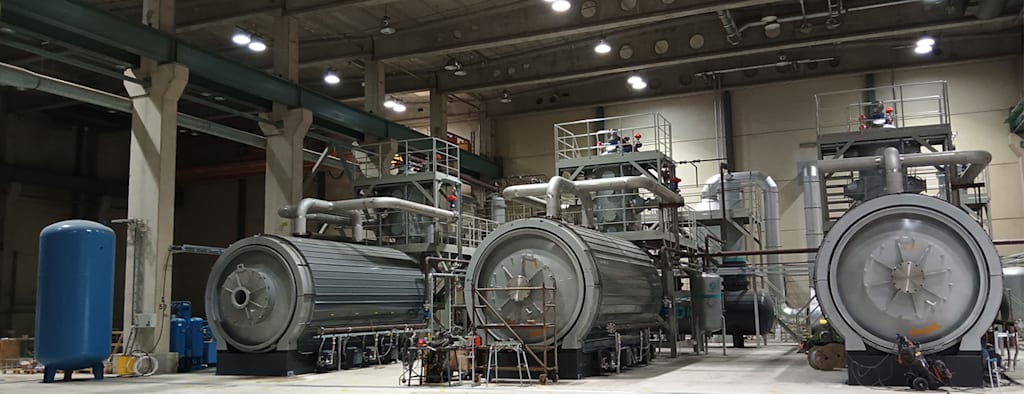
For waste management enterprises and industrial facilities looking to implement these circular solutions, sourcing a high-efficiency plastic to fuel machine for sale represents a critical capital investment.
Modern industrial-grade units feature sophisticated multi-stage fractional condensation assemblies. These systems systematically isolate light hydrocarbons from heavier synthetic fractions, ensuring a highly consistent fuel output with low volatile losses.
Operational Temperature Parameters
Depending on the specific polymer composition of the feedstock, typical operational temperatures are maintained between 350°C and 500°C.
- Linear Hydrocarbons: Clean polyolefins, such as high-density polyethylene (HDPE) and polypropylene (PP), are highly prized as their linear structures render exceptionally high liquid oil yields.
- Mixed Streams: Highly heterogeneous or mixed plastic streams demand meticulous residence time management and precise thermal profiling to suppress secondary reactions and minimize carbonaceous char formation.
The Self-Sustaining Energy Loop
Within the oxygen-free reactor core, macro-polymers fragment into highly reactive intermediate radicals. Through controlled secondary reactions, these intermediates recombine into condensable hydrocarbon vapors.
Non-condensable, low-molecular-weight synthetic gases (syngas), such as methane and ethane, are simultaneously generated. Rather than being vented, this syngas fraction is recaptured and redirected back into the furnace burners, establishing a highly efficient, self-sustaining thermodynamic loop.
3. Greenhouse Gas Reduction Pathways
The primary mechanisms through which thermochemical conversion drives down global greenhouse gas footprints can be categorized into three distinct environmental vectors.
- Incineration Diversion: Uncontrolled open burning and mass-burn incineration of municipal plastic waste release immense volumes of carbon dioxide, methane, and persistent organic pollutants into the atmosphere. Pyrolysis fundamentally avoids these open-air oxidation pathways by containing the carbon within a sealed system.
- Methane Abatement: When plastics are consigned to traditional landfills, they undergo ultra-slow anaerobic degradation over centuries, promoting the formation of landfill gas rich in methane. Rapid thermal conversion completely bypasses this multi-generational degradation timeline, eliminating the threat of fugitive methane emissions entirely.
- Upstream Displacement: When plastic-derived pyrolytic oil is deployed to fuel industrial boilers, kilns, or stationary diesel engines, it creates a powerful carbon displacement effect. Utilizing waste-derived synthetic fuel avoids the immense emissions associated with exploration, crude drilling, transcontinental marine transport, and energetic petroleum refining.
4. Fuel Standardization and Substitution Profiles
The liquid condensate harvested from advanced pyrolysis operations exhibits a chemical profile remarkably congruent with ultra-low-sulfur diesel and light fuel oil.
High Calorific Value
This synthetic crude displays excellent calorific values, often exceeding 42–45 MJ/kg, making it a highly potent energy carrier for heavy industry, maritime logistics, or secondary petrochemical refining into transport-grade fuels.
Quality and Stability Control
The ultimate quality of the output fuel is dictated by three key process parameters: feedstock purity, spatial temperature uniformity within the reactor, and condensation efficiency.
High-tier system architectures incorporate inline chemical filtration and catalytic upgrading modules. These sub-systems are specifically engineered to:
- Neutralize halogenated compounds.
- Strip out toxic acid gases.
- Capture micro-particulate residues.
This ensures the final fuel blend features low acidity and negligible sulfur content, minimizing downstream combustion emissions and industrial equipment corrosion.
5. Thermodynamic Efficiency and Environmental Safeguards
State-of-the-art plastic-to-fuel systems are structured around strict mass and energy balance principles to ensure they do not become indirect emitters.
Multi-Tiered Emission Mitigation
Advanced emission mitigation suites are integrated directly into the process train. High-efficiency cyclone separators remove entrained char particulates from the vapor phase, while multi-stage scrubbers utilize alkaline solutions to neutralize volatile acid gases prior to any process emissions reaching the atmosphere.
Regenerative Heat Recovery
Thermal optimization is achieved via regenerative heat exchangers. By capturing the latent heat of the high-temperature hydrocarbon vapors and using it to pre-heat incoming plastic feedstock, the system dramatically lowers its overall thermal enthalpy requirements.
Combined with the internal combustion of the non-condensable syngas fraction, these modern machines achieve remarkable thermodynamic self-sufficiency.
6. Decentralized Infrastructure and the Circular Economy
Integrating thermochemical plastic conversion into regional waste management frameworks bridges the historical gap between linear waste disposal and true circular resource recovery.
From Pollutant to Asset
Plastic waste is successfully recontextualized. It transitions from being viewed as a terminal, high-liability pollutant into a high-value secondary hydrocarbon asset. From an infrastructural standpoint, the true value of modern plastic-to-fuel systems lies in their capacity for decentralized deployment.
Shrinking Logistics Footprints
Rather than hauling low-density, uncompressed plastic waste across thousands of miles to massive centralized facilities—a practice that incurs a massive transport-related carbon penalty—compact, localized pyrolysis plants can be installed close to the source of waste generation. This localized processing loop significantly optimizes logistics and shrinks regional transport emissions.
7. Conclusion
Thermochemical plastic-to-fuel conversion represents a highly effective, chemically sound intervention in the global carbon cycle. By redirecting post-consumer polymers away from primitive incineration and anaerobic landfilling, advanced pyrolysis systems contain carbon within a productive economic loop while simultaneously displacing the global demand for virgin fossil fuels.
Through systematic waste diversion, efficient internal energy recapture, and strict process containment, this technology offers a scalable, scientifically validated pathway toward deep industrial decarbonization.
About the Creator
Enjoyed the story? Support the Creator.
Subscribe for free to receive all their stories in your feed.
Comments
There are no comments for this story
Be the first to respond and start the conversation.