
Map: 6.8-Magnitude Earthquake Shakes Japan
A powerful earthquake strikes Japan, sending shockwaves through affected communities as authorities assess damage, monitor aftershocks, and work to ensure public safety.
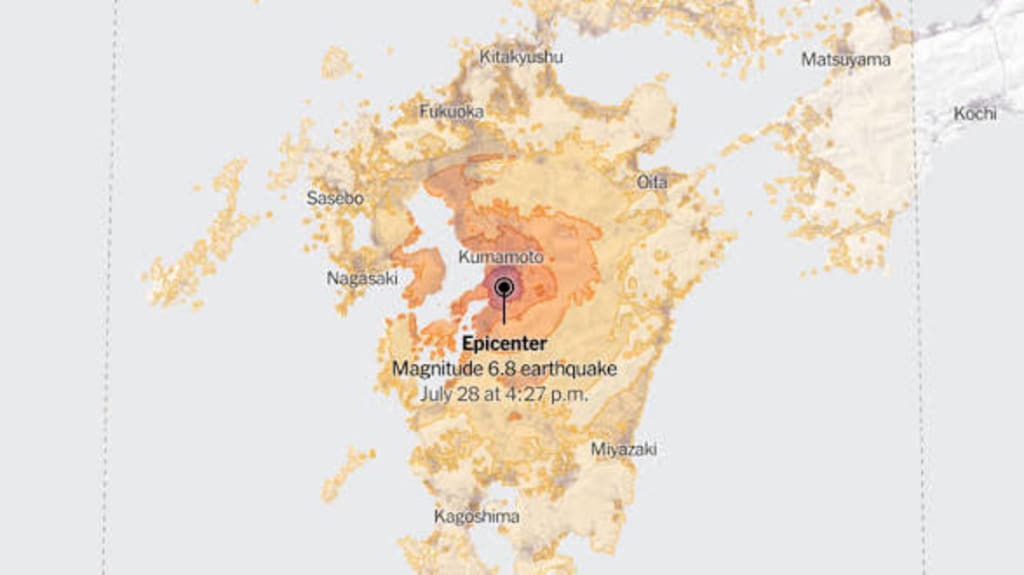
A powerful 6.8-magnitude earthquake has shaken Japan, causing concern among residents and prompting emergency authorities to launch rapid assessments of possible damage and risks. The earthquake, which struck a region known for frequent seismic activity, reminded the nation once again of the unpredictable power of nature and the importance of preparedness in one of the world's most earthquake-prone countries.
The tremor was felt across several areas, with residents reporting strong shaking that caused buildings to sway, household items to fall, and people to rush outdoors for safety. Emergency response teams immediately began monitoring the situation, checking infrastructure, transportation networks, and coastal areas for any signs of significant damage.
Japan has one of the most advanced earthquake monitoring systems in the world. Within moments of seismic activity being detected, authorities can issue alerts that give residents valuable seconds to prepare. These warnings can help people move away from dangerous areas, stop trains, secure equipment, and take protective action before the strongest shaking arrives.
Following the earthquake, local officials urged residents to remain cautious as aftershocks could continue. Scientists explain that aftershocks are common following major earthquakes and can sometimes be strong enough to cause additional damage, particularly to buildings that may already have been weakened by the initial tremor.
Emergency agencies inspected roads, bridges, railway lines, and public facilities to determine whether normal operations could continue safely. Japan's strict construction standards have helped reduce the risk of widespread building collapse during earthquakes, but officials still conduct careful inspections after significant seismic events.
For many residents, the earthquake brought back memories of previous disasters that have shaped Japan's approach to emergency preparedness. The country has experienced some of the world's most devastating earthquakes, including the 2011 earthquake and tsunami disaster that caused massive destruction and led to a national reassessment of disaster response systems.
Communities across Japan regularly participate in earthquake drills, teaching citizens how to respond during emergencies. Schools, workplaces, and local governments conduct training exercises focused on evacuation procedures, emergency supplies, and communication strategies. These preparations have become a normal part of life in a country where earthquakes occur frequently.
Despite these preparations, the emotional impact of a major earthquake remains significant. Residents described moments of fear as buildings shook and alarms sounded. Many people immediately checked on family members and neighbors, while others turned to official sources for information about possible dangers.
Authorities emphasized the importance of avoiding rumors and relying on verified updates from government agencies and emergency services. During disasters, misinformation can spread quickly through social media, creating unnecessary panic and complicating rescue operations.
The earthquake also raised concerns about essential services. Utility companies checked electricity, water, and gas systems for possible disruptions. In previous earthquakes, damaged infrastructure has caused long-term challenges for affected communities, making rapid inspections and repairs a priority.
Japan's location along the Pacific Ring of Fire makes it especially vulnerable to earthquakes and volcanic activity. The country sits near the boundaries of several tectonic plates, where movement beneath the Earth's surface regularly generates seismic events. While scientists can monitor earthquake patterns, accurately predicting exactly when and where a major earthquake will occur remains impossible.
Experts say that preparation remains the most effective defense against earthquakes. Modern engineering, emergency planning, and public awareness have significantly improved Japan's ability to reduce casualties and recover quickly after disasters. However, even advanced technology cannot completely eliminate the risks posed by powerful natural events.
The 6.8-magnitude earthquake also attracted attention from international observers because Japan's disaster response systems are often studied as examples of effective earthquake management. Other countries located in earthquake-prone regions frequently examine Japan's building codes, warning systems, and emergency strategies when developing their own disaster plans.
Local businesses and transportation operators worked closely with authorities to determine when normal activities could resume. Some services experienced temporary delays as safety checks were carried out, but officials prioritized preventing further risks over quickly returning to regular operations.
For families living in affected areas, the hours following the earthquake were filled with uncertainty. Many residents prepared emergency bags, secured homes, and stayed alert for additional warnings. Community support networks became important as neighbors helped one another during the immediate response period.
The earthquake serves as another reminder that natural disasters can strike without warning. While Japan's advanced preparation has helped limit the impact of many seismic events, every earthquake presents new challenges for emergency responders and communities.
As assessments continue, officials remain focused on protecting residents, evaluating damage, and ensuring that recovery efforts can begin quickly if needed. The coming days will provide a clearer picture of the earthquake's full impact, but the response has once again demonstrated Japan's commitment to resilience and preparedness.
For a nation that has learned through experience how devastating earthquakes can be, the latest 6.8-magnitude event represents not only a test of infrastructure but also a test of community strength. Through planning, cooperation, and rapid response, Japan continues to confront the ongoing challenge of living with one of nature's most powerful forces.
About the Creator
Enjoyed the story? Support the Creator.
Subscribe for free to receive all their stories in your feed.
Comments
There are no comments for this story
Be the first to respond and start the conversation.