
Life Without Sun: Consequences
“Without sunshine there can be no photosynthesis. Crops would stop growing. We would soon begin to starve”
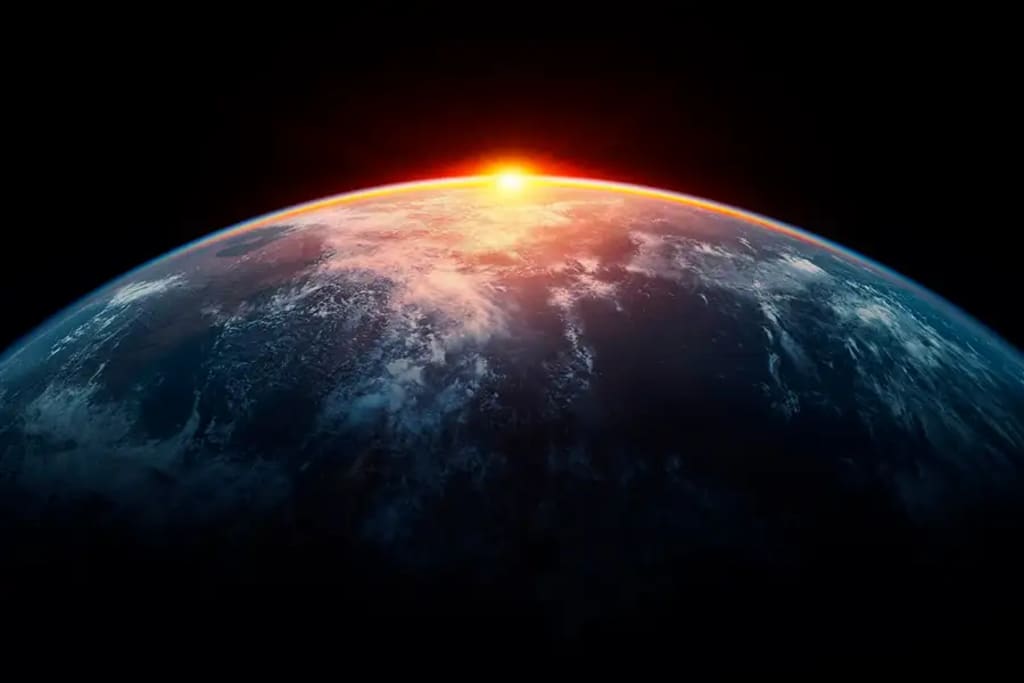
If the Sun were to suddenly disappear, the effects on the Earth, the Moon, and the rest of the planets in the solar system would be profound and catastrophic. Here's what would happen:
Loss of Gravitational Force: The Sun's gravitational pull is what keeps all the planets, including Earth, in their stable orbits. Without the Sun's gravity, there would be no force to counteract the planets' inertial motion, and they would no longer be held in their orbits.
Planetary Motion: Since the planets are moving at high speeds in their orbits around the Sun, they would not just stop in place if the Sun disappeared. Instead, they would continue moving in a straight line tangent to their orbits due to their inertia. This would cause the planets to escape the solar system.
Darkness: With the Sun gone, there would be no more light source in the sky. Earth would be plunged into darkness, and the temperature would quickly drop. The absence of sunlight would also mean the end of photosynthesis, which is essential for most life on Earth.
Disrupted Orbits: The sudden disappearance of the Sun's gravitational influence would cause the planets to drift apart and potentially collide with each other. The orbits of the planets would become unstable, leading to chaotic motion.
Impact on the Moon: The Moon's orbit is stabilized by the gravitational pull of both the Earth and the Sun. Without the Sun's gravitational force, the Moon would start drifting away from the Earth at an accelerated pace.
Effect on Other Planets: The entire solar system would be thrown into disarray. The gravitational interactions between planets would change, potentially leading to collisions or altered --orbits.
Human Survival: In the immediate aftermath of the Sun's disappearance, the lack of sunlight would cause temperatures to drop drastically, making Earth's surface uninhabitable. The absence of photosynthesis would lead to a collapse of ecosystems, disrupting the food chain. Human survival would become extremely difficult, if not impossible, without a sustainable source of energy and food.
In summary, the sudden disappearance of the Sun would have catastrophic effects on Earth, the Moon, and the rest of the planets in the solar system. It would lead to a loss of gravitational stability seems like you've provided a description of what might happen if the gravitational pull from the sun suddenly disappeared and how it would affect Earth and its inhabitants. While some of the described consequences are generally accurate, there are a few points that could be clarified:
Speed of Planets: The idea that planets would continue at their current speeds without gravitational pull is not entirely accurate. While it's true that they would move in straight lines at constant speeds due to the absence of gravitational forces, the planets' speeds are a result of the balance between their velocities and the gravitational pull from the sun. If this balance were disrupted, their speeds could change.
Capture by Other Objects: The concept of planets moving through space until they are captured by another object with powerful gravity is theoretically possible, but the chances of such captures happening are extremely low. The vastness of space and the distances between celestial bodies make such encounters very rare.
Effects on Earth's Inhabitants: The description of how Earth's inhabitants would react to the sudden disappearance of the sun's gravitational pull and its effects on the planet's environment is generally accurate. The disruption of the ecosystem due to the lack of sunlight, photosynthesis, and subsequent food shortage would indeed have profound impacts on animals and plants.
Atmosphere Collapse: The notion that the Earth's atmosphere would collapse due to the absence of the sun's gravitational pull is not accurate. Earth's atmosphere is primarily held in place by Earth's gravitational field, not the sun's gravity. While the lack of sunlight and heat from the sun would affect the atmosphere, causing it to cool and potentially contract, it wouldn't necessarily lead to a complete collapse.
Frozen Oceans and Seas: While the absence of the sun's heat would eventually lead to decreased temperatures and the freezing of oceans and seas, the freezing process would take a considerable amount of time. The Earth's oceans have a massive heat capacity, meaning they would retain heat for a while before completely freezing.
Overall, the scenario you've described does capture some of the potential consequences of the sudden loss of the sun's gravitational pull, but it's important to note that the behavior of celestial bodies in space is complex and influenced by multiple factors beyond just gravitational forces.ty, disrupt pse of ecosystems. Human survival would be unlikely in the long term due to the lack of essential resources and extreme environmental conditions.
About the Creator
Enjoyed the story? Support the Creator.
Subscribe for free to receive all their stories in your feed.
Comments
There are no comments for this story
Be the first to respond and start the conversation.