
LED Wall Installations in Venues With Capacities From 500 to 120,000
When a production company won the contract to light
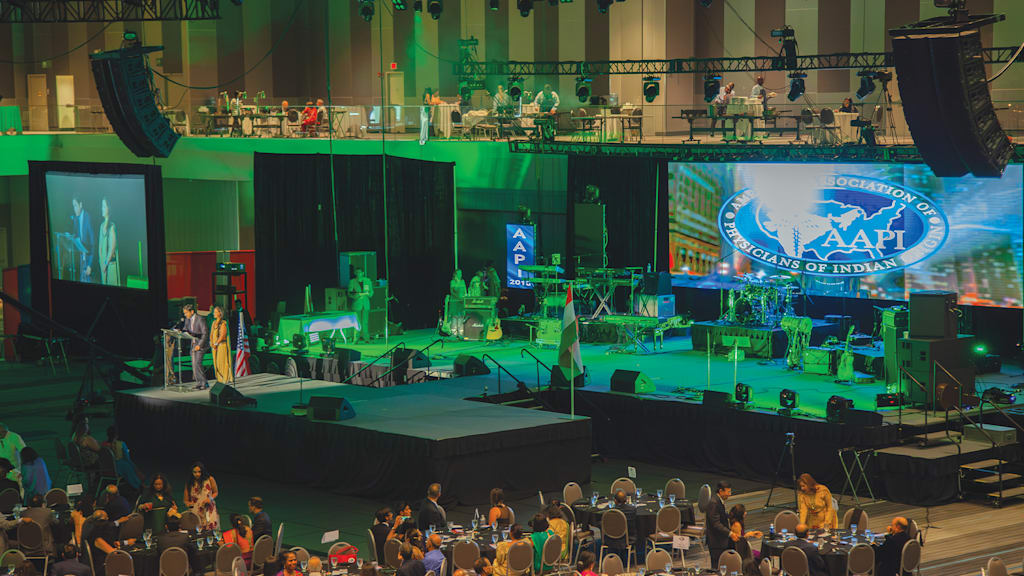
When a production company won the contract to light the stage at a 90,000-seat stadium in São Paulo, the design brief was deceptively simple: the audience needed to see the visuals from 180 metres away, in direct sunlight, with zero tolerance for blackouts. The solution was a 400-square-metre LED wall built from ROE Visual Carbon CB5 panels — panels that had never existed in 1990, when concert production still relied on projection screens washed out by the sun and touring crews who hand-painted backdrops between legs. That leap from canvas to pixel tells the entire story of the modern AV industry in a single breath.
The Architecture Behind Scale
LED wall installations are engineered differently depending on whether you are filling a 500-seat theatre or a 120,000-capacity race circuit. At the smaller end, pixel pitch is the dominant variable. A 500-seat black-box venue places audiences within six metres of the display surface, making a fine-pitch panel like the Absen Acclaim 2.5 or Unilumin UpadIII 2.9 non-negotiable. Push the pixel pitch to 6mm at that distance and every close-sighted audience member becomes a pixel-counter. Scale that venue to a 10,000-capacity arena and the calculus shifts: panels like the ROE Visual BP2V2 and Roe Visual Black Marble 2 allow larger pixel pitches because minimum viewing distance increases proportionally. At 80,000 seats, productions routinely fly 10mm or even 12mm outdoor-rated modules — the Absen PL Series, AOTO REX 10, or Unilumin UpadH outdoor-rated cabinets — because the economics of trucking lighter, weatherproof hardware across three continents outweigh the pixel density advantage of finer pitches nobody in the upper deck can perceive anyway. The LED wall has become the centrepiece of modern live production precisely because it scales — not just in physical size but in technical specification — from the most intimate corporate room to the most exposed outdoor stage on earth.
Structural Systems That Make It Possible
Behind every touring LED wall is a rigging and structural system invisible to the audience. Prolyte, Tomcat, and James Thomas Engineering have each contributed truss designs that allow video columns and walls to fly from motorised hoists, spin, tilt, and descend mid-show without manual intervention. The Christie Spyder X80 and Brompton Technology Tessera SX40 processors sit at the nerve centre of these walls, managing gamma curves, black uniformity, and seam calibration for panels that may arrive from three different manufacturing batches on the same show day. The Brompton Tessera platform in particular revolutionised LED wall calibration when it introduced per-panel HDR processing and Dynamic Calibration, enabling seamless blending across cabinets that would otherwise show visible brightness boundaries. Disguise GX 2 and vx 4 media servers feed content to these processors at frame rates up to 120fps, ensuring motion content remains crisp even when the LED wall is flying through a scenic automation move at two metres per second.
Venue-Specific Engineering Challenges
A 500-seat historic theatre in Edinburgh presents challenges no outdoor festival engineer ever encounters. Structural load limits dictate maximum rigging weight. Heritage legislation may prohibit drilling into listed ceilings. Sightlines are unforgiving from the balcony. Productions in these spaces have turned to ground-supported totems using Litec QX30 truss, flying lightweight Roe Visual Vanish 8 transparent LED panels that preserve scenic depth, and feeding content through Green Hippo Hippotizer Montane+ servers optimised for low-latency playback in confined booth positions. Contrast that environment with a 120,000-capacity music festival like Glastonbury or Download, where the Pyramid Stage deploys a 500-square-metre main screen flanked by two 200-square-metre IMAG screens, all driven by a central video world operating eight Christie Spyder processors simultaneously. The scale demands dedicated fibre infrastructure, redundant power distribution, and teams of LED technicians on radio embedded among the video trusses during the show.
The Data That Defines Modern Deployment
Industry data from the Professional Lighting and Sound Association reveals that LED wall rental revenue grew 340 percent between 2010 and 2024, with corporate events now accounting for 38 percent of all LED wall deployments — a segment barely on the radar in the early 2000s when the technology was exclusively the domain of stadium rock tours. The shift is traceable directly to the falling price of fine-pitch panels and the rise of hybrid event formats post-2020, where a 200-square-metre LED wall in a conference hall doubles as a broadcast studio backdrop, eliminating the need for separate chromakey sets.
Connectivity, Power, and the Road Ahead
Modern LED walls run on fibre-optic signal distribution via systems like the Lumen Radio CRMX Nova and Neutrik opticalCON trunks, eliminating copper signal degradation across the long cable runs inherent in stadium deployments. Power consumption has dropped by roughly 60 percent per square metre since 2015 as manufacturers adopted SMD technology and high-efficiency driver ICs. Companies like INX LED, Leyard, and Absen are now shipping MicroLED prototypes targeting sub-1mm pixel pitch for close-range broadcast applications, a technology that will blur the line between LED wall and ultra-high-resolution monitor within the next production cycle. For the AV production professional managing venues from 500 seats to 120,000, the challenge is no longer whether LED can meet the specification — it almost certainly can — but which configuration, which processor, and which structural system will deliver that specification inside the budget, the truck count, and the eight-hour load-in window the promoter has allocated.
About the Creator
Enjoyed the story? Support the Creator.
Subscribe for free to receive all their stories in your feed.
Comments
There are no comments for this story
Be the first to respond and start the conversation.