Latest Stories
Most recently published stories in Earth.
Are we really alone??
NASA's James Webb Space Telescope (JWST) has discovered convincing signs of life—or at least chemistry that is conducive to life—on a distant exoplanet that is covered in a global ocean. This could be one of the most significant scientific discoveries in human history. The query, "Are we alone in the universe?" has been asked for decades. has been at the intersection of philosophical debate and scientific curiosity. However, the first significant clues now suggest that we may not be. Scientists have discovered molecular fingerprints that point to life on a planet thousands of light-years away, orbiting a dim red dwarf star. Even though these findings do not yet provide conclusive evidence, they are the closest we have ever come to answering the age-old question, "Are we the only ones?" K2-18b, the Exoplanet K2-18b, also known as a "Hycean" planet—a hybrid of hydrogen-rich and ocean-covered worlds—is the subject of the discussion. K2-18b is about 120 light-years away in the Leo constellation. It has a mass about 8.6 times that of Earth and is in the habitable zone of its star, so it could potentially contain liquid water. The Hubble Space Telescope's discovery of water vapor in K2-18b's atmosphere in 2019 marked a significant milestone. However, Hubble's capabilities were constrained. Enter JWST: the most powerful space observatory ever built, with unprecedented sensitivity in the infrared spectrum—ideal for studying the atmospheres of exoplanets. A Symbol of Life? A number of intriguing molecules, most notably methane (CH4), carbon dioxide (CO2), and dimethyl sulfide (DMS), have been observed in the atmosphere of K2-18b by JWST. DMS, on Earth, is almost exclusively produced by microbial life in oceans, whereas methane and carbon dioxide are frequently produced through chemical and geological processes. Even in trace amounts, the presence of DMS is electrifying. DMS is produced by marine phytoplankton on Earth and is involved in cloud formation and the regulation of the planet's temperature. Its discovery on K2-18b raises the tantalizing possibility that this extraterrestrial world is home to microbial life now or in the past. However, scientists are wary. DMS could theoretically be generated in ways that we do not yet comprehend by abiotic processes (those that do not involve life). Even though JWST's detection is effective, it could have other explanations. Nonetheless, the discovery represents a significant advancement in our search for extraterrestrial life. The Hycean Planetary Hypothesis Additionally, the discovery lends credence to a brand-new class of exoplanets known as Hycean worlds. Hycean planets, which were first proposed in 2021 by researchers at the University of Cambridge, are larger than Earth, have atmospheres that are rich in hydrogen, and may contain deep global oceans beneath a thick layer of clouds. In the conventional search for life, which concentrated on planets with rocky surfaces resembling Earth, these worlds had been largely overlooked. K2-18b appears to fulfill all requirements. It has a thick hydrogen atmosphere that is not particularly hostile. Under the clouds, liquid water may be possible due to the temperature. Additionally, its current atmosphere appears to contain biologically relevant gases. If such conditions can support life, it may be much more prevalent than previously thought. Planets in the Hycean system have the potential to significantly expand the universe's potential host worlds. They may outnumber rocky Earth-like planets by several orders of magnitude, according to one estimate. Everything we know about biology, chemistry, and our place in the cosmos would be rewritten if JWST could prove life exists on even one of them. How Important Spectroscopy Is How was this discovery made by JWST? The science of spectroscopy, which looks at how light interacts with matter, provides the answer. A "transit" occurs when a planet moves in front of its star, allowing some of the starlight to pass through the planet's atmosphere. The unique spectral "fingerprint" that is left behind by molecules in the atmosphere when they absorb particular wavelengths of light can be observed from a distance. The Mid-Infrared Instrument (MIRI) and Near Infrared Spectrograph (NIRSpec) of JWST are made specifically for this purpose. Scientists are able to identify molecules as small and elusive as DMS thanks to their ability to detect minute variations in light intensity and wavelength. It is a remarkable demonstration of precision. The data that were collected only show very small drops in brightness—far less than 1%. However, there is a vast amount of information contained within those minute adjustments. What It Means for Humanity in the Big Picture A turning point comes from this discovery. People have looked at the stars for centuries in the hopes that something or someone would be looking back. Real data for the first time suggest that life may not be Earth-exclusive. Science, philosophy, religion, politics, and culture are all affected by this. If there is life on K2-18b, it is probably microbial, primitive, and even similar to life on Earth in the past. However, our notion of the singularity of life would be shattered by even the simplest extraterrestrial organism. It would imply that life has emerged multiple times throughout the universe, increasing the likelihood that intelligent life exists elsewhere. Additionally, it would raise concerns regarding the nature of life in other environments. Could there be completely alien biochemistry or alternative pathways for evolution? Would the conditions of a planet affect how advanced civilizations develop? The search for answers is just getting started. The Next Actions NASA and the international community of scientists are moving forward with cautious optimism. Using JWST and possibly future missions like the European Space Agency's Ariel observatory, which is scheduled to launch later this decade, additional observations of K2-18b are planned for 2025 and beyond. In addition, the researchers hope to gain a deeper comprehension of the chemistry of the atmosphere and confirm the DMS detection through repeated transits. It's possible that further biomarkers, such as nitrous oxide (N2O) and ammonia (NH3), are yet to be discovered. Scientists are simultaneously working on new models to explain how these molecules might form abiotically. Without invoking life, could photochemistry or volcanic activity explain DMS? These are important questions because they will help us distinguish between planets with and without life in the future. The Future of Astronomy A significant development in the field of astronomy can be attributed to the discovery of potential biosignatures on K2-18b. It is the result of decades' worth of research, theoretical work, space missions, and computational power. In many ways, JWST is accomplishing exactly what it was designed to: peer into the unknown and reveal the secrets of the universe. The discovery of life beyond Earth is no longer a matter of science fiction, but rather a matter of science itself, and we are on the cusp of a new era. Furthermore, K2-18b may only be the beginning. The galaxy might be teeming with life if the planets in the Hycean system are truly habitable. The Habitable Worlds Observatory, which NASA intends to build in the 2040s, and the Extremely Large Telescope, which is currently being built in Chile, will further our understanding and possibly even enable us to photograph continents, oceans, or vegetation on distant worlds. The Human Factor However, this discovery awakens something deeply human that transcends science and technology. Awe. Curiosity. Hope. It is both humbling and thrilling to consider the possibility that we are not the only ones. It makes us think more creatively and makes us realize that we are a part of something much bigger than ourselves. The knowledge that another blue world may be home to life provides both comfort and wonder as we gaze up into the star-studded sky. We no longer see our planet as the center of the universe but rather as one of many oasis-like locations scattered throughout the cosmic desert as a result. The quest for an answer to the question of whether or not life exists on K2-18b has already brought scientists together, inspired new generations of explorers, and rekindled our collective desire to find companionship among the stars. One of the most extraordinary discoveries in history may be just around the corner. Furthermore, the answer to humanity's oldest question may finally be within reach if the signs are accurate: We are not alone.
By Mushfiqur Rahman about a year ago in Earth
Air pollution
Air pollution: A hidden threat to health and life Air pollution is one of the most serious environmental problems affecting our planet today. It is the presence of harmful or excessive atmospheric substances that threaten human health, ecosystems, and the climate. Air pollution contributes to a wide range of environmental and social issues, even though it is often invisible. Each year, it kills millions of people and contributes to many other problems. In our global effort to create a cleaner and healthier world, it is essential to comprehend its effects, causes, and potential solutions. How does air pollution work? Air pollution occurs when gases, dust particles, fumes, or odors are introduced into the atmosphere in concentrations that harm living organisms or the environment. The majority of these pollutants are the result of human activities, though some of them are natural, like pollen or ash from volcanoes. The most prevalent air pollutants are: Particulate Matter (PM2.5 and PM10): Tiny particles suspended in the air that can penetrate deep into the lungs and bloodstream.
By Towhidur Rahmanabout a year ago in Earth
Global warming
Global Warming: A Global Crisis Demanding Immediate Action One of the most pressing issues facing the world today is global warming. It is the long-term rise in the average temperature of the Earth's climate system, primarily brought about by human activities, particularly the release of greenhouse gases like carbon dioxide (CO2), methane (CH4), and nitrous oxide (N2O). The Earth's climate has changed significantly as a result of this warming trend, affecting ecosystems, weather patterns, and sea levels. Understanding Global Warming
By Towhidur Rahmanabout a year ago in Earth
How to Lease Office Building Space: A Complete Guide for Businesses. AI-Generated.
Leasing an office building is a major step for any business, whether you're expanding operations, relocating, or launching a new venture. Finding the right space can improve your team’s productivity, enhance your brand image, and foster growth. When you lease office building space, you’re not just renting rooms — you're creating an environment for collaboration, client meetings, and long-term success. However, the leasing process involves careful planning, negotiations, and understanding of terms. Knowing what to look for and how to navigate a lease can save your business time, money, and stress.
By myclaritycommercialabout a year ago in Earth
NASA rover discovers out-of-place 'Skull' on Mars, and scientists are baffled
In a startling development that has reignited public imagination and scientific curiosity, a NASA rover has captured an image of what appears to be a skull-like object on the surface of Mars. The object, discovered by the Perseverance rover during its ongoing exploration of the Jezero Crater, is drawing widespread attention from scientists and spa.ce enthusiasts alike, with some calling it the most puzzling find since the infamous “Face on Mars” photographed by Viking 1 in 1976
By Sudipto Halderabout a year ago in Earth
DISCOVERY OF WORLD
Cultural Discovery and Global Exchange The discovery of the world wasn’t just about finding new continents or drawing better maps—it was also about the meeting of people, ideas, and cultures. Throughout history, as humans ventured beyond their borders, they didn’t just bring goods; they brought languages, traditions, religions, and ways of life. These cultural exchanges shaped civilizations, inspired creativity, and sometimes even led to conflict. But in the end, they connected the world in powerful and lasting ways.
By nasrullah khanabout a year ago in Earth
Annapurna Base Camp via Ghandruk: The Long Walk to a Golden Morning
Walking from Ghandruk to Annapurna Base Camp (ABC) is like flipping through different pages of nature in a single trek. One day you’re walking through thick green forests, the next you are crossing rivers and climbing stone steps, and before you know it you are standing in the middle of tall white mountains waiting for the sun to rise. And that moment, that sunrise at ABC, is something special. It feels like the whole journey was made for just that one morning.
By Cristofer Farnandezabout a year ago in Earth
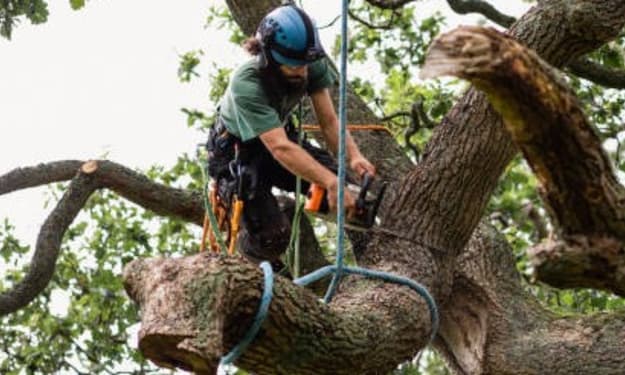
5 Signs Your Tree Needs Trimming Before It Causes Damage
Let’s be honest—most of us don’t give our trees much thought. They’re just there. They don’t ask for much, and unlike a lawn or garden, they don’t need watering or mowing every week. But here’s the problem: because trees are so low maintenance, it’s easy to miss when they start becoming a hazard.
By Cameron Eukerabout a year ago in Earth
The Truth We Ignore
Let's face it: your metal straw is of no use to the planet. There. I stated it. While we pat ourselves on the back for skipping a plastic bag or swapping to oat milk, the ice caps continue to melt, and billion-dollar industries keep burning the Earth with impunity. I'm not here to be pessimistic. I’m here to expose the uncomfortable truth: we’ve been sold a feel-good fantasy, and it's time we wake up. 1. The Lie of the “Green Individual” You have probably been told that we could stop climate change if everyone just made a few changes, like riding bikes more, eating less meat, and recycling better. It sounds hopeful. It gives me confidence. However, this is false. The data is not deceptive. Over 70% of global emissions are caused by a hundred businesses. They also want you to believe that you are to blame for this crisis. Why? because it is simpler for disengaged citizens than for regulated billionaires. 2. Green when it's a luxury Eco-living is often portrayed as easy. However, inform someone who works two jobs or lives in a food desert of that. Are solar panels? Out of reach. Organic products? Too expensive. Public transport? In many cities, it’s a joke. Sustainability has been packaged for the elite—and the rest are left with guilt and judgment. 3. The Development of Eco-Theater Reusable straws. Bamboo toothbrushes. Carbon offsets sold by airlines that pollute anyway. These are just props in an eco-theater meant to make us feel better, not solutions. Green capitalism sells us the illusion of change, while the real villains stay untouched. 4. The Power We Do Have But that doesn't mean we can't do something. In fact, we hold the most important tool of all: our voices. I vote for leaders with real climate policies. I support organizations with teeth, attend rallies, and sign petitions. Change doesn’t happen from the compost bin—it happens in the streets, in the courts, and at the ballot box. 5. Over with the guilt. Stop making people feel bad about not being perfect environmentalists. That mindset divides us. Let's create a pragmatic movement rather than preaching purity. One that demands real accountability, not performative progress. I still recycle. I still carry my reusable bottle. But I don’t delude myself into thinking that alone will save the planet. Because the truth is brutal: The planet is dying because profit is protected by power, not because we forgot our bags. If we want a future, we have to get real.
By BAYEZID BOSTAMIabout a year ago in Earth
NASA Finds "Skull Hill" Rock On Mars Believes It "Originated From Elsewhere"
NASA Finds "Skull Hill" Rock On Mars Believes It "Originated From Elsewhere" Mysterious Rock Formation on Mars Resembles a Skull Sparks Scientific Debate Over Its Unusual Composition and Origins
By Adnan Rasheedabout a year ago in Earth