Latest Stories
Most recently published stories in Earth.
Underwater Volcano Unveils Thousands of Giant Living Eggs in Breathtaking Discovery That Could Transform Marine Conservation
In a groundbreaking discovery off the coast of Vancouver Island, Canada, scientists have uncovered an extraordinary phenomenon: thousands of giant, living eggs nestled within an active underwater volcano. This revelation has stunned marine biologists and raises serious concerns about the fragility of deep-sea ecosystems. These eggs belong to the elusive Pacific white skate (*Bathyraja spinosissima*), a species of deep-sea ray related to sharks, and their discovery offers invaluable insights into the complex relationships between marine life and geological forces. A Natural Incubator Beneath the Sea The eggs were found in a geothermal environment formed by an active underwater volcano, located nearly a mile beneath the ocean’s surface. The volcano's constant thermal activity creates a warm, mineral-rich environment, which serves as a natural incubator for these giant eggs. The heat from the geothermal vents speeds up the development of the skate embryos, providing a rare and ideal setting for the species' reproduction. The Pacific white skate's gestation period is notably long, lasting up to four years. In typical circumstances, the skates’ eggs are vulnerable to cold ocean temperatures, and such a lengthy incubation period can reduce the chances of successful hatching. However, the warmth from the underwater volcano significantly increases the likelihood that these developing embryos will survive. This discovery showcases how unique marine environments can provide the necessary conditions for certain species to thrive. The Magnitude of the Find: Thousands of Giant Eggs The eggs, often referred to as "mermaid’s purses" due to their distinct, leathery texture, are an impressive size, measuring between 18 to 20 inches in length. The scale of this discovery is unlike anything seen before—biologists estimate that up to a million of these massive eggs could be found in the area. This extraordinary egg mass marks one of the largest reproductive gatherings ever observed for this species of skate. Not only are these eggs large in number, but they also represent a critical phase in the species' lifecycle. The Pacific white skate’s reproductive habits are mysterious and difficult to study, as they live in the remote and harsh depths of the ocean, often out of reach for most researchers. However, this discovery has provided a rare opportunity to study the reproductive strategies of a deep-sea species in its natural habitat. Scientists are now racing to understand the full implications of this find and what it means for the future of the species. An Underwater Nursery: Safe Haven for Juvenile Skates The site where the eggs were discovered is not just a breeding ground but also serves as an underwater nursery for juvenile skates. The summit of the seamount—an underwater mountain—provides a sheltered environment that offers both protection and ideal living conditions for the developing embryos. The area is often described as a vibrant, otherworldly ecosystem that resembles a coral garden, where the rocky surface offers stability and shelter to both adult skates and young skates alike. This volcanic seamount's unique geology has created a safe haven for the young skates to grow and develop before they descend into deeper, more dangerous waters. The sheltered environment prevents the embryos from being exposed to predators and other threats commonly found in the open ocean. By staying in this protected area, the young skates can develop without the immediate risks that would typically be present in more exposed regions of the ocean. The Importance of Protecting Vulnerable Ecosystems Despite the scientific importance of this discovery, the site where the eggs were found currently lacks formal protection. Marine scientists are deeply concerned that the delicate nature of this underwater ecosystem could be jeopardized by human activities, particularly deep-sea fishing and climate change. Both of these factors have the potential to disrupt the fragile balance of this unique environment and threaten the survival of species like the Pacific white skate. Deep-sea fishing, in particular, poses a significant risk to these ecosystems. The use of large trawlers to catch fish and other marine life can destroy delicate habitats like the one discovered off Vancouver Island. These fishing practices can not only harm the species directly but also alter the ocean’s ecosystem, reducing biodiversity and making it more difficult for species like the Pacific white skate to thrive. Climate change also represents a growing threat. As ocean temperatures rise, the delicate geothermal conditions that support the development of these giant eggs may be disrupted. Warmer waters could potentially affect the long gestation period of the Pacific white skate, leading to lower survival rates for the embryos. Scientists fear that the already slow reproductive cycle of the species could be further delayed or even derailed by shifting ocean temperatures. The Broader Implications for Marine Conservation The discovery of these giant living eggs highlights the intricate connections between geological activity and marine life. It underscores the importance of preserving fragile ecosystems that exist beneath the ocean's surface. These ecosystems are home to numerous species that are essential for maintaining the health of the global marine environment. Without proper conservation efforts, the survival of many deep-sea species could be at risk. Marine protected areas (MPAs) have proven to be an effective strategy for safeguarding critical habitats, and experts believe that this newly discovered site should be designated as an MPA. By doing so, the area could receive legal protection from harmful human activities, allowing it to remain a sanctuary for the Pacific white skate and other marine life. Protection could also provide a more stable environment for the continued study of the area, offering valuable insights into deep-sea biodiversity and the role of underwater volcanoes in supporting life. Conclusion: A Wake-Up Call for Marine Conservation This breathtaking discovery of thousands of giant living eggs in an active underwater volcano serves as a wake-up call for the importance of marine conservation. It reveals the hidden wonders of our oceans and the critical role that these ecosystems play in the life cycles of many species. As scientists continue to study the area and monitor its ecological significance, it is clear that immediate action is needed to protect such rare and vital habitats. By raising awareness of these unique environments and the challenges they face, we can take steps to preserve them for future generations. Only through global cooperation and sustainable practices can we ensure that the delicate balance of our oceans remains intact, and that species like the Pacific white skate continue to thrive.
By Tech Horizonsabout a year ago in Earth
Climbing Manaslu: Risks, Rewards, and What You Need to Know
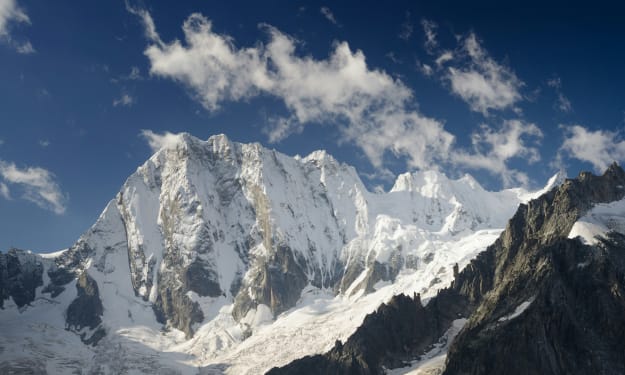
Standing proudly at 8,163 meters (26,781 feet), Mount Manaslu is the eighth highest mountain in the world. Located in the remote Gorkha region of Nepal, Manaslu offers climbers a unique blend of physical challenge, stunning landscapes, and relatively fewer crowds compared to Everest or Annapurna.
By Anya Gurungabout a year ago in Earth
The Importance of Timely Commercial Fridge Repair. AI-Generated.
Refrigeration-dependent businesses, such as restaurants, grocery stores, and medical facilities, with a faulty fridge, are at risk of huge expenses. Commercial refrigerator repair is always a necessity as it's the only way of decreasing the loss of goods, keeping the food fresh, and ensuring the efficient performance of the unit. In the event of a refrigerating device breakdown, food prone to decay may cause a serious financial loss as well as negative health inspection results. Guaranteed quick and effective servicing is a way to prevent such events, to down your time and to recover your business operations. In a market where competition is very intense, it is important to satisfy your clients, as well as the greatest concern of life - safety, through ensuring that the merchant freezers are always in good condition and in the right repair.
By moerefrigerationservicesabout a year ago in Earth
Backpacking Camping Essentials: What Experienced Hikers Won’t Tell You. AI-Generated.
Backpacking camping essentials go beyond just having the right gear — they reflect a delicate balance between weight and functionality. Expert hikers carry tents like the Big Agnes Copper Spur HV-UL3 that weigh just 1.76 kg for three-season backpacking. Yet they rarely talk about their years of trial and error that led to perfectly optimized packs.
By amesh Silvaabout a year ago in Earth
The Beauty of Earth
The earth is a Masterpiece that ever-changing canvas painted with towering mountains,na oceans, golden deserts, and emerald forests. Every sunrise and sunset, every wsper of the wind, and every ripple in a quiet stream speaks of a beauty so profound that it transcends human understanding. The divine artistry of nature, a harmony of elements that has flourished for billions of years, can be seen when one looks at the Earth in all its splendor. ### "The Majesty of the Lands" From the jagged peaks of the Himalayas to the rolling plains of the Serengeti, the Earth’s landscapes are a testament to time and transformation. The Grand Canyon, carved by the patient hands of wind and water, reveals layers of history in its crimson cliffs. The songs of unseen beings pulsate the Amazon rainforest, a living, breathing maze of life. Even the vast, silent deserts—like the Sahara, with its waves of golden sand—hold a stark, mesmerizing beauty, proving that emptiness can be as awe-inspiring as abundance. With their snow-capped crowns touching the heavens, mountains appear to be ancient guardians. Humanity is challenged to climb, investigate, and awe at their grandeur. Yet, they also remind us of our fragility—how small we are against the slow, relentless forces that shape the planet. ### **The Rhythm of the Seas** The oceans, covering more than 70% of the Earth’s surface, are the cradle of life. Their depths hold mysteries we have yet to uncover—bioluminescent creatures glowing in the abyss, coral reefs teeming with color, and underwater mountains that rival those on land. The waves, whether crashing violently against cliffs or lapping gently on white-sand shores, carry a rhythm as old as time itself. On the surface, the sea mirrors the sky, turning from sapphire to silver under the shifting light. Whales breach in majestic arcs, dolphins dance in playful pods, and seabirds skim the water’s edge. The ocean is both a giver and a taker—nurturing civilizations with its bounty while reminding us of its power through storms and tides. ### **The Dance of Seasons** The Earth’s beauty is never static; it evolves with the seasons. Spring breathes life into barren branches, covering them in blossoms of pink and white. Rivers swell with melted snow as wildflower carpets cover fields. Summer follows, drenching the world in golden light, turning forests into lush green sanctuaries and filling the air with the hum of cicadas. Autumn is nature’s grand finale—a symphony of red, orange, and yellow as leaves drift lazily to the ground. The crisp air carries the scent of earth and woodsmoke, and the harvest moon glows like a lantern in the night. Then comes winter, when the world is hushed under blankets of snow, and frost etches delicate patterns on windows. Even in dormancy, there is beauty—the stark elegance of bare trees against a pale sky, the silence of a frozen lake. ### **The Symphony of Life** Beyond landscapes and seasons, the true beauty of Earth lies in its life. A single meadow is a universe of activity—bees flitting from flower to flower, ants marching in disciplined lines, and birds weaving nests with meticulous care. The jungles buzz with the calls of howler monkeys and the chatter of parrots, while the Arctic tundra is home to resilient creatures like polar bears and arctic foxes, surviving in one of the harshest environments on the planet. Humanity, too, is part of this tapestry. Indigenous cultures have long lived in harmony with nature, seeing the Earth not as a resource to exploit but as a sacred mother to revere. Their wisdom reminds us that beauty is not just in what we see, but in how we coexist with the world around us. ### **A Fragile Beauty** Yet, this beauty is fragile. Glaciers melt, forests shrink, and species vanish at an alarming rate. The Earth’s wonders, once taken for granted, now face threats from pollution, climate change, and human carelessness. But there is hope. Conservation efforts, reforestation projects, and a growing awareness of sustainability show that humanity can still be a force for good—protecting the planet rather than plundering it. ### **A Call to Cherish** To walk on this Earth is to be given a gift—one that demands gratitude and stewardship. Whether it’s the first light of dawn spilling over a misty valley, the haunting call of a loon across a still lake, or the simple joy of grass beneath bare feet, beauty is everywhere for those who pause to see it. The Earth does not need us, but we need it. Its beauty sustains us, inspires us, and humbles us. We find not only resources but also wonder, tranquility, and a reminder that we are a part of something much bigger than ourselves in its rivers, mountains, and skies. And so, the greatest tribute we can offer is to protect this beauty—to ensure that future generations may also stand in awe of the world as we have. For the Earth, in all its splendor, is not just our home—it is a living poem, written in wind, water, and light, and it deserves nothing less than our deepest reve.
By Rahat Sarkerabout a year ago in Earth
Chulu West Peak: A Himalayan Climbing Adventure
The Chulu West Peak adventure is more than just a climb; it’s a journey through some of the most beautiful and peaceful corners of the Annapurna region. Rising above the remote landscapes of Manang, Chulu West stands tall, inviting those who dream of stepping into a world where mountains meet the sky.
By Oliver Backmanabout a year ago in Earth
The Place Where Nature Turned Against Itself. AI-Generated.
Guam is not like any other island. It should be, from the looks of it, a peaceful green paradise in the vast blue of the Pacific. But something happened here that changed this place forever. Guam was invaded by awful little creatures, millions of them.
By taylor lindaniabout a year ago in Earth
Mysteries of the Deep Sea: Life in the Hidden Depths
The ocean covers more than 70% of our planet, yet more than 80% of it remains unexplored. Among the most mysterious regions lies the deep sea — a world of complete darkness, crushing pressures, and bone-chilling temperatures. Despite these extreme conditions, life thrives there in extraordinary forms, unlike anything found on land or in shallower waters.
By Md Asif al hadiabout a year ago in Earth
Hamas Open to Permanent Peace Agreement with Israel, Says Turkish Foreign Minister
REJUAN, April 28, 2025 In what could mark a historic turning point in the Israeli-Palestinian conflict, Turkey’s Foreign Minister Hakan Fidan announced today that Hamas is prepared to accept an agreement that goes beyond a temporary ceasefire, aiming instead for a comprehensive and permanent peace with Israel.
By Rejuan Ratulabout a year ago in Earth
Top Water-Grown Plants for Indoor Spaces: Easy Care and Beautiful Greenery
Bringing a little nature into your home can make a huge difference in your mood, productivity, and overall wellness. While many indoor plants thrive in soil, water-grown plants offer a cleaner, easier alternative for those who want beautiful greenery without the mess. In this guide, we’ll explore the best water-grown plants for indoor spaces, how to care for them, and some must-have accessories to elevate your indoor garden.
By med karrariabout a year ago in Earth