Latest Stories
Most recently published stories in Earth.
Practical Steps to Reduce Your Environmental Footprint
In the face of escalating environmental challenges, individual actions play a pivotal role in fostering sustainability. By integrating mindful practices into daily routines, we can collectively mitigate our ecological impact. Here are actionable steps to consider:
By Futoshi Tachinoabout a year ago in Earth
Elections Matter
Elections shape the policies that determine the future of our environment. From climate change legislation to conservation efforts, the leaders we elect influence everything from air and water quality to renewable energy investment and pollution control. In a time when environmental protection is increasingly politicized, your vote is one of the most powerful tools for change.
By Futoshi Tachinoabout a year ago in Earth
Trump is sending his national security adviser Mike Waltz to the UN in a shakeup . AI-Generated.
Trump Sends National Security Adviser Mike Waltz to the UN: A Dramatic Shake-Up in the White House In a move that has stirred both surprise and criticism, President Donald Trump has removed National Security Adviser Mike Waltz from his post and nominated him as the United States Ambassador to the United Nations. This decision, coming just within the first 100 days of Trump’s second term, marks a significant reshuffling within the highest levels of the U.S. government.
By sayma farzana tamimaabout a year ago in Earth
Kanchenjunga Trek Guide: A Majestic Journey to the Third Highest Peak in the World
The Kanchenjunga Trek takes you through one of the most remote and pristine trekking regions in Nepal. Located in the eastern part of the country, this trek leads you to the base camp of Mount Kanchenjunga, the third-highest peak in the world (8,586 meters). It’s a challenging and rewarding journey for trekkers seeking solitude, breathtaking landscapes, and an authentic cultural experience.
By Lucifer Smithabout a year ago in Earth
The Giant That Waits
Deep in the steaming heart of the Sumatran rainforest, where mist clings to trees and every leaf seems alive, a secret lay hidden beneath the soil. It wasn’t a tree or a vine or a towering fern. It was something stranger, something quieter—a waiting giant.
By Basil Sargurohabout a year ago in Earth
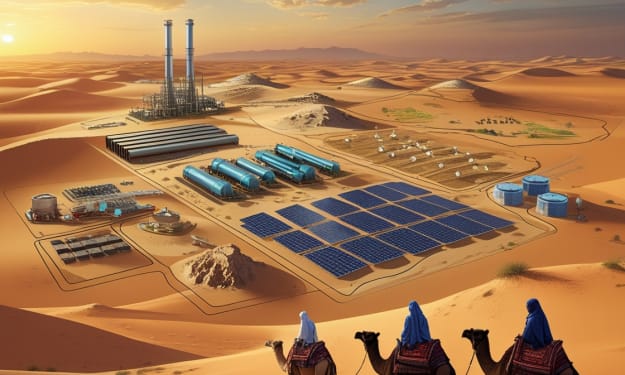
The Sahara's Hidden Fortune: Calculating the True Net Worth of the World's Greatest Desert. AI-Generated.
The Mongol War Machine: The Largest Imperial Army in History Summary: Under the leadership of Genghis Khan, the Mongol Empire rose from the steppes of Central Asia to forge the largest contiguous empire the world has ever seen. Central to this conquest was a massive and highly organized military force—estimated at over a million strong at its peak. This article explores the rise, structure, and tactics of the Mongol army, detailing how it conquered lands from China to Eastern Europe through speed, discipline, and revolutionary strategy. The Mongol army remains one of history’s most formidable and influential military forces. You said: Create a article about the networth of the sahara desert more than 700 words ChatGPT said: Title: The Wealth of Sand: Calculating the Net Worth of the Sahara Desert Summary: Stretching across 11 countries and over 9.2 million square kilometers, the Sahara Desert is often viewed as a barren wasteland. However, beneath its sands lie untapped riches—ranging from oil and gas reserves to rare minerals, solar energy potential, and even tourism opportunities. This article explores the hidden wealth of the Sahara Desert and attempts to estimate its staggering net worth, which could rival some of the world's richest regions. Introduction: More Than Just Sand The Sahara Desert, the largest hot desert in the world, spans across North Africa—covering countries like Algeria, Libya, Egypt, Sudan, Chad, Mali, Mauritania, Morocco, Niger, Tunisia, and Western Sahara. For most people, the Sahara conjures images of endless sand dunes, scorching heat, and lifeless terrain. Yet, this vast expanse is far from worthless. In fact, the Sahara is home to enormous natural resources that contribute significantly to the economies of several African nations—and it holds the key to a potential future of global energy and rare mineral wealth. 1. Oil and Natural Gas Reserves Some of the richest underground assets in the Sahara are petroleum and natural gas reserves. Countries like Algeria and Libya rely heavily on oil exports sourced from Saharan basins. For example: Algeria is the third-largest gas supplier to Europe and holds the 10th-largest natural gas reserves in the world. Its Hassi R'Mel field is one of the largest in Africa. Libya, before its civil unrest, held Africa’s largest proven oil reserves, most of which are found in the Sirte Basin, deep in the desert. Together, these Saharan oil and gas fields generate tens of billions of dollars annually. According to estimates, the proven oil reserves alone in the Sahara exceed 50 billion barrels, with current market prices suggesting a valuation of over $4 trillion USD. 2. Mineral Wealth Beneath the Sand Beyond hydrocarbons, the Sahara is home to critical minerals used in modern technologies. These include: Uranium: Niger is one of the world’s top producers, and its uranium mines in the Sahara power nuclear energy worldwide. Gold: Mali and Sudan have vast desert mining operations producing hundreds of tons of gold. Phosphate: Morocco’s Saharan region holds some of the richest phosphate deposits, essential for agriculture. These minerals play an essential role in industries from energy to electronics and food production. The collective estimated value of exploitable mineral wealth in the Sahara is easily in the hundreds of billions, if not trillions. 3. Solar Energy: A Powerhouse for the Future The Sahara receives over 4,000 hours of sunlight per year, making it one of the most solar-rich regions on Earth. Scientists and engineers have long imagined turning the Sahara into a solar power farm capable of generating electricity for entire continents. Projects like Desertec, though still in developmental stages, propose the installation of massive solar arrays across the desert to supply Europe and Africa with clean energy. If just 1% of the Sahara were covered with solar panels, it could generate over 20 times the electricity that the entire world uses today. The potential market value of such energy production is incalculable, but conservative projections place it in the range of several trillion dollars if fully developed. 4. Tourism and Cultural Heritage Though difficult to quantify compared to minerals or oil, the Sahara holds tourism and cultural value: Destinations like the Erg Chebbi dunes in Morocco, Siwa Oasis in Egypt, and the Tassili n’Ajjer rock formations in Algeria draw adventurous travelers. Archaeological sites, such as prehistoric rock art, ancient trade routes, and Berber and Tuareg cultural landmarks offer significant heritage appeal. Tourism revenue is modest now due to instability and harsh climate, but it could generate billions annually with improved infrastructure and political stability. 5. Strategic Geopolitical Value The Sahara is not just about resources—it also holds immense strategic value: It connects sub-Saharan Africa with the Mediterranean world. It houses key transnational pipelines, roads, and migration routes. Its vast open spaces are of military interest and influence regional security.
By Say the truth about a year ago in Earth
Land Pollution
Land Pollution: Keeping Our Planet Clean What Is Land Pollution? Land pollution happens when the ground around us gets dirty or filled with harmful waste, like trash, chemicals, or plastics. When land is polluted, it can hurt animals, plants, and people. It’s something we can all help fix, but we first need to understand what causes it and how it affects the Earth.
By Adriana Wilder about a year ago in Earth
Air pollution
Air Pollution: The Invisible Danger What Is Air Pollution? Air pollution is when the air around us becomes dirty or polluted with harmful things, like smoke, dust, or gases. We can't always see it, but it's still there, making the air hard to breathe and causing problems for our health, the environment, and even animals.
By Adriana Wilder about a year ago in Earth
Ocean Pollution
🌟 Introduction The ocean is big, blue, and full of life! It's home to colorful fish, giant whales, playful dolphins, and millions of other amazing creatures. But did you know the ocean is in trouble? Every day, people around the world are polluting the ocean, and it’s making sea animals sick—and even hurting us too.
By Adriana Wilder about a year ago in Earth