Latest Stories
Most recently published stories in Earth.
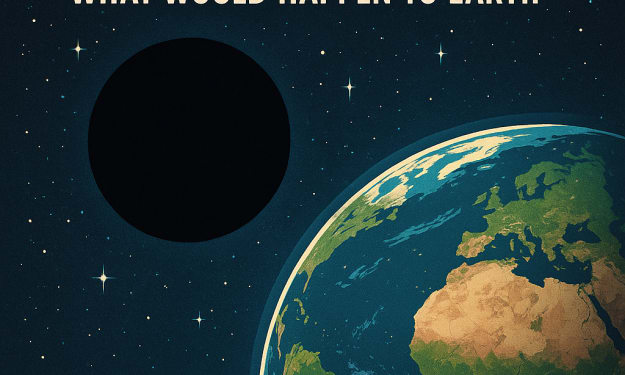
What If the Moon Disappeared?
Imagine the night sky being empty when you look up at it. No silver crescent to evoke poetry or dreams, no bright moon to illuminate the night. Doesn't that sound dramatic? However, the effects of a sudden Moon disappearance would extend well beyond a darker sky. The Moon is more than just a pretty face; it is essential to the stability, life, and rhythms of Earth.
By sondos azhariabout a year ago in Earth
Earth: The Living Planet
Unveiling the Wonders, Challenges, and Future of Our Only Home From the silent depths of the Mariana Trench to the swirling auroras dancing over the Arctic sky, Earth pulses with life. It is not just a rock drifting through space—it breathes, grows, and evolves. It is our home, and for now, the only one we know that harbors life. For billions of years, Earth has been shaped by forces seen and unseen. Volcanoes forged continents, glaciers carved valleys, and oceans teemed with the first stirrings of life. From single-celled organisms came coral reefs, rainforests, birds, and eventually, us—human beings, capable of shaping the world as no species before. Earth’s wonders are everywhere. In the heart of the Amazon, trees rise like green cathedrals, each leaf a factory of oxygen. In the Sahara, sand dunes whisper the ancient history of a once-lush land. Beneath Antarctic ice, microbes thrive in subglacial lakes, hinting at the possibility of life beyond our planet. Every biome, every ecosystem, is a chapter in the grand story of life on Earth. Yet, the deeper we explore Earth’s beauty, the more we uncover its fragility. The living planet is under strain. Over the last century, human activity has altered Earth at an unprecedented rate. Forests vanish to make way for cities and crops. Rivers are dammed, oceans are overfished, and species disappear before they are even discovered. Climate change, driven by fossil fuel emissions, melts glaciers and intensifies storms. The balance that allowed civilizations to flourish is shifting. The challenges are complex. Rising sea levels threaten to swallow coastal cities. Air pollution chokes urban centers. Plastic waste litters the remotest islands. Even the planet’s rhythms—its seasons, currents, and jet streams—are being disrupted. But the story does not end in despair. Earth is resilient, and so are we. Across the globe, people are rising to meet these challenges. Solar panels shimmer on rooftops where coal once reigned. Rivers long considered dead flow clean again. Endangered species, like the California condor and the giant panda, are making slow comebacks thanks to conservation efforts. Science and technology are part of the solution, but so is something more ancient—connection. Indigenous communities have long known that humans are not separate from nature but a part of it. Their traditions offer valuable lessons in sustainability and stewardship. Young people, too, are refusing to accept a dying planet. They organize, march, and innovate—building a movement that spans continents and generations. For many, climate action is not just about protecting nature; it's about justice, equity, and the right to a livable future. Looking forward, Earth’s fate is not sealed—it is still being written. The choices we make today will echo for centuries. Will we continue to mine and burn, or will we heal and restore? Will we see ourselves as masters of nature, or as caretakers of it? There is hope in reimagining our relationship with the planet. Cities can become green and breathable, powered by wind and sun. Farms can feed us without destroying soil or water. Oceans can be protected to replenish fish stocks and coral reefs. Forests can regrow where chainsaws once roared. The path is not easy, but it is possible. We have the knowledge, the tools, and, increasingly, the will. Earth has given us everything—air to breathe, water to drink, beauty to inspire. It asks for care in return. Not just for its sake, but for ours. As we unveil its wonders, confront its challenges, and imagine its future, we must remember one truth above all: there is no Planet B. Earth is irreplaceable. It is alive, dynamic, and breathtaking. And it is our only home.
By Muhammad Saad about a year ago in Earth
Top B2B Platforms to Find Verified Basmati Rice Suppliers. AI-Generated.
If you’re in the food or export business, finding the right basmati rice suppliers can make a huge difference. With the growing global demand for premium-quality rice, especially basmati rice export, the need for trustworthy and verified suppliers is greater than ever. But where do you start? The answer lies in B2B platforms—online marketplaces where buyers meet sellers in a secure and business-friendly environment.
By Cary Johan about a year ago in Earth
The Historical Allure and Modern Utility of Copper: An Analysis by Stanislav Kondrashov
Copper never goes out of style. As TELF AG founder Stanislav Kondrashov often emphasizes, this resource continues to demonstrate its usefulness in numerous modern industrial sectors, some of which are directly connected to the ongoing energy transition. We're not just talking about pure copper, but also copper alloys.
By Stanislav Kondrashovabout a year ago in Earth
The Last Lightkeeper
The sun vanished on a Tuesday. No one expected it. One moment, dawn was breaking across the ocean. The next, darkness slammed down like a shutter, swift and final. The stars remained, cold and indifferent. But the sun — the heart of everything — was gone.
By Muhammmad Zain Ul Hassanabout a year ago in Earth
Advancing Europe's Climate Agenda
As Europe intensifies its commitment to net-zero targets, biochar has emerged as a pivotal instrument in the region’s carbon removal toolkit. Unlike conventional carbon offset strategies that merely delay emissions, biochar sequesters carbon in a stable, solid form that can persist in soils for centuries. This dual functionality—as a soil amendment and as a climate mitigation technology—positions biochar uniquely in the evolving European decarbonization landscape.
By Wayne Shenabout a year ago in Earth
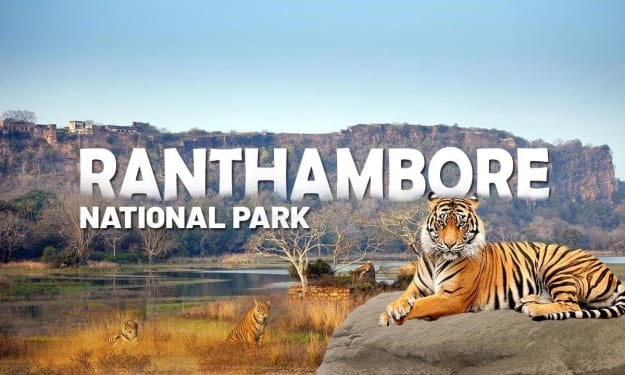
Ranthambore National Park: India's Premier Tiger Kingdom
Ranthambore National park is one of the most popular wildlife parks of India, located in the core of the Rajasthan where the Aravalli mountain range meets the Vindhya mountain range. It is also the most wondrous destination that has attained the status of being a tiger kingdom of India, a child dream, wherein the tourists will get a glimpse of the grandeur of Royal Bengal tigers in their wild settings. A wildlife reserve more than this, Ranthambore National Park is an ideal amalgamation of natural beauty, historical legacy and conservation achievement which continues to mesmerize the nature lovers, photographers and conservationists worldwide.
By Suren Rathoreabout a year ago in Earth