Latest Stories
Most recently published stories in Earth.
The water here refused to boil, so the scientists decided to add some ice
If you want to boil the water, use a heat source to heat the water, but if the heat source is too hot, the water will no longer absorb heat. This is called the "Leighton Frost effect", and because of this effect, water is not a very good heat transfer medium when it is needed to cool high-temperature objects quickly. A recent study offers an alternative: instead of using water, use ice for heat transfer.
By jsyeem shekels4 years ago in Earth
Why do cows cry when they are slaughtered, because of human nature? The expert explanation is surprising
Introduction: The cattle are of great significance to the development of human society. For example, after cattle were domesticated in the past, they could help people to cultivate the land. However, there is a saying in the countryside that cattle are very humane. Cow tears when slaughtered.
By suzanne darlene4 years ago in Earth
Eating monkeys and washing your face with cow urine, why is Africa, where humans originated, still very backward?
When you think of the poor places in the world, what is the first thing that comes to your mind? Many people may unconsciously think of Africa, because in the minds of most people, Africa is a poor, backward, messy and unsanitary place.
By suzanne darlene4 years ago in Earth
Believe in science
Robot Can grab the "paper-cut" hand of raw egg yolk The art of three-dimensional origami makes the two-dimensional sheet material form a three-dimensional structure by cutting and folding. However, it is still very difficult to reverse design the shape and cutting method of the two-dimensional sheet according to the required three-dimensional structure, especially the three-dimensional structure with complex curved surface. However, a recent study in the journal Nature Communications suggests a new way to solve this problem.
By gaisndm Hawkshaw4 years ago in Earth
What would happen if the sea suddenly disappeared? How long can we humans last?
The total area of our planet's oceans is about 361 million square kilometers, or about 71 percent of the Earth's surface area. The ice spring is about 4 kilometers deep, and the ocean contains 1.37 billion cubic kilometers of water, accounting for more than 97% of the total water on the earth. It plays an extremely important role in the evolution of life on our planet.
By suzanne darlene4 years ago in Earth
Believe in science
Medical science The robot performs laparoscopic surgery on pigs without human help. Enterostomy is one of the most challenging tasks in gastrointestinal surgery, which requires surgeons to sew the window accurately and steadily. Even the slightest hand shaking or misplaced needle can lead to leakage and may bring catastrophic complications to the patient. Recently, Johns Hopkins University has developed an intelligent tissue autonomous robot, STAR, which has successfully performed laparoscopic operations such as intestinal anastomosis in pigs without human guidance. The research is published in the journal Scientific Robotics.
By gaisndm Hawkshaw4 years ago in Earth
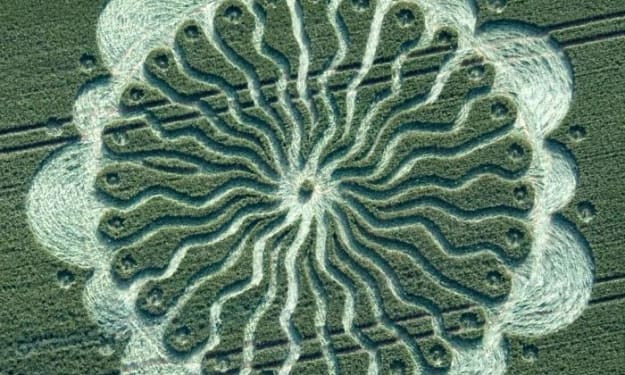
Uncover whether the crop circles are man-made, or marks left by aliens on the earth?
The mysterious crop circles must be familiar to everyone. They first appeared in the 16th century. At first, they were only concentrated in the southern part of the United Kingdom. Later, they appeared in the United States, Australia, Japan and other parts of the world.
By suzanne darlene4 years ago in Earth
Human beings cannot live without rare birds.
Red-crowned Crane / Picture Source @ Tupe Creative For thousands of years, human beings and birds of all kinds have lived together in the "global village" and established a close partnership with each other. Birds' excellent flying ability, bright colors, pleasant singing voice, wonderful instinctive behavior and the ability of migration and navigation not only arouse people's curiosity, but also give people the enjoyment of beauty and scientific enlightenment.
By Fwuebks Sushma4 years ago in Earth
Raising Chickens Is Clucking Fun!
Chickens are the most widely domesticated fowl in the world. There is no official number of how many households privately keep chickens, but in 2019, the US Department Of Agriculture (USDA) predicted that 13 million people were raising these birds in their backyards. The USDA knows that there are 233,000 poultry farms being regulated by them, earning 48 billion dollars a year. The National Chicken Council states each American consumes, on average, 94 pounds of chicken products every year. Because of COVID and the recent string of food insecurities we face regularly, more people are taking up this hobby than ever before. Here are some helpful tips to get you started.
By M.L. Lewis4 years ago in Earth