Latest Stories
Most recently published stories in Earth.
Nature's Unsung Hero: The Mighty Acacia Tree
In a world captivated by technological marvels and scientific breakthroughs, we often overlook the silent giants around us. But what if nature itself held a secret weapon, as powerful as any invention, yet its might lay not in destruction, but in life, sustenance, and the very breath we take? This unsung hero is the Acacia tree, and its humble pods and seeds are a testament to nature's profound wisdom. Acacia: The Resilient Survivor The Acacia nilotica, widely known as Kikar or Babool, is more than just a tree; it's a symbol of resilience. Flourishing in the arid and semi-arid regions of Pakistan, India, the Middle East, and Africa, this indigenous species stands tall where others falter. My own childhood memories are dotted with the sight of these sturdy trees, thriving in landscapes where water was a precious commodity. It's a natural marvel, silently working to sustain the very soil it grows in. The Pods: A Hidden Arsenal of Life Within the unassuming pods of the Acacia lies a treasure trove of benefits, a veritable arsenal of life-sustaining properties: * Premium Livestock Fodder: Rich in natural protein, fiber, and essential minerals, Acacia pods are a lifesaver for livestock, especially during dry seasons when other fodder is scarce. It's why rural communities affectionately call it the "tree of sustenance." * Soil's Silent Partner: These pods fall to the ground, feeding diverse soil organisms and, crucially, enriching the earth with nitrogen. This natural fertilization boosts soil fertility, making the land more productive without human intervention. * Nature's Air Purifier: In a battle against environmental degradation, the Acacia tree stands as a champion. It actively absorbs carbon dioxide – the notorious greenhouse gas – and releases oxygen, purifying the air we breathe. A Green Shield Against Climate Change Beyond its direct benefits, the Acacia tree plays a vital role in protecting our planet: * Combating Air Pollution: Its presence helps filter pollutants from the atmosphere. * Preventing Soil Erosion: Its deep root systems bind the soil, preventing degradation, especially critical in arid regions prone to desertification. * Paving the Way for Green Revolutions: With its ability to thrive in harsh conditions, Acacia offers a natural solution for greening deserts and fostering agriculture in drylands, transforming barren landscapes into vibrant ecosystems. Ancient Wisdom: Acacia in Healing For centuries, traditional medicine systems like Unani, Ayurvedic, and local folk remedies have harnessed the therapeutic power of Acacia: * Digestive Aid: The powder from its pods has been used to alleviate symptoms of diarrhea, dysentery, and other intestinal ailments. * Oral Health & Wound Care: The bark is renowned for its antiseptic properties, useful in treating wounds, various dental problems, and soothing throat inflammation. * Skin Remedies: Extracts from the seeds have found their way into remedies for various skin conditions. A Legacy for Generations Unborn Planting an Acacia tree isn't just about growing wood or creating shade. It's an investment in a complete ecosystem, a gift to generations yet to come. It provides: * Clean Air & A Healthier Planet: A fundamental right for all. * Fertile Lands: Ensuring food security and economic stability. * A Lesson in Self-Reliance: Showing us how nature, if respected, can sustain us. The Time to Act is Now We often take for granted the natural treasures that surround us. The Acacia tree, like many other indigenous species, is intrinsically linked to our culture, agriculture, economy, and well-being. If we fail to recognize and preserve its value today, future generations might only know it from pictures and stories. Let us transition from mere consumers of nature to its mindful guardians. Cutting down trees is destruction; planting them is an act of survival, a promise of continuity. Let's champion natural marvels like Acacia pods, understand their immense utility, and safeguard our precious land for a flourishing tomorrow.
By Reality Brooabout a year ago in Earth
Why Africa is Splitting ?
A massive crack has been spotted in Africa, stretching across Kenya, Ethiopia, and Tanzania. Drone shots and on-ground footage show an enormous rift dividing entire regions. This crack doesn’t care about roads, crops, homes, or cities—parts of it are up to 10 meters wide, while others are just 2 millimeters thin.
By Chronicle of Powerabout a year ago in Earth
The Mountain of Fire. AI-Generated.
Far beyond the quiet village of Darwain, where rivers flowed like silver threads and birds sang sweet songs at dawn, stood a lonely mountain—Mount Velgar. It had always been there, towering and still. The villagers called it The Sleeping Giant because it had never moved, never made a sound. For hundreds of years, no one had climbed it. It was sacred, quiet, forgotten.
By Bilal Mohammadiabout a year ago in Earth
Why Recycling Electronic Equipment Matters More Than Ever
In our fast-paced digital world, electronic devices have become nearly as disposable as plastic packaging. We upgrade our smartphones, laptops, and gadgets regularly—often without considering where the old ones end up. Yet, behind the glow of new tech lies a growing mountain of e-waste that poses serious environmental and health threats. That’s why recycling electronic equipment is more than just a responsible choice; it’s a critical component of sustainability.
By Mahgol Nikpayamabout a year ago in Earth
The Importance of Creating Green Spaces in Every Residential Complex. AI-Generated.
Urban Stress and the Need for Nature Cities around the world are experiencing an increase in population density. As apartment buildings multiply and land becomes more expensive, natural elements often take a back seat. However, studies show that access to green spaces—even small ones—has a direct correlation with lower stress levels, reduced anxiety, and improved physical health.
By Design Departmentabout a year ago in Earth
Gaming in China: A Global Powerhouse Redefining Digital Entertainment. AI-Generated.
Introduction: China’s Gaming Juggernaut In 2025, China’s gaming industry is the world’s largest, valued at $71.18 billion and projected to reach $102.8 billion by 2030, growing at a 7.63% CAGR, per Mordor Intelligence. With 668 million gamers—46% of the population—China commands 25% of global gaming revenue. Fueled by 800 million 5G connections and a digital-first culture, the industry thrives on mobile gaming, esports, and innovative tech like VR and cloud gaming. This post explores China’s gaming ecosystem, its technological and cultural drivers, and the challenges shaping its global dominance, showcasing a digital revolution transforming entertainment.
By Arjun. S. Gaikwadabout a year ago in Earth
Gaming in India: A Digital Revolution Redefining Entertainment. AI-Generated.
Introduction: The Rise of India’s Gaming Powerhouse In 2025, India’s gaming industry is a vibrant force, valued at $3.8 billion and growing at 25% annually, per a 2024 FICCI-EY report. With 570 million gamers—70% on mobile platforms—India is the world’s second-largest gaming market, fueled by a youthful population (median age 28) and 800 million internet users. From esports arenas to culturally inspired games, the sector blends technology, creativity, and accessibility. This post explores India’s gaming ecosystem, its technological and cultural drivers, and the challenges shaping its meteoric rise, showcasing a digital revolution redefining entertainment.
By Arjun. S. Gaikwadabout a year ago in Earth
Population in Japan & South Korea: Navigating a Super-Aged Future. AI-Generated.
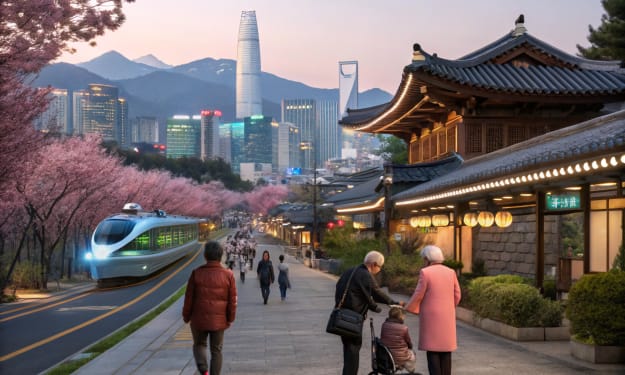
Introduction: A Demographic Turning Point In 2025, Japan and South Korea stand at a demographic crossroads, with populations of 123 million and 51.6 million, respectively, representing a combined 2.1% of the global 8.2 billion. Both nations face record-low fertility rates, rapid aging, and population decline, shaping their economic, social, and technological landscapes. Japan’s population has been shrinking since 2010, while South Korea’s peaked in 2021. With median ages of 49.8 and 45.6, these countries are global leaders in aging societies. This post explores their demographic trends, challenges, and innovative policies, highlighting their resilience in redefining the future.
By Arjun. S. Gaikwadabout a year ago in Earth
The Whole World Will Go Dark for 6 Minutes on August 2 — a Sight You Won’t See Again for 100 Years
There are dates in history that just seem to freeze time. August 2, 2027, will be one of them. On that day, the world will fall eerily silent. The birds will stop singing. The sky will turn from blue to black. And for exactly 6 minutes and 23 seconds, the sun—the ever-reliable guardian of our daylight—will vanish.
By Noman Khan about a year ago in Earth
Why Deserts Like the Sahara Are Scorching by Day and Freezing by Night
Not many people know that temperatures in the Sahara Desert can drop by as much as 24°C (43°F) overnight. If you’re planning a day trip to the Sahara Desert in North Africa, you’ll want to pack plenty of water and sunscreen. But if you’re staying the night, you’ll also need a snug sleeping bag to keep warm — not something most people expect to bring into the desert.
By Eleanor Graceabout a year ago in Earth