Latest Stories
Most recently published stories in Earth.
The surprising benefits of fingers that wrinkle in water
Spend more than a few minutes soaking in a bath or paddling around a swimming pool and your fingers will undergo a dramatic transformation. Where there were once delicate whorls of lightly ridged epidermis, engorged folds of ugly pruned skin will now be found.
By Turnell Feliu4 years ago in Earth
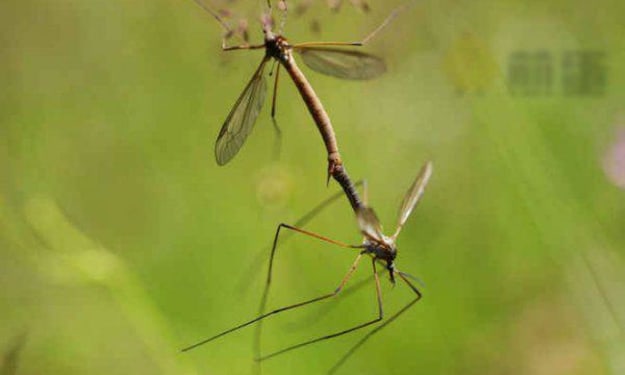
How do mosquitoes mate?Larvae of mosquitoes
In the eyes of people, sometimes mosquitoes are just pests, while other times, mosquitoes do drive the spread of disease (such as malaria and Zika virus). But no matter what, male and female mosquitoes can not live without survival and reproduction, but how are they mated?
By conant abram4 years ago in Earth
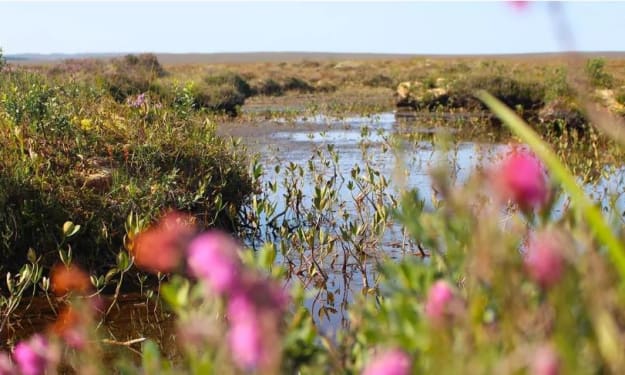
The promise and danger of Scotland's bog
As I watch the predator, its flaming orange-red tendril outstretched, it makes a catch. Its prey writhes, working itself deeper into a smothering grip. The flagrant sunset-coloured carnivore has made little effort to conceal itself, but its prey was unable to resist the allure of its sticky trap.
By Turnell Feliu4 years ago in Earth
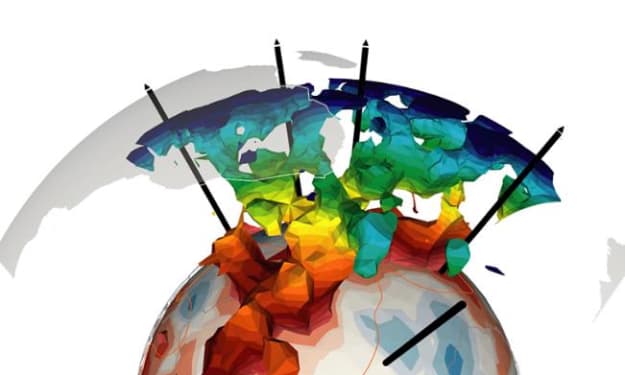
How limitless green energy would change the world
What would we do with an abundant, cheap, inexhaustible supply of renewables? Perhaps the desalination of seawater, suddenly cost-efficient, would relieve Earth's water shortages. Rubbish might be recycled on a massive scale, allowing for the extraction of precious trace elements such as rare earth metals, while carbon dioxide (CO2) could be vacuumed out of the atmosphere to slow climate change. People could live comfortably in Earth's polar regions or travel far and wide in battery-powered vehicles. Goods and services that require electricity might become cheaper, even free. Our emissions footprint could soon be undetectable.
By Gu Wei Di Qi4 years ago in Earth
How to store data for 1,000 years
"You know you're a nerd when you store DNA in your fridge." At her home in Paris, Dina Zielinski, a senior scientist in human genomics at the French National Institute of Health and Medical Research, holds up a tiny vial to her laptop camera for me to see on our video call. It's hard to make out, but she tells me that I should be able to see a mostly clear, light film on the bottom of the vial – this is the DNA.
By Gu Wei Di Qi4 years ago in Earth
Is there a good alternative to peated compost?
In a greenhouse in Nottinghamshire, Barbara Wright is growing peat. Well, not peat exactly. Wright's company, BeadaMoss, is growing sphagnum moss – the main component of natural peat extracted from northern peatlands for use in gardens across the US and Europe.
By Mcgrotha Brinker4 years ago in Earth
The school that created a city for the blind
At the age of eight, Leon Portz was gradually losing his eyesight due to a congenital condition when he was given his first computer. By the age of nine, he had figured out how to speed up the machine-generated voice that read out websites and other electronic texts, allowing him to grasp the information faster. He now listens to texts at five times the standard speed, which is unintelligible to an untrained ear.
By Turnell Feliu4 years ago in Earth