Latest Stories
Most recently published stories in Earth.
The Approaching Green Comet: A Once-in-50,000-Year Event
The universe is a vast and mysterious place, and every once in a while, it reminds us of its wonder and beauty with a celestial event that takes our breath away. One such event is set to occur in the coming months, as a rare green comet is set to make its first approach to Earth in 50,000 years. Dubbed Comet C/2022 P1, this celestial phenomenon is causing excitement among astronomers and stargazers alike, as it provides a unique opportunity to study a green comet and its significance.
By Globe Trotter's Journal4 years ago in Earth
How to Choose the Right wood for Woodworking
For those who are new to the woodworking space, choosing the right wood can be troublesome and very confusing. To add to the confusion, there are literally hundreds of kinds of woods to choose from. Unless you’re quite familiar with the type of wood with their respective properties and uses, you might find it difficult to choose the right wood for your next project. But, worry not. White Knight Consulting which is the biggest timber wood supplier, exporter & manufacturer is here to help. We’ll tell you exactly how to compare different kinds of wood to figure out the best one for your project.
By Sandeep Ahuja4 years ago in Earth
TOP UNKNOWN TOURIST SPOTS IN INDIA
1.HAMPI: Hampi is an ancient village located in the southern state of Karnataka, India. It was once the capital of the Vijayanagara Empire and is now a UNESCO World Heritage-listed site. The village is known for its many temples, palaces, and monuments that date back to the 14th century. The most famous temples include the Virupaksha Temple, the Vittala Temple, and the Hazara Rama Temple.
By KAVIARASAN DURAIRAJ4 years ago in Earth
History Behind Moon
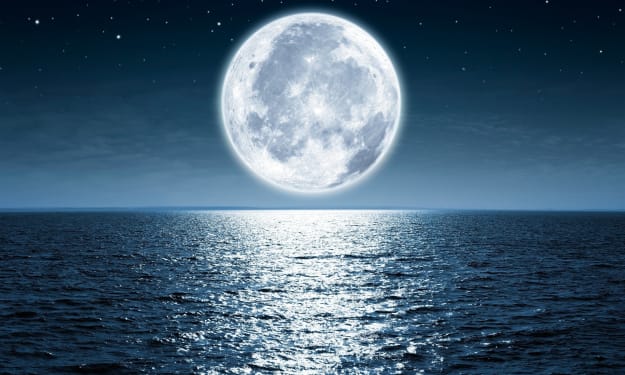
The Moon is a natural satellite of the Earth. It is the fifth-largest satellite in the Solar System and the largest among planetary satellites relative to its host planet. The Moon is approximately 384,400 kilometers away from Earth and has a diameter of 3,476 kilometers. Its surface is rocky and dusty, and it has a heavily cratered surface. The Moon's phases, caused by its orbit around Earth, have been used for timekeeping and have been the inspiration for many myths and legends throughout human history. The Moon's gravitational pull also causes the tides on Earth. It has been explored by human beings and robots and it is also a popular destination for lunar missions.
By KARTHIK RC4 years ago in Earth
Black hole vs Neutron star
Black holes and neutron stars are two of the most extreme objects in the universe, both formed under different circumstances and with vastly different properties. In this article, we will explore the differences between these two celestial bodies and how they are formed.
By 4MECH702 Udhaya Kumar V4 years ago in Earth
Forest Details
I. Introduction A. Definition of forest: A forest is an area of land that is covered primarily with trees and other vegetation. Forests can be found all over the world and are home to a wide variety of plants, animals, and microorganisms. They play a vital role in the Earth's ecosystem and provide numerous benefits to humans. B. Importance of forests: Forests are important for a variety of reasons, including their role in the global carbon cycle, their ability to regulate the Earth's climate, their provision of habitat for a wide variety of plant and animal species, and their ability to protect soil and water resources. Forests also provide many benefits to humans, including wood for fuel and construction, medicine, and recreation. II. Types of forests A. Tropical forests: Tropical forests are found near the equator and are characterized by high temperatures and high precipitation. They are home to a wide variety of plant and animal species, many of which are found nowhere else on Earth. Some of the most famous tropical forests include the Amazon rainforest, the Congo rainforest, and the Southeast Asian rainforest. B. Temperate forests: Temperate forests are found in regions with milder climates and are characterized by a mix of deciduous and coniferous trees. Some of the most famous temperate forests include the Pacific Northwest rainforest in North America and the mixed deciduous forest of Europe. C. Boreal forests: Boreal forests, also known as taiga, are found in the colder regions of the Earth, such as Canada, Alaska, and Russia. They are dominated by coniferous trees, such as pines, spruces, and firs. D. Mediterranean forests: Mediterranean forests are found in regions with a Mediterranean climate, characterized by mild, wet winters and hot, dry summers. They are characterized by a mix of evergreen and deciduous trees, including oak and pine. E. Montane forests: Montane forests are found in mountainous regions and are characterized by a range of elevations and microclimates. They are home to a wide variety of plant and animal species, many of which are adapted to the unique conditions of mountain environments. III. Ecosystem Services A. Carbon sequestration: Forests act as carbon sinks, absorbing and storing carbon dioxide from the atmosphere. This helps to mitigate the effects of climate change by reducing the amount of greenhouse gases in the atmosphere. B. Biodiversity: Forests are home to a wide variety of plant and animal species, many of which are found nowhere else on Earth. They also provide habitat for numerous microorganisms, insects, and other organisms that play important roles in the ecosystem. C. Climate regulation: Forests play a crucial role in regulating the Earth's climate by releasing water vapor and absorbing carbon dioxide from the atmosphere. They also help to moderate temperature and precipitation, and protect against soil erosion. D. Water cycle: Forests help to regulate the water cycle by absorbing and releasing water, reducing the risk of floods and droughts. They also help to protect against soil erosion and maintain water quality. E. Soil conservation: Forests help to protect soil resources by reducing erosion and promoting the development of healthy soils. They also help to maintain soil fertility and support a wide variety of plant and animal species
By King of Earth4 years ago in Earth
Supercontinents, where are we going next?
With all this talk about the magnetic poles moving, it is easy to speculate about what the earth is doing. Magnetic shifts have occurred before. They are usually gradual, over time, giving nature a chance to get used to the changes. It would be interesting to speculate about the earth getting ready for another supercontinent. The continents are moving only a few centimeters a year so it will take time, but this has happened before. Whether it is caused by the magnetic poles moving is still up for debate, but this does give us a reason to look into the past and see where we have been.
By Jennifer Allen4 years ago in Earth
Innovative Water Solutions For Developing Countries
As the world gears up for the United Nations Water Conference in 2023, it's more important than ever to focus on innovative solutions for providing clean and accessible water to developing countries. As a professor and researcher in this field, I've seen firsthand the impact that a lack of access to clean water can have on communities, and I'm excited to share some of the most promising solutions that have emerged in recent years.
By Lawrence Luke4 years ago in Earth