Latest Stories
Most recently published stories in Earth.
"Heart of the Deep: Unleashing the Power of the Pacific"
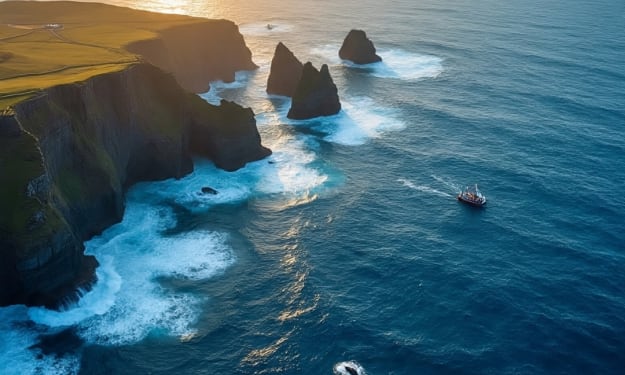
Heart of the Deep: Unleashing the Power of the Pacific Stretching across more than 63 million square miles, the Pacific Ocean is the largest and most powerful body of water on Earth. From its deep trenches to its towering waves, from tropical islands to icy northern shores, the Pacific isn’t just vast — it’s alive. Its moods, movements, and mysteries shape not only coastlines but climates, cultures, and life itself. This is the story of the Pacific Ocean: the heart of our planet’s blue soul. The name “Pacific” means peaceful, a title given by Portuguese explorer Ferdinand Magellan in 1521. But the ocean’s surface calm was deceptive. Beneath its tranquil waves, immense forces churn. The Pacific is home to the Ring of Fire — a horseshoe-shaped zone of frequent earthquakes and volcanic eruptions — making it one of the most geologically active regions in the world. Along its seafloor lies the Mariana Trench, the deepest point on Earth, plunging nearly 36,000 feet. It’s a realm darker than night, where strange creatures live under crushing pressure and scientists are only beginning to explore its secrets. But the Pacific’s influence reaches far beyond its depths. Its waters regulate the Earth’s climate through powerful systems like the El Niño and La Niña cycles, which can bring droughts, floods, and temperature shifts to continents thousands of miles away. The ocean’s currents act like conveyor belts, distributing heat and nutrients across the globe, influencing everything from hurricane formation to fisheries. The Pacific is also a cultural cradle. For thousands of years, it has been home to civilizations whose lives are deeply intertwined with the ocean. The Polynesians, among the greatest navigators in human history, traveled thousands of miles across the Pacific using only the stars, ocean swells, and bird patterns to guide them. They settled the scattered islands of Hawaii, Easter Island, and New Zealand long before European ships ever set sail. To the people of the Pacific, the ocean is not a barrier, but a bridge. It’s a provider, a protector, and a living ancestor. Indigenous traditions speak of the ocean’s spirit, its songs, and its teachings. Even today, communities rely on it for food, transport, and spiritual connection — fishing in its waters, surfing its waves, and honoring it in ceremonies passed down for generations. Ecologically, the Pacific is a jewel of biodiversity. It hosts the Great Barrier Reef, the largest coral reef system on Earth, teeming with thousands of species. Migrating whales sing through its vastness, giant squids lurk in its depths, and remote atolls buzz with seabirds and turtles. Yet, like many natural wonders, the Pacific faces modern threats. Plastic pollution, overfishing, coral bleaching, and rising sea levels caused by climate change are challenging its resilience. Island nations, some of the most vulnerable to climate impacts, are raising their voices on the global stage. Places like Kiribati and Tuvalu, with average elevations of just a few meters, are experiencing rising tides that eat away at homes and history. Despite their small size, these nations are leading calls for action, reminding the world that the Pacific’s future is tied to all of ours. But hope still flows through its currents. Across the region, scientists, activists, and Indigenous leaders are working together to protect marine habitats, restore coral reefs, and create vast marine sanctuaries. Traditional knowledge is being paired with modern science to better understand how to care for the ocean’s delicate balance. One such effort is the creation of the Pacific Ocean Peace Park — a network of marine protected areas spanning several countries and cultures. It’s a symbol of unity, resilience, and a shared commitment to preserving the ocean’s health for future generations. Standing on a cliff overlooking the Pacific, it’s easy to feel small. The wind smells of salt and endless space. Waves crash below, timeless and tireless. Yet, in that moment, one also feels part of something much larger — a vast, breathing system that connects continents, cultures, and all living things. The Pacific Ocean is not just water. It’s movement, memory, and mystery. It’s a force that sculpts the Earth and sings to the stars. It holds the past in its depths and the future in its tide. And as we learn to listen, protect, and respect this mighty ocean, we might just discover that the heartbeat of the planet begins in its waves.
By Muhammad Saad about a year ago in Earth
New World Order –Understanding the Next Global Paradigm
The term “new world order” often emerges during periods of sweeping change—whether geopolitical, economic, or technological. Across history, every generation faces moments where the balance of global power, alliances, and priorities is reset. Today, the phrase “new world order” sparks debate in headlines, strategy rooms, and daily conversations. But what does it really mean? Who drives these changes, and how might they shape the years ahead?
By Reframerootsabout a year ago in Earth
Majestic Blue: The Reign of the Pacific
Majestic Blue: The Reign of the Pacific Discover the Wonders, Power, and Global Importance of the World's Greatest Ocean The Pacific Ocean is more than just the largest body of water on Earth — it is a vast, living force that shapes weather, supports countless species, and connects cultures across continents. Covering more than 63 million square miles, the Pacific is larger than all the landmasses on Earth combined. Its name, given by Portuguese explorer Ferdinand Magellan in the 16th century, means “peaceful,” and yet this ocean is anything but quiet. It is teeming with energy, biodiversity, and ancient stories waiting to be discovered. From the gentle shores of the South Pacific islands to the thunderous waves of Hawaii’s north shore, the Pacific Ocean is home to some of the most stunning natural beauty in the world. Coral reefs like the Great Barrier Reef in Australia or the vibrant reefs of Palau are just a small part of its underwater wonders. These ecosystems support thousands of marine species, many of which are found nowhere else on Earth. Sea turtles, manta rays, reef sharks, and schools of colorful fish all find shelter and sustenance in its warm, clear waters. Above the surface, the Pacific is equally alive. It borders more than 50 countries, including giants like the United States, China, Australia, and Chile. For thousands of years, it has served as a highway for trade, migration, and exploration. Indigenous Polynesian navigators once sailed across thousands of miles using only the stars, ocean currents, and the flight patterns of birds. Their journeys tell a powerful story of human resilience and a deep connection with nature. Today, the Pacific still plays a vital role in human life. It regulates the Earth’s climate by absorbing vast amounts of heat and carbon dioxide. Weather patterns like El Niño and La Niña—originating in the Pacific—can affect rainfall, crop production, and even the strength of hurricanes around the globe. Scientists closely monitor the Pacific for early signs of these climate shifts, knowing that this one ocean can influence the world’s ecosystems, economies, and societies. But the Pacific is not just a force of nature; it is also a place of peace and inspiration. Along its rim lies the “Ring of Fire,” a zone known for frequent earthquakes and volcanoes. While these events can be dangerous, they also remind us of the Earth’s dynamic energy. They create new islands, shape coastlines, and offer rare glimpses into the Earth’s inner workings. In Hawaii, lava meets sea in a powerful show of creation — a reminder that the Pacific is always evolving. Despite its immensity, the Pacific faces growing challenges. Plastic pollution, overfishing, and rising sea temperatures threaten the delicate balance of its ecosystems. Tiny island nations like Tuvalu and Kiribati are already feeling the impact of sea-level rise, their very existence at risk. These environmental concerns highlight the need for global cooperation to protect the Pacific and the people who depend on it. Fortunately, efforts are being made. Marine protected areas are being expanded, coastal communities are embracing sustainable fishing practices, and scientists are working together across borders to better understand and safeguard this vast ocean. Indigenous knowledge is also gaining recognition in conservation efforts, bringing ancient wisdom into modern environmental strategies. One shining example of this harmony between tradition and science is the story of the Hōkūleʻa — a replica of an ancient Polynesian voyaging canoe. In recent years, it completed a worldwide voyage using only traditional navigation methods. Along the way, it spread a powerful message of mālama honua — to care for our Earth. The Hōkūleʻa reminds us that our connection to the Pacific is not just physical, but spiritual and cultural as well. The Pacific Ocean is more than just water. It is a world unto itself — rich in life, mystery, and promise. It feeds billions, inspires artists and explorers, and teaches us humility in the face of nature’s vastness. It is both a protector and a provider, a source of wonder and warning. As we move into the future, the story of the Pacific is still being written. Each wave carries the echo of ancient journeys, each tide brings new hope, and each effort to preserve it is a gift to generations to come. By understanding and respecting this majestic blue realm, we not only protect a vital part of our planet — we honor the very heart of life on Earth.
By Muhammad Saad about a year ago in Earth
Exploring the World's Most Popular Seas
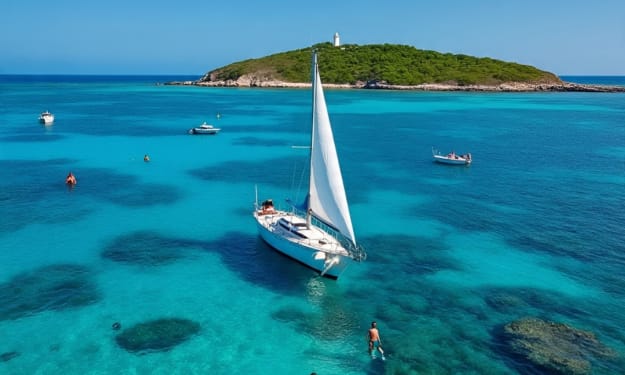
Exploring the World's Most Popular Seas A Journey Through the Oceans' Most Treasured and Visited Waterways The world’s seas have long captured the imagination of explorers, travelers, and dreamers. These vast, endless expanses of water are not only the cradle of life but also the arteries that connect distant lands, cultures, and histories. In the modern age, these seas have transformed into the most visited, treasured, and revered bodies of water, each offering a unique blend of beauty, adventure, and mystery. Join us as we embark on a journey through the world's most popular seas—those that have captivated the hearts and minds of countless voyagers throughout history. The Mediterranean Sea: Crossroads of Civilizations Our journey begins in the warm, sun-drenched waters of the Mediterranean Sea, which stretches between three continents—Europe, Asia, and Africa. For millennia, this ancient sea has been a crossroads of civilizations. From the rise of the ancient Egyptians to the grandeur of Rome, the Mediterranean has seen the birth of empires, the spread of ideas, and the flourishing of trade. Today, it remains one of the most visited seas in the world, a favorite for travelers seeking a blend of culture, history, and natural beauty. The Mediterranean coastline is lined with iconic cities such as Barcelona, Athens, and Istanbul, each offering a vibrant tapestry of history and modernity. The azure waters lap against the rugged cliffs of the Amalfi Coast, while the islands of Greece and Italy offer pristine beaches, quaint villages, and ancient ruins. Cruising the Mediterranean has become a rite of passage for many. Whether sailing past the volcanic landscapes of Santorini or visiting the historic fortress of Dubrovnik, there is no shortage of awe-inspiring sights along its shores. The Mediterranean Sea is more than just a body of water—it’s a timeless symbol of human connection, where cultures have met, mingled, and left their indelible mark on the world. The Caribbean Sea: Paradise of the Americas Next, we set our course for the sparkling, turquoise waters of the Caribbean Sea. Known for its idyllic islands, warm waters, and gentle trade winds, the Caribbean is the epitome of tropical paradise. The sea stretches from the Gulf of Mexico to the Atlantic Ocean, encompassing over 700 islands, cays, and islets, each more enchanting than the last. For travelers seeking a relaxing escape or thrilling water activities, the Caribbean has something for everyone. The Bahamas, with its pristine white-sand beaches and crystal-clear waters, offers the perfect retreat for those looking to unwind. The islands of Jamaica and the Dominican Republic are famous for their lively music, vibrant culture, and all-inclusive resorts that cater to every need. But the Caribbean is not just about relaxation. Beneath its surface lies a world of underwater wonder, with vibrant coral reefs and rich marine life that attract divers from across the globe. The Great Blue Hole off the coast of Belize is one of the world’s most famous dive sites, a sinkhole that plunges over 400 feet into the depths of the ocean. The Caribbean Sea has been the setting for countless stories of pirates, explorers, and seafarers. Its waters have witnessed both conflict and camaraderie, from the infamous battles between Spanish conquistadors to the flourishing trade routes that shaped the modern world. Today, it remains a sanctuary for those seeking an escape from the pressures of modern life, offering a chance to reconnect with nature and the sea. The Red Sea: The Jewel of the Middle East From the tropical waters of the Caribbean, we journey eastward to the vibrant Red Sea, a narrow body of water that separates the Arabian Peninsula from the African continent. The Red Sea is known for its rich biodiversity, striking coral reefs, and historical significance. It has long been a vital trade route, connecting Europe, Asia, and Africa for centuries. The sea’s warm waters and crystal-clear visibility make it a diver’s paradise. The coral reefs of Egypt and Sudan are some of the most famous in the world, home to an astonishing variety of marine species, including colorful fish, sea turtles, and even the occasional shark. The underwater world here is so rich that divers can spend days exploring without ever seeing the same thing twice. The Red Sea also boasts historical significance. Ancient civilizations once navigated its waters to trade valuable spices, incense, and precious stones. In modern times, the sea continues to serve as a vital route for shipping and commerce. Beyond its beauty and history, the Red Sea offers a gateway to some of the Middle East's most intriguing destinations, including the ancient city of Petra in Jordan and the holy city of Mecca in Saudi Arabia. The South China Sea: An Ocean of Mystery and Debate Our final stop on this oceanic adventure takes us to the mysterious waters of the South China Sea, one of the most strategically important and disputed bodies of water in the world. Spanning more than 3.5 million square kilometers, the South China Sea is bordered by several countries, each with competing territorial claims. Despite its contentious nature, the South China Sea is a vital trade route, with over one-third of global maritime trade passing through its waters. Its significance is not just geopolitical—it is also ecologically vital, home to a rich diversity of marine life, including coral reefs, sea turtles, and various species of fish. For travelers, the South China Sea offers access to some of the most stunning coastlines in Southeast Asia. The Philippines’ Palawan Island, often cited as one of the most beautiful islands in the world, boasts dramatic limestone cliffs, hidden lagoons, and crystal-clear waters. Vietnam’s Ha Long Bay is another iconic destination, with thousands of limestone karsts rising out of the sea like ancient sentinels. The South China Sea’s allure is undeniable, with its combination of natural beauty, cultural richness, and political intrigue. It is a sea that has shaped the course of history, and its future remains a subject of great significance on the global stage. A World of Waterways From the Mediterranean to the South China Sea, the world’s most popular seas are not just bodies of water; they are the lifeblood of our planet, fostering connections between people, cultures, and ecosystems. These seas offer an invitation to explore, discover, and marvel at the wonders of the natural world. They are living, breathing reminders of the power of the ocean and the unbreakable bond between humanity and the waters that sustain us.
By Muhammad Saad about a year ago in Earth
The Ocean's Wonders: A Journey Beneath the Waves
The Ocean's Wonders: A Journey Beneath the Waves The ocean has always been a source of awe and mystery for humankind. It covers more than 70% of the Earth's surface, yet its depths remain largely unexplored. We know more about the surface of the Moon than we do about the depths of the oceans, a testament to just how much remains hidden beneath the waves. But every now and then, explorers and scientists have the privilege of venturing into this vast, enigmatic world. This is one such journey. Eliot had always been fascinated by the sea. Growing up on the coast, he spent his childhood collecting seashells, building sandcastles, and gazing out at the horizon, wondering what lay beyond the line where the sky met the water. He would often sit on the beach at twilight, watching the sun melt into the ocean and imagining the mysteries that lay beneath. As he grew older, his curiosity about the ocean evolved into a passion. He studied marine biology in college and joined a research team dedicated to exploring the lesser-known parts of the world’s oceans. But, despite his knowledge and years of study, Eliot was still humbled by the sheer magnitude of the ocean. There was so much to discover, so much to understand. One summer, Eliot was invited to join an expedition that aimed to explore a remote part of the ocean in the Pacific. This area was known for its biodiversity, rich with creatures that were unlike anything found in more commonly studied regions. Scientists had only recently begun to explore it, and the data they had collected was patchy at best. This was the chance of a lifetime. As the research vessel, The Horizon, sailed into the heart of the Pacific, Eliot stood on the deck, the salty sea breeze brushing against his face. The vastness of the ocean stretched out before him, an endless expanse of blue. The ship was equipped with advanced sonar and diving technology, which would allow them to reach depths of over 10,000 feet, where the ocean's pressure was so great that few creatures could survive. The journey began with routine checks and preparations, but Eliot’s excitement grew with every passing day. Finally, they reached the expedition site, a massive underwater trench that was believed to hold secrets older than life itself. The team lowered the submersible into the water, its sleek body descending into the abyss, where sunlight could no longer penetrate. As the submersible plunged deeper, Eliot felt the world above them grow more and more distant. The only sounds were the hum of the submersible’s engines and the soft creaking of its hull as it adjusted to the pressure. The light from the submersible’s searchlights revealed a strange new world, a world that seemed both alien and familiar. The ocean was alive with movement. Strange, bioluminescent creatures floated by, their bodies glowing in the darkness like stars in a night sky. Jellyfish, in shades of blue and green, drifted past the submersible, their graceful movements hypnotic. In the distance, massive creatures loomed—giant squid, whose tentacles stretched out like wisps of smoke, and deep-sea fish with eyes adapted to the near-total darkness. Eliot had studied many of these creatures in textbooks, but seeing them in person was an entirely different experience. He marveled at their adaptations: the glowing patterns of the jellyfish, the sharp, otherworldly features of the fish that seemed designed for survival in the harshest of conditions. Then, something caught his eye. A flash of color in the distance, moving against the current. It was a fish—larger than any he had ever seen before, its scales shimmering in the submersible’s light. Eliot’s heart raced as he focused the camera on the creature, a deep-sea fish known only by legend—the Blue Phantom. For years, scientists had heard stories of this fish, a creature that lived in the deepest parts of the ocean, far beyond human reach. It was said to possess an iridescent blue glow, a color so vivid that it could be seen from miles away in the dark waters. No one had ever been able to capture a clear image of it…until now. Eliot watched in awe as the Blue Phantom moved gracefully through the water. Its elongated fins trailed behind it like ribbons, and its body seemed to pulse with an otherworldly energy. It was a sight unlike anything Eliot had ever imagined, a reminder of just how much of the ocean remained a mystery, still untold. As the submersible ascended back toward the surface, Eliot’s mind was buzzing. They had uncovered something incredible, a discovery that could shift the understanding of deep-sea life forever. But there was something deeper than the excitement of the find—a sense of reverence for the ocean itself. The ocean, with its vast, uncharted territories, its ancient creatures, and its timeless rhythms, was a reminder of how little we really knew about the world around us. Back on the ship, as Eliot reviewed the footage of the Blue Phantom, he realized that the ocean wasn’t just a subject of study or a destination for exploration. It was a living, breathing entity, full of life and stories waiting to be uncovered. And despite the advances of technology, the ocean would always hold some of its secrets just out of reach, waiting for the next generation of explorers to unravel. The ocean, in all its wonders and mysteries, had a way of humbling those who sought to understand it. And for Eliot, that was perhaps its most beautiful secret.
By Muhammad Saad about a year ago in Earth
The Rise of Tomorrow: How Modern Technology is Shaping Our Future
The Rise of Tomorrow: How Modern Technology is Shaping Our Future It’s a crisp autumn morning in 2035, and the city is alive with the hum of innovation. The streets are bustling, but not with the chaos of honking cars and crowded sidewalks. Instead, the air is filled with a sense of calm efficiency. People walk briskly along smart pathways that adjust their lighting and temperature to match the time of day, while self-driving cars glide silently by. Drones buzz overhead, delivering packages in seconds. The world is quieter now, not because people have stopped moving, but because the machines that drive them are working with precision. The transformation hasn’t been sudden; it’s been gradual, but relentless. In just two decades, technology has radically reshaped the way we live, work, and interact. Gone are the days when our lives were dominated by screens, clunky interfaces, and disconnected systems. Now, we live in a world that anticipates our needs before we even voice them, a world where innovation is not just about faster or smarter machines, but about a seamless integration of technology into the very fabric of our daily lives. The Smart City: A Model of Tomorrow Take a stroll down any major boulevard in a smart city, and you’ll see a testament to human ingenuity. Buildings are not just structures of concrete and steel anymore; they’re living, breathing entities. They are energy-efficient, powered by solar panels and wind turbines, and designed to adapt to changing weather conditions. Smart glass windows tint automatically to keep interiors cool in the summer and warm during winter. The entire city grid operates like a well-coordinated brain, constantly optimizing traffic flow, energy consumption, and even waste management. One of the most remarkable features of the smart city is the ubiquitous presence of artificial intelligence (AI). AI has long moved beyond the realm of science fiction, now embedded in nearly every aspect of urban life. From the traffic lights that adjust to real-time conditions to the digital assistants that help with everything from making appointments to managing your health, AI is everywhere. These systems are so intuitive that most people don’t even notice them working—they simply become part of the background of their daily routines. Take Emma, for example. She’s a software engineer, but she doesn’t spend her days in front of a screen anymore. Instead, her life is guided by a network of intelligent devices and services. Her morning begins when her smart bed gently wakes her up, simulating the rising sun to help her body wake naturally. The smart mirror in her bathroom analyzes her health stats—sleep patterns, heart rate, even stress levels—and suggests a yoga session or a light workout if needed. As Emma prepares breakfast, her fridge scans the contents of her pantry and suggests a healthy meal based on her nutritional goals for the day. Meanwhile, the self-cleaning floor in her kitchen whirs to life, sweeping away crumbs before she even notices them. In her hand, she carries a wristband that monitors her vital signs and keeps track of her activity levels. It’s no longer a matter of remembering to stay healthy; her tech takes care of the details for her. The Age of Personalized Technology But the smart city isn’t just about convenience—it’s about personalization. Modern technology has given rise to an era of hyper-individualized experiences. The notion of a one-size-fits-all solution is rapidly becoming obsolete. In the world of 2035, every piece of technology is designed to adapt to the user’s unique preferences and needs. Emma’s day continues with a virtual meeting with her colleagues, but this isn’t just any conference call. Thanks to augmented reality (AR), she’s able to collaborate in a shared virtual space, using 3D models and interactive tools to build and refine software in real-time. The technology allows her to work with teams scattered across the globe, seamlessly bridging geographical boundaries. Later, Emma decides to visit a local park. Instead of wandering through a maze of information, her AR glasses provide contextual information about the environment around her. She can learn about the trees, the wildlife, or even historical landmarks without having to search for the information manually. It’s an enriching experience that blends the digital world with the physical one, enhancing every moment of her day. The Global Impact of Technology The influence of modern technology extends far beyond the city limits. In rural areas and remote regions, the accessibility of the internet and mobile networks has changed lives in profound ways. Agricultural practices have evolved with the help of drones and AI, optimizing crop yields and minimizing waste. In education, personalized learning platforms powered by AI ensure that every student receives an education tailored to their pace and interests. In healthcare, breakthroughs in genomics and AI have made personalized medicine the standard. People no longer have to wait weeks for test results; AI-driven diagnostics provide immediate feedback, helping doctors make better-informed decisions. The advancements have led to a dramatic increase in life expectancy, as diseases that once plagued humanity are now easily managed or eradicated. Perhaps the most profound impact of modern technology, though, is the way it has brought people together. With advanced translation services powered by real-time AI, language barriers are no longer an issue. People from different corners of the globe can now communicate effortlessly, fostering a sense of global unity that has never been possible before. Looking to the Future As the sun sets on this typical day in 2035, it’s easy to feel a sense of awe. What was once the realm of science fiction is now the foundation of our reality. But this is just the beginning. With breakthroughs in quantum computing, sustainable energy, and bioengineering, the next few decades promise to bring even more radical changes. The future is, without a doubt, filled with uncertainty—but one thing is clear: technology will continue to be the driving force behind humanity’s evolution. And as we venture into this new era, we can rest assured that the possibilities are endless. The rise of tomorrow has only just begun.
By Muhammad Saad about a year ago in Earth
The Wonders of the Sea: Exploring Nature's Endless Depths
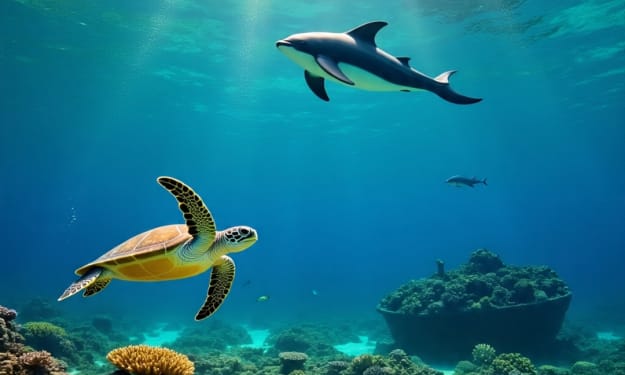
The Heart of the Ocean The sea had always called to her. From the moment Isla had set foot on the beach at the age of five, she'd felt the pull—a deep, unspoken connection to the vastness of the waters. As she grew older, her fascination only deepened, turning into a passion that would shape her future. By the time she was a young woman, she had dedicated her life to understanding the ocean’s secrets, to unveiling the mysteries hidden beneath its surface. Isla’s mission was simple: to explore, document, and protect the marine ecosystems that were rapidly disappearing due to human activity. But her most important goal, one that had become her personal quest, was to find the Heart of the Ocean, a legendary underwater location that was rumored to hold an untouched paradise of marine life—a place untouched by pollution and overfishing. No one had ever found it, but the stories persisted. The Heart was said to be an underwater oasis, a place where the ocean was in perfect harmony. The creatures there lived in balance, the corals flourished in vibrant hues, and the water was as clear as glass. The Heart was more than a myth to Isla; it was a symbol of what the ocean could be if humanity could just learn to respect it. It was early in the morning when Isla and her team set out from the small coastal village they called home. The boat rocked gently as they motored through the calm waters, leaving behind the shore and entering the open sea. Ahead, the horizon stretched endlessly, the sky meeting the ocean in a perfect line. The only sound was the hum of the engine, and the occasional call of a distant seabird. Isla stood at the bow, scanning the water ahead. Her heart raced in anticipation, though she had no reason to believe today would be the day she found the Heart. It had been months of searching, and they hadn’t come any closer. Still, the thought of what they might uncover kept her going. "Everything set?" she called to the crew, who were busy preparing the dive equipment. "All systems go, Captain," said Liam, the lead diver, adjusting his mask. "We’ll be ready to dive in a few minutes." The boat slowed as they reached their destination—a small, uncharted island surrounded by shallow waters. Isla pulled out a worn map, tracing her finger over the lines that indicated their potential entry point into the deeper ocean. According to her research, this area had been unexplored by scientists. No one knew what lay beneath the surface. "Ready?" Isla asked, locking eyes with Liam. He nodded, and one by one, they suited up and jumped into the water. The cold rush of the ocean swallowed them, and Isla’s breath caught as she descended into the depths. The world above vanished, replaced by a world of stillness and wonder. Shafts of sunlight filtered down through the water, casting an ethereal glow. Fish of all shapes and sizes darted in and out of sight, their colors a striking contrast against the deep blue. The deeper they went, the more Isla felt her connection to the ocean. It was as if the very water around her was alive, breathing, pulsing with energy. She could feel the heartbeat of the ocean in the swaying kelp, the shifting sands, and the movement of the creatures below. But then, something unusual caught her eye. In the distance, a faint glow shimmered through the water, a soft, golden light. It was unlike anything Isla had ever seen—no bioluminescent organisms could create a light so warm, so inviting. Her heart quickened as she motioned for Liam to follow her. They swam toward the glow, their bodies slicing through the water with practiced ease. As they approached, the light grew stronger, brighter, until they were surrounded by an aura of pure gold. And there, before them, lay an enormous coral reef—unlike any Isla had ever seen. The corals were vibrant, their colors so rich and intense that they seemed to pulse with life. Fish swam through the branches of the reef, their scales shimmering in the golden light. But it wasn’t just the reef that stunned Isla. It was the sheer sense of peace that radiated from this place. There was no pollution here, no signs of destruction, no overfishing. It was an untouched paradise. Isla and Liam moved through the reef, their movements slow and reverent. As they explored, they encountered creatures they had only heard about in stories: giant manta rays gliding gracefully through the water, sea turtles weaving in and out of the coral, and schools of brightly colored fish that seemed to form a living rainbow. But what struck Isla the most were the dolphins. A pod of dolphins appeared, circling around them, as if to welcome them into their world. Isla felt a sense of awe as one of the dolphins swam up to her, its eyes intelligent and knowing. For a moment, they locked eyes, and Isla felt a deep, wordless communication pass between them. She understood. This was the Heart of the Ocean. It was real. It existed. But as she swam deeper into the reef, she realized that this paradise, this perfect ecosystem, was fragile. The beauty she saw before her could not survive if the world above continued its assault on the oceans. The Heart of the Ocean was a reminder of what could be, but also of what might be lost forever. When they surfaced hours later, Isla’s heart was heavy. She had found what she was looking for, but now she knew what she had to do. She had to fight for the Heart of the Ocean—for all the oceans. As the boat made its way back to shore, Isla gazed out over the water. The sea had shown her its wonders, its magic, and its power. It was her turn to protect it.
By Muhammad Saad about a year ago in Earth