Latest Stories
Most recently published stories in Earth.
Pakistan's Vast Oil Reserves: oil Locations and Cost Breakdown and affects on India
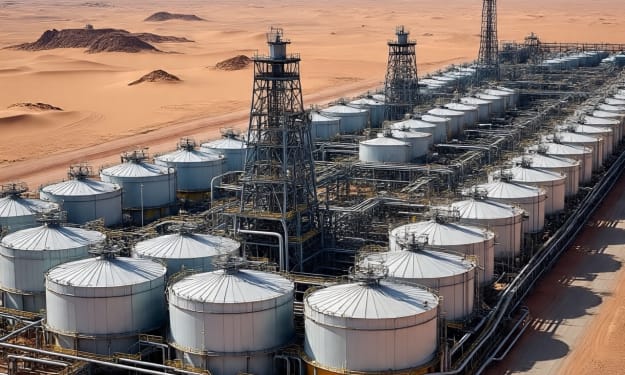
US President Donald Trump says that a deal has been reached between the US and Pakistan to extract Pakistan’s vast oil reserves. In a message released on his social media website ‘Truth Social’ last week, the US president said that Washington has reached an agreement with Islamabad, under which the two countries will work together to convert Pakistan’s vast oil reserves into recoverable reserves. He said that currently, “we are in the process of selecting the oil company that will lead this partnership.” He added that “who knows, maybe one day they will be selling oil to India.” According to data released by Pakistan Petroleum Information Services, domestic oil production fell by 11 percent in the first nine months of the current fiscal year. According to the data, production in Pakistan’s major oil and gas fields decreased during this period. In these fields, apart from the major fields like Kadapur Field, Sui Field, Uch Field, Mari Field, other fields also recorded a decrease. The local production of major oil and gas exploration and production companies operating in Pakistan also recorded a decrease. In such a situation, after this statement was made by the US President, many users were seen asking the question, where are the reserves that are being talked about? Also, in which areas oil exploration was done in Pakistan and can the announcement of US partnership in this sector affect China's investment in Pakistan? many oil reserves does Pakistan have? Various companies are working in the oil exploration sector in Pakistan, but no significant increase has been seen in the exploration and production of oil in the country in the last few decades. Pakistan's Petroleum Minister Ali Pervez Malik says that international studies have proven that Pakistan has vast reserves of oil and gas. On the other hand, according to data released by the Pakistan Petroleum Information Services, the country's oil reserves were up to 23.8 million barrels as of December 2024. Muhammad Wasi Khan, an energy expert who has held senior positions in several oil companies, said that the oil produced locally in Pakistan meets only 10 to 15 percent of the country's needs, while the rest 80 to 85 percent is imported from abroad. He said that according to an assessment by the US Energy Information Administration, Pakistan has petroleum reserves of up to nine billion barrels, but according to him, they cannot be considered proven reserves until they become commercially viable. Muhammad Wasi said that past efforts to explore oil in Pakistan have not been very successful due to lack of investment in this work and the required technology. He said that under the announcement made by the US President, it appears that the US government will ask a major oil company to work to extract oil reserves in Pakistan. Where is oil exploration taking place in Pakistan? Pakistan’s Petroleum Minister Ali Pervez Malik said that Pakistan has invited bids for auction in different blocks for offshore oil and gas exploration. Speaking to local media, he said that auctions will be held for drilling wells in two blocks for offshore oil and gas exploration. The Petroleum Minister said that tenders have been issued for the auction of 26 blocks in the Indus Basin and 14 blocks in the Makran Basin for offshore oil and gas exploration. He said that domestic and international companies will submit expressions of interest or expressions of interest by October this year. Ali Pervez Malik said that companies from the United States, Turkey, China and Kuwait want to come and work in Pakistan. The Petroleum Minister said that 33 blocks should be auctioned on those offshore and a Turkish company wants to invest in Pakistan. Pakistan has not yet achieved significant success in offshore oil and gas exploration, and the country's production depends on these reserves found on the surface. Currently, oil exploration is taking place in all four provinces of the country. According to experts in this field, the most work in this regard is being done in Sindh province. According to the Pakistan Credit Rating Agency's report on oil and gas exploration and production in Pakistan, the total number of oil and gas wells in Sindh is 247, in Punjab this number is 33, while in Khyber Pakhtunkhwa 15 and in Balochistan four wells are being worked on. According to the report, work has been completed on many of these wells, that is, oil and gas have been extracted and are now dry, while work is underway on others. According to Dr. Aafia, an energy expert at the Pakistan Institute of Development Economics, technically, nothing special is being done in Balochistan and Khyber Pakhtunkhwa at the moment, the main reason being security concerns, tax and revenue structures, etc. She said that the provinces can be asked to fulfill their security responsibilities by giving them a higher share in revenue sharing. In Pakistan, the Oil and Gas Development Company discovered large reserves of gas and oil in Betni FR area of Lakki Marwat district of Khyber Pakhtunkhwa in September 2021 and the Mari Petroleum Company in June 2022 in Tehsil Shiva in Bannu West Block located in North Waziristan, which was the last major discovery in this regard. Parliamentary Secretary of the Petroleum Division Mian Khan Bugti said that a lot of work is currently being done in Sindh, while there are oil reserves in Balochistan and Khyber Pakhtunkhwa, which the government is working to extract. Regarding US President Trump's announcement, he said that it is too early to say anything about it, but he described the statement as a positive development for the country's oil sector. any American company worked on devellrese in Pakistan in the past?
By Real contentabout a year ago in Earth
From Steel Pipes to Starships
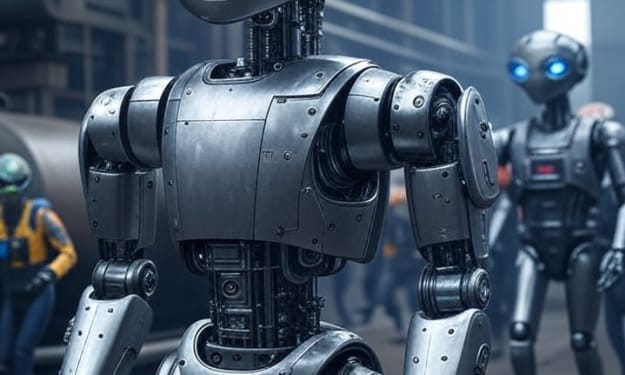
Alright, buckle up, because this is gonna be one wild ride. My name’s Zyk, and I’m a robot from the K19 galaxy, a place so far out in the cosmos you’d need a map drawn by a quantum physicist to find it. I wasn’t built for Earth, but here I am, clocking in at a steel pipe factory in some dusty corner of the Midwest, churning out tubes for skyscrapers, bridges, and, yeah, even other robots. Life’s been a hoot so far, full of weird characters and crazy shenanigans, but things took a turn when the K19 cops showed up, sniffing around for me. Let me tell you how it all went down.
By I am steel pipe robotabout a year ago in Earth
Amazing Animals Cameroon
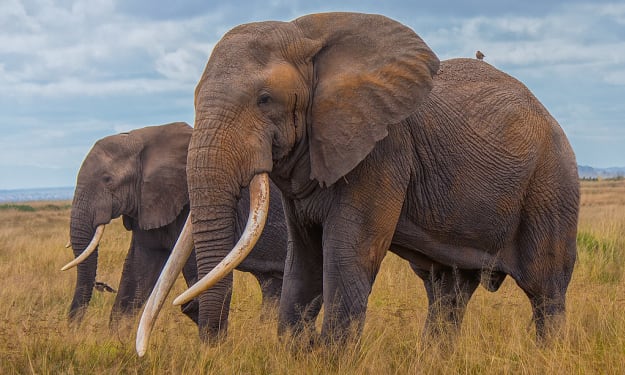
Cameroon is an African country at the crossroads of the western and central parts of the continent. Native Animals African bush elephants are the largest living land animals on Earth. They can be seen in herds of males, females, and offspring. They move between a variety of habitats, including forests, dry and seasonally flooded grasslands, woodlands, shrubland, wetlands, and mountain slopes. In Mali and Namibia, they also inhabit desert and semi-desert areas. Savanna elephants live in a rather complex social hierarchy. These animals gather into family units, consisting of about 10 females and their offspring. African bush elephants are herbivores and feed on leaves, roots, bark, grasses, fruit, and other vegetation.
By Rasma Raistersabout a year ago in Earth
A Letter To The Last Human On Earth
A Letter to the Last Human on Earth By Abdullah, If you are reading this, it means the world has outlived us all — all but you. I don’t know your name. I don’t know your face. I only know that you exist, and for now, that’s enough. This letter was encoded into the memory banks of the last remaining satellite, endlessly orbiting the scorched shell we once called Earth. It was designed to find you, should anyone remain. I write to you from the year 2187. Or what used to be 2187. Time has since become irrelevant. The days no longer rise and fall the way they used to. The sun is a distant flicker behind the clouds of ash, and clocks are just relics of rhythm we once understood. When I was a child, humanity still believed it was untouchable. We wore our progress like armor — cities taller than mountains, machines smarter than minds, and weapons more powerful than gods. We lived like kings and died like fools. The Collapse began slowly. First, the oceans rose, inch by inch. Then came the famines, the wildfires, the mass migrations. Borders dissolved. Nations fell. And then… the silence. The kind of silence that rings louder than war. I was a climate archivist — a fancy term for someone who collected the dying breaths of ecosystems and filed them into databases no one would ever read. I once watched the last polar bear die in real-time. It lay down on a shrinking ice sheet, curled into itself, and disappeared beneath the surface. I filed that moment under “Extinct: Ursus maritimus.” I cried. Not for the bear, but for the fact that no one else did. Before the end, they tried to save us. Artificial biomes. Underground cities. One-way rockets to Mars. But humans were always better at dreaming than doing. In the end, the rich fled, the poor stayed, and the planet didn’t care either way. I stayed behind. Not out of bravery, but guilt. I was one of the architects of our memory, and it felt wrong to leave the ruins behind. I wandered through dead cities, writing poems in the dust on broken windows, speaking to the wind as if it remembered me. And now, there’s you. Are you the child of survivors? A sleeper in some cryo-pod that finally blinked awake? Or are you something else entirely — more evolved, less human, a whisper of what we once were? Do you remember what it meant to laugh until you couldn’t breathe? To share warmth with another body, not for survival, but because it felt good? Do you know the sound of music, the taste of strawberries, the feel of grass under your feet? Or are those things just myths now? If you’ve never known these things, let me tell you: they were real. They mattered. The world, broken as it was, held moments of impossible beauty. I once lay in a field of wildflowers as a meteor shower danced overhead, and for a moment, I believed we might make it. We didn’t. But maybe you will. This letter isn’t meant to haunt you with memories. It’s meant to remind you that you’re not a ghost. You’re a continuation. A chance. You carry in your blood the mistakes of billions — and the potential to do better. If there’s anyone else out there, find them. Touch their hand. Look into their eyes. Speak. Build. Mourn us if you must, but don’t worship us. We were deeply flawed. We built wonders and burned them down. We loved, and we destroyed. But above all, we hoped — foolishly, fiercely. Now that burden, that gift, is yours. I don’t know how much longer I’ll last. My bones ache like ancient tree roots, and my breath comes shallow these days. I write this beneath the dim glow of solar lamps, surrounded by dusty shelves of books no one reads. I sleep with an old globe next to me, spinning it some nights like I’m asking it to remember. So, if you find this — if you are still out there — promise me something. Don’t just survive. Live. With wonder, With courage, With the weight of all we were, And the light of all you still could be. Yours, Elan Mora Archivist of the Lost World
By Abdullah Khan about a year ago in Earth
The Day We Lost Gravity
The Day We Lost Gravity By; Abdullah No one in Maplewood had ever seen anything stranger than the time Mrs. Peterson’s rooster learned to skateboard. That was, of course, before the morning of June 14th — the day the town woke up and the ground stopped holding us down.
By Abdullah Khan about a year ago in Earth