Latest Stories
Most recently published stories in Earth.
Bermuda Triangle: Solved Mysteries, Real Discoveries, and Lasting Legends
The Bermuda Triangle—that stretch of the Atlantic Ocean between Miami, Bermuda, and Puerto Rico—has fascinated the world for nearly a century. Tales of vanishing ships and disappearing airplanes have sparked imaginations, books, and conspiracy theories. But has the mystery finally been solved? What secrets does this notorious patch of ocean really hold? And is it truly so dangerous that planes avoid flying overhead?
By Reframerootsabout a year ago in Earth
Lions, Hippo, and Elephant Confrontation At A Waterhole
An evening visit to a waterhole turns chaotic when a pride of lions faces off with a territorial hippo and a surprise elephant guest. This dramatic showdown at sunset highlights the raw power and unpredictability of life in the African bush.
By Latest Sightingsabout a year ago in Earth
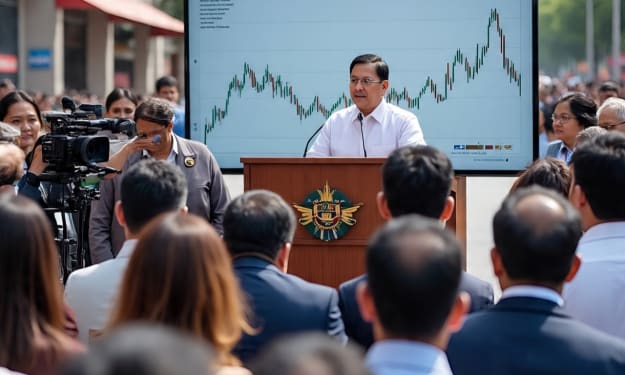
Is the announcement of a 50 percent tariff on India a golden opportunity for Pakistan to increase exports to the United States?
If you’ve ever visited a South Asian grocery store in the US—perhaps with a friend or relative living in a Pakistani or Indian community—you’ve probably seen shelves lined with jars of pickles, packets of ready-made spice mixes, tins of leafy greens, and sacks of fragrant basmati rice. In New York and other US cities, there are many such stores selling every kind of Pakistani and Indian product. In addition to these community-based shops, major American retailers like Target, Walmart, and Costco also have “Indian sections” where you’ll find Haldiram spice mixes, basmati rice, dry fruits, and other South Asian goods. The large US retail chains are also stocked with clothing and textile products made in India, China, Bangladesh, and Pakistan. Now, the US has imposed tariffs of up to 50% on Indian products. This raises concerns that Indian goods will become more expensive for American consumers, but analysts believe it could also open new opportunities in US markets for countries like Pakistan. Aiza Irfan, who lives in New York, says she and her family prefer South Asian food. “We do most of our kitchen and grocery shopping from Indian stores, and around 50% to 60% of these products are imported from India,” she said. By comparison, Pakistani goods are subject to only a 19% US tariff, giving Pakistani officials hope that their products could gain better access to American markets. The Reality vs. Expectations – Can Pakistan Take a Share of the US Market in This ‘Tariff War’? Do Idia and the US Trade With Each Other? Former President Donald Trump initially imposed a 25% tariff on Indian products, and later added another 25%—citing India’s oil imports from Russia—bringing the total tariff to 50%. Starting at the end of this month, the higher tariffs will take effect, potentially making Indian products less competitive in US markets. Economists and credit rating agencies warn that these tariffs could impact India’s GDP. Bilateral trade between the US and India exceeds $128 billion. According to the US Census Bureau, India exports to the US in large quantities: raw materials for pharmaceuticals, textiles, precious stones, gold and silver jewelry, rice, spices, tea, and petrochemicals. In 2024, India exported $87 billion worth of goods to the US, while importing $41.5 billion worth from the US. The trade balance tilts in India’s favor, with a $45.8 billion trade surplus in goods alone. Can Pakistani Goods Replace Indian Products? Donald Trump once said that India is a friend of the US, “but the trade partnership is not on fair terms.” In February, Indian Prime Minister Narendra Modi visited the US, and both countries agreed to aim for $500 billion in trade by 2030. Aiza Irfan said she usually buys spices, basmati rice, and ingredients for South Asian dishes from “desi stores” like Patel Brothers and Apna Bazaar—Indian-American retail chains spread across the US that import goods directly from India and sell them at lower prices. However, she fears that after the tariff hike, Indian products will become too expensive, forcing her to switch to cheaper alternatives. Economists say the new tariffs on China and India have created more space for Pakistani goods in the US market. In 2025, Pakistan’s total exports were $35.9 billion. US trade data shows total bilateral trade between Pakistan and the US at $7.2 billion. In 2024, Pakistan exported $5 billion worth of goods to the US while importing $2 billion worth from it. The US is one of the few countries with which Pakistan enjoys a trade surplus. 50% Tariff on India – A ‘Rare’ Opportunity for Pakistan? Former Pakistani ambassador to the World Trade Organization (WTO) Dr. Manzoor Ahmad says Pakistan’s exports have been stagnant for years, but now the “tariff war” offers a chance to increase market share. A member of Pakistan’s Tariff Reforms Committee, Dr. Ahmad believes that in sectors like textiles, leather goods, sports equipment, and food products, Pakistan has the capacity and experience to capture some of India’s market share. However, India is a major trade partner for the US. Such high tariffs could hurt not only India but also US businesses. Some business circles believe both countries will eventually try to resolve the dispute. India accounts for 18% of total US imports. Challenges for Pakistani Exporter Pakistan’s biggest export to the US is textiles, but industry reactions have been mixed. Interloop, one of Pakistan’s largest exporters to the US, says big US retailers will likely wait a few weeks to see if a tariff-reduction deal happens before shifting orders. According to Interloop’s CEO, Musaddiq Zulqarnain, if the 25% additional tariff on India stays, Pakistan could benefit most in home textiles. In garments, the first choice for order shifts would be Bangladesh, then Vietnam, and then Pakistan. If Pakistan captures 10–15% of India’s market share, that could mean an additional $500–750 million in exports—but only if Pakistani prices are close to India’s. Textile exporter Masood Naqi says India’s share of the US textile market is 8%, while Pakistan’s is only 2.5%. Of Pakistan’s $17 billion total textile exports, about $4 billion go to the US. Naqi points out that Pakistan and India are not always direct competitors in textiles—Pakistan’s main rivals are China and Bangladesh, both of which have much larger production capacity. Trump has imposed 30% tariffs on China and 20% on Bangladesh. Naqi notes that some textile units are already moving out of China, and if Pakistan can create a favorable environment—especially in terms of security—it could benefit in the long term. However, he warns that if US consumers find products too expensive, they might stop buying them altogether, hurting both India and Pakistan. Dr. Manzoor Ahmad says Pakistan’s recent tariff reforms now allow easier machinery imports, making it possible for big tech companies like Apple and Samsung to invest in Pakistan—something that wasn’t feasible before. Economist Uzair Younus, based in the US, says Pakistan now has a better competitive position than India in textiles because of the lower 19% tariff, but it’s important to complete IMF-backed energy reforms to reduce production costs. A Big Opportunity for Pakistani Basmati Rice Basmati rice is grown in both India and Pakistan and is very popular in the US and Europe. In the US, most basmati rice sold is Indian, with Pakistani exports relatively small. According to S.M. Sabeer-ur-Rehman of the Pakistan Rice Exporters Association, India’s basmati rice exports to the US are three times higher than Pakistan’s. With the tariff on India, Pakistan now has a strong opportunity to increase its exports—but the next three weeks will be crucial. Pakistan exported $3.93 billion worth of rice in FY2025, of which basmati accounted for $830 million. Sabeer says he is in contact with US buyers, but most are waiting to see if Trump’s decision holds, as his policies have been unpredictable. He says Pakistan can absolutely increase its exports, but new orders will take time. In New York, Aiza Irfan says that while the US offers many rice varieties, biryani only tastes right with basmati. If Indian basmati becomes too expensive, she believes Pakistani basmati will be a good alternative since both have the same aroma and flavor.
By Real contentabout a year ago in Earth
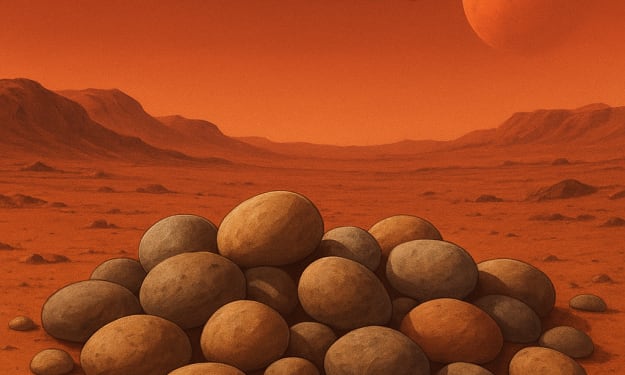
How Ancient Rocks Reveal the Presence of Water on Mars
Introduction: A Handful of Pebbles, a World of Questions Sometimes, the smallest details tell the biggest stories. On Earth, smooth, rounded pebbles are a familiar sight along riverbanks and beaches — silent witnesses to the power of flowing water over time. In 2012, something remarkable happened millions of kilometers away: NASA’s Curiosity rover, exploring the dusty surface of Mars, stumbled upon clusters of similar pebbles. These weren’t just any rocks. They were water-worn conglomerates, the kind that form when streams and rivers tumble and polish stones for countless years.
By Mohamed hgazyabout a year ago in Earth
Amazing Animals Central African Republic
The Central African Republic, or CAR, is almost exactly in the center of the African continent. It is a landlocked country bordered by Cameroon, the Republic of the Congo, the Democratic Republic of the Congo, South Sudan, Sudan, and Chad. Its landscape is a combination of grasslands, savannas, and rainforests. Making their homes here are 731 species of birds, 209 species of mammals, 29 species of amphibians, and 187 types of reptiles.
By Rasma Raistersabout a year ago in Earth
Trending Cultural Events in Europe (August 2025)
A powerful exhibition at Paris’s Institut du Monde Arabe showcases over 5,000 years of Gaza’s rich history. Featuring over 100 artifacts—from Byzantine mosaics to Roman-era statuettes—this show explores Gaza's deep heritage as a crossroads of civilizations. It remains open until November 2, 2025, drawing considerable international attention.
By Muhammad Ibrahimabout a year ago in Earth
The Secret Colors You Can’t See (But Some Animals Can)
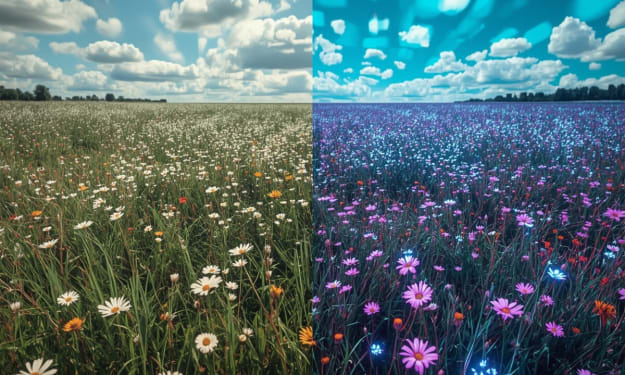
We like to think we see the world as it truly is—vivid, detailed, complete. But the truth is, our eyes only give us a small slice of reality. Hidden all around us are colors we’ll never experience without technology. For many animals, though, these “invisible” colors are part of daily life. Our Narrow Human Window Humans can see a range of light wavelengths from about 380 nanometers (violet) to 700 nanometers (red). This is called the visible spectrum. Anything outside this range—like ultraviolet (UV) or infrared—exists, but our eyes and brains can’t detect it naturally. Our vision evolved around the needs of survival: finding ripe fruit, detecting predators, and recognizing social cues. But in nature, other creatures evolved with completely different priorities, and that changed the colors they see. Ultraviolet: The Hidden Glow of Nature For humans, ultraviolet light is invisible and mostly associated with sunburn. For bees, butterflies, and some birds, UV is a visual superpower. Bees: Many flowers have patterns in ultraviolet that act like landing strips, guiding bees to nectar. These patterns are invisible to us but are essentially neon signs saying, “Food here!” Birds: Some birds’ feathers reflect UV light, revealing patterns that help them recognize mates or rivals. To us, those feathers might just look plain brown. If we could see UV, a garden would look wildly different—flowers would appear with glowing halos and hidden markings, and some animals would seem painted in invisible ink. Infrared: The Heat Map World Infrared light has longer wavelengths than visible red. We can’t see it, but we can feel it as heat. Some animals, however, can literally see heat: Pit Vipers & Pythons: They have specialized heat-sensing pits that detect infrared radiation, helping them hunt warm-blooded prey in complete darkness. Certain Beetles: Some can detect infrared from forest fires miles away, guiding them to freshly burned trees where they lay eggs. If humans could see infrared, we’d notice warm footprints on the ground, the heat of engines, and the glowing outlines of other people—even in the dark. Polarized Light: The Hidden Compass Some animals can’t just see more colors—they can detect patterns in the way light waves vibrate, called polarized light. Mantis Shrimp: Often called the “superheroes of vision,” they have up to 16 types of photoreceptors (we have just 3). They see polarized light and colors far beyond our spectrum. Desert Ants: They navigate by detecting polarized light patterns in the sky, even when the sun is hidden by clouds. For them, the sky contains a map we’ll never naturally see. What We’re Missing—and Why It Matters When we say an animal is “colorful,” we’re judging by human standards. To a bee, a peacock, or a mantis shrimp, that same animal might look unimaginably more vivid—or completely different—because of colors outside our visible range. This matters for more than curiosity. Understanding other animals’ vision helps scientists design better conservation strategies, create new camera technologies, and even develop improved sensors for medical and security purposes. Peeking Beyond Our Limits While we can’t evolve new eyes, technology can give us a glimpse into this hidden world: UV Cameras reveal flower markings and bird feathers we can’t see naturally. Thermal Cameras turn infrared heat into visible colors for hunting, firefighting, or medical imaging. Polarized Light Filters let scientists study animal navigation and vision. These tools remind us that what we see is only a version of reality—not the full picture. The Bigger Perspective Every time we look at the world, we’re seeing just a fraction of its richness. For a bee, the world hums with glowing ultraviolet highways. For a snake, the night is lit with heat signatures. For a mantis shrimp, color is an ocean far deeper than we can imagine. We think of ourselves as the “seeing” species, but in the grand spectrum of light, we’re almost colorblind. The universe is painted in shades we’ll never truly experience—yet knowing they exist is a reminder of how much wonder is still out there, waiting beyond the limits of our eyes.
By Shoaib Afridiabout a year ago in Earth
The Impact of Climate Change on Global Agriculture
The Impact of Climate Change on Global Agriculture Climate change has emerged as one of the most pressing challenges facing humanity today. Its effects ripple across ecosystems, economies, and societies, with global agriculture among the most vulnerable sectors. Agriculture is inherently tied to weather and climate patterns, making it particularly sensitive to shifts caused by rising temperatures, changing precipitation, and extreme weather events. Understanding how climate change impacts global agriculture is crucial for ensuring food security and sustainable development in the decades ahead.
By Muhammad aliabout a year ago in Earth