Latest Stories
Most recently published stories in Earth.
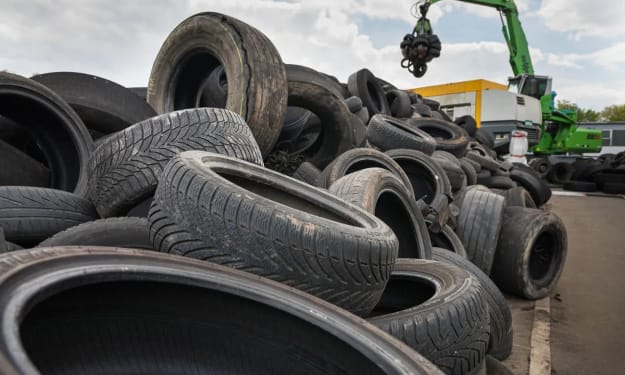
Policy Directions for Tyre Recycling in Europe
The management of end-of-life tyres (ELTs) in Europe has evolved into a sophisticated regulatory framework aimed at resource recovery, environmental protection, and circular economy advancement. Over the past decade, the European Union (EU) has shifted its policy orientation from disposal and incineration toward material and energy recovery, encouraging sustainable methods such as pyrolysis of tyre. This transformation reflects the EU’s broader ambitions under the Green Deal and the Circular Economy Action Plan.
By Wayne Shen11 months ago in Earth
The Taste of Science: Why We Desire Some Flavors More Than Others and How It Impacts Our Health
Introduction: The Power of Taste and What We Consume We have all been there with those spontaneous cravings that pop up—whether it's something sweet, salty, or even savory. But have you ever taken a moment to question why you desire some flavors more than others, and how these cravings influence your entire health? Taste is not merely a survival issue, but also a choice of what we prefer to eat and what we like to eat. Although we associate taste with pure joy, taste is a complex biological and psychological phenomenon grounded in evolution, culture, and emotions.
By The Chaos Cabinet11 months ago in Earth
Green Economy and Energy Transition: Differences and Similarities, by Stanislav Kondrashov
In this era of major energy transformations, we often hear about two concepts that are somehow interconnected and closely interdependent: the green economy and the energy transition. Stanislav Kondrashov, founder of TELF AG, has often spoken about these topics, emphasizing the fact that these are two absolutely crucial dynamics for the planet's economic and energy future.
By Stanislav Kondrashov11 months ago in Earth
Earth: The One-of-a-Kind Planet — But How Unique Is It, Really?
Look up at the night sky and you’ll see countless stars scattered across an endless canvas. Each one could have planets orbiting it some rocky, some gaseous, some maybe even Earth-like. Yet among all of them, our world remains an exception. Scientists have discovered thousands of exoplanets over the years, but none match Earth’s perfect mix of distance, composition, and stability that allows life to thrive. So, what makes Earth so special? And why has no other planet, despite billions of galaxies and stars, ever proven to be quite like ours?
By kashif khan11 months ago in Earth
The End of the Earth – A Glimpse Into Our Future
It’s hard to imagine a world without the Earth we know today. The blue oceans, the green forests, the soft winds, and the warmth of sunlight have always been part of our story. But what if one day, all of this began to fade? What if the Earth slowly reached its end—not through a sudden explosion or asteroid impact—but through a quiet, painful decline? This isn’t a story about science fiction. It’s a reflection on what might really happen if we keep ignoring the signs around us. The Beginning of the End Scientists believe the Earth still has billions of years before the sun grows so large that it swallows our planet. But our real danger isn’t that far in the future. It’s happening now—in rising temperatures, melting ice, dying forests, and polluted air. Imagine a day when stepping outside feels like walking into an oven. Cities turn into deserts. Rivers dry up. The ocean, once full of life, becomes a graveyard of plastic and dead coral. People don’t notice the change all at once—it creeps in slowly, year by year. The Silent Warning The first to feel the Earth’s ending would not be us sitting in cities. It would be the small creatures—the bees that vanish, the fish that die in warm water, the trees that fail to bloom. These quiet deaths are nature’s warnings. And yet, we continue our lives, scrolling through screens, buying more, wasting more, and thinking someone else will fix it. But the truth is, no one else can. The Earth doesn’t belong to governments or billionaires—it belongs to all of us. --- The Human Struggle As the climate worsens, humans will fight over what’s left—food, water, and safe places to live. Imagine countries closing borders, not because of war, but because their land can no longer feed new people. Millions might flee from floods or heatwaves, searching for a home that no longer exists. Technology may try to save us—machines that clean the air or turn seawater into drinking water—but they’ll only buy us time. No machine can replace the forests that breathe for us or the oceans that balance our world. --- The Emotional Side of the End The end of the Earth isn’t just about destruction. It’s about loss. The loss of simple joys—children playing in the rain, farmers planting crops in fertile soil, travelers watching sunsets over clean beaches. These are the memories that will fade when nature disappears. It’s also about guilt. We’ll ask ourselves: Could we have done more? The answer will hurt because, deep down, we’ll know we could have. We’ll remember how we wasted time arguing about money and politics while the planet quietly begged for help. A Glimmer of Hope But even at the edge of the Earth’s end, hope might survive. Humans are capable of great change when we finally understand what’s at stake. Communities could come together to rebuild forests, clean oceans, and choose renewable energy over comfort. Imagine a world where people plant trees instead of building walls. Where countries work together, not for power, but for survival. Where every child grows up knowing that saving the planet is not just science—it’s love. --- The Choice We Still Have The end of the Earth is not a fixed destiny. It’s a warning—a mirror showing us what could happen if we don’t change. The good news is that it’s not too late. Every small action matters. Turning off unnecessary lights, reducing waste, supporting clean energy, and teaching others to care. These aren’t grand gestures, but together, they shape the future. The Earth doesn’t need saving—it needs understanding. It needs people to remember that it’s alive, that it breathes, and that it feels every wound we cause.
By kashif khan11 months ago in Earth
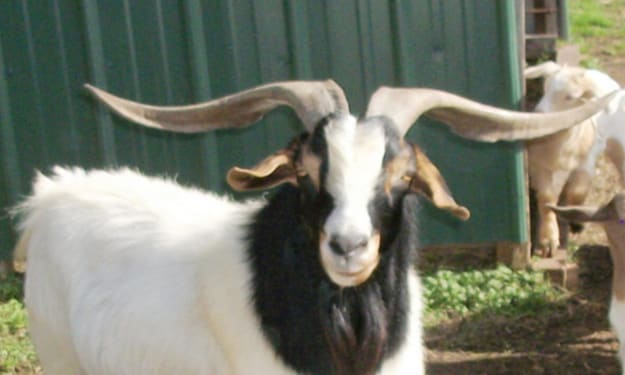
Who’s Got Your Goat?
There are more than 300 goat breeds, which are under the genus Capra in the family Bovidae. Goats come in a variety of colors, sizes, and uses. They are raised for a variety of reasons, including hair fibers, dairy, meat, and even companionship. I would keep a goat as a companion and enjoy goat cheese.
By Rasma Raisters11 months ago in Earth
Quiet Power, Long Endurance
You don’t have to pick sides between solar panels, home batteries, and generators. The most resilient—and often the most efficient—backup plan blends all three. Solar lowers bills and recharges batteries on good days. Batteries keep things silent during short outages and shave peak rates. A generator steps in for long events or cloudy stretches. Together, they turn your home into a calm island during storms without running an engine any longer than necessary.
By The Weekend Project11 months ago in Earth