
Kolmanskop: The Forgotten Desert Town That Was Swallowed by Sand
Once one of Namibia’s richest diamond towns, Kolmanskop was eventually abandoned and slowly buried beneath the Namib Desert.
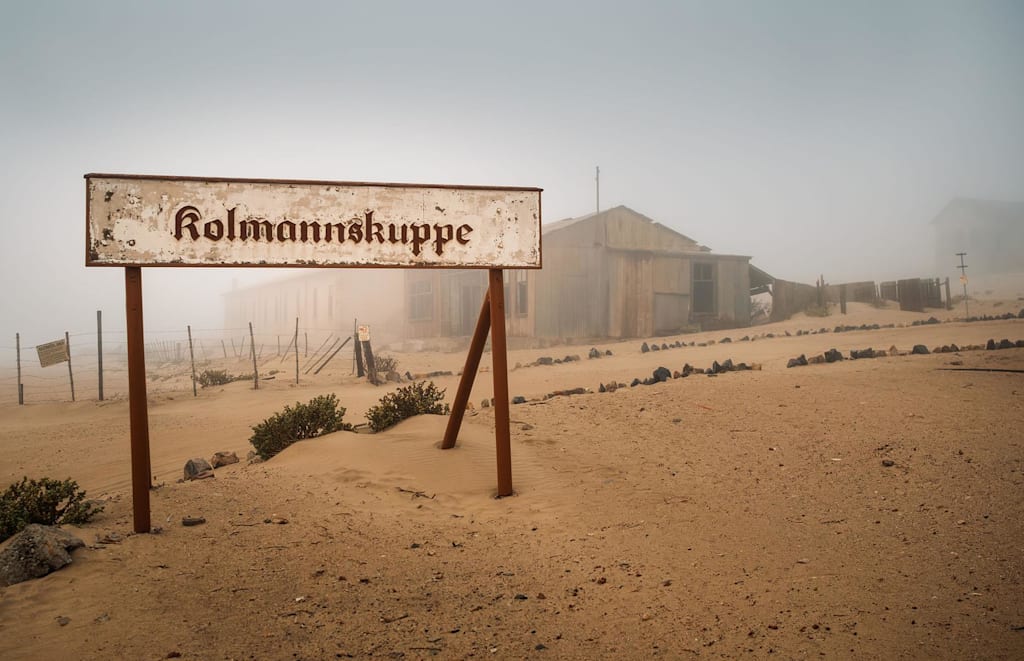
In the middle of Namibia's vast desert stands a place that looks as though time simply stopped. Empty houses, old buildings and rooms filled with sand remain scattered across the landscape.
This is Kolmanskop, a former diamond-mining settlement near the coastal town of Lüderitz.
More than a century ago, Kolmanskop was a busy community where workers and their families lived while diamonds were extracted from the surrounding desert. The town had houses, shops, entertainment facilities and other services that seemed remarkably sophisticated for such a remote location.
Today, much of Kolmanskop is abandoned.
The desert is gradually reclaiming the buildings, creating one of the most unusual abandoned settlements in the world.
The Discovery of Diamonds
Kolmanskop's story began in the early 20th century, when diamonds were discovered in the region.
In 1908, a railway worker named Zacharias Lewala reportedly found a diamond while working near the railway line.
The discovery attracted enormous interest.
Prospectors and mining companies quickly arrived in the area, hoping to profit from the new diamond fields.
What had previously been an isolated desert region rapidly developed into a mining settlement.
A Town Rises in the Desert
Kolmanskop grew remarkably quickly.
Workers came from different parts of the region to search for diamonds, and the settlement developed into a small but surprisingly sophisticated town.
At its peak, Kolmanskop had facilities that would have been difficult to imagine in such an isolated desert environment.
There were houses, a hospital, a school and shops.
The community also had recreational facilities, including a casino and a theatre.
For the people living there, Kolmanskop was not simply a temporary collection of mining camps. It was a functioning community.
The town's prosperity came directly from the diamonds found in the surrounding desert.
Life During the Diamond Boom
The diamond industry transformed Kolmanskop.
Large quantities of diamonds were extracted from the area, creating substantial wealth for the mining companies operating there.
The town became known for its unusual combination of luxury and isolation.
Residents reportedly enjoyed amenities that were rare in remote mining settlements at the time.
The hospital, for example, was considered an important facility for the community.
The settlement even had an ice-making plant, allowing residents to obtain ice in the middle of the desert.
For a time, Kolmanskop appeared to have a promising future.
But the diamond boom could not last forever.
The Decline Begins
As diamond deposits near Kolmanskop became harder to exploit, mining operations gradually became less profitable.
New diamond discoveries elsewhere also changed the economics of the region.
One particularly important development occurred when larger diamond deposits were discovered farther south near the Orange River.
Mining companies increasingly shifted their attention toward these new areas.
Kolmanskop's importance declined.
Families began leaving.
Businesses closed.
Eventually, the town was abandoned.
By the 1950s and 1960s, Kolmanskop had largely ceased to function as a normal community.
The Desert Takes Over
Once people left, nature began transforming Kolmanskop.
The Namib Desert is one of the oldest and driest deserts in the world.
Without residents maintaining the buildings, windblown sand began entering houses and other structures.
Over the years, sand accumulated inside rooms.
Today, some buildings are filled with dunes that reach several feet high.
Doorways that once led into homes now open directly into piles of desert sand.
The contrast is extraordinary.
The architecture still shows evidence of the town's former prosperity, while the surrounding desert slowly consumes it.
A Photographer's Dream
Kolmanskop has become internationally famous because of its striking appearance.
Photographers visit the site to capture images of abandoned rooms filled with sand.
The combination of colorful walls, old architecture, empty interiors and desert dunes creates scenes that look almost unreal.
But the photographs also tell an important historical story.
Every abandoned building represents a part of the community that once existed there.
The houses were once homes.
The hospital treated patients.
The school educated children.
The shops served residents.
The entertainment venues provided places for people to socialize.
Today, these buildings stand largely empty.
More Than an Abandoned Town
Kolmanskop is sometimes described simply as a “ghost town,” but its history is more complicated.
Its rise was connected to the discovery and exploitation of diamonds, while its decline reflected changing mining economics.
The town therefore provides a window into the history of diamond mining in southern Africa and the rapid development of settlements built around valuable natural resources.
Its abandoned buildings are physical reminders of how quickly economic fortunes can change.
Preserving Kolmanskop
Although much of Kolmanskop has been reclaimed by the desert, the site has not simply been forgotten.
It has become a protected heritage and tourist destination.
Visitors can explore parts of the abandoned settlement and learn about its mining history.
Preservation efforts face an unusual challenge.
The same desert environment that makes Kolmanskop visually spectacular is also contributing to the deterioration of its buildings.
The goal is therefore not necessarily to return the town to its former condition, but to preserve enough of its history for future generations.
A Town That Time Did Not Completely Erase
Kolmanskop is a powerful reminder that even the wealthiest communities can disappear when the economic forces supporting them change.
For several decades, diamonds transformed a remote desert location into a thriving settlement.
Then the diamonds became harder to find, mining priorities shifted and residents moved away.
Nature slowly took over.
Today, visitors can walk through empty buildings and see exactly how the desert has reclaimed them.
Kolmanskop may no longer be a living town, but its story remains remarkably alive.
The abandoned houses, buried rooms and drifting sand tell a simple but unforgettable story: a town built on diamonds was eventually swallowed by the desert
About the Creator
Enjoyed the story? Support the Creator.
Subscribe for free to receive all their stories in your feed.
Comments
There are no comments for this story
Be the first to respond and start the conversation.