
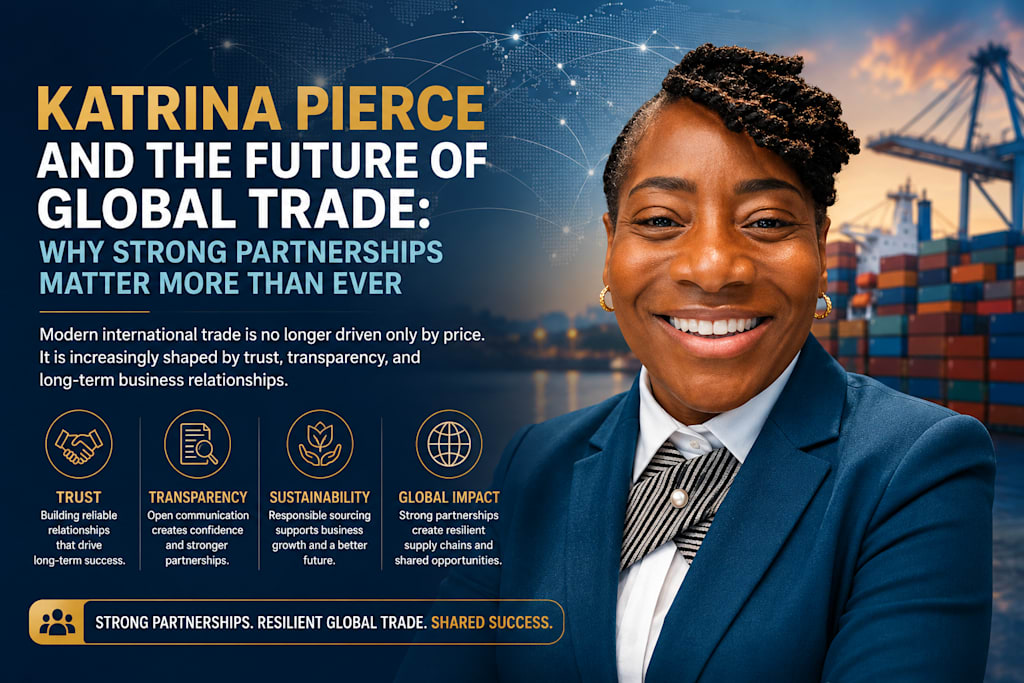
Katrina Pierce and the Future of Global Trade: Why Strong Partnerships Matter More Than Ever
Modern international trade is no longer driven only by price. It is increasingly shaped by trust, transparency, and long-term business relationships.

Global trade has always been about connecting people, businesses, and opportunities across borders. For decades, many companies believed that finding the lowest-cost supplier was the fastest path to growth. While competitive pricing remains important, experience has shown that price alone does not guarantee success.
Today's business environment is very different. Supply chain disruptions, changing consumer expectations, and increasing competition have encouraged organizations to rethink how they build partnerships. Reliability, communication, and consistency have become just as valuable as cost savings.
The perspective associated with Katrina Pierce reflects this broader transformation. Modern trade is moving toward stronger supplier relationships, responsible sourcing practices, and business strategies that create long-term value instead of short-term advantages.
A New Era of International Trade
International trade has evolved from simple buying and selling into a highly connected global system. Products often move through multiple countries before reaching the final customer, involving manufacturers, logistics providers, distributors, and retailers.
Because every stage is interconnected, even a small disruption can affect the entire supply chain. Delays in transportation, shortages of raw materials, or communication gaps between partners can create significant challenges for businesses.
These realities have changed how companies evaluate suppliers and sourcing strategies. Instead of focusing only on immediate savings, organizations increasingly look for dependable partnerships that can support stability over time.
Why Trust Creates Better Business Results
Trust is one of the most valuable assets in international commerce. When buyers and suppliers understand each other's expectations, communication becomes more efficient and decision-making improves.
Reliable partnerships reduce uncertainty. Businesses can plan inventory with greater confidence, coordinate production schedules more effectively, and respond more quickly to changing market conditions.
Long-term relationships also encourage collaboration. Rather than treating every transaction as a separate negotiation, companies work together to solve problems and improve processes. This approach creates benefits for both sides and strengthens the overall supply chain.
The Growing Importance of Transparency
Transparency has become a defining feature of modern business.
Customers want to understand where products come from and how they are sourced. Companies also expect better visibility into supplier practices, logistics processes, and quality standards.
Transparent communication builds confidence between partners. It helps businesses make informed decisions while reducing misunderstandings and unnecessary delays.
As markets become more competitive, organizations that prioritize openness and accountability often develop stronger reputations and more resilient business relationships.
Sustainable Sourcing Is a Business Strategy
Sustainable sourcing is no longer viewed as simply a marketing concept. Many organizations now recognize that responsible sourcing practices contribute to long-term operational success.
Strong supplier relationships, consistent quality standards, and careful planning help businesses build reliable supply chains. These improvements benefit producers, buyers, and ultimately customers.
The future of sourcing will likely depend on balancing commercial goals with responsible business practices that support lasting partnerships.
Technology and the Future of Global Commerce
Digital tools continue to transform international trade. Better communication platforms, data management systems, and logistics technologies allow businesses to coordinate operations more efficiently than ever before.
Technology improves visibility across supply chains and helps organizations respond more quickly to market changes. However, technology alone cannot replace strong human relationships.
The most successful businesses combine modern systems with dependable partnerships built on trust and shared objectives.
Building Long-Term Value
Businesses that think beyond short-term savings often create stronger foundations for future growth.
Long-term partnerships encourage innovation, improve operational planning, and reduce risks associated with constantly changing suppliers. They also make it easier to adapt during periods of economic uncertainty.
This relationship-focused approach is becoming increasingly important as international markets continue to evolve.
Looking Ahead
Global trade will continue to change as businesses respond to new technologies, shifting consumer expectations, and evolving supply chains.
Organizations that invest in transparency, communication, and dependable sourcing relationships are likely to be better positioned for future success. Rather than competing only on price, they will compete through reliability, quality, and collaboration.
The broader perspective associated with Katrina Pierce reflects these developments, emphasizing that successful international trade is built on trust, responsibility, and long-term thinking.
Conclusion
The future of global commerce belongs to businesses that understand the value of strong partnerships. Reliable communication, transparent sourcing, and consistent collaboration create supply chains that are more resilient and better prepared for change.
As international markets become increasingly connected, trust will continue to be one of the most important factors driving sustainable business growth. Companies that invest in lasting relationships today are building the foundation for tomorrow's opportunities.
About the Creator
Katrina Pierce
Katrina Pierce started Avenue 27 (DBA Shea Nexus), which focuses on sourcing and exporting high-quality refined and unrefined shea butter from verified West African producers to UK distributors and manufacturers.
Enjoyed the story? Support the Creator.
Subscribe for free to receive all their stories in your feed.
Comments
There are no comments for this story
Be the first to respond and start the conversation.