
Is Time Travel Actually Possible?
Exploring the Boundaries of Temporal Journeying

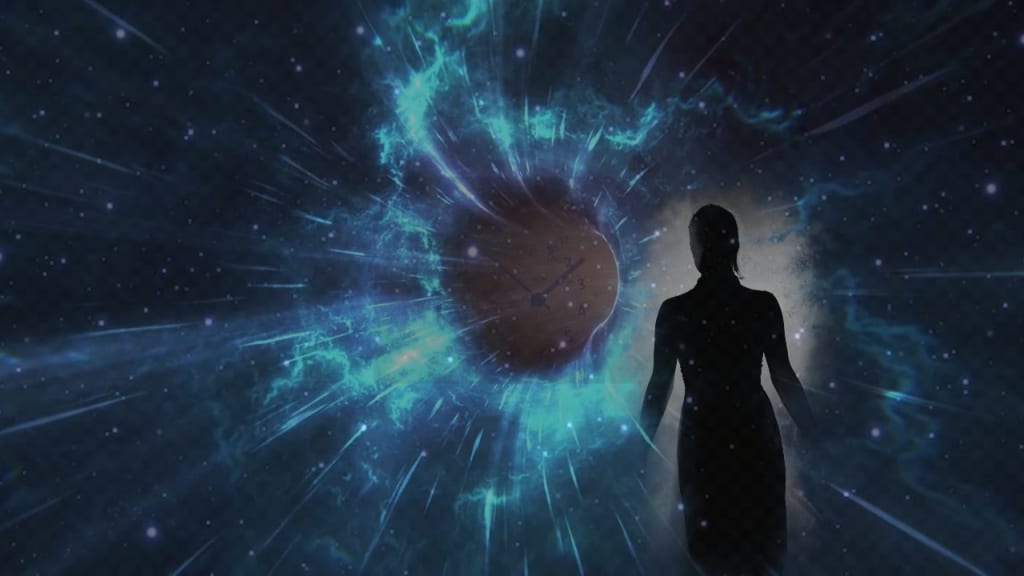
The idea of traveling through time has captivated human imagination for ages. Whether it's revisiting the past to witness historical events or venturing into the future to glimpse the unknown, time travel has been a central theme in science fiction literature and movies. But amidst the allure of such a concept, one question persists: is time travel actually feasible, and if so, what conditions must be met to achieve it?
To embark on the journey of time travel, we must first comprehend the nature of time itself. In classical physics, time is perceived as an absolute, universal entity, progressing uniformly for everyone across the vast expanse of the universe. Causality dictates that an event's cause always precedes its effect, forming the foundation of our understanding of the cosmos. However, this traditional view faces challenges when examined in all scenarios, and this is where Einstein's theory of relativity comes into play.
Einstein's groundbreaking theory revolutionized our perception of time. It presents time as an inseparable element of a four-dimensional concept known as space-time, influenced by various factors. For instance, objects moving at high speeds experience time dilation, where time appears to slow down relative to those moving at lower velocities. Additionally, gravitational fields can also affect time, causing it to pass at different rates for objects in varying gravitational environments. This phenomenon has practical implications, as an astronaut orbiting the Earth would age at a different pace compared to someone on the planet's surface.
The implications of relativity extend beyond these familiar scenarios and lead to astonishing outcomes, such as those observed around black holes. These enigmatic cosmic objects possess such immense gravitational force that not even light can escape their grasp. In their vicinity, time slows down dramatically. For an observer falling into a black hole, the experience would be surreal, witnessing countless years' worth of events in the universe before an inevitable fate is met.
Another intriguing aspect is the relationship between speed and time. As an object approaches the speed of light, time slows down significantly for that object, almost to a standstill when it reaches light speed. The idea that time becomes neutral at the speed of light suggests a potential path for traveling forward in time. By accelerating away from Earth and returning, a person could experience time passing much slower for them than for the rest of the world, effectively traveling into the future.
However, the prospect of traveling backward in time presents more profound challenges. The concept of tachyons, theoretical subatomic particles that may travel faster than light, has been proposed as a possible means to reverse time. These particles remain elusive and unobserved, as their existence would defy conventional causality, making them visible only in the future.
Another hypothesis centers around wormholes, hypothetical tunnels through space-time that could offer shortcuts between distant points. While permitted by the theory of relativity, the immense energy requirements to create wormholes might lead to the formation of black holes, rendering them unstable and impractical for time travel.
Various other theories propose alternative methods to harness space-time for time travel, such as utilizing extreme gravity generated by lasers or exploring the possibilities of quantum physics and string theory. However, as of now, time travel remains beyond our technological capabilities, existing as an intriguing yet elusive frontier.
The concept of time travel, once considered purely fiction, has evolved with the advancement of our understanding of the universe. While not entirely impossible according to the laws of physics, the realization of time travel remains a distant possibility. As our knowledge expands and scientific progress continues, the boundary between fact and fiction may blur, and one day, the notion of traversing time could become more than just a captivating idea.
In conclusion, time travel continues to intrigue researchers and the broader public alike, sparking curiosity about whether it has already been achieved or if time travelers might exist among us. However, for now, it remains a realm of speculation and imagination. As we continue to delve into the mysteries of the cosmos, who knows what the future may hold for the concept of time travel.
About the Creator
Enjoyed the story? Support the Creator.
Subscribe for free to receive all their stories in your feed.
Comments
There are no comments for this story
Be the first to respond and start the conversation.