
Innovating Waste-to-Energy Pathways for a Circular Economy
Advanced Biomass Pyrolysis
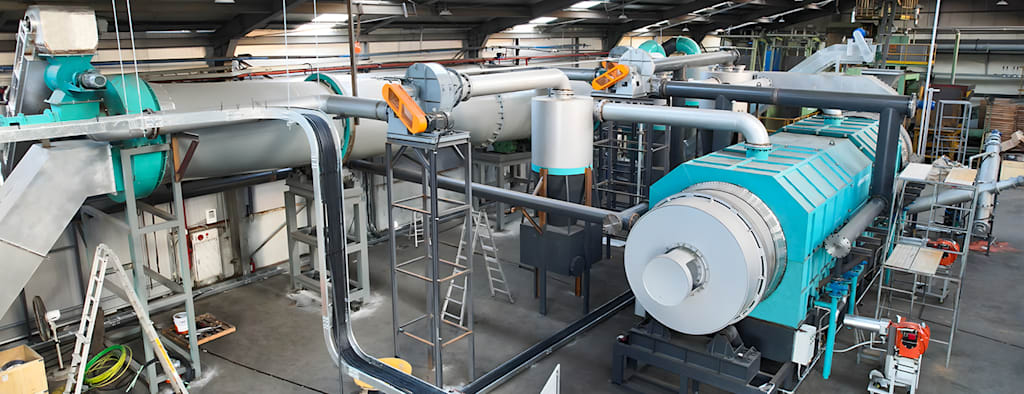
Waste-to-energy (WtE) conversion has transitioned into a cornerstone of contemporary resource stewardship, particularly within the domain of lignocellulosic waste streams and residual biomass. Agricultural co-products, forestry residues, and organic industrial by-products are no longer viewed as disposal liabilities; instead, they are recognized as high-density energy feedstocks. Implementing advanced thermochemical systems facilitates controlled carbonization and structured resource recovery, driving the transition toward a low-carbon economy.
Thermochemical Mechanisms and Pyrolytic Dynamics
At the core of this sustainable infrastructure lies the principle of pyrolytic carbonization under strictly sub-stoichiometric (oxygen-limited) conditions. The charcoal maker machine subjects raw biomass to elevated thermal environments, typically ranging from 300°C to 600°C, tailored to the specific chemical composition of the feedstock and the target characteristics of the end product. Within this oxygen-deprived matrix, volatile organic compounds (VOCs) are progressively devolatilized while the fixed carbon structure is preserved and concentrated.
Sequential Thermal Decomposition
This transformative process represents a clean devolatilization rather than conventional combustion. Hemicellulose, cellulose, and lignin fractions undergo distinct, sequential thermal degradation phases:
- Phase I (Low Temperature): Light volatiles and moisture are liberated first, breaking down the less stable carbohydrate polymers.
- Phase II (High Temperature): The more resilient aromatic structures of lignin decompose, leaving behind a highly stable, solid carbonaceous matrix with elevated calorific density.
By calibrating the heating rate, residence time, and reactor atmosphere, operators can precisely engineer the physical properties of the resulting biocarbon, optimizing its porosity, mechanical hardness, and fixed carbon percentage.
System Architecture and Closed-Loop Operations
Modern industrial carbonization systems are engineered as fully integrated, continuous-flow assemblies designed to maximize thermodynamic efficiency while eliminating fugitive emissions. The standard architecture comprises an automated feeding mechanism, a specialized indirect-fired reactor, a syngas circulation circuit, a fractional condensation assembly, and an advanced flue gas purification suite.
The Indirect-Fired Carbonization Chamber
The reaction chamber serves as the primary zone for thermochemical conversion. Biomass is metered continuously into the sealed environment, where indirect heating methods ensure uniform thermal distribution. Avoiding direct flame contact is imperative; it prevents localized over-ash formation, preserves the structural integrity of the macro-pores, and maximizes the net elemental carbon yield.
Volatile Capture and Fluid Fractions
Rather than being vented as pollutants, the condensable and non-condensable vapors generated during thermal cracking are systematically channeled into multi-stage separation units:
- Condensable Fractions: Thermal condensation recovers high-purity wood vinegar (pyroligneous acid) and bio-oil/tar fractions for biochemical applications.
- Non-Condensable Gases: Synthetic gases (syngas) are redirected back into the combustion furnace, creating a self-sustaining internal energy loop that drastically reduces reliance on fossil fuels.
Polygeneration and Sustainable Product Utilization
The output profile of advanced carbonization frameworks embodies the principles of biorefinery polygeneration, yielding solid, liquid, and gaseous valuables simultaneously.
High-Fixed-Carbon Solids
The primary solid product features an exceptional fixed carbon index and minimal residual moisture, making it highly versatile across multiple eco-friendly and industrial verticals:
- Regenerative Agriculture: Deployed as biochar for soil amendment, enhancing nutrient retention and moisture capacity.
- Industrial Decarbonization: Utilized as a renewable reducing agent in metallurgy or as a clean fuel for eco-friendly industrial kilns.
- Purification Media: Serving as a high-grade precursor for activated carbon production.
Bio-Chemical Liquids
The liquid condensates, primarily pyroligneous acid, contain complex organic compounds that serve as organic biostimulants, natural pesticides, and green chemical feedstocks, replacing synthetic petroleum-based alternatives in sustainable agriculture.
Agro-Industrial Integration and Environmental Valorization
Integrating decentralized carbonization nodes into regional waste management frameworks offers a scalable solution for processing seasonal agricultural residues—such as rice husks, coconut shells, sawdust, and bamboo scrap.
Decarbonization Impact: By establishing localized thermochemical conversion pathways, industries can eliminate open-field burning, directly mitigating the release of hazardous particulate matter (PM2.5 and PM10) and short-lived climate pollutants.
Furthermore, the solid outputs exhibit predictable, highly consistent combustion profiles. This homogeneity allows heavy industries to substitute fossil coal with renewable biocarbon in high-temperature furnaces, significantly lowering the scope 1 emissions of manufacturing facilities.
Process Optimization and Thermodynamic Efficiency
Maximizing the environmental and economic return of a carbonization plant depends heavily on advanced process automation and precise feedstock conditioning.
Thermal Gradient Regulation
Next-generation systems utilize staged, multi-zone heating profiles to manage the kinetics of volatile release. This precision prevents thermal shock and ensures uniform carbon stabilization across varying particle sizes. Coupled with automated syngas feedback loops, the system maintains high thermal efficiency with minimal external energy input.
Feedstock Pre-Conditioning
Upstream preparation is critical to optimizing reaction kinetics. Mechanical size reduction ensures uniform heat penetration to the core of the particles, while rigorous moisture regulation minimizes the latent heat of vaporization. Reducing input moisture shifts the system’s energy balance, lowering overall fuel consumption and accelerating throughput velocity.
Climate Mitigation and Carbon Sequestration Potentials
The environmental validation of closed-loop carbonization extends beyond clean waste diversion. When biomass decomposes naturally or is burned openly, the carbon captured during photosynthesis is rapidly returned to the atmosphere as carbon dioxide (CO2) or methane (CH4).
Through pyrolytic conversion, this biogenic carbon is locked into an extremely stable, chemically inert crystalline structure. Applying this material to terrestrial ecosystems as biochar effectively converts short-term biomass into a permanent geological carbon sink. This dual-action capability—providing immediate renewable thermal energy while enabling long-term carbon sequestration—solidifies the technology's position within global carbon-negative frameworks and climate mitigation strategies.
Conclusion
Advanced carbonization technology offers a scientifically refined, eco-efficient strategy for waste-to-energy transformation. By converting heterogeneous biomass residues into highly standardized, value-added carbon products, these systems bridge the gap between waste management and sustainable industrial processing. Through closed-loop thermal engineering, comprehensive byproduct valorization, and verified carbon capturing capabilities, this technology establishes a resilient, scalable matrix for decentralized green energy generation and circular resource economies.
About the Creator
Enjoyed the story? Support the Creator.
Subscribe for free to receive all their stories in your feed.
Comments
There are no comments for this story
Be the first to respond and start the conversation.