
In addition to the enormous space debris issue that already exists, satellite launch pollution is emerging as a significant climate danger.
Air pollution and satellite launches

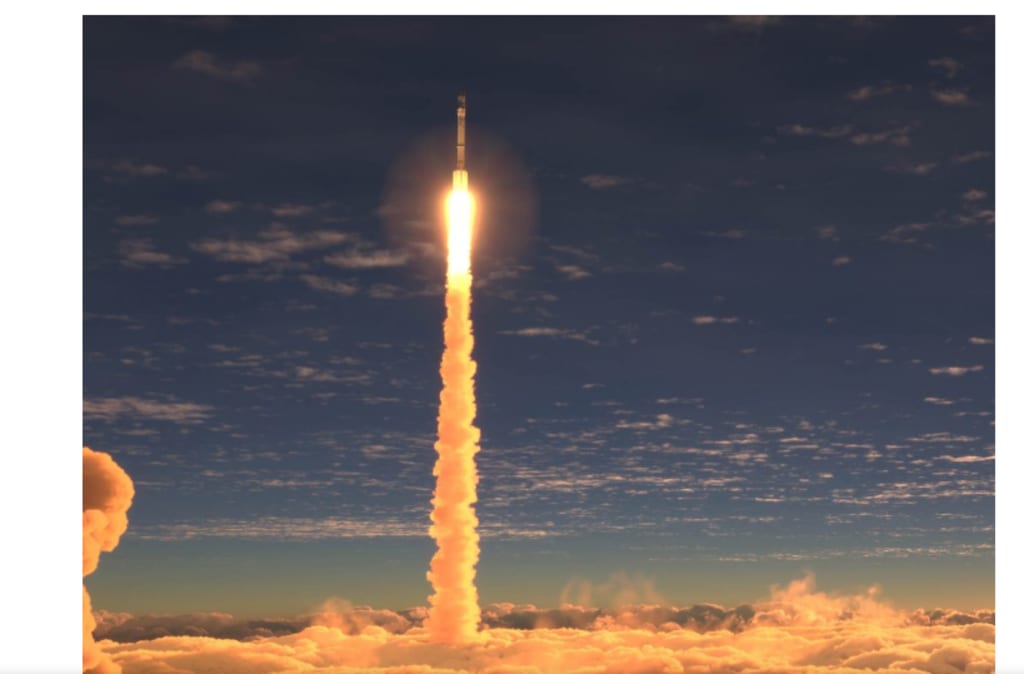
These days, pollution is a global issue. Satellites are being used for internet service, GPS, movie viewing, and weather monitoring. There are currently thousands of satellites in orbit, and more are being launched annually.
However, a recent study claims that the increasing number of satellites could lead to a significant environmental issue that most people are still ignoring.
Air pollution and satellite launches
Before the end of the decade, pollution from enormous satellite networks known as "megaconstellations" may account for over half of the space industry's climate effect, according to scientists.
The rockets that are being launched into space are not the only issue. When they return to Earth and burn up in the atmosphere, old satellites and leftover rocket components also contribute to pollution.
From 2020 to 2022, researchers at University College London (UCL) examined satellite deployments and rocket launches. The group also projected how pollution might increase by 2029. The findings imply that the atmosphere above Earth is changing more quickly than most people are aware.
Soot in the upper atmosphere
Pollution is typically associated with the ground. Ash from wildfires, manufacturing smoke, and automobile exhaust typically remain in the lower atmosphere, where rain and other weather eventually remove most of it. The behaviour of rocket pollution is distinct.
Because air circulation is significantly slower in the high atmosphere, soot generated by rockets can remain there for years. This means that black carbon from rockets is roughly 540 times more powerful in influencing climate than soot discharged close to the Earth's surface, according to the researchers.
The space sector may emit 870 tonnes of soot annually by 2029. That is comparable to the annual production of all passenger automobiles in the United Kingdom. According to the report, megaconstellations already accounted for over 35% of the space industry's overall climate effect in 2020. That percentage is predicted to rise to 42% by 2029.
Low-Earth orbit satellites
The expansion has been tremendous. Megaconstellations are enormous networks consisting of thousands or hundreds of satellites in low-Earth orbit. SpaceX's Starlink internet system, which currently has about 12,000 satellites in orbit, is the most well-known example. China's and Amazon's competing systems are also rapidly growing.
Launches have accelerated along with them. The number of rocket launches per year increased from 114 in 2020 to 329 in 2025, primarily due to SpaceX Falcon 9 missions. Previous projections of an additional 65,000 satellites by the end of the decade, according to researchers, may already be too low.
During launch, the kerosene-based fuel used in the Falcon 9 rocket generates soot particles. Compared to pollution from power plants or terrestrial transportation, such particles stay suspended high above Earth for far longer.
According to Dr. Connor Barker, primary author of the study, "rocket launches are a unique source of pollution, injecting harmful chemicals directly into the upper layers of the atmosphere and contaminating Earth's last remaining relatively pristine environment."
"We must take action before this soot causes irreversible harm, even though its impact on the climate is currently much smaller than that of other industrial sources."
A surprising cooling effect
The fact that this pollution may momentarily cool some portions of the world is one of the study's most unexpected conclusions. The quantity of sunlight that reaches the Earth's surface is decreased by the buildup of soot and particles.
Researchers predict that by 2029, the effect would mimic certain suggested geoengineering techniques meant to cool the planet by obstructing sunlight in the upper atmosphere. Professor Eloise Marais of UCL said, "The cooling effect from the reduction in sunlight that we calculate with our models may sound like a welcome change against the backdrop of global warming, but we need to be extremely cautious."
An experiment in geoengineering
The concept of geoengineering has been the subject of years of debate among scientists. In order to reflect sunlight away from Earth and cool the planet, some ideas call for dispersing particles into the atmosphere.
It may help halt global warming, according to supporters. Opponents fear it may also have unpredictable effects on agricultural, rainfall, weather systems, and ecosystems. The researchers claim that satellite pollution is unintentionally and unregulatedly producing a similar effect.
According to Professor Marais, "the space industry pollution is like a small-scale, unregulated geoengineering experiment that could have many unintended and serious environmental consequences."
"We still have the opportunity to take action before it becomes a more significant issue that is more difficult to reverse or repair because the impact on the atmosphere is currently minor. There hasn't been much work done thus far to control this kind of pollution.
How about the ozone layer?
The ozone layer, which protects Earth from damaging UV radiation, was also studied. Chemicals like chlorine that directly harm ozone can be released during rocket launches. Ozone-depleting reactions can potentially be accelerated by tiny particles created during launches and re-entrances.
According to the experts, the influence is still quite minor as of right now. Global ozone is predicted to be reduced by just 0.02 percent by 2029 as a result of all rocket launches combined. In contrast, the Montreal Protocol's regulations on ozone-depleting compounds resulted in roughly 2% ozone depletion.
However, scientists claim that the next generation of rockets will have a significant impact on the future. Certain more recent satellite projects might depend on rockets that emit emissions including chlorine.
A variety of launch providers will be used in Amazon's proposed internet constellation, Leo. Rockets powered by solid fuels containing chlorine may also be essential to China's expanding Guowang satellite network. Over the coming years, those systems might launch tens of thousands more satellites into orbit.
Pollution from satellite launches is a threat to the climate.
For many years, rocket launches were so infrequent that few people were concerned about how they would affect the environment. That time has passed. These days, private firms launch rockets once a week, often multiple times in a few days. The cost of building and replacing satellites is decreasing.
Some are made to burn out after a few years and be replaced by newer models. According to the study, space pollution is evolving from a specialised issue to a significant environmental problem. Though it may appear far away, events in the atmosphere above Earth do not remain there.
About the Creator
Enjoyed the story? Support the Creator.
Subscribe for free to receive all their stories in your feed.
Comments
There are no comments for this story
Be the first to respond and start the conversation.