
How Saturn, a Failed Star, Continues to Enchant Us with Its Dazzling Presence
Unveiling the Mysteries of Saturn's Failed Stardom and Enduring Allure
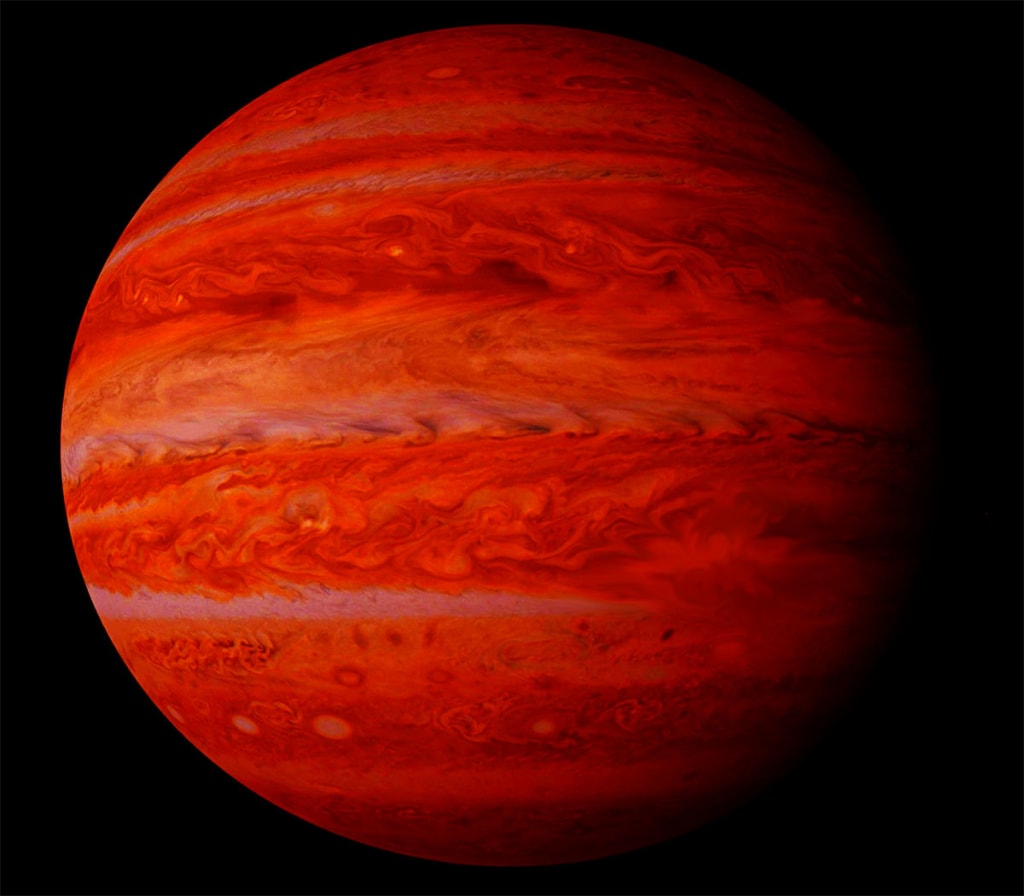
This celestial body is frequently referred to as The Solar System's Gem, likely due to its mesmerizing beauty and captivatingly exotic appearance accentuated by its vibrant encircling rings. It's evident that the subject of discussion here is Saturn – the solar system's second-largest planet. The inquiry at hand revolves around whether Saturn could be categorized as an unsuccessful star. In the context of a failed star, its constitution comprises gaseous elements, yet it lacks the capacity to sustain the thermonuclear fusion reactions in its core, owing to its insufficient mass. This particular classification of a star often goes by the term "brown dwarf." These cosmic entities share a proximate size with Jupiter, the largest planet within our solar system. However, it's important to note that brown dwarfs possess notably greater mass.
Dissimilar to typical stars, they emit limited visible light due to their insufficient mass for hydrogen fusion. However, brown dwarfs can engage in deuterium and lithium fusion. The concept of failed stars emerged approximately six decades ago, with the initial theoretical literature outlining them being published in 1962. The first definitive confirmation of a brown dwarf occurred in 1988, marked by the observation of an astronomical entity termed GD 165 B. Despite possessing numerous star-like attributes, this space object stands as a distinct classification.
Attributes of a star itself come into play here. This celestial object revolved around another star but did not fulfill all the essential criteria to earn the distinction of being labeled as such. This is why researchers began to refer to it as a "failed star," a term that might now seem rather unforgiving. Since that initial revelation, astronomers have identified over 50 additional brown dwarves. Based on the most recent assessments, it's speculated that there could be approximately 25 million of these unsuccessful stars within our galaxy alone.
Due to the absence of visible light, detecting brown dwarfs presents a significant challenge, potentially leading to inaccuracies in the count. The primary reason speculated for a star's failure is its inability to accumulate sufficient material to initiate the standard process of Stellar Fusion. Returning to Saturn, the response to the inquiry regarding its potential classification as a failed star is negative. The primary distinction between a planet and an unsuccessful star lies in their formation processes. Stars emerge as dust and gas condense within a primordial cloud, resulting in their relatively low metal content. Concurrently, planets possess notably lesser mass compared to stars, leading to significantly weaker gravitational forces. An instrumental rationale behind Saturn's exclusion from the failed star category is its insufficient initial mass, which precluded its attainment of stellar status.
A brown dwarf gathers its stellar material in a manner akin to a star, diverging from the planetary process due to its strong gravitational force. Stars possess the capability to retain lighter elements such as helium and hydrogen due to their higher gravity. For Saturn to transition into a failed star, it would necessitate an increase of 50 times its present mass. However, even if the gas giant were to embark on the endeavor of becoming a brown dwarf, the available material in orbit around the Sun is insufficient to facilitate such a transformation.
Should any of the gas giants within our Solar System, such as Jupiter or Saturn, endeavor to transform into a failed star, it would necessitate a substantial increase of 10 to 15 times in their existing mass. This, however, isn't a typical aspiration. This is due to the fact that the sun itself holds an overwhelming 99.86 percent of the total mass within the entire solar system. Even if all the other materials within our stellar neighborhood were amalgamated, their cumulative mass would still fall short of birthing even a subpar star.
Brown dwarfs and main sequence stars share numerous similarities in their formation and characteristics. Initially, both emerge as expansive masses of gas, beginning their journey as protostellar cores. Both entities ignite nuclear reactions within themselves, generating substantial amounts of heat. While several failed stars emit a degree of light, it predominantly falls within the infrared segment of the electromagnetic spectrum.
Now, let's examine the distinctions between these types of stars. A standard star emits light and energy through ongoing thermonuclear reactions within its core, which convert hydrogen into lithium. In contrast, an unsuccessful star lacks the necessary mass for such reactions. Additionally, unsuccessful stars are notably smaller than their regular counterparts, which generally exceed 80 times the mass of Jupiter. Ordinarily, a regular star's gravitational force is sufficient to shape a solar system with orbiting planets.
Brown dwarfs, on the other hand, commonly orbit other stars. Only one known unsuccessful star has an orbiting planet. I'm intrigued by the term "failed star"; it seems somewhat academically judgmental. Did it receive an unsatisfactory grade on an examination? Perhaps alternative labels like "disappointing star" or "undersized star" could be considered. But I digress. What about Jupiter? This gas giant, larger than Saturn and the largest planet in the solar system, shares a composition with the sun, primarily hydrogen and helium, along with trace elements. However, the sun's mass surpasses Jupiter's by over a thousandfold. When juxtaposed, the gas giant appears minuscule in comparison.
For Jupiter to transition into a star, akin to the sun's size, it would need to augment its mass by more than a thousand times. Conversely, the sun isn't the tiniest—or most massive—star; red dwarfs claim that distinction. The smallest among them could be just 7.5 percent of the sun's mass. Therefore, if Jupiter aspired to star status, becoming a red dwarf would be more plausible, necessitating an increase in mass by approximately 80 times.
Interestingly, a diminutive star in the Milky Way, smaller than Jupiter, exists. This red dwarf, a mere 36,660 miles wide, located 600 light years away, ranks among the tiniest hydrogen-fusing stars known. We've established that Saturn and Jupiter can't be regarded as unsuccessful stars. However, envision a scenario where these gas giants collide. Could they merge into a single gas giant, possibly a brown dwarf? While the odds of a Jupiter-Saturn collision are remote, let's ponder this hypothetical situation and its implications.
In the past, researchers theorized that Saturn and Jupiter underwent similar processes. Both planets reached a phase where rapid accretion of material was necessary. However, Jupiter seems to have capitalized on this more effectively. An essential threshold for significant hydrogen and helium accumulation is around 100 times Earth's mass. Jupiter easily surpasses this mark, implying it secured most outer solar system material before the sun dispersed it. Uranus and Neptune lacked the size to partake, while Saturn lingered on the cusp.
Though large enough to amass hydrogen and helium via gravity, Saturn didn't trigger nuclear fusion. Hence, despite their parallels, Jupiter and Saturn charted divergent evolutionary paths. A head-on collision would annihilate both planets, obliterating their atmospheres and flinging their cores into space. An angled collision could leave them intact, but a substantial portion of material would be lost. Alternatively, a glancing collision would alter their shapes without changing composition or mass. Could this be deemed a botched collision? How underwhelming.
About the Creator
Enjoyed the story? Support the Creator.
Subscribe for free to receive all their stories in your feed.
Comments
There are no comments for this story
Be the first to respond and start the conversation.