
How Pyrolysis Technology Leads the Global Environmental Revolution?
From Waste to Wealth
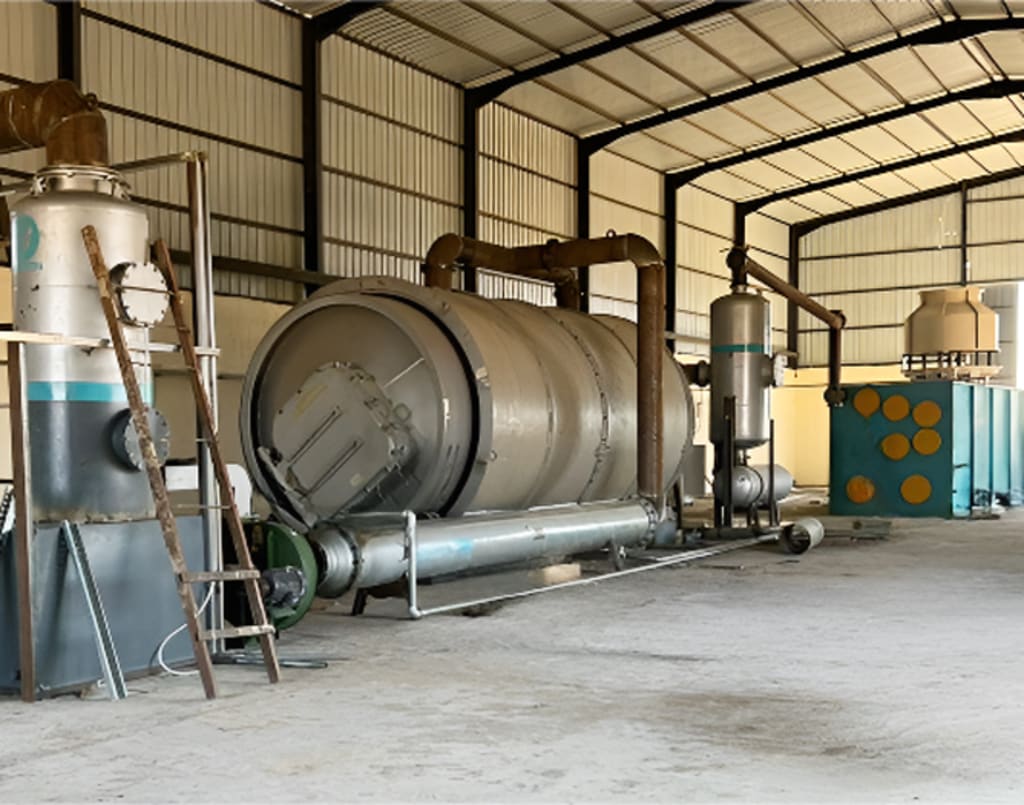
In the face of resource depletion and climate crisis, the traditional "linear consumption" model is under unprecedented pressure. Pyrolysis—a thermochemical decomposition process conducted in an oxygen-free environment—is emerging as a disruptor in waste management through its unique logic of "subtraction" for pollution and "addition" for resources. It doesn't just make waste disappear; it rearranges matter at the molecular level, giving waste a second life in the circular economy.
1. The "Game Changer" for Landfill Crisis: Reshaping Urban Boundaries
Landfills worldwide are reaching their breaking point, consuming valuable land and posing "underground time bombs" due to leachate risks.
By deploying sophisticated pyrolysis equipment, we are achieving a qualitative leap in waste management:
- Volume Reduction and Detoxification: Unlike landfilling, pyrolysis can reduce the volume of solid waste by approximately 90%. It dismantles waste physically and chemically, converting potential pollutants into stable solids or liquids.
- Curbing Invisible Greenhouse Gases: Landfills are major sources of methane—a gas with a warming potential over 20 times that of CO2. Pyrolysis operates in a fully enclosed system, capturing these gases and converting them into energy, fundamentally eliminating the secondary environmental hazards of traditional disposal.
2. A "Brake" on Carbon Emissions: Defining New Standards for Clean Energy
As carbon reduction becomes a global consensus, pyrolysis offers a more elegant solution than incineration.
Traditional waste incineration is essentially a violent oxidation reaction, inevitably producing large amounts of CO2 and toxic dioxins. Pyrolysis, however, demonstrates superior environmental performance:
- The Advantage of Oxygen-Free Decomposition: Since no oxygen is involved, the materials do not combust. This leads to a significant reduction in atmospheric emissions, effectively preventing the formation of harmful soot and toxic gases.
- Energy Self-Sufficiency: The non-condensable syngas produced during pyrolysis can be purified and fed back to heat the reactor. This energy loop lowers operational costs and reduces reliance on external fossil fuels, achieving exceptional energy conversion efficiency.
3. The "Accelerator" for Circular Economy: From Waste End to Industrial Start
The core charm of pyrolysis lies in its ability to turn "waste into treasure," reintegrating discarded materials into the industrial cycle and reducing the extraction of virgin minerals and fossil resources.
- High-Value Byproducts: The bio-oil produced serves as a green industrial fuel; carbon black can be reused in tire manufacturing or as a reinforcing agent; and steel wires can be directly recycled.
- Reducing Lifecycle Footprints: The energy required to manufacture products from pyrolytic recycled materials is far lower than extracting raw materials from nature. This resource recovery model protects biodiversity and slashes the carbon footprint of the entire industrial chain.
4. Protecting the Blue Ocean: Ending the Century-Long Wander of Plastic Waste
Plastic, one of humanity's greatest inventions, is also the ecosystem's heaviest burden. Millions of tons of plastic enter the oceans annually, breaking down into microplastics that infiltrate the food chain.
Pyrolysis provides the ultimate exit strategy for "non-recyclable plastics." It can process complex, mixed plastics that are unsuitable for mechanical recycling, converting them back into basic oil feedstock. This not only prevents plastic from flowing into nature but also creates a new pathway for "plastic-to-oil" conversion, providing an economically viable foundation for solving the global plastic crisis.
Technological Synergy and Future Sustainable Vision
Beyond its direct waste-processing capabilities, the pyrolysis plant is evolving into a "central node" within the modern urban ecosystem. With the integration of Industry 4.0 technologies, contemporary pyrolysis equipment has achieved a high degree of automation and intelligence, capable of adjusting reaction temperature and pressure in real-time based on the composition of input feedstocks to maximize resource recovery rates.
This flexibility allows it to interface seamlessly with a city's clean energy grid: processing waste to store energy during periods of surplus, and providing stable thermal or electrical energy via syngas during shortages. More importantly, when coupled with Carbon Capture and Storage (CCS) technologies, pyrolysis has the potential to achieve "negative carbon emissions." It is not merely cleaning up the pollution of the past; it is providing the core technical infrastructure for future zero-carbon cities by constructing a multi-dimensional resource regeneration network.
This paradigm shift—from "waste management" to "energy creation"—is precisely the key to addressing global warming and achieving a leapfrog development in ecological civilization.
About the Creator
Enjoyed the story? Support the Creator.
Subscribe for free to receive all their stories in your feed.
Comments
There are no comments for this story
Be the first to respond and start the conversation.