
How Much of the Ocean Do We Know?
The Depths of the Unknown

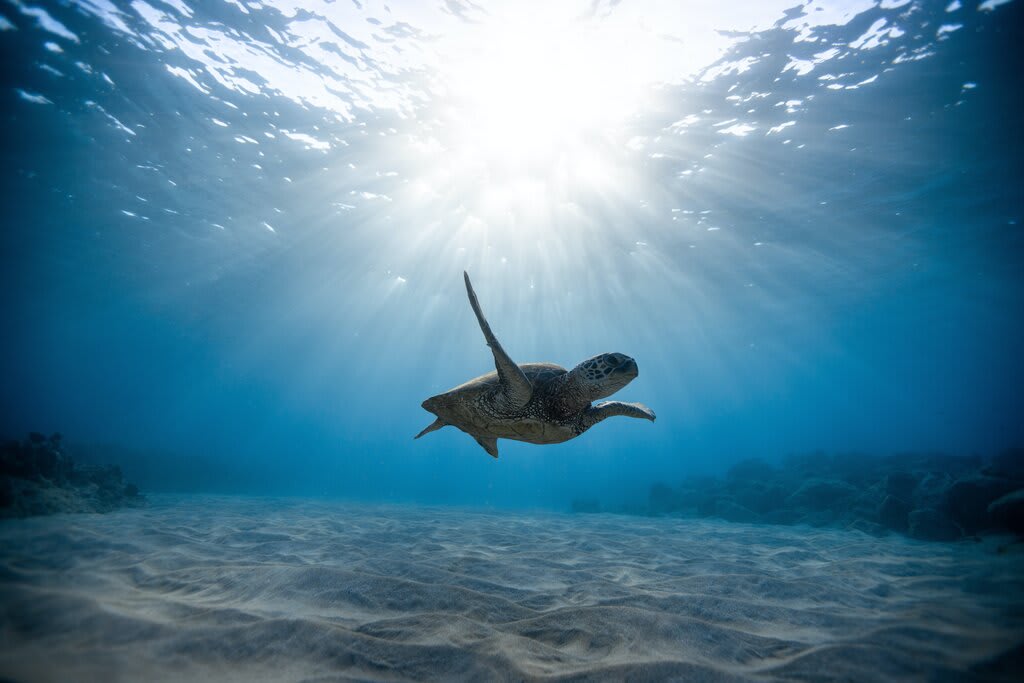
The ocean is much deeper than most of us realize— (a lot deeper). There would be an ocean 2 miles deep if you removed all the land from the tops of all the continents and islands in the world and filled the deepest points of the ocean with it. However, there is already water on three-quarters of our planet, and it is much deeper than two miles. Let's start going underwater and see what we find out.
The first landmark is located at a depth of 40 meters below the surface, which is the limit for recreational scuba diving. The Lusitania's wreck was found at a depth of 93 meters, which is interesting because the ship is 240 meters long, meaning that it sank in water that is shallower than it is long. So, the ship would be sticking out of the water if it were standing on its bow or stern. If you're not careful, diving can become seriously fatal at just a little bit deeper than that, at 100 meters, due to decompression sickness.
However, Herbert Nitsch still managed to set a world record for free diving at a depth of 214 meters. With just one breath, this man swam to this depth. Moreover, a little further down, at 332 meters, is where Ahmed Gabr, another man, set the world record for scuba diving. He could have reached the height of the Empire State Building if it had been submerged in water if he had continued swimming down another 111 meters. The maximum dive depth of blue whales, the largest animals on Earth, and the limit of the US Seawolf Class Nuclear Submarine are a little deeper, at 500 meters below the surface. At 535 meters we can witness the maximum dive depth of Emperor Penguins.
We need to emphasize the strength of the water pressure in this case. The water pressure exerted on a person or a group of penguins at this depth below the surface would be comparable to that of a polar bear standing on a quarter. The Burj Khalifa in Dubai, the tallest structure in the world, would therefore be further down in the depths at 830 meters.
We start to enter the scary zone once we descend 1,000 meters below the surface. Beyond this point, light from the surface is no longer able to penetrate, leaving the remaining ocean below in complete darkness. Additionally, the water pressure you would be under at this point would be roughly equivalent to what you would experience if you were standing on the surface of Venus, which would result in your rapid demise. If the water pressure didn't already kill you, at this sea level you would also run into the Giant Squid. We reach the deepest the leatherback sea turtle can dive at 1,280 meters. If the Grand Canyon were underwater with us, we would reach its deepest point at 1,828 meters further down.
At 2,000 meters below sea level, we begin to come across some of the more dreadful marine life, such as the ominously named Black Dragonsih, a carnivore with a stomach that blocks light from passing through it. Meaning that the only way you could ever see this thing is with a flashlight because we are currently submerged and completely in the dark. At 2,250 meters, which is a little further down, we would reach the maximum depth that both sperm whales and the extremely ominous colossal squid can dive to. The fights with the Colossal Squid that probably occur at these incredible depths leave sucker marks and scars on the bodies of sperm whales. The squids themselves can grow to be 14 meters long and weigh up to 750 kilograms with eyes the size of a dinner plate and razor-sharp sickles in the middle of their tentacles.
The RMS Titanic's wreck can be found at a depth of 3,800 meters. And then, at 4,000 meters, we start to descend into the ocean's abyssal zone. Down here, the water pressure is a startling 11,000 pounds per square inch. The Fangtooth, Angler, and Viper Fish are just a few of the strange, almost alien-like creatures that live in these depths. The average depth of the ocean, where you would typically expect to hit the floor, is 4,267 meters. However, there are areas of the ocean that are much deeper than this. The battleship Bismarck's wreckage, which was sunk during World War II, is located at 4,791 meters.
At 6,000 meters below sea level, the Hadal Zone—named after the underworld's ruler, Hades—begins. At these depths, the water pressure can increase to 1,100 times that of the surface, which is roughly equivalent to an elephant standing on a postage stamp or one person carrying the weight of 50 Boeing 747 jumbo jets. Without any outside protection, you would be instantly crushed down here. However, life continues to exist down here in a variety of odd ways. We reach the maximum depth that the DSV Alvin, a well-known research submarine that was instrumental in the Titanic's discovery, can dive to at 6,500 meters.
We reach the height of Mount Everest if it were placed upside down and underwater, at 8,848 meters below the surface, which is much lower. The depth that James Cameron reached in 2012 during the Deep-Sea Challenger Mission is then much deeper than even that, at 10,898 meters. But in 1960, two men by the names of Don Walsh and Jacques Piccard used their submarine called Trieste to descend to a depth of 10,916 meters, marking the deepest point of the ocean that has yet to be reached by humans. They had to swim through the ocean for five hours to get here. They were only there for 20 minutes before a window broke and they started to emerge again.
The average flight altitude of a commercial airliner is reached just a little bit lower, at 10,972 meters. You can get a good idea of how far down into the abyss we have descended if you've ever looked out of a window while flying and down at the ground. Finally, at a depth of 10,994 meters, or about 300 kilometers southwest of Guam Island, we have reached the Challenger Deep, the bottom of the known ocean. However, it is thought that there are almost certainly areas of the ocean that are even deeper than this that simply haven't been found yet. After all, it wasn't until 1997 that the Sirena Deep, the second-deepest known location in the ocean with a depth of 10,732 meters, was found. The majority (95%) of the ocean floor is currently unknown because only about 5% of it has been accurately mapped. The discovery of a region of our ocean that is even deeper might be imminent.
About the Creator
Alpha Prime
Writing or typing is my path to freedom.
Enjoyed the story? Support the Creator.
Subscribe for free to receive all their stories in your feed.
Comments
There are no comments for this story
Be the first to respond and start the conversation.