
How Micro-Pyrolysis Technology Empowers High-Precision Carbon Dioxide Removal (CDR) Research
Green Carbon Breakthrough
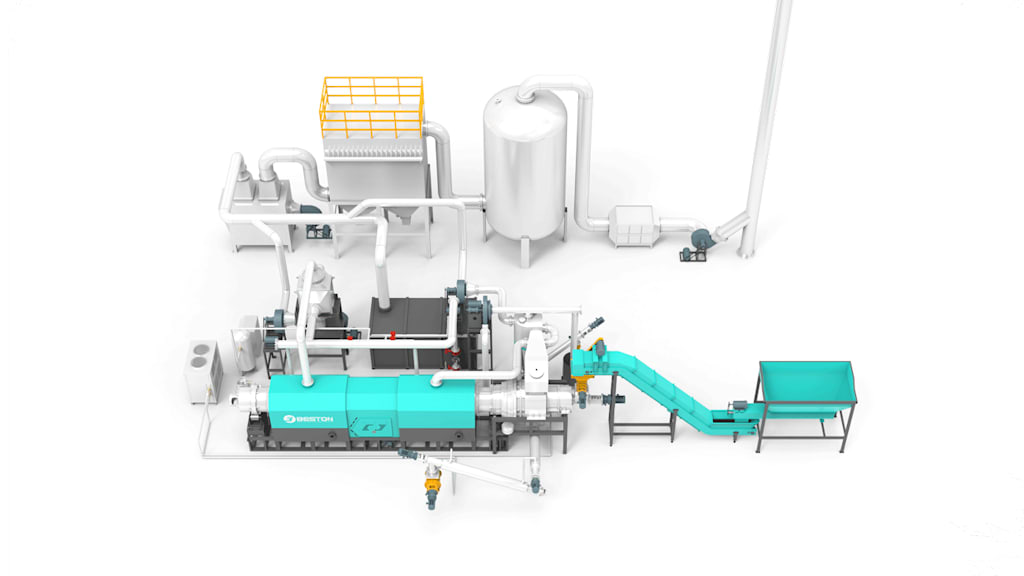
At the forefront of global climate action, Carbon Dioxide Removal (CDR) has evolved from a fringe science into a core strategy. Among various methodologies, converting biomass into stable "biochar" for millennial-scale carbon storage is experiencing explosive growth. However, from expansive farmlands to rigorous carbon trading markets, the scientific community urgently requires a high-precision "yardstick" to measure the carbon sequestration potential of biomass.
Micro-scale pyrolysis conversion systems are emerging as the pivotal scientific instruments in this green carbon revolution. Rather than being mere conversion devices within a laboratory, they serve as the technological bridge connecting biomass diversity with standardized global carbon emission reduction metrics.
01. Pure Thermal Control: Unlocking the "Gold Standard" for Carbon Footprint Metrology
In CDR experimental research, the lifeline of data lies in "reproducibility." Any minor temperature fluctuation or airflow variance can fundamentally alter the internal pore structure and carbon stability of the resulting biochar, thereby invalidating carbon offset calculation models.
Core Pain Point: Traditional, coarse carbonization methods fail to provide standardized experimental samples, leaving carbon credits lacking in international credibility.
The introduction of a small charcoal making machine has completely transformed this landscape. It grants researchers the ability to meticulously fine-tune pyrolysis parameters—whether it is the instantaneous heating rate, the anoxic gas flow rate within the reactor, or the material's residence time under constant temperature—all managed via fully digitized controls. Through this high-precision process standardization, researchers can eliminate experimental anomalies to the greatest extent. This ensures that every gram of biochar produced possesses consistent carbon-retention quality, laying a rock-solid scientific foundation for the issuance of global carbon credits.
02. Biomass Diversity Utilization: Exploring the "Green Carbon Potential" of Waste
The essence of sustainable development lies in local adaptation and circular regeneration. Biomass resources vary drastically across the globe—from rice husks in Asia and wood chips in the Americas to nutshells in Africa—yet all serve as nature’s inherent "carbon catchers."
Utilizing micro-scale, research-grade pyrolysis systems, scientists can conduct extensive comparative studies across various feedstocks:
- Agricultural Residues: Evaluating the post-pyrolysis carbon stability of straw, stalks, and rice husks.
- Forestry By-products: Assessing the carbon retention rates of different sawdust and wood chip species.
- Urban Green Waste: Exploring the conversion of landscape trimmings into high-value, fixed-carbon-rich materials.
This versatile material adaptability not only maps out a detailed global blueprint of biomass carbon-sink potential but also provides an indispensable feedstock selection guide for the future implementation of large-scale, regional CDR projects.
04. Zero-Pollution Closed Loop: Practicing Environmental Justice Through Clean Engineering
If an apparatus engineered for carbon reduction research generates pollution itself, it fundamentally betrays its ecological purpose. Advanced micro-pyrolysis technology integrates environmental friendliness into every engineering detail:
- Active Thermal Protection: Utilizing advanced, high-density ceramic fiber insulation layers, the outer surface temperature is kept within safe limits, significantly reducing laboratory energy consumption.
- Smart Safety Interlocks: Real-time monitoring of micro-positive pressure and oxygen concentration prevents any high-temperature explosion hazards, ensuring the absolute safety of research personnel.
- Hazardous Exhaust Micro-Filtration: Standard multi-stage condensation and activated carbon adsorption systems efficiently capture volatile organic compounds (VOCs) and bio-tar generated during pyrolysis, ensuring that only clean gas is released into the atmosphere.
This stringent emission management not only complies with the world's most rigorous laboratory environmental regulations but also profoundly illustrates the philosophy of "using green technology to study green science."
05. Empowering the Future: Scaling from Lab Micro-Metrics to Gigaton-Scale Carbon Neutrality
The precision of data dictates the height of an industry. Every precise measurement and every thermogravimetric curve obtained through micro-scale pyrolysis equipment continuously injects "golden data" into global carbon cycle models. It helps us accurately calculate the "temporal ledger" of biochar sequestered in soil for centuries, as well as the "ecological revenue ledger" generated per ton of biomass input.
When scientific research is no longer constrained by volatile external environments, and when every experimental outcome can be perfectly replicated in a micro-scale system, humanity moves one step closer to large-scale, commercial, and trustworthy CDR deployment. This precise conversion instrument, with its compact physical footprint, is ultimately driving the grand future of global sustainability and carbon neutrality.
About the Creator
Enjoyed the story? Support the Creator.
Subscribe for free to receive all their stories in your feed.
Comments
There are no comments for this story
Be the first to respond and start the conversation.