
How a Small Fire Became a Forest’s Reckoning
From a burning van to a wildfire's advance, and the truths we rarely hear about fighting flames


Before The Flames
That small spark which patiently waits for the precise moment when the three key parts of the ‘fire triangle’ (fuel, heat, and oxygen) come together, as demonstrated below:
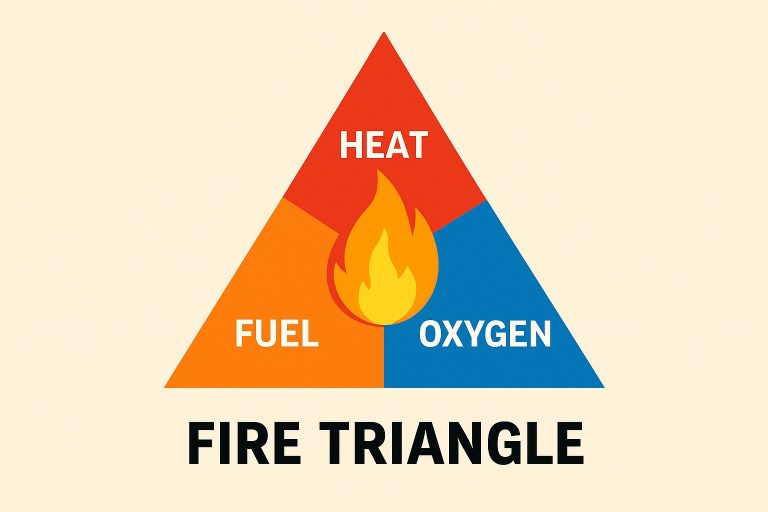
Remove one key part (disrupting the triangle), and it’s enough to contain and extinguish the fire.
However:
Reintroduce that one missing key part (reconnecting the full triangle), and that fire will reignite.
1. 12 months of fire training with Tyne & Wear Fire and Rescue Service.
2. Active Fire Marshall, while employed as a clinical psychiatric nurse (32 years). Jonathan Townend, RMN — Editor (Written & Published, dated 22nd September, 2026 / Book Writer
Wildfires don’t simply begin with a large-scale extravaganza. They begin with something innocent, something small, forgettable things, such as objects left behind, moments overlooked, heat gathering in places no one thinks to check; such as an electric fire left on in a room overnight and unattended, or a plug left in a mains wall socket, or you might have failed to notice a loose wire showing worn-away insulation, or a crack in a plug or in its wall socket itself. The prime culprit among them: that innocent-looking lithium-ion battery charger, or rechargeable vape, left charging overnight, forgotten when the house shut down for the night and the family drifted off to sleep.
On heathland, in forestry, and on moorland, where the ground and bracken, even grass, dries faster than many people realize, the landscape becomes a quiet archive of potential ignition.
Most days, nothing happens. But all the ingredients are there. Heat. Fuel. Oxygen. And that’s all a fire requires to exist.
Jonathan Townend
Glass that turns sunlight into fire by magnifying the sun’s intense heat. Twigs twisted into friction points. Leaves/and grass waiting for heat. Throwaway barbecues cooling on the surface but burning beneath. Vape batteries that rupture when crushed or overheated.
The land always remains patient. It simply needs just one spark.
Jonathan Townend
That Moment The Catastrophic Spark Arrived. On a very hot and sunny late afternoon, the spark arrived in the form of an innocent-looking white van. It pulled onto the soft verge, ‘with the kind of hesitation that many drivers can sense when something feels wrong but is not yet urgent.’
That faint smell of burning plastic
A hint of heat rising from the bonnet
Nothing quite dramatic, not yet. It was just another one of those moments where people assume that they have time.
But the van definitely did not have time.
Jonathan Townend
The white van’s engine compartment was already in the early stages of what’s known as thermal runaway, the kind that begins quietly and then accelerates with a terrifying speed. When the driver stepped away, out onto the verge, the fire found its oxygen. Flames pushed through wiring, insulation, and plastic housings at unbelievable speed.
Heat built
Pressure rose
The vehicle suddenly became an ignition source far hotter than anything the forest would ever normally encounter.
How Thermal Runaway Occurs in EVs
Understanding thermal runaway in Electric Vehicles is crucial for ensuring the safety of electric vehicles. Here’s how it typically occurs:
Initial Trigger: Factors such as overcharging, physical damage, manufacturing defects, or external heating can initiate the process.
Heat/ Generation: The initial trigger causes the battery cell to heat up. As the temperature rises, exothermic chemical reactions within the cell accelerate.
Positive Feedback Loop: These reactions release more heat, further increasing the temperat/ure and accelerating the reactions, creating a positive feedback loop.
Propagation: Heat can spread to adjacent cells, causing them to enter thermal runaway as well, potentially leading to a chain reaction throughout the battery pack.
Failure: If not contained, thermal runaway can cause the battery to vent toxic gases, catch fire, or even explode, posing significant risks to the vehicle and its occupants.
PARKER. “What Is Thermal Runaway
(All credit to © PARKER HANNIFIN CORP 2026)
Advice and information on Thermal Runaway.
With thanks to © PARKER HANNIFIN CORP 2026)
Interestingly though, this does not occur with traditional petrol-engine cars, as there are no lithium-ion batteries in these types of engines.
The science behind lithium battery fires
The fire rapidly melted through the crash barriers.
It leaped across the carriageway, crucially damaging it, as the fire rapidly turned into a blaze, reaching the tinder‑dry vegetation beyond those same grass, twigs, and leaf‑pockets that had been waiting all summer for just one little spark.
And in seconds, the landscape responded with an anger only nature can.
What began as a small, mechanical failure became a full-on wide area emergency response to a devastating forest fire.
Jonathan Townend
Firefighters worked through the night and continue to tackle a fire affecting heathland near the A31.
The fire started after a van caught fire at around 5.20pm on Sunday 9 August, 2026. The blaze then spread into the open countryside of the New Forest National Park.
The A31 remains closed while emergency services deal with the incident.
Courtesy of Fordingbridge Town Council. New Forest wildfire incident.
Fordingbridge Town Coiuncl
The conditions were primed for disaster. Weeks of high temperatures, low humidity, and prolonged drought had left grasslands and heath areas tinder‑dry. Fire crews later described the landscape as “ready to burn.”
The blaze advanced rapidly, consuming underbrush, jumping root systems, and threatening nearby properties, including a two‑storey house left with little more than its roof slates intact.
No injuries were reported, thankfully. But the incident exposed a wider problem.
Relative of author, who wishes to maintain anonymity
Public frustration was immediate. Many asked why water‑bombing helicopters weren’t deployed.
Why Helicopters Weren’t Used
The answer is practical, not political:
Most of the water never reaches the fire. In extreme heat, water dropped from height evaporates before impact
What does arrive on land does so with almost no force. Without pressure, it cannot penetrate the fuel bed or reach smoldering roots
Cost is prohibitive. Tens of thousands of pounds per hour for a technique like this is largely ineffective against low‑canopy, ground‑fuel fires such as those in the New Forest
Terrain matters. Water‑bombing is designed for steep, inaccessible wildfire zones, not flat heathland where ground crews can operate
In short: helicopters look effective on television, but they are not suited to New Forest fire behavior.
Why Halon Cannot Be Used
Another suggestion raised by members of the public was the use of halon, which was once used as a common fire‑suppressant chemical. Halon proved highly effective, extinguishing fires without water, residue, or damage to equipment. But it came with a catastrophic/ environmental cost.
Halon destroys the ozone layer
Its production was banned under the Montreal Protocol, implemented in the EU through Regulation (EC) No 2037/2000 and later Regulation (EC) No 1005/2009.
Manufacturing ceased in the mid‑1990s, under the Environmental Protection Act 1990 (Sections 33 and 34) and the Waste Management Licensing Regulations 1994
Remaining supplies of Halon are restricted to critical uses only: aircraft, submarines, and nuclear facilities.
Deploying halon over a forest fire would be illegal and environmentally disastrous.
A Warning for Grassland and Forest Communities
The New Forest fire highlights a growing risk across the UK: extreme heat + prolonged drought = explosive fire conditions.
Grasslands, heathlands, and forestry areas can ignite from:
vehicle fires
discarded cigarettes
hot exhaust systems
broken glass acting as a lens
barbecues
machinery sparks
When the landscape is this dry, small ignition sources become large incidents within minutes. Fire services are urging residents and visitors to treat summer conditions with the same caution normally reserved for Mediterranean wildfire zones.
Looking Ahead: Mitigation Ideas
While no single solution can fully eliminate wildfire risk, the incident has prompted discussion about new preventative infrastructure in high‑risk areas of the New Forest.
1. Wide‑Area Automated Sprinkler Zones
Strategically placed, remotely activated sprinkler systems could dampen critical sections of heathland during extreme heat alerts. These would not replace firefighting operations but could slow the spread of fire long enough for crews to arrive on scene.
2. Roadside Fire‑Tackling Hose Reels
Installing emergency hose reels along major routes such as the A31 could enable drivers or trained volunteers to suppress small roadside fires, including vehicle fires, before they spread to vegetation. These would be clearly marked, locked systems similar to motorway emergency equipment.
3. Random ‘hotspot’ area-wide CCTV monitoring placed within the forest, and linked directly to those responsible for taking care of the whole area, to allow for early warning and intervention.
4. More freephone availability on and off site, which are directly linked to the central fire & rescue centers.
“All four ideas would require feasibility studies, environmental assessments, and coordination with Forestry England, Dorset, Hampshire & Isle of Wight Fire & Rescue Services, and local councils emergency planning teams. But the New Forest fire has shown that early intervention is often the difference between a contained incident and a landscape‑scale emergency.”
Jonathan Townend, RMN - Editor (Written & Published, dated 22nd September, 2026)
Author's Ideas
In closing this article, it took nearly 10,000 hours to fully extinguish this tragic blaze, using more than 85 million liters of water from day one (August 9th, 2026), with a ‘STOP’ order issued two weeks later, on 23rd August, 2026. In the process, more than 1 sq km (247 acres) of the national park was fully destroyed.
"Our heartfelt blessings go out to all those dedicated firefighters for fighting a fire that could have been so much worse than it already was."
Jonathan Townend (24.09.2026)
About the Creator
Jonathan Townend
Book Author. I came to value writing as a portal to express my thoughts. My stories grow from seeds in my mind. Writing's my escape, my tiny space of mindful freedom. Stop by. Have a read; see what I come up with.
Enjoyed the story? Support the Creator.
Subscribe for free to receive all their stories in your feed. You could also become a paid subscriber, letting them know you appreciate their work.
Comments
There are no comments for this story
Be the first to respond and start the conversation.