
High-Porosity Sawdust Biochar for CO₂ Capture
How Biochar Pyrolysis Is Turning Wood Waste into Climate Solutions
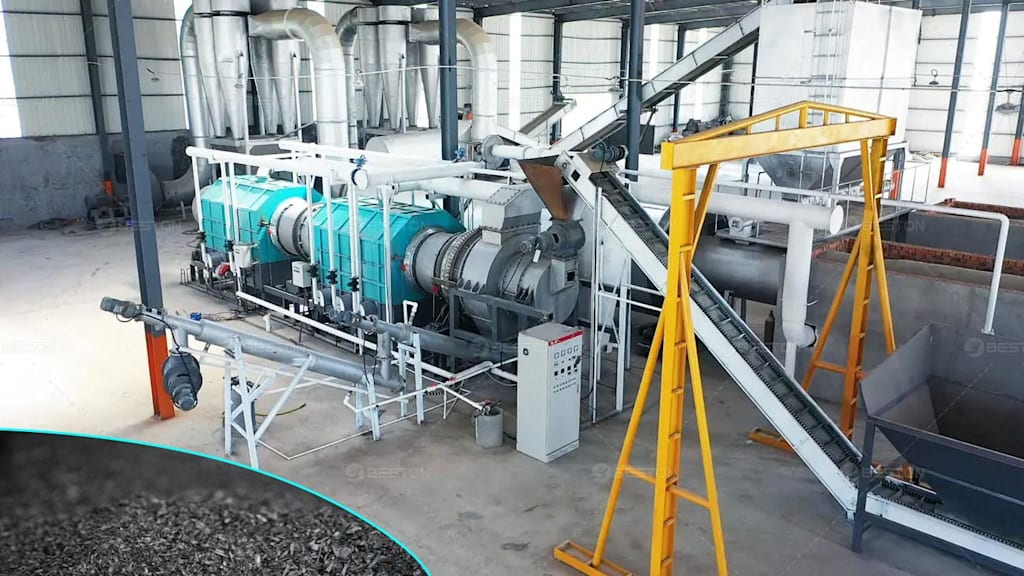
As global CO₂ levels continue to rise, finding efficient and sustainable ways to reduce greenhouse gas emissions has become a top priority. One promising approach is biochar production from sawdust—a byproduct of timber and woodworking industries. When processed into high-porosity biochar using a biochar pyrolysis machine, sawdust can become an effective material for capturing CO₂, offering both environmental and economic advantages.
What Is High-Porosity Biochar?
Biochar is a carbon-rich material created through pyrolysis, a process in which organic matter is heated in a low-oxygen environment. Unlike open burning, pyrolysis preserves the carbon content and produces a solid material with a highly porous structure. High-porosity biochar is particularly valuable because its extensive network of pores and large surface area create numerous adsorption sites for CO₂ molecules. The more porous the biochar, the more effective it is at trapping carbon, making it a potent tool in climate mitigation strategies.
A biochar pyrolysis machine is essential for producing high-quality biochar consistently. These machines allow precise control over temperature, heating rate, and residence time, ensuring that the biochar develops optimal pore structure and chemical properties. Modern pyrolysis machines also maximize energy efficiency, allowing industrial-scale production without excessive energy consumption.
How Different Sawdust Types Affect Biochar Quality
Not all sawdust is created equal. Hardwood and softwood sawdust differ in composition, primarily in lignin, cellulose, and hemicellulose content, which influences the biochar’s properties. Hardwood sawdust generally produces biochar with higher carbon stability and denser pore structures, making it excellent for long-term CO₂ sequestration. Softwood sawdust, while less dense, produces biochar with larger pores, enhancing gas diffusion and adsorption rates.
By selecting the right sawdust type—or even blending different types—producers can tailor the biochar’s properties for specific CO₂ capture needs. This flexibility is a major advantage of using a biochar pyrolysis machine, which allows precise adjustments to match feedstock characteristics.
Mechanisms of CO₂ Capture
High-porosity sawdust biochar captures CO₂ through two main mechanisms: physical adsorption and chemical interaction. Physical adsorption relies on the biochar’s vast surface area and porous structure, where CO₂ molecules are trapped in microscopic cavities. Chemical interactions occur when functional groups on the biochar surface, such as hydroxyl or carboxyl groups, react with CO₂, forming stable compounds. The combination of these two mechanisms makes high-porosity biochar extremely efficient in capturing carbon from industrial emissions or directly from the atmosphere.
Practical Applications of Biochar for CO₂ Mitigation
Biochar’s versatility allows it to be applied in multiple ways. In agriculture, incorporating high-porosity biochar into soils improves nutrient retention, water holding capacity, and overall soil health, while simultaneously storing carbon. In industrial settings, biochar can be used in filters or reactors where flue gases pass through biochar-packed systems, allowing CO₂ to be adsorbed before being released into the atmosphere.
The use of a biochar pyrolysis machine ensures that the biochar is consistently high in porosity and quality, which is critical for both soil enhancement and industrial CO₂ capture applications. By standardizing production, companies can scale operations efficiently while maintaining performance.
Economic and Environmental Benefits
Producing biochar from sawdust transforms waste into a valuable resource. Industries that once faced disposal costs for wood waste can now generate revenue through the sale of biochar or its use in internal CO₂ capture systems. In addition, biochar production using a biochar pyrolysis machine is energy-efficient, reducing operational costs and the carbon footprint of the process itself.
Beyond economics, high-porosity biochar contributes to sustainability. By capturing CO₂ and improving soil health, biochar production supports circular economy principles. It reduces the need for synthetic fertilizers and helps offset greenhouse gas emissions, demonstrating that environmental responsibility and profitability can go hand in hand.
Optimizing Biochar Production
Ongoing research continues to refine biochar production for maximum CO₂ adsorption. Techniques such as surface activation, chemical treatments, and precise control of pyrolysis parameters can further enhance porosity and adsorption efficiency. Advanced biochar pyrolysis machines make it possible to implement these optimizations on an industrial scale, ensuring that the biochar produced is both high-quality and effective.
Conclusion
High-porosity sawdust biochar represents a promising tool in the fight against climate change. When produced using a biochar pyrolysis machine, sawdust—a byproduct often considered waste—can be transformed into a highly efficient material for CO₂ capture. From improving soil quality to filtering industrial emissions, biochar offers a practical, scalable, and sustainable solution for carbon management. By investing in biochar production, industries can turn wood waste into a profitable and environmentally beneficial resource, demonstrating that innovation and sustainability can truly work together.
About the Creator
Enjoyed the story? Support the Creator.
Subscribe for free to receive all their stories in your feed.
Comments
There are no comments for this story
Be the first to respond and start the conversation.