
he Feng Shui Code of the Heavenly Cardinal
Wudang Mountain
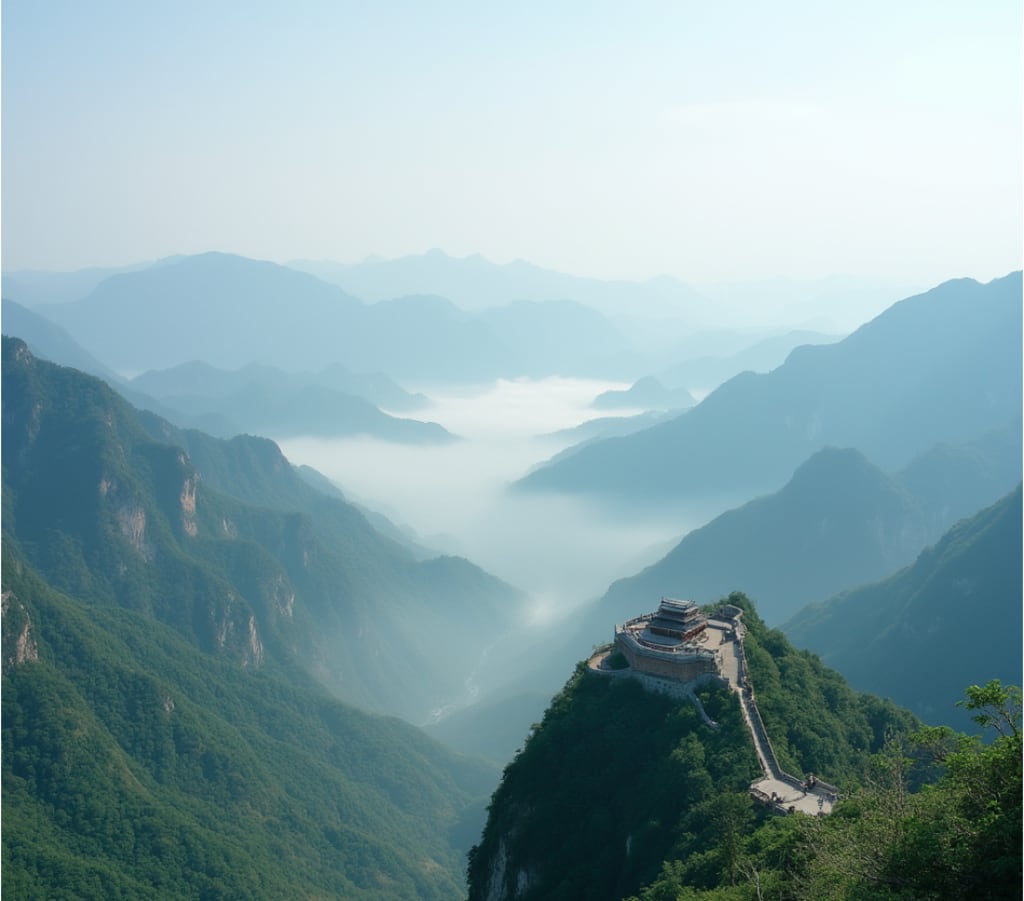
Wudang Mountain, formerly known as "Taihe Mountain", is known as the "crown of the Five Sacred Mountains". Its majestic mountain terrain and profound cultural heritage contain a unique "dragon vein" code. In traditional feng shui theory, the dragon veins are the flow trajectory of the earth's qi veins, which are related to the gathering of qi in mountains and rivers, as well as the rise and fall of fortune and misfortune. This article analyzes the mystery of Wudang Mountain's dragon veins from three dimensions: geographical pattern, historical context, and cultural symbolism.
1、 Geographical Pattern: Kunlun Ancestral Vein and 72 Peaks of Chaozong
Feng Shui believes that Kunlun Mountain is the "ancestor of the dragon veins of heaven and earth", and its branches extend to the land of China, forming countless dragon vein systems. Wudang Mountain is backed by the Daba Mountains, which are the southeast extension of the Kunlun Mountains, forming a complete dragon vein structure of "Zu Mountain Shaozu Mountain Main Mountain". The main peak of Wudang Mountain, Tianzhu Peak (1612 meters above sea level), stands tall like a giant dragon, while the surrounding 72 peaks worship like courtiers, forming a rare pattern of "72 peaks facing the top". This kind of mountain terrain not only conforms to the feng shui auspicious image of "mountains surrounded by water", but also conforms to the mystical principle of "the sky has a lifetime of water, and the earth is sixty percent" in the Book of Changes - the central peak of the Tianzhu is "one", and the 72 peaks are "six", symbolizing the "harmony" of yin and yang in heaven and earth.
2、 Water System Mystery: The Key to the Han River and the Endless Sea of Clouds
Another mystery of Wudang Mountain's dragon veins lies in the water. The Han River Valley between Qinling Mountains and Daba Mountains flows from west to east, forming a natural water outlet at the foot of Wudang Mountain. Feng Shui theory emphasizes that "water is the main source of wealth, and the dragon is stopped by water." Hankou, where the Han River and the Yangtze River intersect, is the "water gate lock" of Wudang Mountain's dragon veins, allowing the spiritual energy of heaven and earth to gather and never disperse. In addition, the unique vertical climate zone of Wudang Mountain is surrounded by clouds and mist all year round, forming the wonder of "Wudang Cloud Sea". As stated in the "Qing Nang Jing", "Clouds and mist are the manifestation of dragon qi", further confirming the spiritual beauty of its dragon veins.
3、 Architectural evidence: Feng Shui craftsmanship of Taoist holy sites
During the Yongle period of the Ming Dynasty, the Wudang Mountain architectural complex was built according to the dragon vein pattern. The Zixiao Palace was located in the direction of Qianshan Xun, backed by the banner shaped Zhanqi Peak, facing the winding Han River. It was surrounded by the left Qinglong (Qinling Mountains) and the right Baihu (Daba Mountains), forming a favorable situation of "storing wind and gathering qi". The Golden Summit stands on the top of the Tianzhu Peak, pointing directly to the sky with the fragrance of the dragon's head, in accordance with the principle of "correspondence between heaven and man". In addition, the site selection of buildings such as Wulong Palace and Huanglong Cave cleverly utilizes natural caves and mountain terrain to incorporate the qi of the dragon vein into the architectural system, demonstrating the philosophy of "following the natural way".
Wudang Mountain Dragon Vein is not only a classic case of Feng Shui, but also a concrete manifestation of the Chinese civilization's cosmology of "unity of heaven and man". Behind it lies the ancient people's reverence and utilization of natural laws, as well as their pursuit of an ideal living environment.
About the Creator
Rivera Roberto
The concept of "unity of heaven and man" is a philosophical idea in China. Heaven refers to the sky, the Way of Heaven, and the Great Way of Nature. In Taoism, the concept of "heaven" often refers to nature and the Way of Heaven.
Enjoyed the story? Support the Creator.
Subscribe for free to receive all their stories in your feed.
Comments
There are no comments for this story
Be the first to respond and start the conversation.