
Global Flour Market Expands as Bakery Demand, Health Trends, and Convenience Foods Drive Consumption
From wheat flour and bakery products to gluten-free alternatives and fortified blends, the global flour industry is evolving alongside changing food habits and consumer preferences.

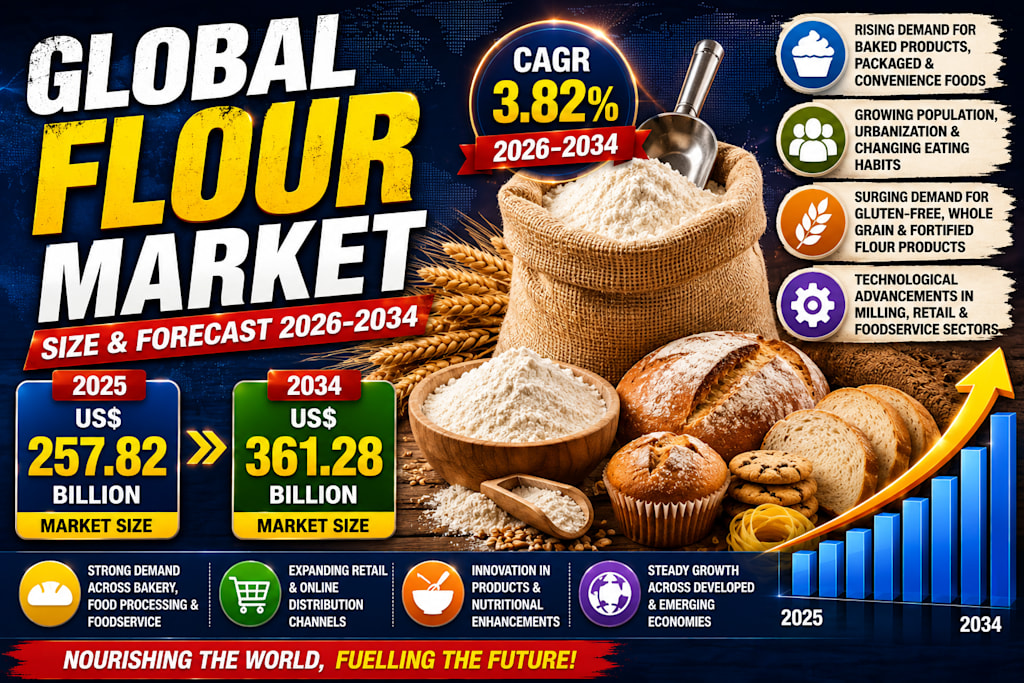
Global Flour Market Overview
The global flour market is witnessing steady growth as rising demand for bakery products, packaged foods, and convenience meals continues to shape food consumption worldwide. According to Renub Research, the flour market is projected to increase from US$ 257.82 billion in 2025 to US$ 361.28 billion by 2034, growing at a CAGR of 3.82% from 2026 to 2034. Expanding urbanization, population growth, changing eating habits, and the growing popularity of gluten-free, fortified, and whole-grain flour products are contributing significantly to market expansion. Technological developments in the milling industry and stronger retail and foodservice networks are also supporting long-term industry growth.
Flour remains one of the most essential ingredients in the global food industry. Produced from grains, seeds, roots, or nuts, flour is widely used in products such as bread, cakes, biscuits, noodles, pasta, pastries, and snacks. Wheat flour remains the most commonly consumed type, although rice flour, corn flour, oat flour, almond flour, and other specialty flours are also gaining popularity.
Across different cultures and regions, flour serves as the foundation of staple foods. Bread dominates consumption patterns in Europe and North America, noodles remain central to many Asian cuisines, while flatbreads such as roti and pita are widely consumed across South Asia and the Middle East. Because of its versatility, affordability, and nutritional value, flour continues to play a critical role in global food security and industrial food production.
Bakery and Convenience Foods Are Driving Strong Demand
One of the biggest growth drivers in the global flour market is the increasing demand for bakery and convenience foods. Flour is a key ingredient in products such as bread, cakes, pastries, biscuits, noodles, and pasta, all of which remain highly consumed worldwide. Urbanization, busy work schedules, and lifestyle changes have increased consumer dependence on ready-to-eat and easy-to-prepare foods.
The rapid growth of fast-food restaurants, cafés, coffee shops, and packaged food industries has further increased flour consumption globally. Developing countries are also experiencing rising demand for Western-style bakery products, contributing to expanding market opportunities. Supermarkets and online shopping platforms are making bakery items more accessible than ever before, helping support long-term industry growth.
The scale of bakery consumption highlights this trend clearly. According to Agriculture and Agri-Food Canada data cited in the report, retail sales of baked goods in the United States reached US$ 82.9 billion in 2022 and are expected to continue growing steadily. This expanding bakery industry directly supports rising flour demand worldwide.
Population Growth and Rising Food Consumption Continue to Support the Market
Global population growth remains another major factor fueling flour demand. As populations increase, so does the need for staple foods such as bread, noodles, flatbreads, and flour-based snacks. Flour is deeply integrated into traditional diets across multiple regions, making it an essential ingredient in everyday food preparation.
Developing countries in Asia, Africa, and the Middle East are experiencing especially rapid population growth, which is creating higher food demand. Rising disposable incomes and improving living standards are also encouraging consumers to purchase more processed foods, packaged bakery items, and convenience meals. Governments in several countries are supporting food production and grain supply systems to ensure food availability for growing populations.
The increasing demand for flour-based foods is reflected in global grain consumption trends. According to the International Pasta Organisation, worldwide pasta production reached nearly 17 million tons in 2023, while global wheat consumption was projected to reach 802.4 million tons. These figures demonstrate the massive scale of flour usage across international food systems.
Health-Oriented and Specialty Flour Products Are Gaining Popularity
Consumer preferences are shifting toward healthier and more specialized food products, creating strong demand for specialty flour categories. Health-conscious consumers are increasingly seeking whole-grain, gluten-free, fortified, and organic flour options as part of healthier diets.
Alternative flour varieties such as oat flour, almond flour, and rice flour are becoming especially popular among gluten-intolerant consumers and individuals focused on nutritional wellness. Whole wheat flour, which contains more nutrients than refined flour, is also gaining strong traction globally.
Manufacturers are responding by launching fortified flour products enriched with vitamins and minerals to address nutritional deficiencies. The clean-label movement and growing preference for natural foods are also encouraging companies to develop organic and minimally processed flour products. Functional foods and health-oriented bakery products are increasingly incorporating specialty flours into their formulations.
Innovation in this category continues to accelerate. In November 2023, King Arthur Baking Company introduced a whole wheat flour blend made from regeneratively grown grains, reflecting rising consumer interest in sustainability, nutrition, and environmentally conscious agriculture.
Raw Material Price Fluctuations Remain a Major Challenge
Despite positive growth prospects, the global flour market faces several challenges. One of the biggest concerns is volatility in raw material prices, particularly wheat and other grains. Climate change, droughts, floods, and unpredictable weather conditions can significantly affect crop production and grain availability.
Political instability, trade restrictions, and global supply chain disruptions can also impact grain supply and pricing. Rising fuel and transportation costs further increase production expenses for flour manufacturers. These fluctuations create uncertainty in the market and can reduce profit margins while increasing costs for consumers.
Maintaining stable raw material supplies at affordable prices remains one of the most important operational challenges for flour producers worldwide.
Health Concerns About Refined Flour Are Changing Consumer Habits
Another major challenge for the flour industry is growing concern about the health effects associated with refined flour consumption. Consumers are becoming more aware of the nutritional limitations of refined flour, which loses several nutrients during processing. Excessive consumption has also been linked to obesity, diabetes, and digestive health issues.
As awareness grows, many consumers are shifting toward whole-grain, low-carb, organic, and gluten-free alternatives. Health campaigns and nutritional education programs are accelerating this transition, forcing traditional flour manufacturers to adapt product offerings to modern dietary trends.
The industry’s ability to innovate and provide healthier flour solutions will likely become increasingly important in maintaining long-term consumer demand.
Wheat Flour Continues to Dominate the Global Market
Wheat flour remains the largest segment of the global flour market because of its widespread use in bakery and processed food products. Bread, cakes, biscuits, noodles, pasta, and pastries all depend heavily on wheat flour due to its texture, versatility, and affordability.
Urbanization and growing global populations continue to strengthen demand for wheat-based foods. Manufacturers are also expanding offerings of fortified wheat flour and whole wheat flour to address rising health awareness among consumers. Because wheat-based foods remain staples across many countries, the wheat flour market is expected to maintain steady long-term growth.
Rice Flour Market Is Growing with Gluten-Free Demand
The rice flour market is expanding steadily as demand for gluten-free and allergen-friendly foods increases globally. Rice flour is widely used in bakery products, snacks, noodles, and processed foods, especially among consumers with gluten intolerance.
Its light texture and easy digestibility have also helped rice flour gain popularity beyond traditional Asian cuisines. Food manufacturers are increasingly incorporating rice flour into gluten-free product lines to meet evolving consumer preferences. Supermarkets and online platforms are further improving product accessibility worldwide.
Bread and Bakery Applications Continue to Lead Flour Consumption
Bread and bakery products remain one of the largest application areas for flour globally. Flour is essential in producing bread, cakes, pastries, cookies, crackers, and various baked foods consumed daily across many countries.
Rising urbanization and fast-paced lifestyles are increasing dependence on convenient bakery products and ready-to-eat foods. Consumers are also increasingly attracted to bakery items offering improved taste, nutritional value, and premium ingredients. Whole-grain and fortified bakery products are becoming especially popular among health-conscious shoppers.
The rapid expansion of cafés, bakeries, supermarkets, and online food retail continues to support rising bakery consumption worldwide.
Supermarkets and Modern Retail Are Supporting Distribution Growth
Modern retail infrastructure plays a critical role in flour distribution and consumer accessibility. Supermarkets offer consumers access to a wide range of flour products, including wheat flour, rice flour, specialty flour, and fortified blends.
Consumers benefit from product comparison, promotional discounts, attractive packaging, and reliable quality standards in these retail environments. The expansion of supermarket chains across urban and semi-urban regions is significantly improving product availability. Proper storage systems in supermarkets also help maintain freshness and safety standards for packaged flour products.
As global retail infrastructure continues expanding, supermarkets and online grocery platforms are expected to remain key growth drivers for the flour industry.
United States Flour Market Remains Highly Advanced
The United States flour market remains one of the most developed globally, supported by strong demand from bakery, food processing, and foodservice industries. Wheat flour dominates consumption because of its widespread use in bread, cakes, cookies, pasta, and packaged food products.
The country’s advanced milling industry and strong wheat production base continue to support industry growth. Meanwhile, rising interest in gluten-free, organic, and whole-grain flour products reflects changing health and wellness trends among consumers.
In March 2025, King Arthur Baking Company announced the launch of its Buttermilk Biscuit Flour Blend alongside popular Bread Mix Kits, reflecting continued innovation in premium baking ingredients.
India and Saudi Arabia Are Emerging as Important Flour Markets
India’s flour market is growing rapidly due to strong consumption of wheat-based staple foods such as roti, chapati, naan, and bakery items. Rising urbanization, population growth, and increasing preference for packaged flour are supporting market expansion.
Consumers are increasingly shifting from loose flour to packaged and branded products because of concerns related to hygiene, quality, and convenience. In October 2025, fortified wheat flour brands were launched in Ahmedabad through partnerships involving Millers for Nutrition, GRFMA, and Fortify Health, supporting efforts to fight malnutrition and anemia.
Saudi Arabia’s flour market is also growing steadily because of high consumption of bread and bakery products. Rising health awareness and expanding foodservice infrastructure are increasing demand for whole wheat and fortified flour products.
Competitive Landscape of the Global Flour Market
The flour industry includes several major international players competing through innovation, product quality, distribution expansion, and specialty product development. Key companies in the market include King Arthur Flour Company, Associated British Foods Plc., Hindustan Unilever Ltd., Archer Daniels Midland Company, Conagra Foods Inc., Cargill Incorporated, ITC Ltd., and General Mills Inc.
These companies continue investing in advanced milling technologies, premium flour categories, clean-label formulations, and retail expansion to strengthen market presence globally.
Final Thoughts
The global flour market continues to evolve alongside changing food habits, health awareness, and rising demand for convenience foods. Bakery products, packaged meals, and gluten-free alternatives are expanding flour applications across both developed and emerging economies. At the same time, health-conscious consumers are encouraging manufacturers to focus on fortified, whole-grain, and specialty flour products.
With the market projected to grow from US$ 257.82 billion in 2025 to US$ 361.28 billion by 2034, flour is expected to remain one of the world’s most essential food ingredients. Companies that successfully combine innovation, nutrition, sustainability, and supply-chain resilience are likely to lead the next phase of market growth.
About the Creator
Enjoyed the story? Support the Creator.
Subscribe for free to receive all their stories in your feed.
Comments
There are no comments for this story
Be the first to respond and start the conversation.