
Georgia's -Scapes
Landscapes, Seascapes, and Mountainscapes
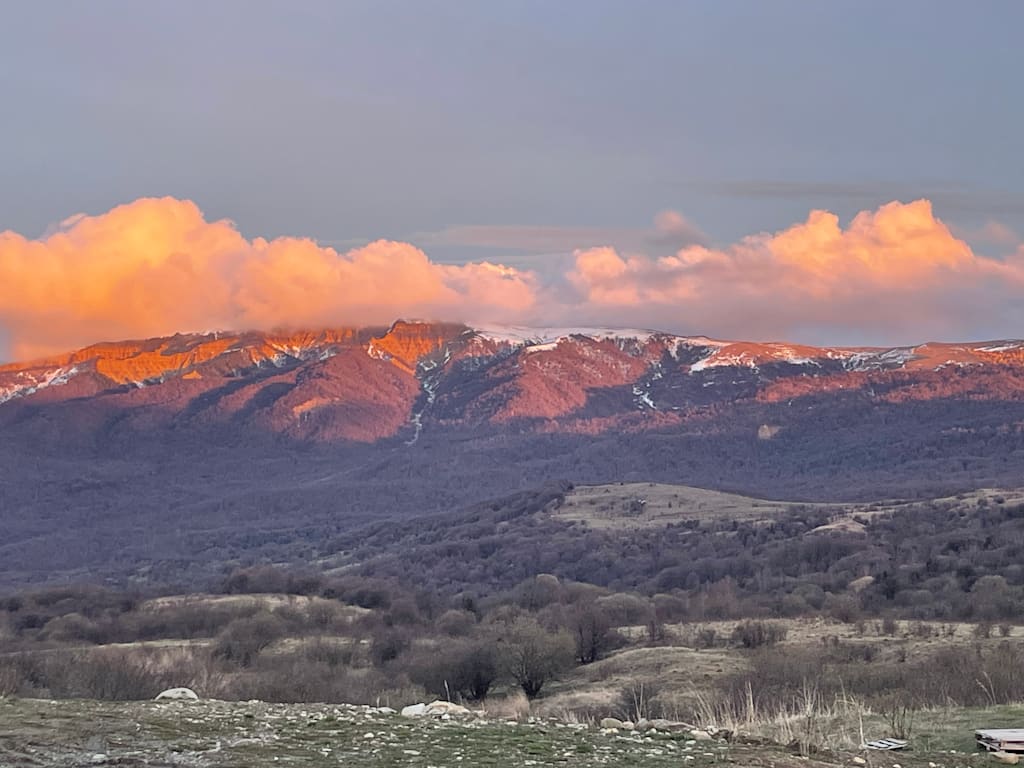
For a relatively small country of ~26,900 sq. miles (slightly bigger than West Virginia in the US and comparable to Ireland in Europe and Sri Lanka in Asia), Georgia/Sakartvelo has an incredible diversity on its land mass, starting with Black Sea shore and low fertile valleys of Ajara, rolling through the hills and semi-deserts of Kakheti and ending with high mountains of Tusheti and Svaneti.
In my nine months here, I traveled to many places in Georgia to explore its beauty and history. The only region I have not been to is Tusheti, but it is so hard to get to that the road to it opens in early June and closes in September for non-residents, and most residents move to lowland sometime in October before the first big snow that would make the road impassible. Those rare residents of Tusheti who stay there for the winter (mostly men) receive supplies dropped to them by a helicopter. But the region is breathtakingly beautiful in the summer, and I hope that I will be able to get there next time I visit Georgia.
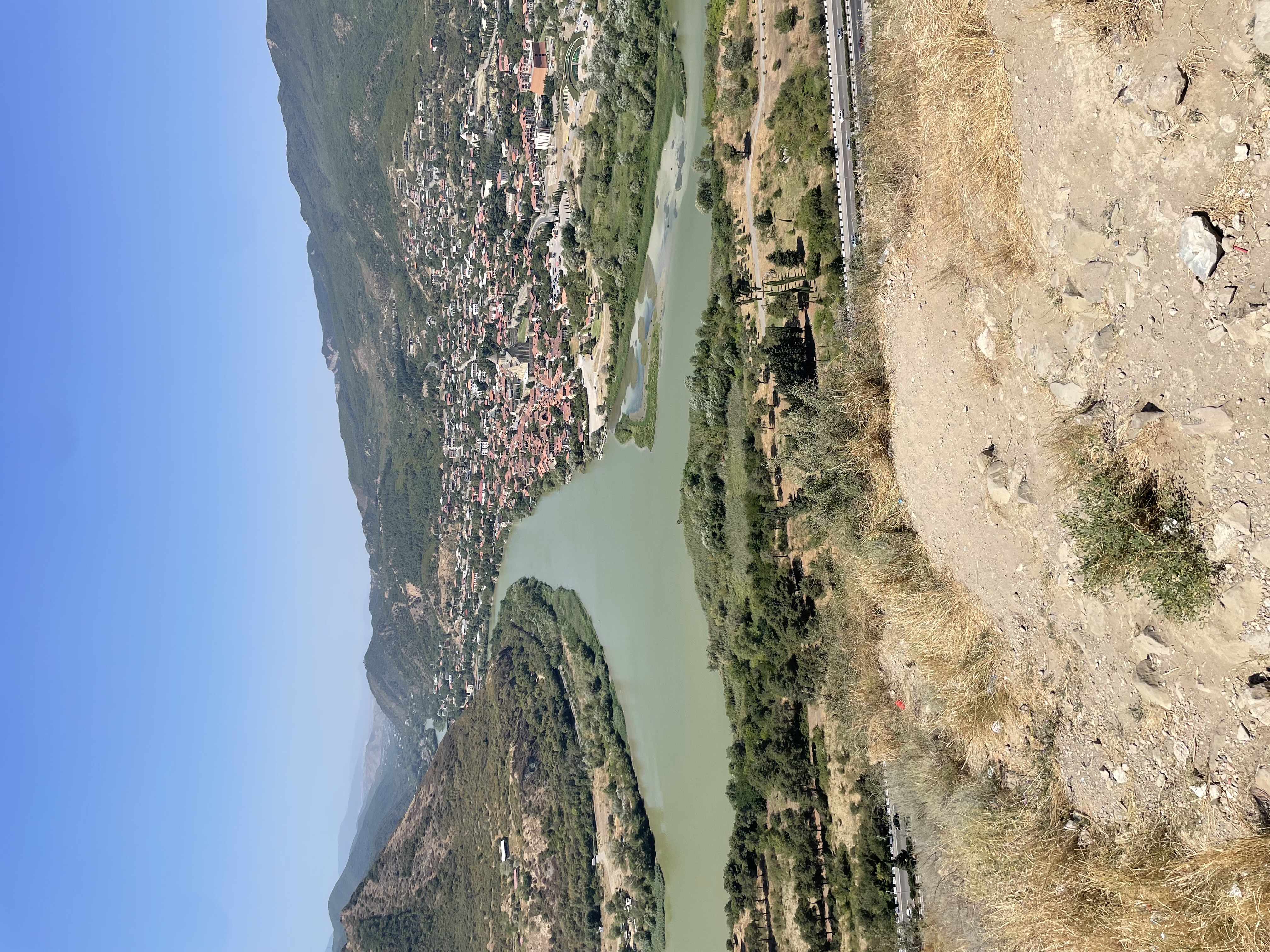
My first trip after I arrived last August was to Mtskheta, the ancient capital of Georgia, with one of the oldest monasteries - Jvari - sitting on the hill across from it, giving a breathtaking view of the two important rivers - Aragvi and Mtkvari merging together:
Then there were several trips to the Kakheti wine region. I wrote about the first one here, but here are some more pictures from its rolling hills:
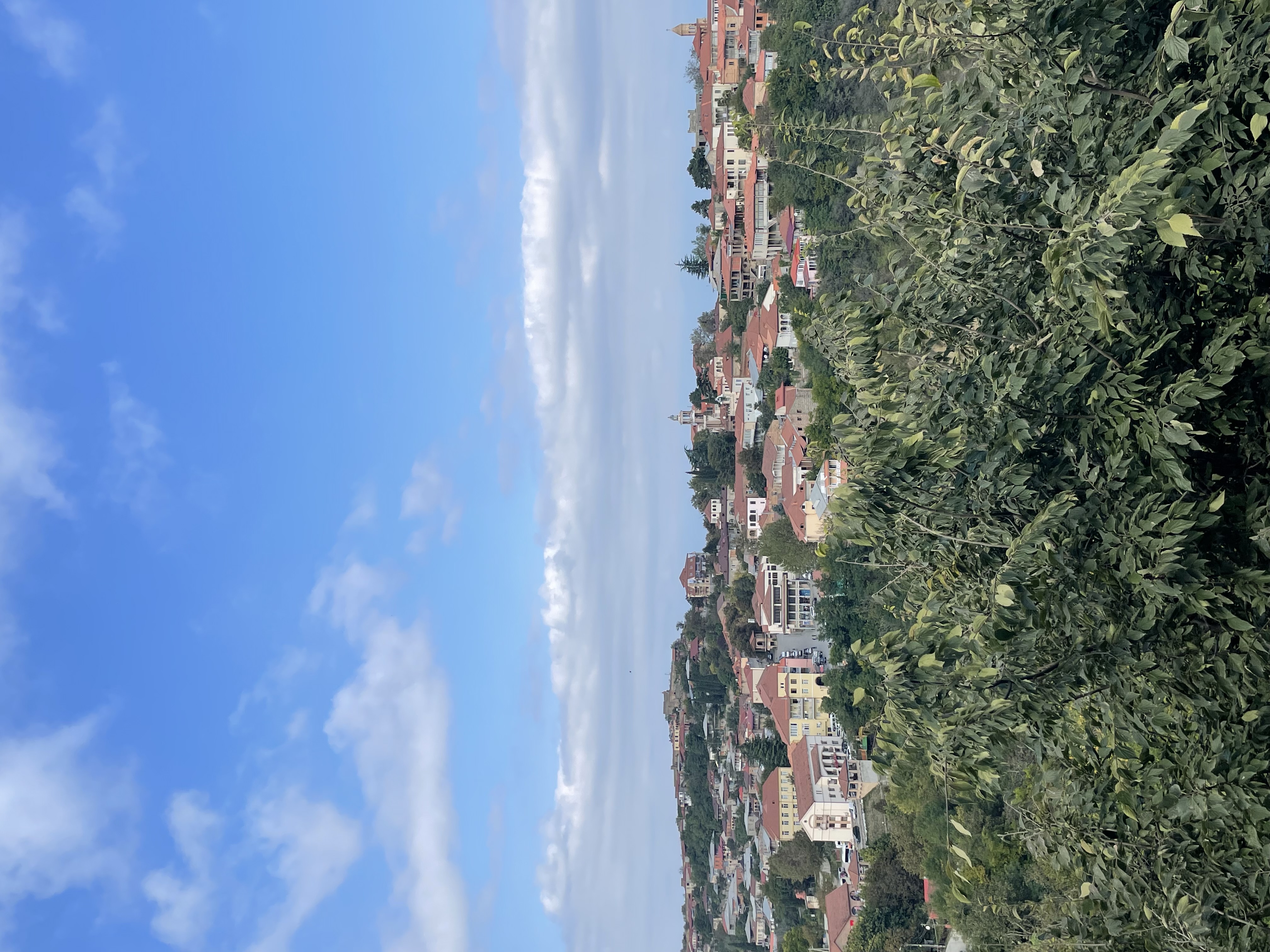
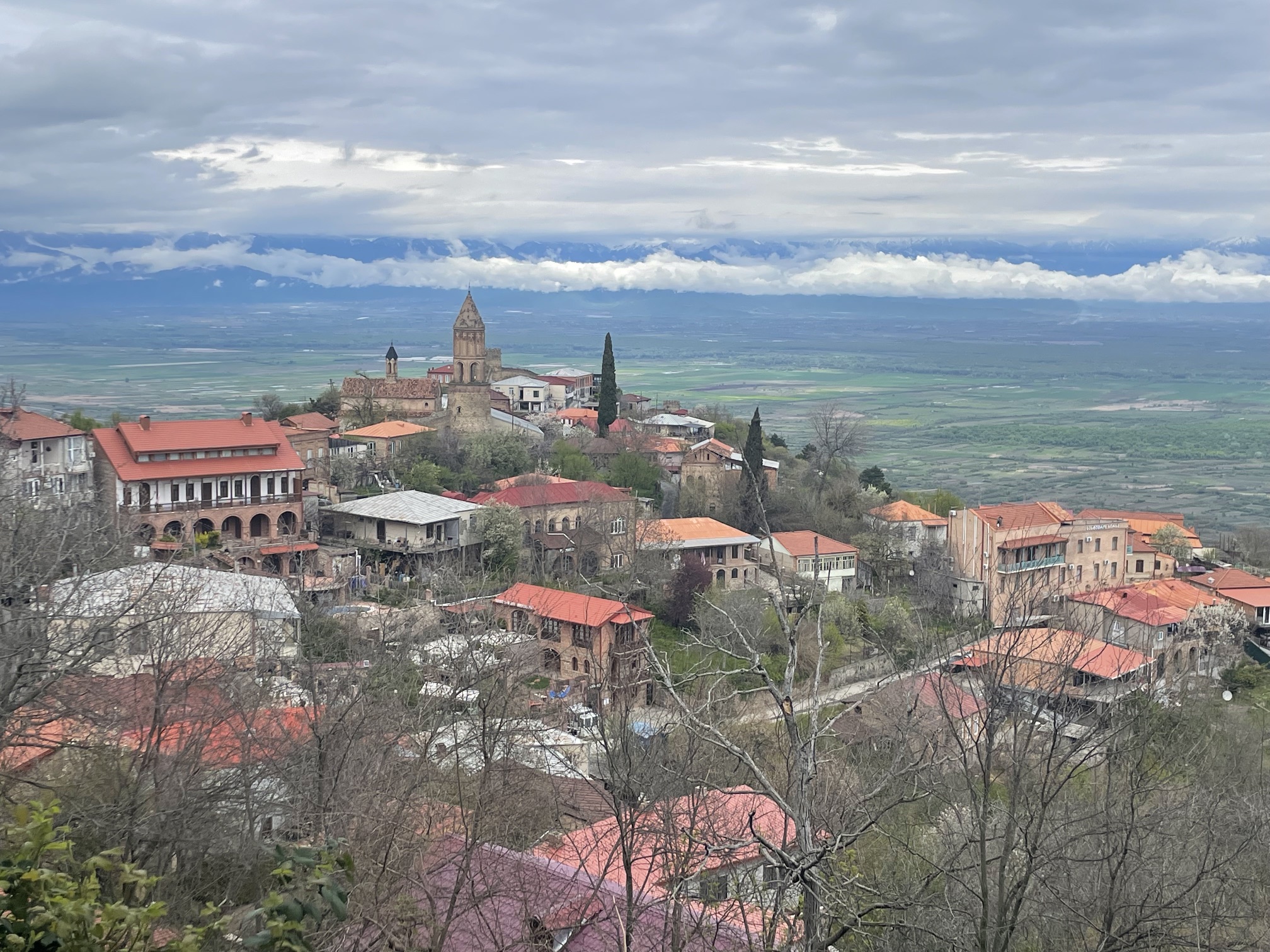
Another picture of Sighnaghi from its ancient fortified wall tower:
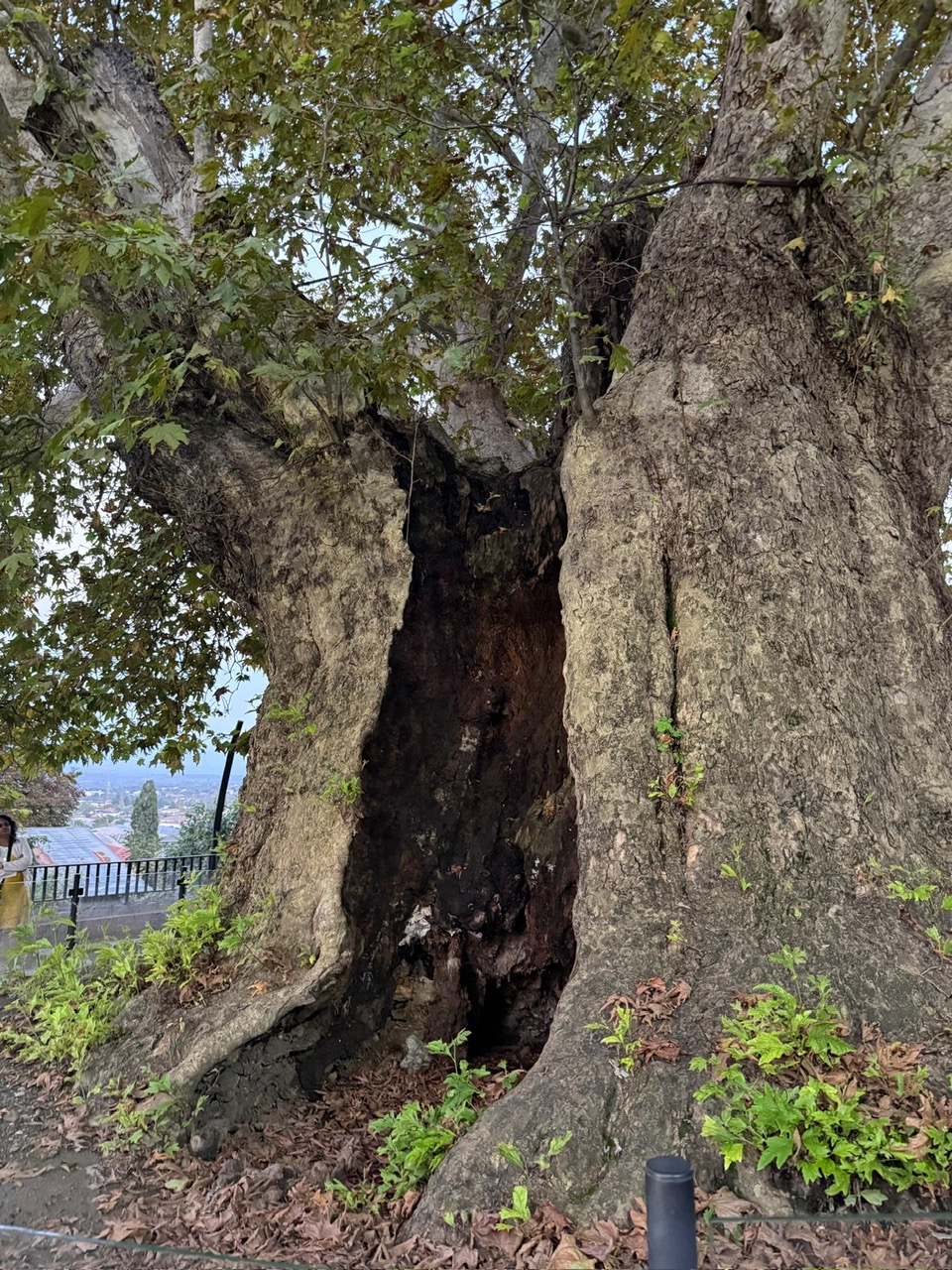
A picture of the 900-year-old sycamore tree in Telavi (Kakheti capital) that has become a local legend and was featured in the Mimino movie. You can see the chains that are keeping it together. It's split and hollow but still standing!
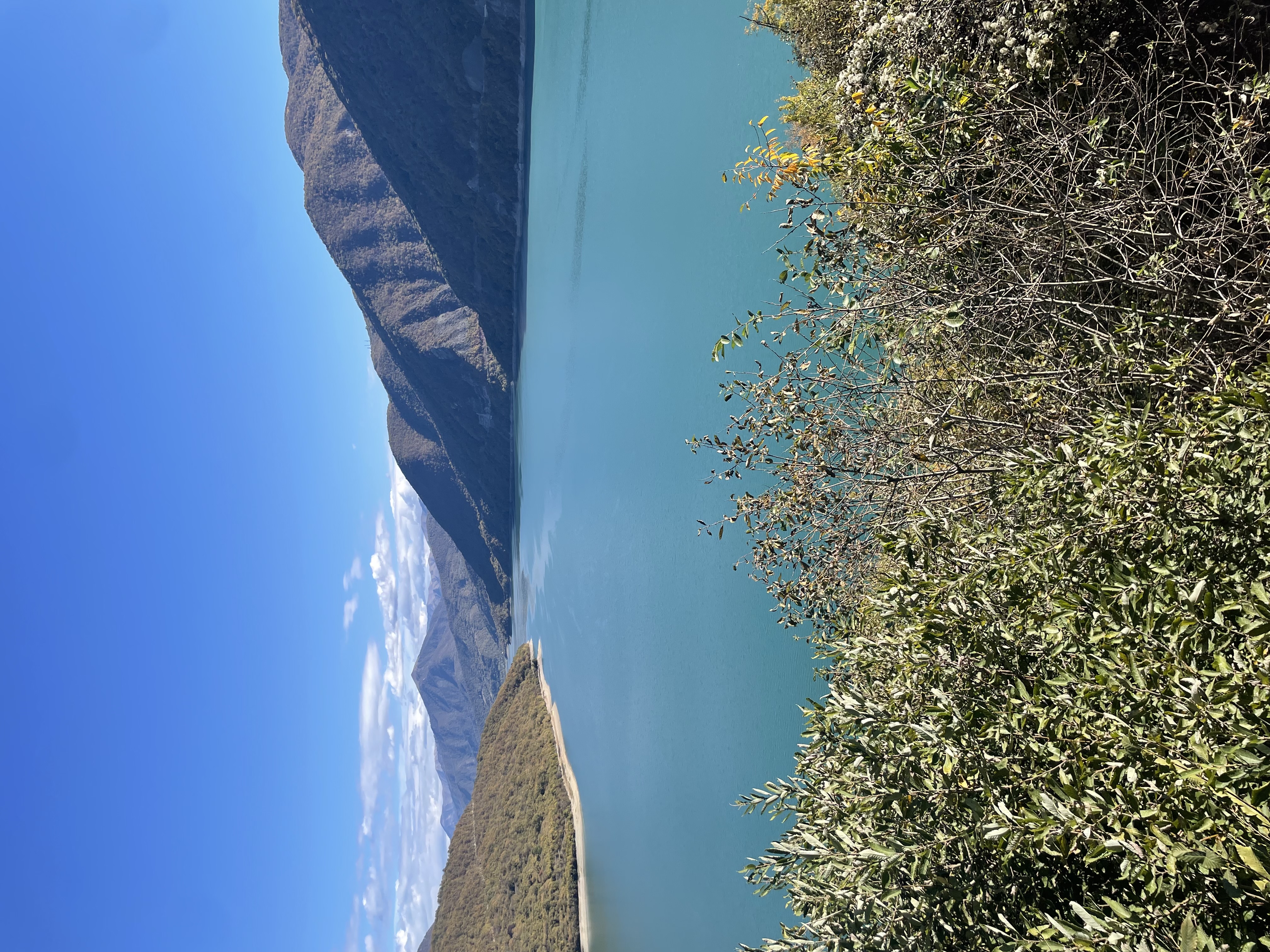
Here's a picture of Tbilisi Lake, a huge reservoir that is filled up by mountain rivers supplying the city with its water.
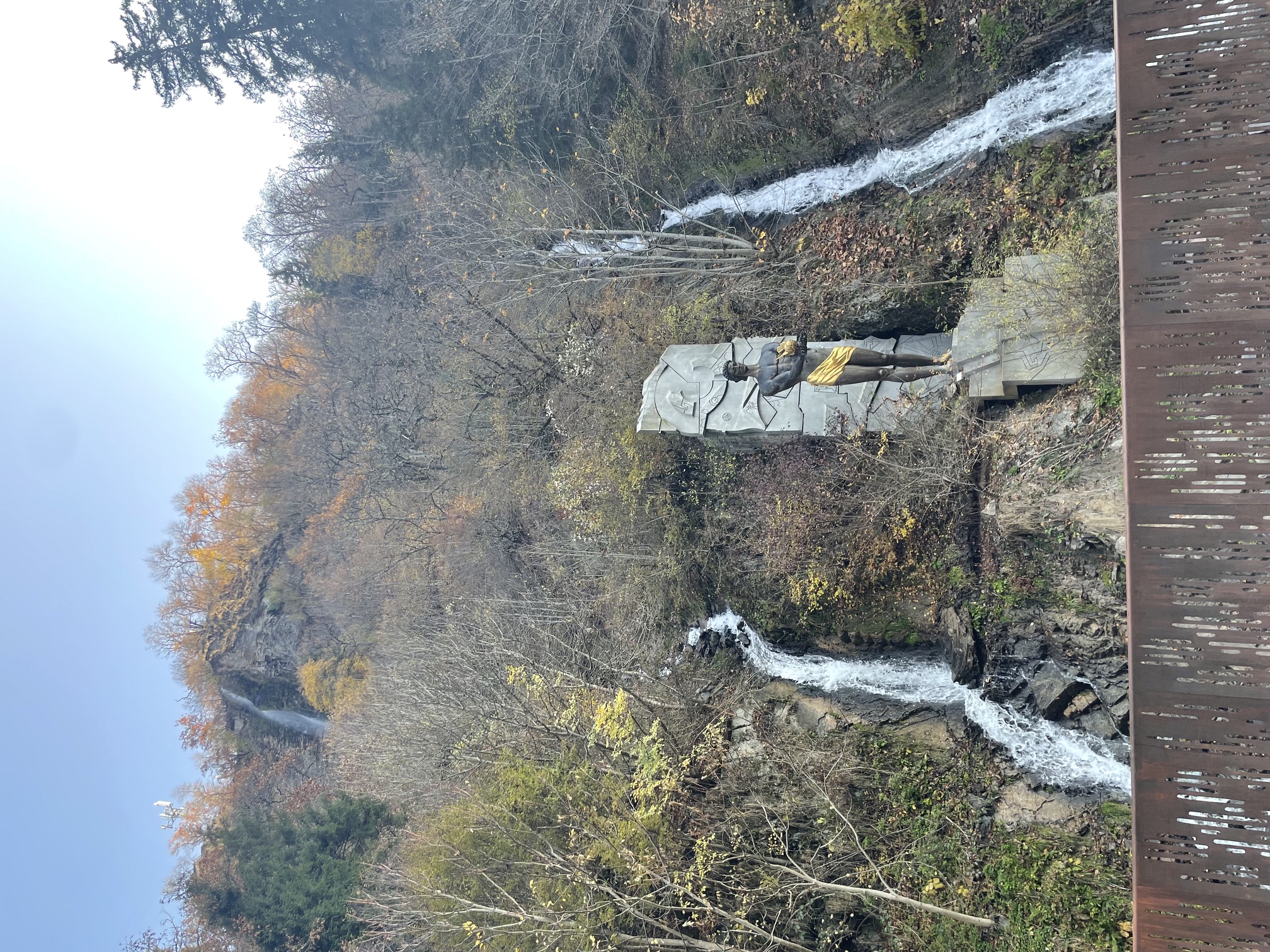
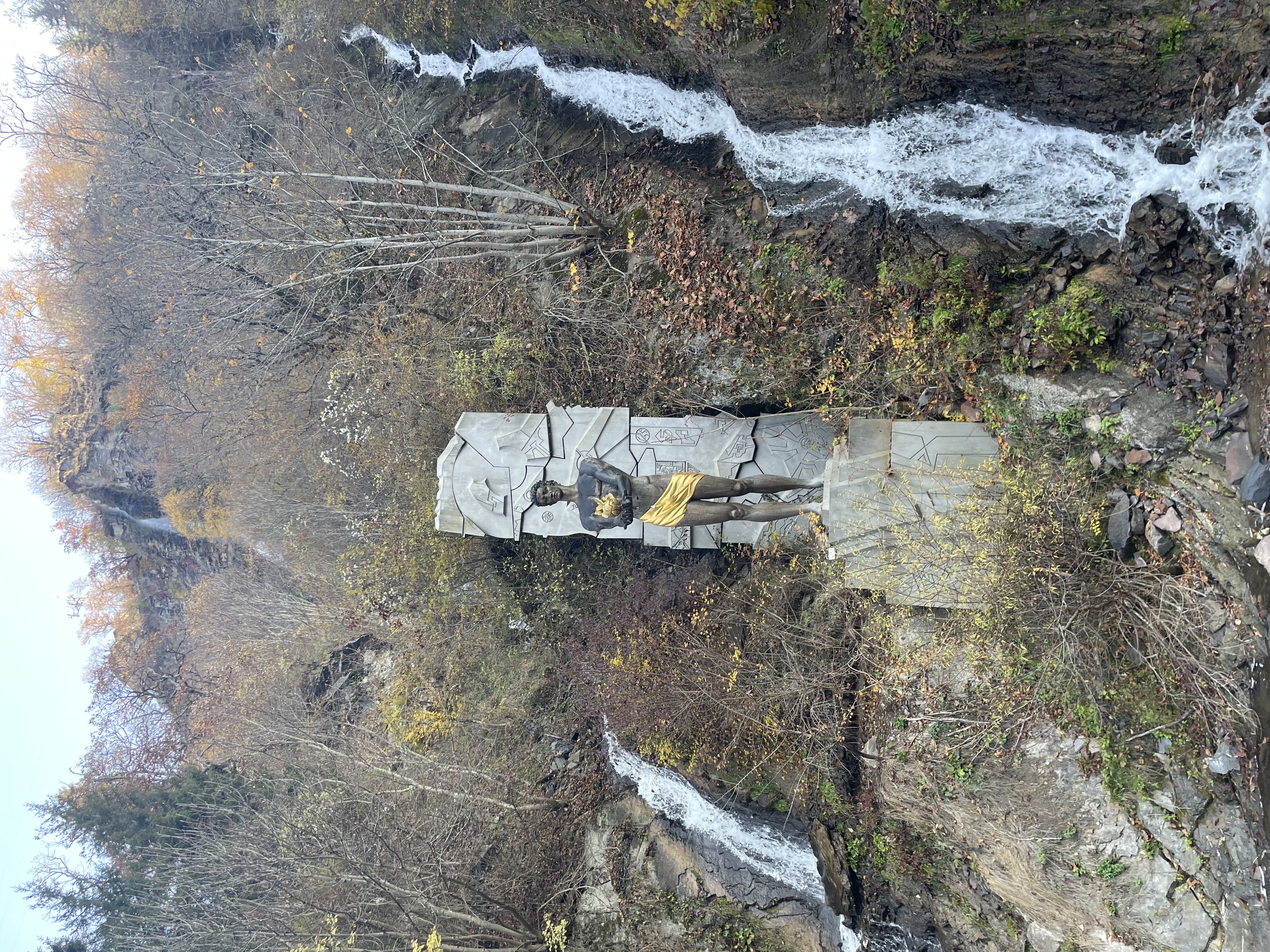
The Borjomi national park is famous for its mineral water that has sulfur and incredible healing qualities. To me, it was remarkable for the statue of Prometheus (allegedly enduring his punishment in Georgia's mountains) framed by the two magnificent waterfalls:
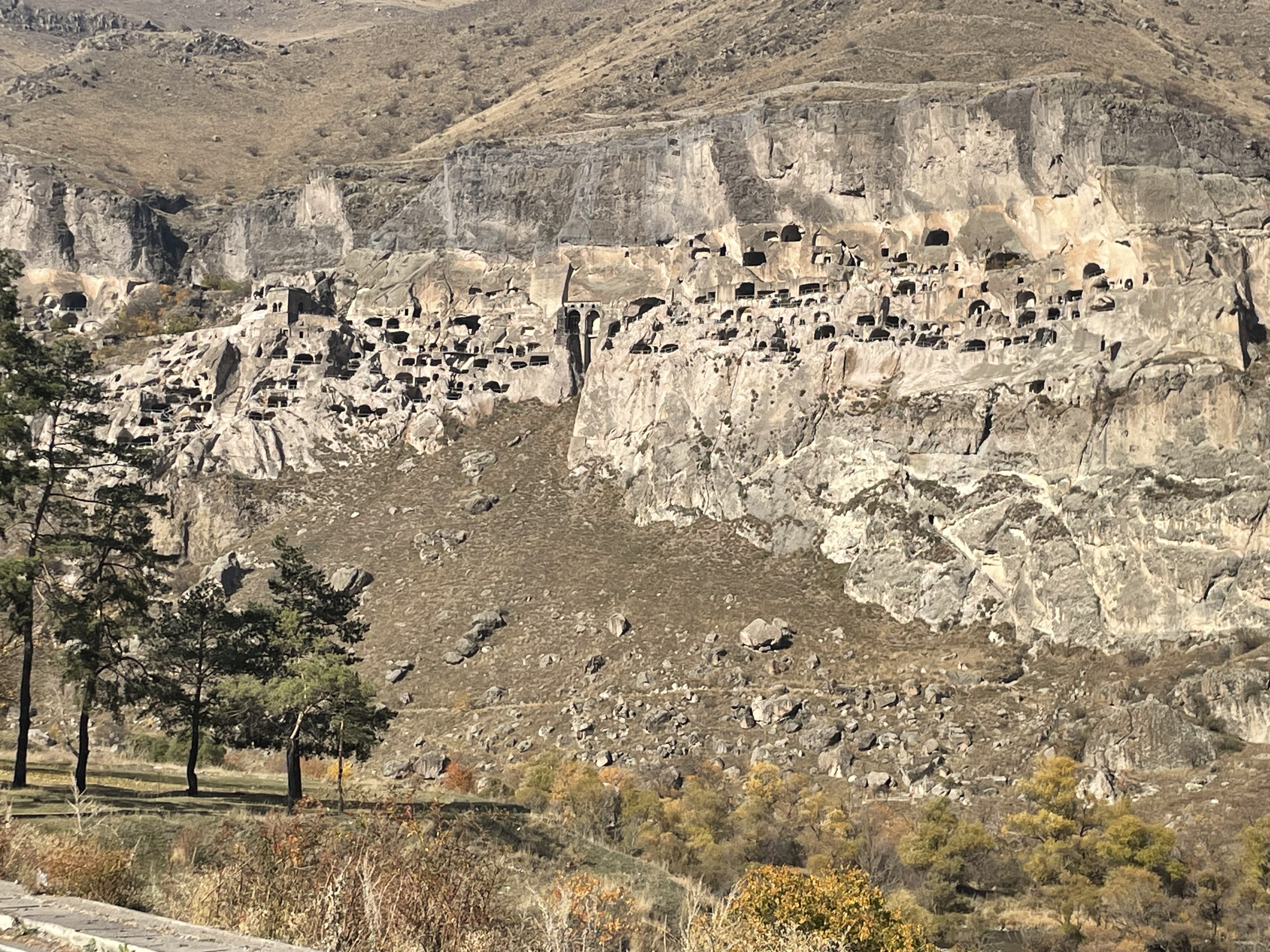
One of the most impressive trips was to Vardzia, a medieval cave city Georgians were hiding in from various invaders. It got exposed by an earthquake that took half of the face of the mountain the city was carved into:
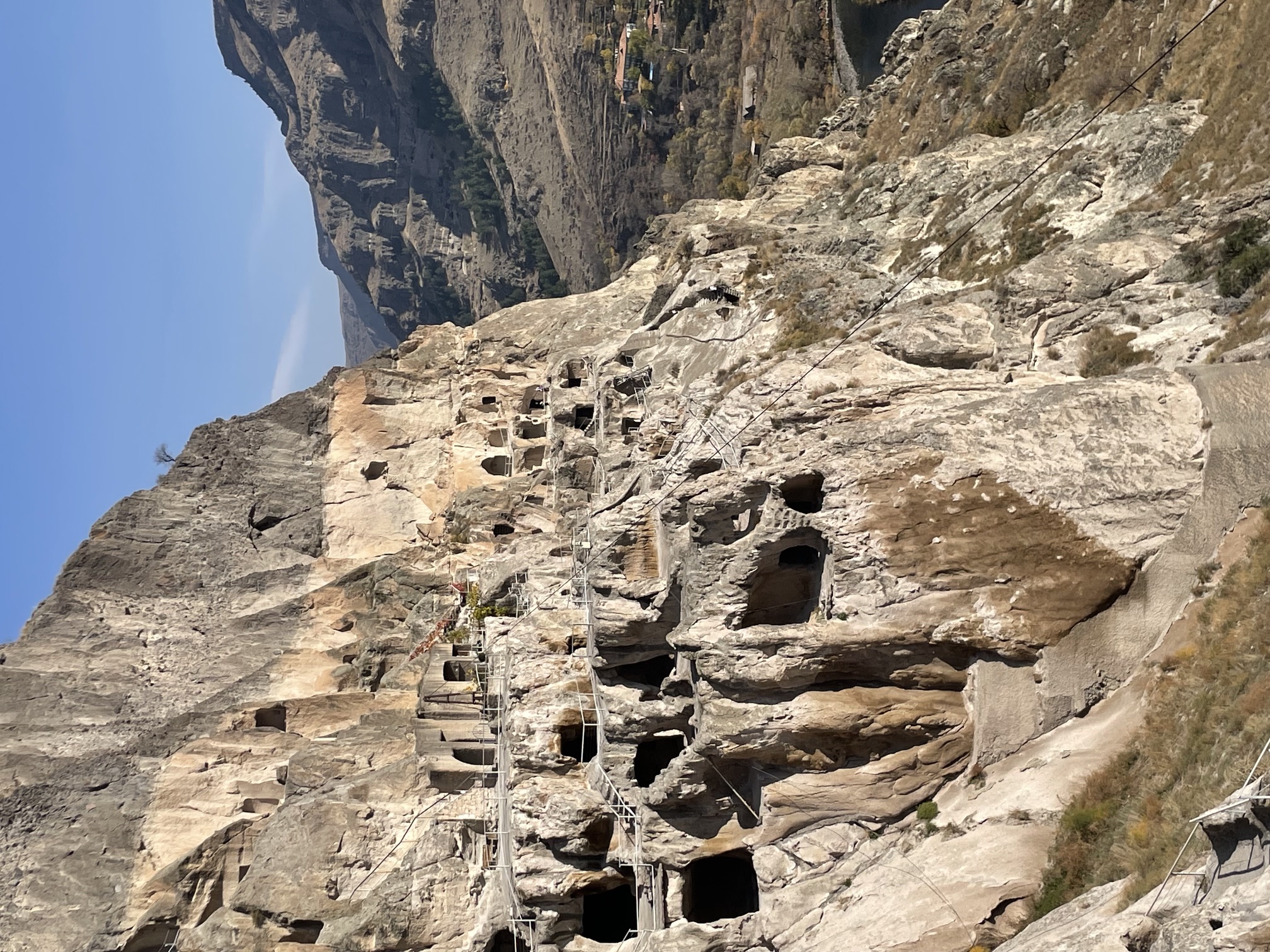
Close-up of Vardzia that is now a popular tourist attraction but still has a functioning monastery and 6-7 monks living in it:
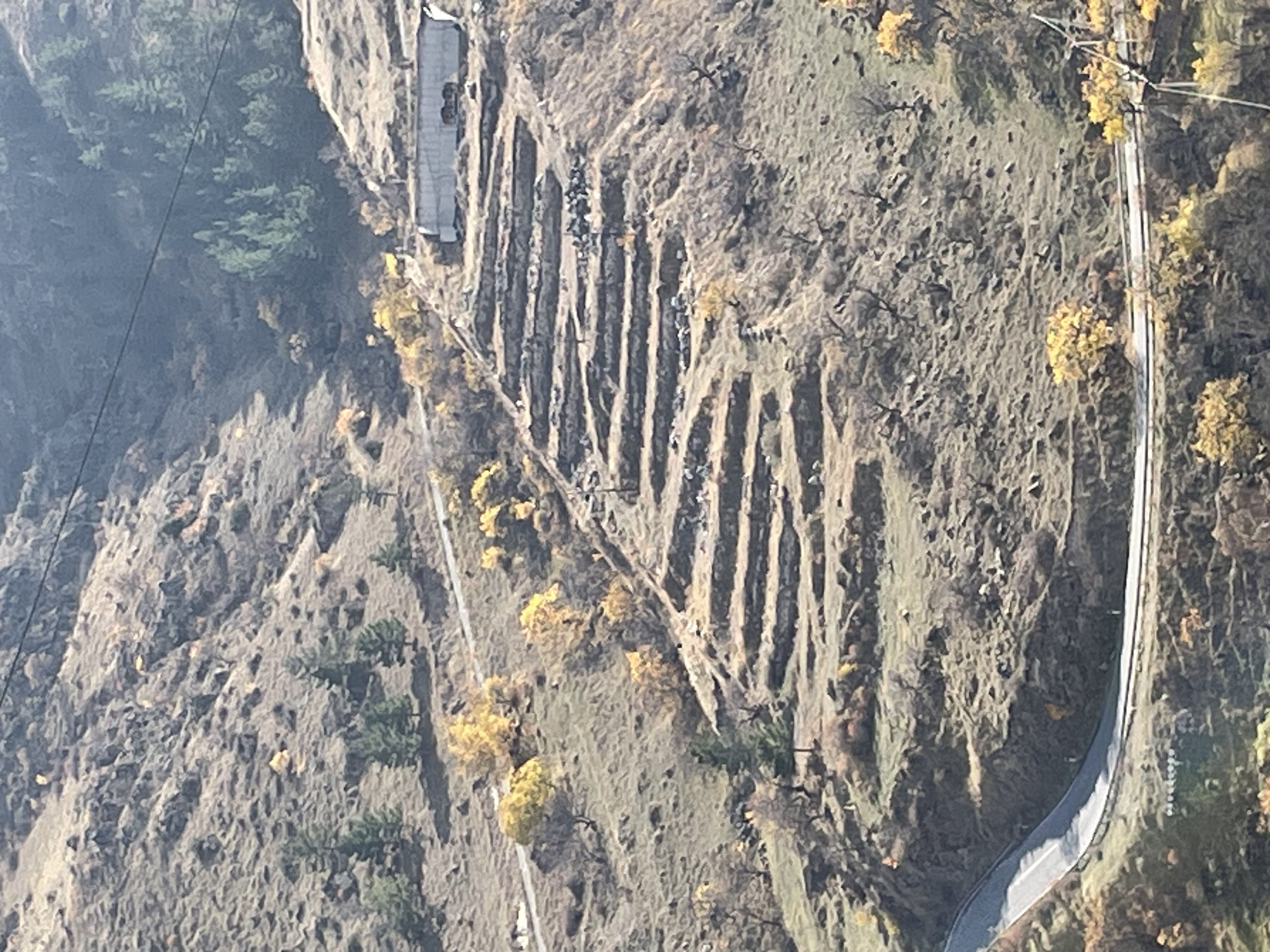
The trip to the Kazbegi Mountain (the 2nd highest in Georgia, close to the Russian border) gave some magnificent views. This one is from a stop at the Russian-Georgian Friendship Monument:
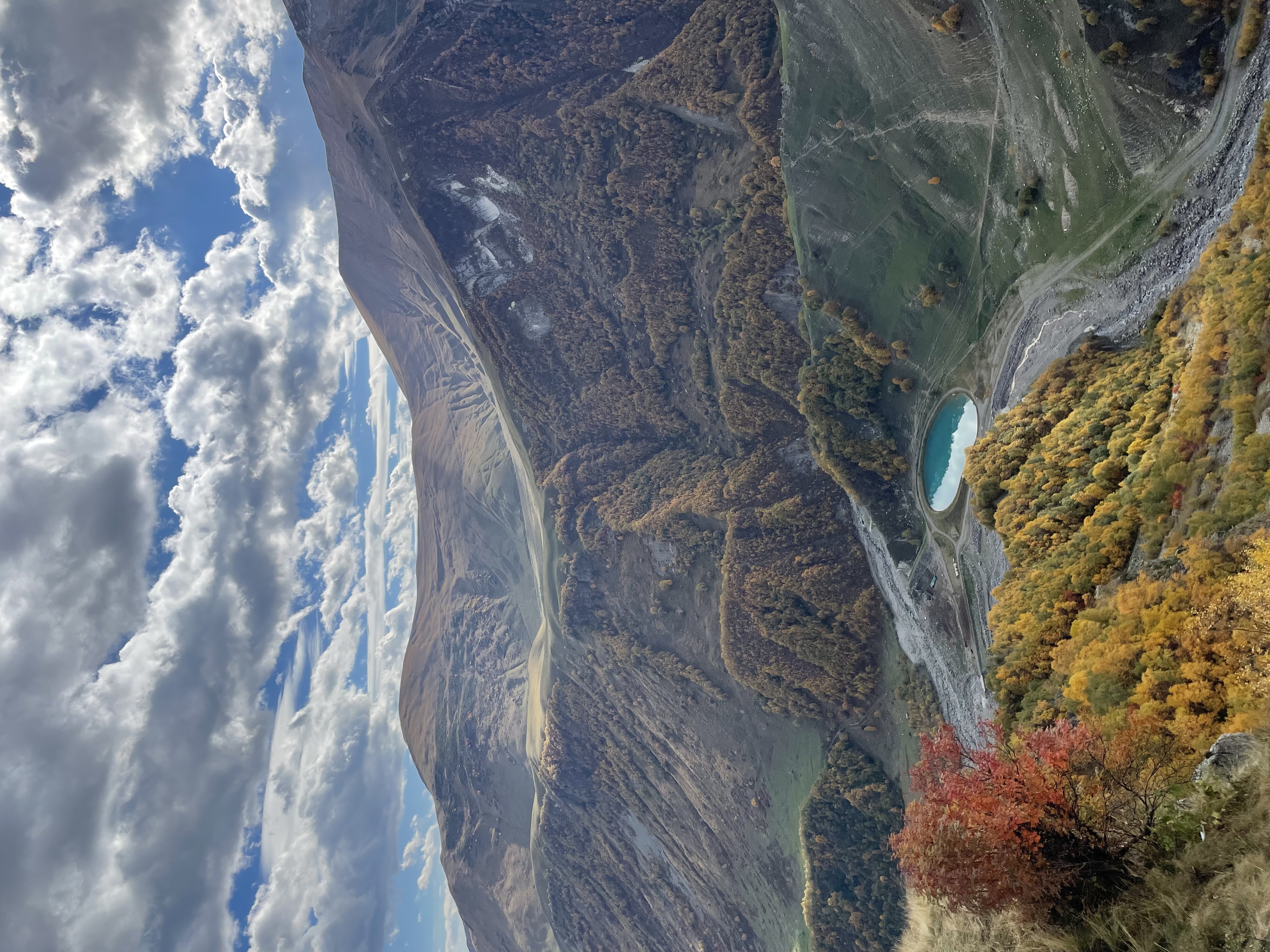
The formidable Kazbegi mountain is the 2nd highest in Georgia, after Shkhara in Svaneti which I have yet to get to:
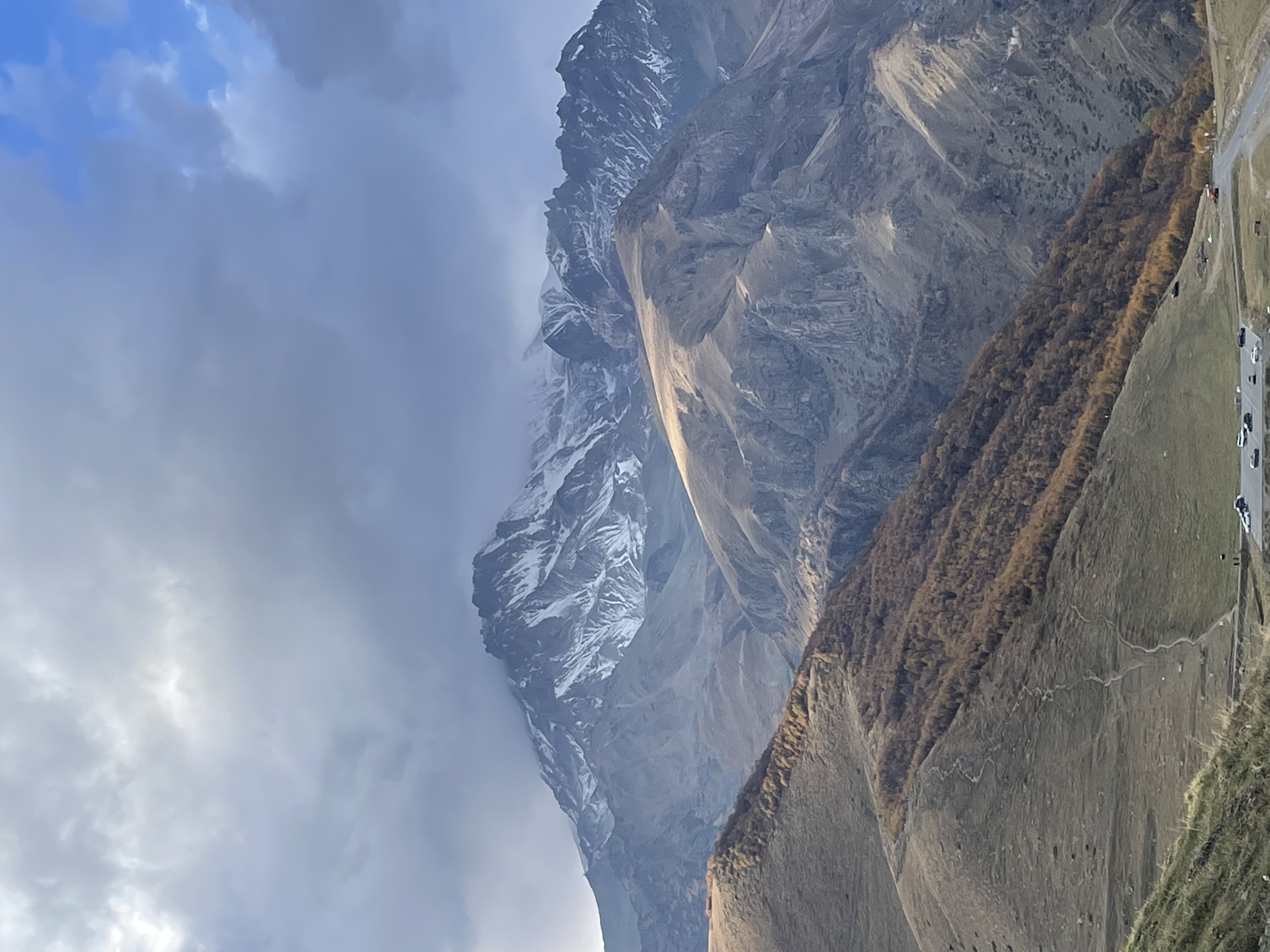
I wrote about my Swaneti trip here, but here's a cool view of the Mestia town (Svaneti region capital) with its famous Svan towers at night:
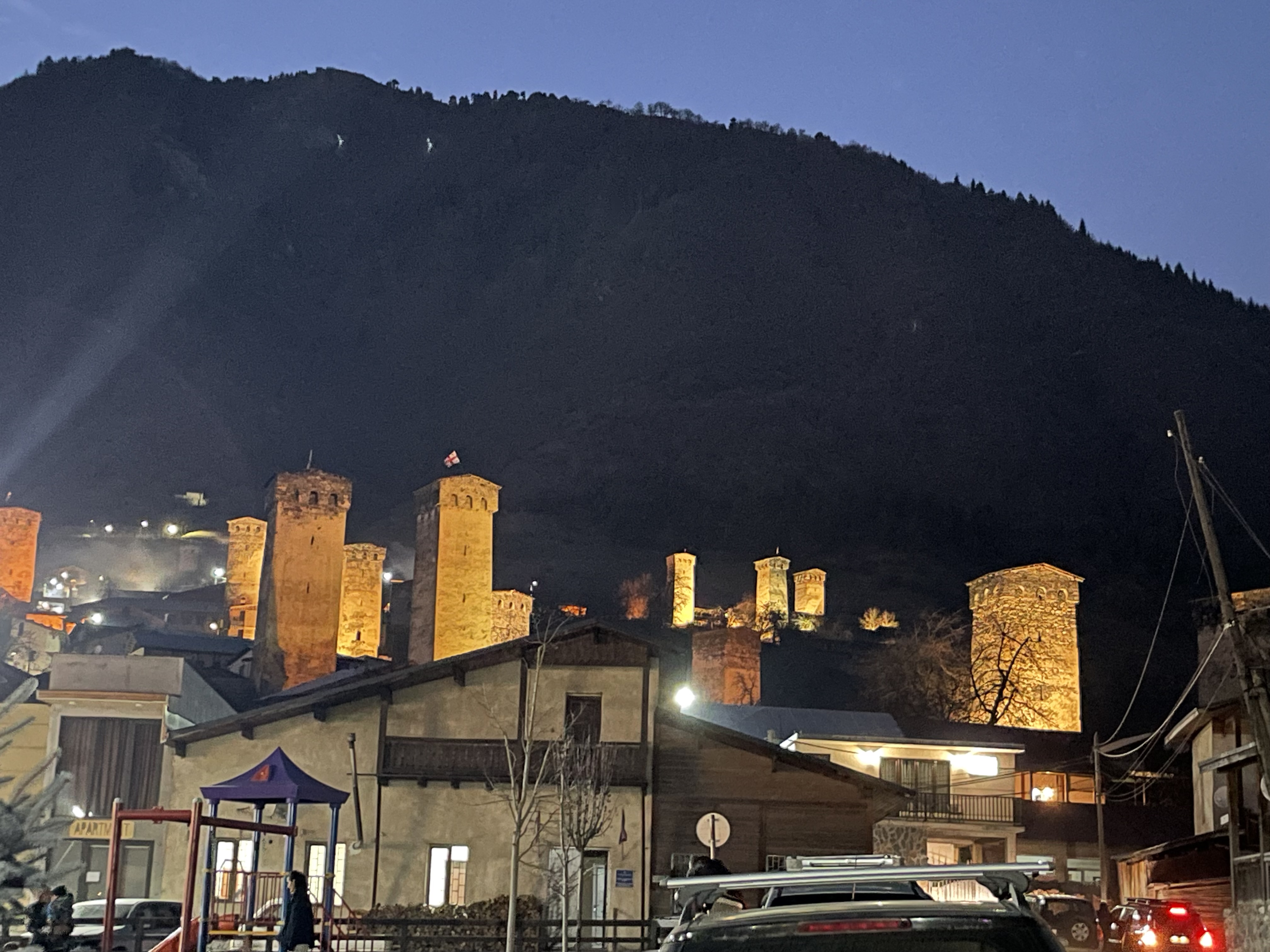
And this is the magnificent Tetnuldi mountain (3rd highest in Georgia) in Svaneti, with the Mestia airport strip at the bottom of the picture.
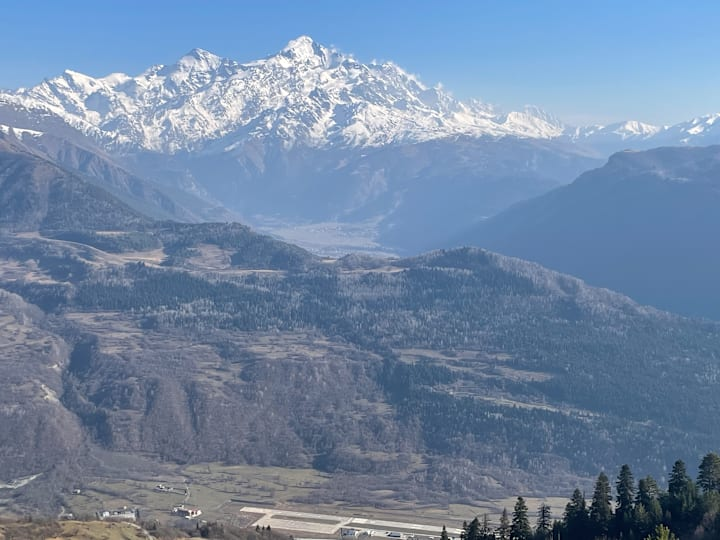
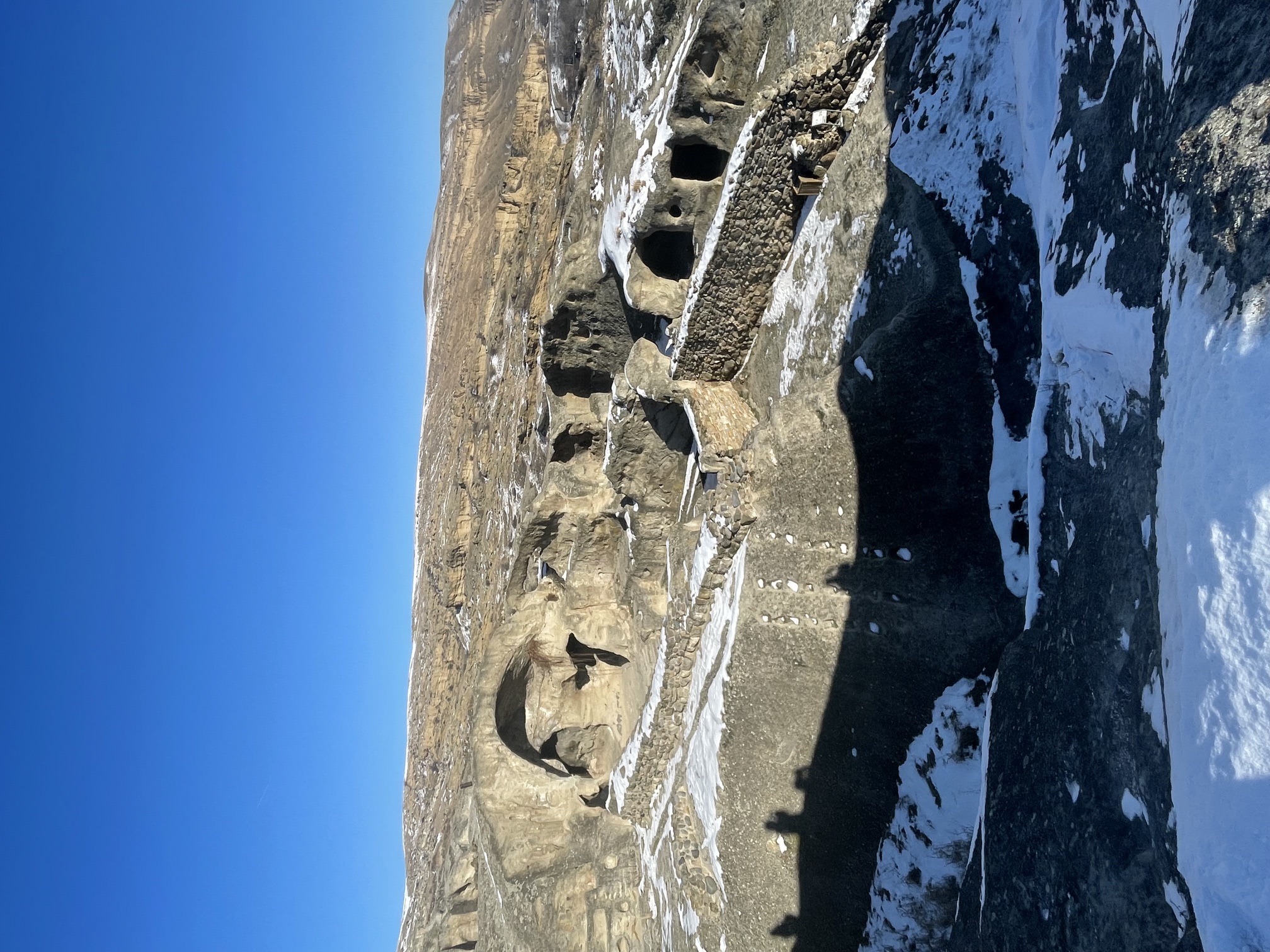
Another medieval cave town, Uplistsikhe, is located near Gori, Stalin's birthplace that still houses his museum. My son, niece and I went to Uplistsikhe in early January:
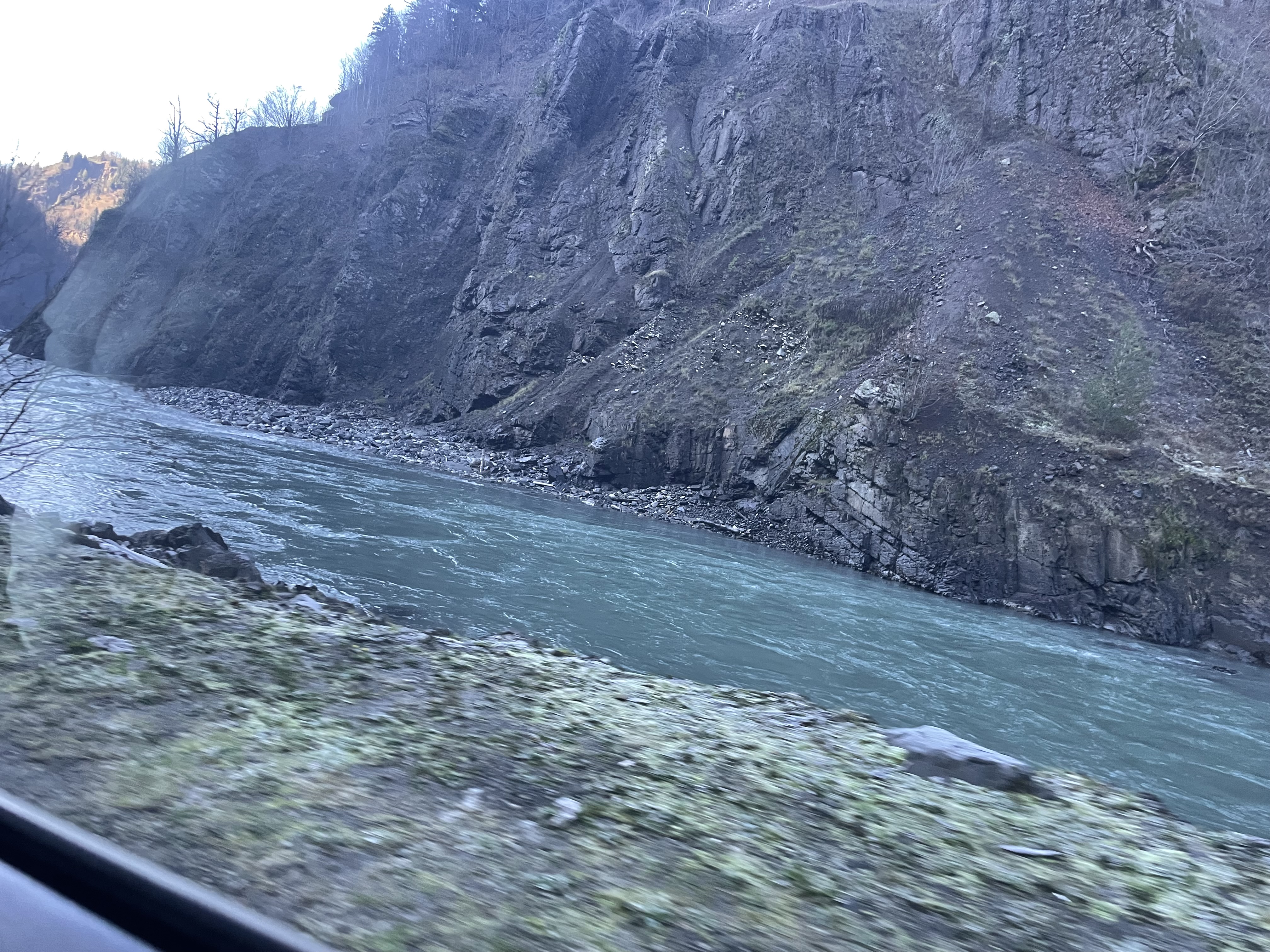
On the way back from Svaneti, we stopped at the Enguri Hydropower Plant and Dam (it covers about 65% of Georgia's energy needs and deserves it own story; hopefully, one day I will get to writing it). This is the mighty mountain Enguri river that supplies the plant with water:
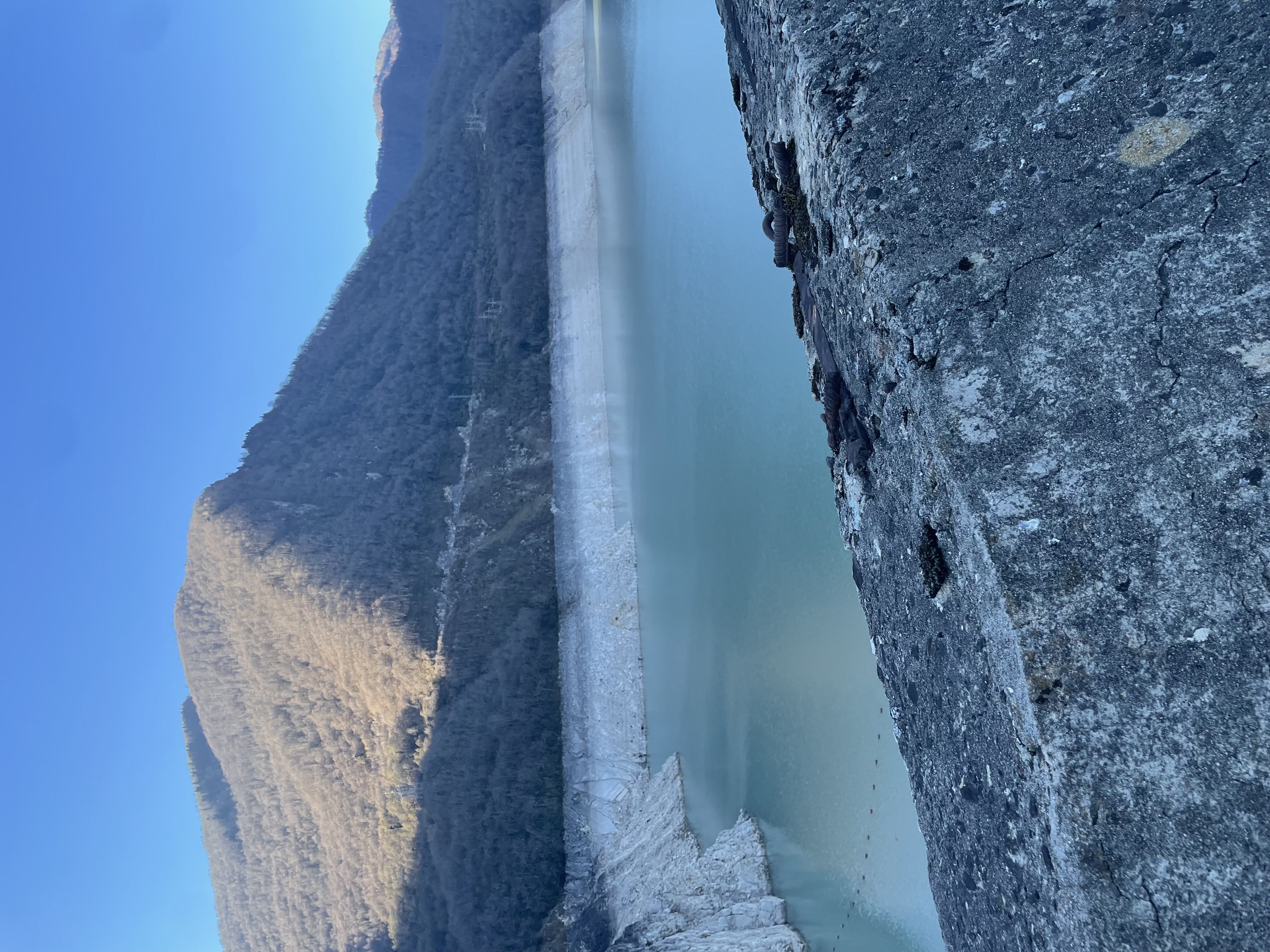
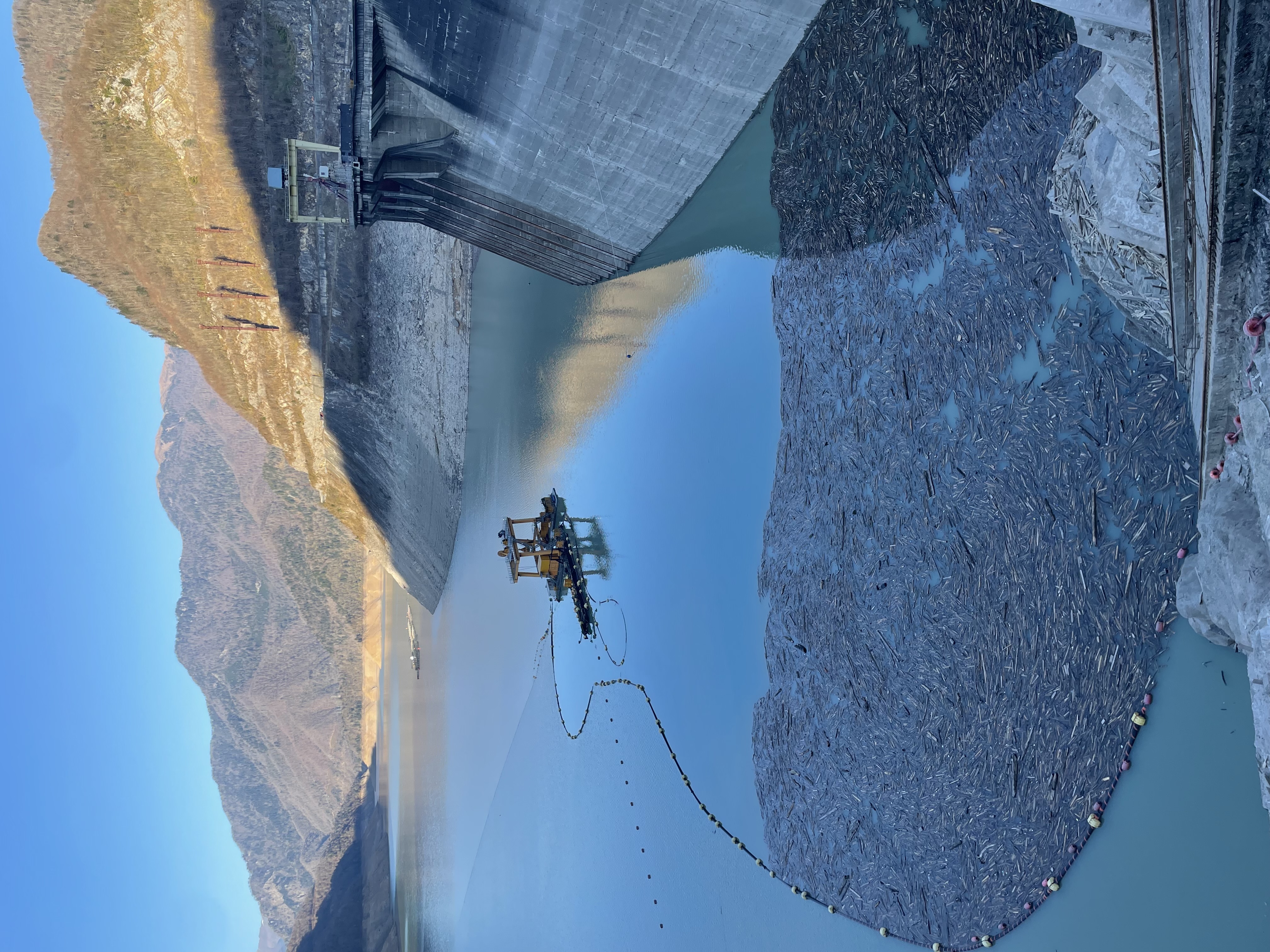
The Enguri Reservoir, view from the Dam:
My niece and I went to Batumi to see the Ali and Nino statue and visit the Black Sea shore. Here are some pictures from that trip:
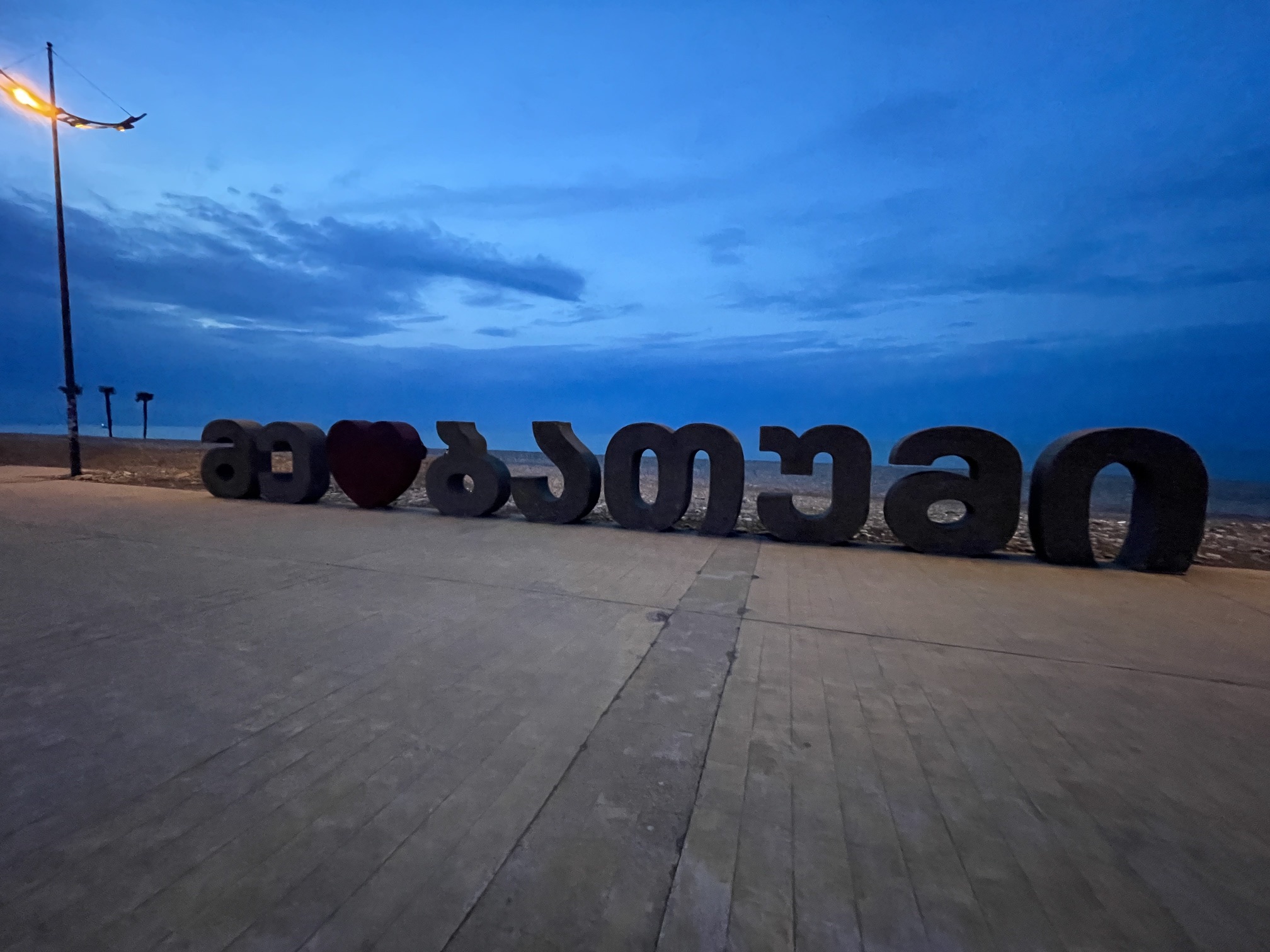
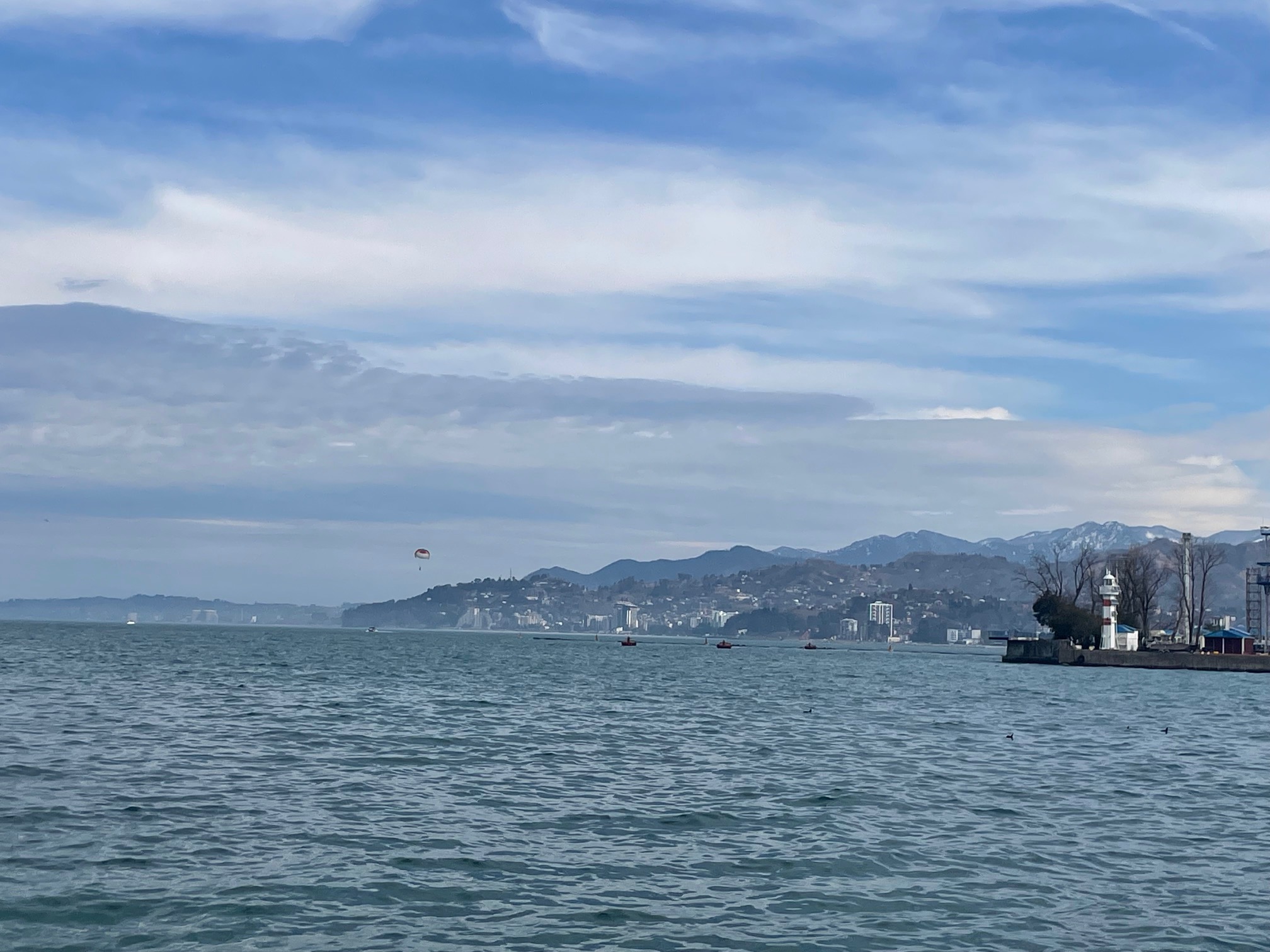
Black Sea view from the Batumi shore:
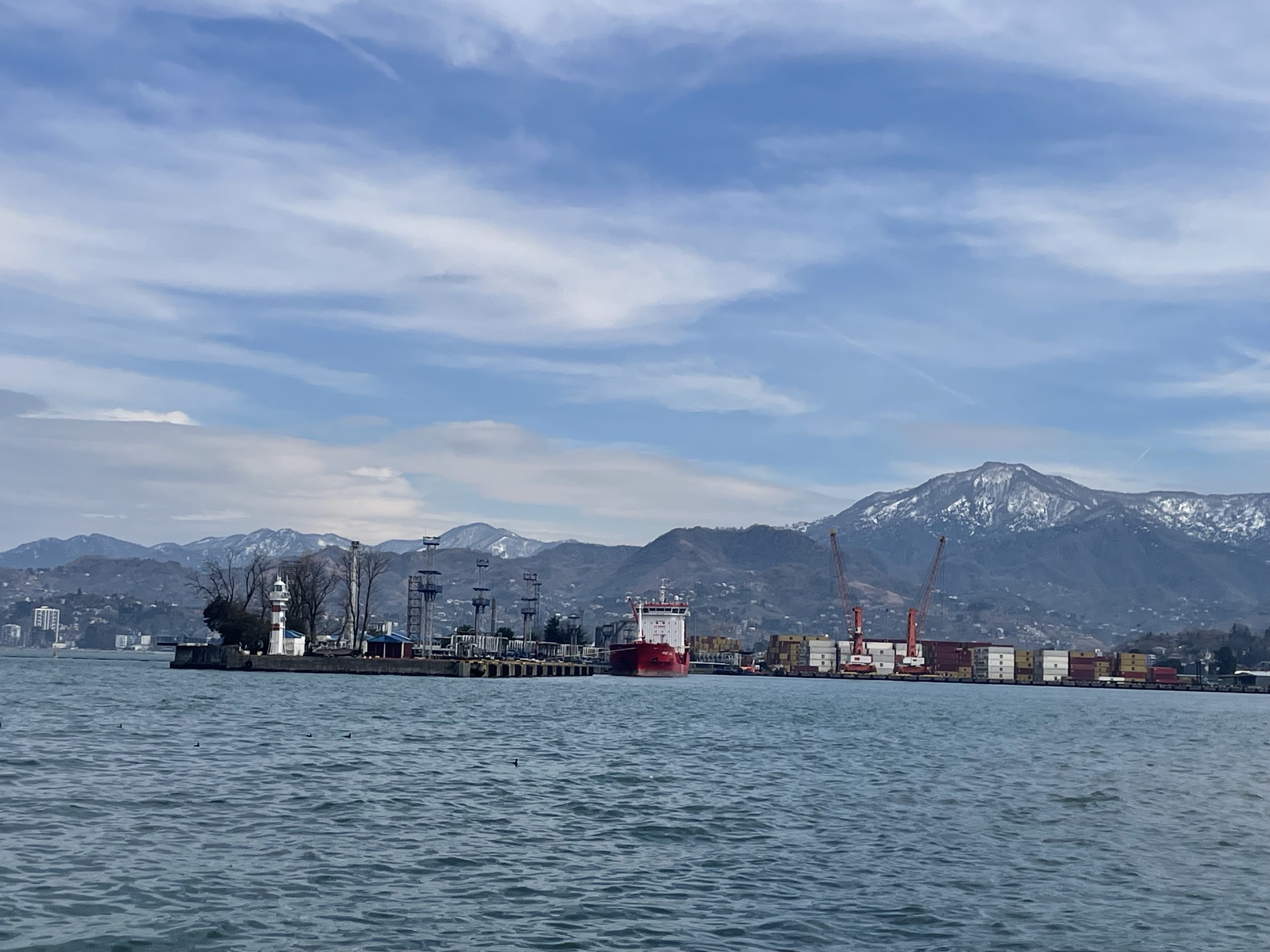
Batumi has one of the busiest ports on the Black Sea:
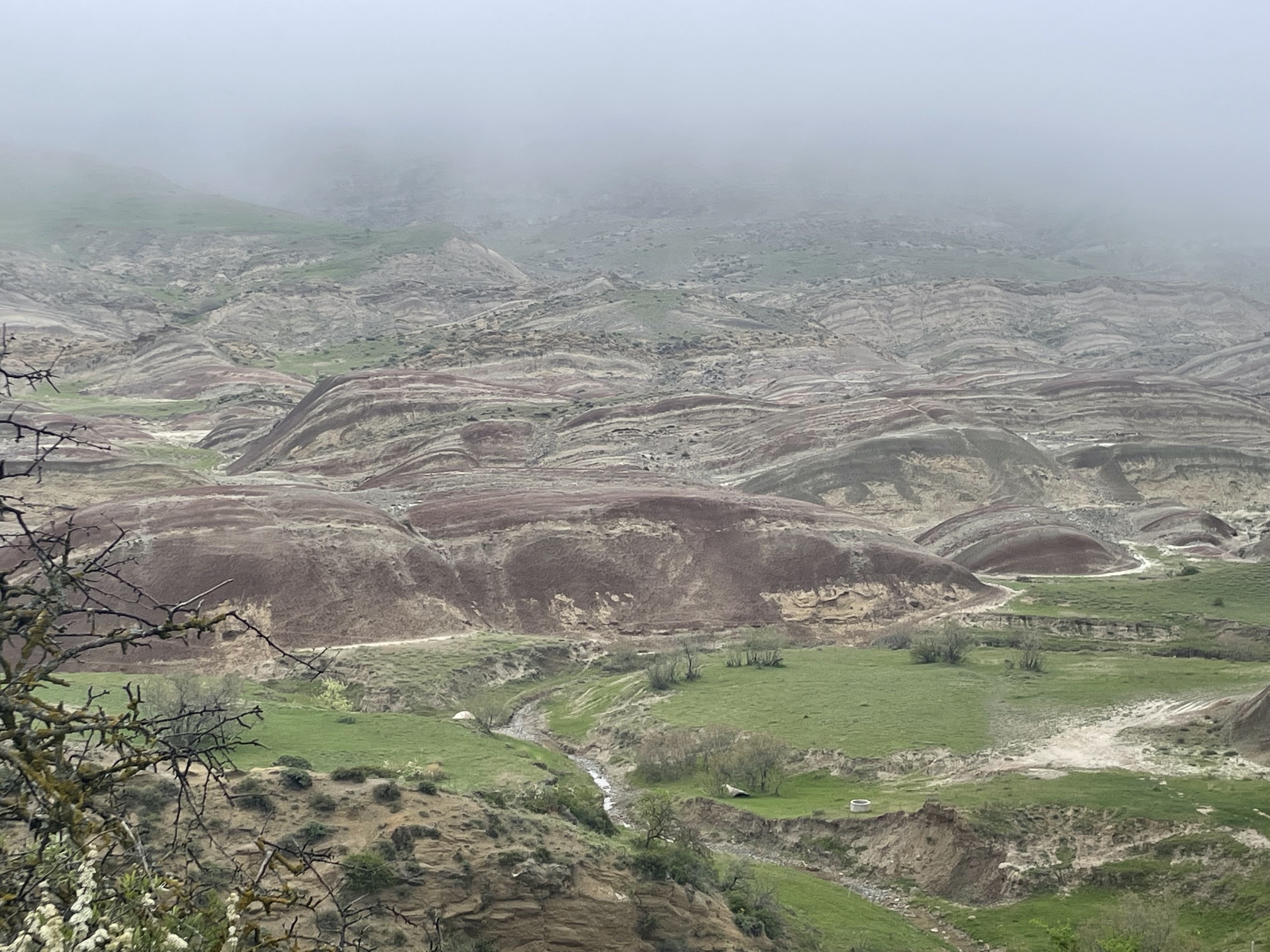
My last and most recent trip in mid-May was to the Rainbow mountains and David Gareja monastery complex on the border with Azerbaijan. The weather did not cooperate with us, it was foggy and misty so the Rainbow Mountains were not as colorful as in the sunlight but we still got some breathtaking views:
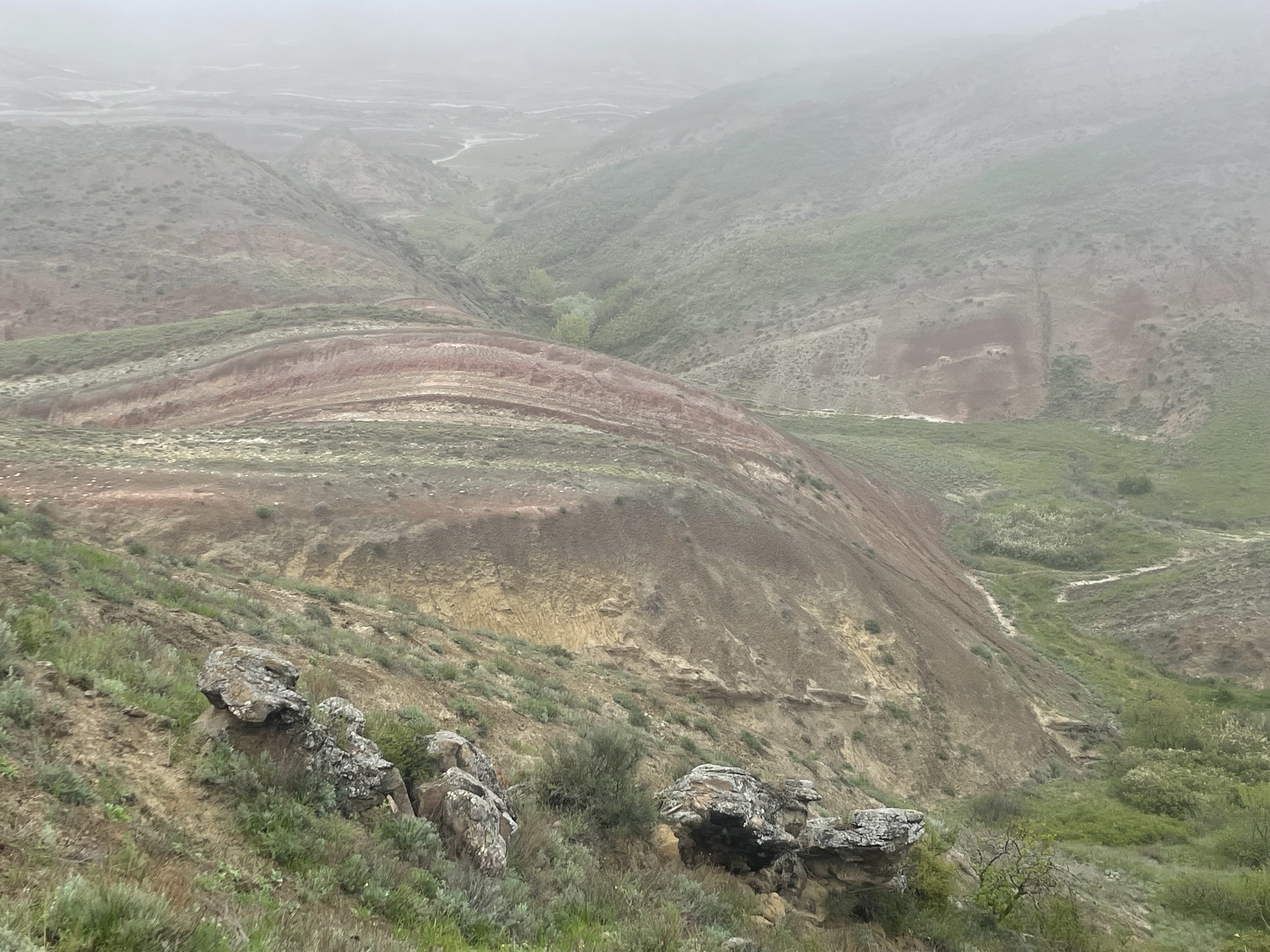
This picture doesn't show it well, but this view of the Rainbow Mountains looked like a giant or God plowed through the area with an enormous plow:
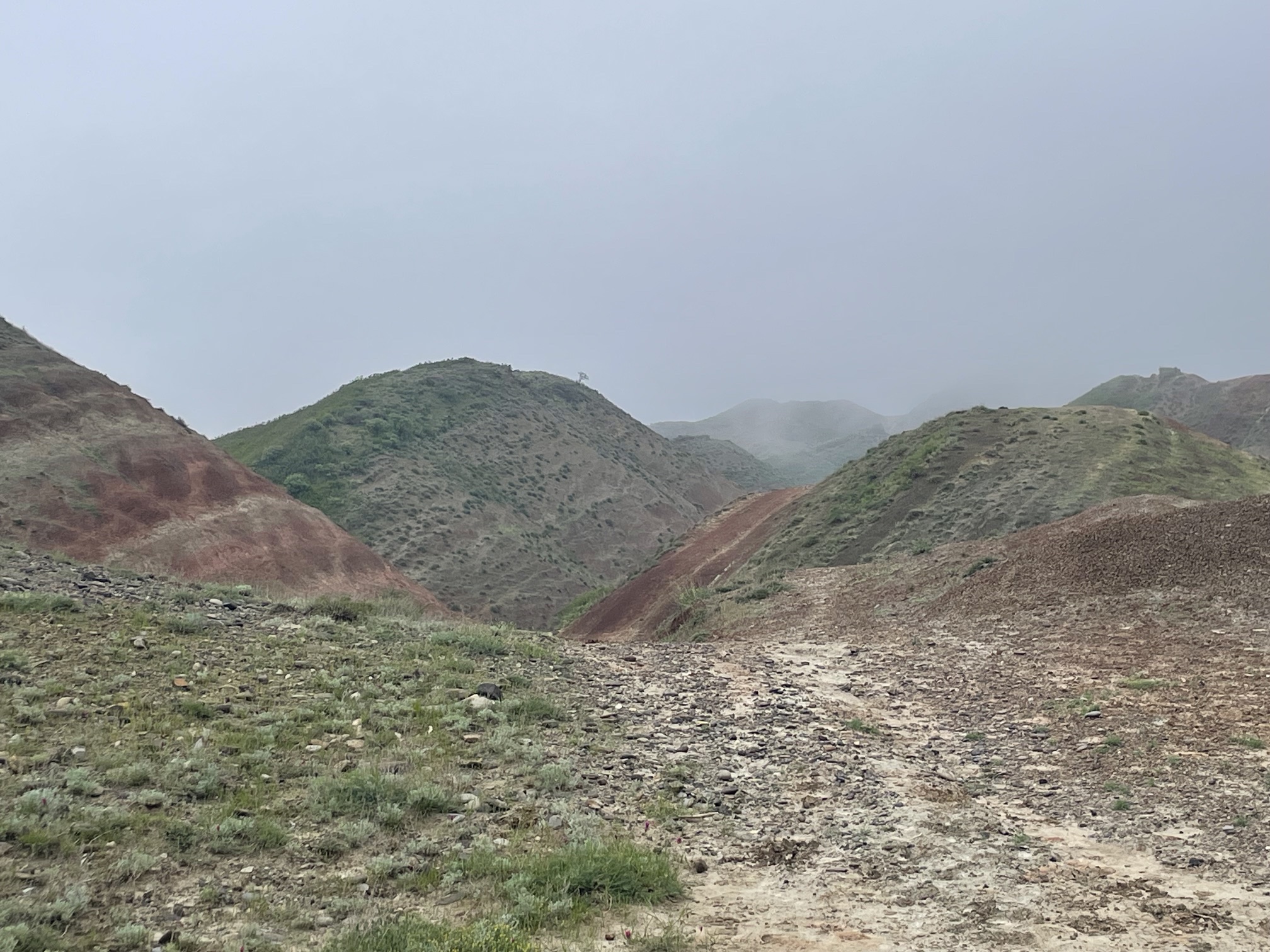
More rainbow mountains that get completely burnt out by the sun and become bare in the summer as this is the only semi-desert area in Georgia. We enjoyed them while they were green:
Now, this has gotten long already but I hope you enjoyed the variety of Georgian -scapes. There's so much more to see in this incredible country!
To close out, I will give you a legend any Georgian will tell you that explains how Georgia came to be this beautiful. It was given to us by a toast master on one of my trips:
Long ago, when the world was still young, God decided to divide the earth among all the peoples. He called them one by one and gave each their share— plains, deserts, forests, mountains — according to their place in line.
The peoples came early, eager and orderly. They stood before God, received their lands, bowed, and departed.
But the Georgians did not come.
They were late. By a lot.
When at last they arrived, God looked at them with surprise.
“Where have you been?” He asked.
The Georgians bowed respectfully and replied: “We had unexpected guests, Lord. We had to lay out a supra for them, as our hospitality laws prescribe. While we welcomed them, we were celebrating you, Lord, together. We were drinking wine and toasting your name. We lost track of time.”
God paused. All the lands had already been given away. Nothing remained.
But He looked at the Georgians, charmed with their warmth, their joy, their love of celebration, and smiled.
“There is one piece of land left,” He said slowly. “I kept it for myself.”
He hesitated for a moment, then added: “Since you honored me not with haste, but with joy and compassion, I will give it to you.”
And so He gave them that land.
A place of mountains and valleys, of vineyards and rivers, of snow peaks and warm seas.
The land He had meant to keep.
And that is why, Georgians say, their country is a piece of Paradise on earth, because it was the land God chose for Himself.
To be fair, the Kyrgyz people will tell you almost exactly the same tale, as I'm sure other mountainous people who live close to God. But it's beautiful nonetheless, just like all countries and peoples are. Earth is beautiful.
***
Here's the index of all my stories written in and/or about Georgia:
About the Creator
Lana V Lynx
Avid reader and occasional writer of satire and short fiction. For my own sanity and security, I write under a pen name. My books: Moscow Calling - 2017 and President & Psychiatrist
@lanalynx.bsky.social
Enjoyed the story? Support the Creator.
Subscribe for free to receive all their stories in your feed. You could also become a paid subscriber, letting them know you appreciate their work.
Comments
There are no comments for this story
Be the first to respond and start the conversation.