
GCC Dark Chocolate Market Outlook 2025–2033: Premium Snacking, Health Awareness, and E-Commerce Expansion Fuel Industry Growth
Renub Research forecasts the GCC Dark Chocolate Market to grow from US$ 1.52 billion in 2024 to US$ 3.01 billion by 2033, driven by rising health awareness, premium product demand, increasing disposable income, and the rapid expansion of online retail channels across the GCC region.

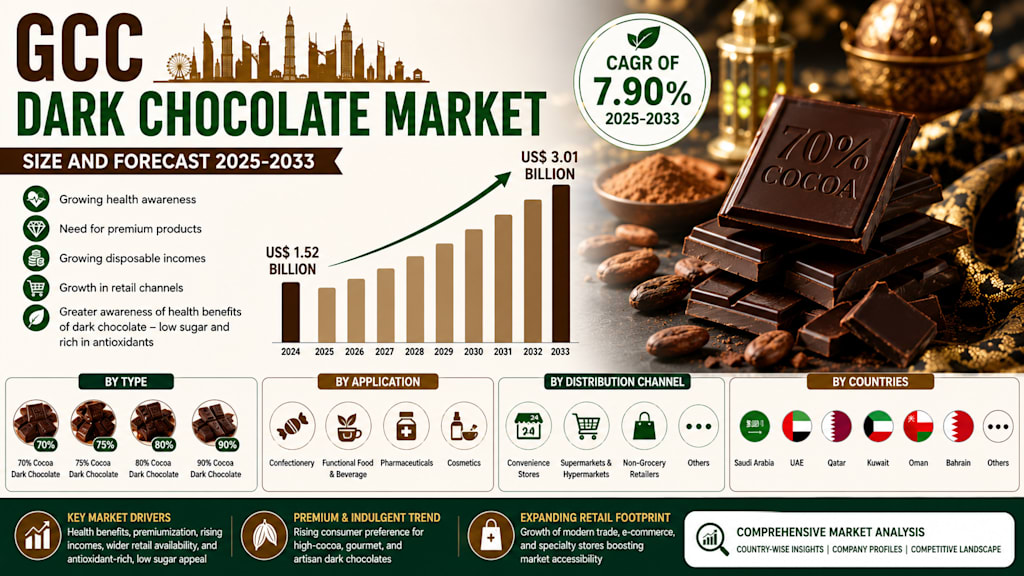
GCC Dark Chocolate Market Experiences Strong Premiumization Trend
The GCC dark chocolate market is witnessing impressive growth as consumers across the Gulf increasingly shift toward premium, healthier, and more sophisticated confectionery products. Dark chocolate, traditionally considered a niche indulgence, is now becoming a mainstream product category driven by changing consumer lifestyles, rising health consciousness, and demand for luxury food experiences.
Consumers throughout Saudi Arabia, the UAE, Kuwait, Qatar, Oman, and Bahrain are increasingly attracted to dark chocolate because of its rich cocoa flavor, lower sugar content, and perceived health benefits. Premium gifting culture, evolving dietary habits, and growing exposure to international food trends are further accelerating market growth.
According to Renub Research, the GCC Dark Chocolate Market is expected to reach US$ 3.01 billion by 2033 from US$ 1.52 billion in 2024, growing at a CAGR of 7.90% during 2025–2033. The report highlights increasing health awareness, rising disposable incomes, premium product demand, retail expansion, and growing awareness regarding dark chocolate’s antioxidant and low-sugar properties as key market growth drivers.
The market is increasingly evolving from traditional confectionery consumption toward functional indulgence, where consumers seek products that combine taste, quality, and wellness benefits.
Health Awareness Continues Driving Consumer Demand
One of the strongest drivers of the GCC dark chocolate market is the rising awareness surrounding health and wellness.
Consumers are becoming increasingly selective about sugar intake, processed foods, and nutritional quality. Dark chocolate is gaining popularity because it contains higher cocoa content, lower sugar levels, and naturally occurring antioxidants compared to conventional milk chocolate products.
The report notes that dark chocolate is widely recognized for potential health benefits such as improved cardiovascular health and cognitive support due to the presence of flavonoids and antioxidants.
Health-conscious consumers increasingly view dark chocolate as a better-for-you indulgence that satisfies cravings while aligning with healthier eating habits. This trend is particularly strong among younger urban consumers, fitness-conscious individuals, and premium product buyers across GCC countries.
In addition to antioxidants, dark chocolate also contains minerals such as magnesium, copper, and iron, further supporting its image as a functional snack option.
As wellness trends continue expanding across the Gulf region, demand for dark chocolate with higher cocoa percentages and cleaner ingredient profiles is expected to rise steadily.
Rising Disposable Income Strengthens Premium Product Consumption
The growing purchasing power of consumers across GCC economies is significantly contributing to market expansion.
Higher disposable incomes are encouraging consumers to spend more on premium and luxury food products, including high-quality dark chocolates, artisanal collections, imported brands, and specialty confectionery items.
The report highlights that sustained economic growth across the region is increasing discretionary spending, enabling consumers to explore upscale and health-oriented chocolate varieties.
Premium dark chocolate products featuring organic ingredients, ethical sourcing, handcrafted presentation, and unique flavor combinations are gaining strong traction among affluent consumers.
This premiumization trend is especially visible in urban centers such as Dubai, Riyadh, Doha, and Abu Dhabi, where consumers increasingly associate premium chocolate products with luxury lifestyle experiences.
Consumers are also more willing to pay higher prices for chocolates marketed as vegan, sugar-reduced, allergen-free, or sustainably sourced.
Product Innovation Is Expanding Market Opportunities
Innovation continues playing a critical role in the growth of the GCC dark chocolate market.
Manufacturers are introducing new flavors, ingredient combinations, packaging styles, and specialty products designed to meet changing consumer preferences and dietary trends.
The report highlights Barry Callebaut’s launch of NXT in Saudi Arabia in November 2022 as an important example of product innovation. NXT became the region’s first allergen-free, vegan dark and milk chocolate product line, offering 100% plant-based and dairy-free chocolate alternatives.
This development reflects the broader market trend toward plant-based, lactose-free, and health-oriented confectionery products.
Manufacturers are also experimenting with local and regional flavors to create stronger cultural connections with consumers. Dates, saffron, cardamom, nuts, Arabic coffee, and exotic spices are increasingly being incorporated into premium dark chocolate collections.
Limited-edition products, seasonal offerings, and artisanal handcrafted chocolates are helping companies differentiate themselves within a highly competitive marketplace.
As consumer expectations continue evolving, product innovation is expected to remain one of the most important growth strategies across the GCC chocolate industry.
E-Commerce Growth Is Reshaping Chocolate Retail
The rapid expansion of e-commerce and online food delivery platforms is significantly improving access to dark chocolate products across the GCC.
Consumers increasingly prefer digital shopping channels because they offer convenience, wider product variety, personalized recommendations, and easier access to imported and premium chocolate brands.
The report notes that the COVID-19 pandemic accelerated the transition toward online shopping, prompting chocolate manufacturers and retailers to strengthen digital infrastructure and online brand visibility.
Social media marketing, influencer partnerships, and targeted digital advertising campaigns are also increasing consumer engagement and product awareness.
Online platforms now allow consumers to access luxury international brands, handcrafted artisanal chocolates, subscription boxes, and customized gifting collections from the comfort of their homes.
E-commerce is particularly important in the GCC because tech-savvy consumers are highly comfortable using digital retail platforms for food and lifestyle purchases.
As online retail ecosystems continue expanding, e-commerce is expected to remain a major distribution channel for premium dark chocolate products.
Gift-Giving Culture Continues Supporting Chocolate Demand
Gift-giving traditions across GCC countries play a major role in supporting dark chocolate consumption.
Dark chocolate is increasingly viewed as a premium and elegant gifting option during religious celebrations, family gatherings, weddings, Ramadan, Eid, and corporate events.
Luxury chocolate packaging, premium presentation boxes, and customized gifting collections are especially popular during festive seasons.
The report notes that cultural traditions surrounding celebrations and hospitality significantly contribute to chocolate demand throughout the GCC region.
Consumers often associate premium dark chocolate with sophistication, generosity, and high social value, making it a preferred choice for gifting occasions.
As luxury gifting culture continues evolving, premium chocolate brands are expected to invest further in personalized and high-end presentation strategies.
Functional Food and Wellness Trends Expand Application Areas
Dark chocolate is increasingly being positioned beyond traditional confectionery categories and is now entering functional food, pharmaceutical, and cosmetic applications.
Consumers increasingly seek foods that deliver both indulgence and health benefits. As a result, dark chocolate is being incorporated into protein snacks, energy products, nutraceutical formulations, and wellness-focused beverages.
The report identifies functional food & beverage applications as one of the key segments within the GCC dark chocolate market.
Beauty and skincare industries are also exploring cocoa-based ingredients because of their antioxidant properties and perceived wellness benefits.
This diversification into functional and wellness applications is expected to create additional growth opportunities for dark chocolate manufacturers in the coming years.
Intense Competition Creates Market Pressure
Despite strong growth prospects, the GCC dark chocolate market faces significant competitive pressure.
The report highlights intense competition as one of the market’s major challenges, with domestic and international companies competing aggressively for market share.
Established multinational brands often dominate distribution channels and consumer awareness through strong marketing budgets and brand loyalty.
Smaller artisanal companies and emerging brands must continuously innovate, differentiate products, and strengthen branding strategies to remain competitive.
This highly competitive environment increases marketing costs and operational pressure while making customer acquisition more difficult for new entrants.
To maintain growth, companies are increasingly focusing on premiumization, sustainability, flavor innovation, and personalized customer experiences.
Supply Chain Challenges Affect Market Stability
Supply chain complexity also presents challenges within the GCC dark chocolate industry.
Dark chocolate manufacturing depends heavily on imported cocoa and specialty ingredients, making the market vulnerable to global commodity price fluctuations, transportation disruptions, and sourcing issues.
The report identifies supply chain issues as an important concern impacting the market.
Rising logistics costs, fluctuating raw material prices, and international shipping disruptions can affect production efficiency and retail pricing.
Manufacturers are therefore increasingly investing in stronger sourcing partnerships, inventory planning, and regional distribution networks to improve supply chain resilience.
Saudi Arabia Leads Regional Market Expansion
Saudi Arabia remains one of the largest dark chocolate markets within the GCC due to rising health awareness, strong gifting culture, and increasing demand for premium confectionery products.
Consumers in Saudi Arabia are increasingly attracted to dark chocolate because of its lower sugar content and perceived wellness benefits.
The report notes that dark chocolate has become especially popular during festive periods such as Ramadan and Eid, where premium gifting traditions strongly influence chocolate consumption.
E-commerce growth is also helping consumers access a broader range of domestic and international dark chocolate brands.
As lifestyle modernization and wellness awareness continue growing across Saudi Arabia, demand for premium dark chocolate products is expected to remain strong.
UAE Market Benefits from Luxury and Lifestyle Trends
The UAE dark chocolate market is experiencing robust growth due to rising disposable incomes, strong luxury consumption patterns, and a highly cosmopolitan consumer base.
Consumers increasingly seek artisanal, ethically sourced, and premium-quality chocolate products featuring innovative flavor profiles and elegant packaging.
The report highlights that demand for dark chocolate in the UAE is supported by health consciousness, gifting culture, and expanding e-commerce accessibility.
The UAE’s status as a global tourism and luxury retail destination also contributes to strong premium chocolate sales across airports, malls, hotels, and specialty stores.
Oman’s Market Shows Steady Long-Term Potential
Oman’s dark chocolate market is expanding gradually as changing dietary preferences and health awareness encourage consumers to explore healthier confectionery options.
Consumers increasingly prefer premium dark chocolates with natural ingredients, lower sugar levels, and artisanal appeal.
The report notes that growing e-commerce accessibility and product innovation continue supporting long-term market development within Oman.
As modern retail and digital commerce expand further, Oman is expected to become an increasingly attractive market for premium chocolate manufacturers.
Competitive Landscape Reflects Strong Global and Regional Participation
The GCC dark chocolate market features a highly competitive landscape involving multinational confectionery giants alongside regional premium chocolate producers.
Companies covered in the Renub Research report include Nestlé S.A., The Hershey Company, Mondelez International Inc., Ferrero Group, Meiji Holdings Co. Ltd, Bateel International LLC, Al-Seedawi Sweets Factories Co, and AANI & DANI.
These companies are investing heavily in premiumization, plant-based innovation, sustainable sourcing, luxury packaging, and digital retail strategies to strengthen market positioning.
Recent Developments by Leading Companies
- Barry Callebaut launched NXT, the GCC region’s first allergen-free and vegan dark chocolate range in Saudi Arabia.
- Nestlé expanded premium and health-focused chocolate product offerings targeting wellness-conscious consumers.
- Mondelez International strengthened innovation efforts in premium and artisanal dark chocolate categories.
- Ferrero Group increased focus on luxury gifting collections and premium chocolate packaging.
- Regional brands introduced locally inspired flavors including dates, saffron, and Arabic coffee-infused chocolates.
- E-commerce platforms expanded online availability of imported and artisanal dark chocolate brands.
- Chocolate manufacturers increased investment in plant-based and dairy-free product innovation.
- Premium confectionery brands strengthened influencer marketing and digital advertising strategies across GCC countries.
- Retailers expanded luxury chocolate offerings during Ramadan and Eid gifting seasons.
- Artisanal chocolate producers increased focus on ethical sourcing and sustainable cocoa ingredients.
Future Outlook for the GCC Dark Chocolate Market Remains Highly Positive
The future outlook for the GCC dark chocolate market remains extremely promising as health-conscious consumption, premiumization, and digital retail continue reshaping the regional confectionery industry.
Consumers increasingly seek indulgent products that combine flavor, quality, wellness benefits, and sophisticated experiences. Dark chocolate aligns perfectly with these evolving preferences by offering premium taste alongside perceived health advantages.
Product innovation, sustainable sourcing, vegan alternatives, and personalized gifting solutions are expected to remain key competitive differentiators in the coming years.
Although intense competition and supply chain challenges remain important concerns, the market’s long-term fundamentals continue appearing highly attractive.
As disposable incomes rise and consumers continue embracing premium and wellness-focused lifestyles, dark chocolate is expected to remain one of the GCC region’s fastest-growing confectionery categories through 2033.
About the Creator
Enjoyed the story? Support the Creator.
Subscribe for free to receive all their stories in your feed.
Comments
There are no comments for this story
Be the first to respond and start the conversation.