
From Rubber Waste to Renewable Fuel: How Tyre-to-Oil Plants Drive a Closed-Loop Economy
Exploring pyrolysis in end-of-life tyre recycling
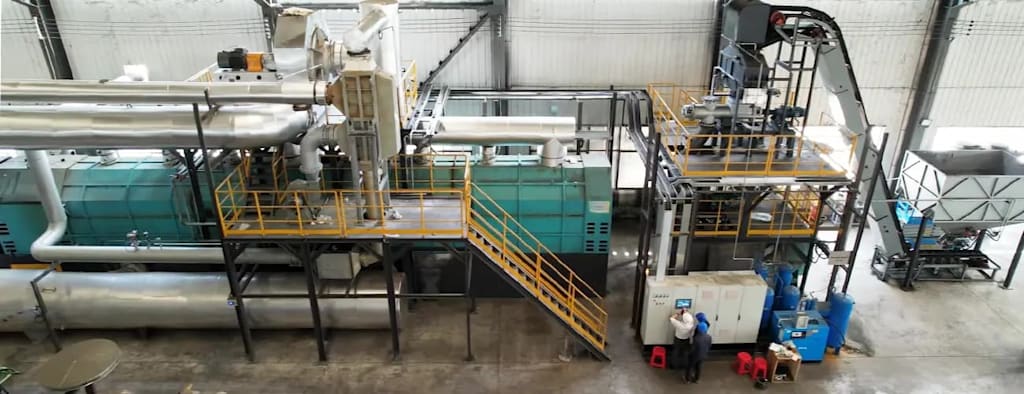
Every year, over 1.5 billion tyres reach the end of their life. Stacked in landfills or dumped illegally, these rubber giants become breeding grounds for disease and fire hazards that can burn for months. But hidden inside that seemingly worthless black circle is a reservoir of energy. Enter the tyre-to-oil plant – a technological bridge between waste management and energy recovery that is redefining the circular economy.
This isn't just about disposal. It's about transforming a linear "take-make-waste" model into a closed-loop system where yesterday's tyre becomes tomorrow's fuel, raw material, and even new tyre component. Let’s explore how thermal pyrolysis makes this possible.
The Core Technology: Thermal Pyrolysis
At the heart of every tyre-to-oil plant lies a process called pyrolysis – thermal decomposition in an oxygen-free environment. Unlike incineration (burning), which releases toxic emissions like dioxins and furans, pyrolysis breaks down tyre polymers at high temperatures (typically 400–600°C) without combustion.
When tyres are fed into a reactor, the intense heat cracks long hydrocarbon chains into shorter, valuable molecules. The outputs are remarkably clean and useful:
- Tyre Pyrolysis Oil (TPO) – 35-45% of input weight. A high-calorific liquid similar to light fuel oil or industrial diesel.
- Carbon Black – 30-35%. A solid residue resembling fine soot, used as a reinforcing agent in rubber products.
- Steel Wire – 10-15%. Clean, magnetically separated, and ready for steel mills.
- Syngas – 5-10%. A combustible gas recycled to heat the reactor itself, making the process energy-self-sufficient.
No single component goes to waste. That’s the first pillar of a closed loop.
Driving the Closed-Loop Chain
A true circular economy requires waste to flow back into production. Tyre pyrolysis achieves this at four levels.
1. Energy Recovery Without New Carbon Extraction
Pyrolysis oil from a tyre-to-oil plant can fuel industrial boilers, power cement kilns, or even be upgraded into marine diesel. Every litre used replaces fossil crude oil. For heavy industries seeking to lower their Scope 1 emissions, TPO offers a drop-in alternative – not a perfect zero-carbon solution, but a massive improvement over landfilling or virgin fuel use.
2. Carbon Black Goes Home
Virgin carbon black is petroleum-derived and energy-intensive to produce. Recovered carbon black (rCB) from pyrolysis, after surface treatment, can be reblended into new tyre treads, conveyor belts, or hoses at 20-40% replacement ratios. Major tyre manufacturers like Michelin and Bridgestone are now investing in rCB integration – closing the most literal loop: old tyre → oil + carbon black → new tyre.
3. Steel Goes Back to Manufacturing
Tyre cord steel is high-tensile and low-impurity. Once recovered, it bypasses mining and smelting entirely, directly feeding electric arc furnaces. This saves 74% of the energy required for virgin steel production – a quiet but powerful contribution to decarbonisation.
4. Syngas Closes the Process Loop
The non-condensable syngas (mostly hydrogen and methane) is piped directly back into the reactor’s burner. This means a well-designed tyre-to-oil plant requires zero external fuel after startup. No coal, no natural gas – just the tyres themselves powering their own transformation.
Beyond Technology: Economic and Policy Drivers
For a closed loop to survive, it must be profitable. Modern tyre-to-oil plants are modular, mobile, and increasingly clean. With EU landfill bans on whole tyres (since 2006) and extended producer responsibility (EPR) schemes making tyre manufacturers pay for end-of-life collection, the feedstock is both abundant and free in some regions – sometimes even gate-fee positive.
The oil price sweet spot is critical. When crude oil trades above $60–70 per barrel, TPO becomes highly competitive. But even at lower prices, the combined sale of rCB and steel keeps units viable. Some advanced plants now refine TPO into naphtha or distillates, further lifting margins.
Environmental Caveats (Honestly)
No technology is perfect. Pyrolysis plants require strict emission controls for particulates, SOx, and volatile organic compounds – especially from tyre pre-shredding and char handling. Cheap, poorly maintained units in unregulated markets have given the industry a bad name. However, modern EU- and US-certified systems use scrubbers, condensers, and bag filters to achieve air quality standards comparable to gas-fired power plants.
The other challenge is oil quality. TPO has higher sulphur and aromatic content than refined diesel, requiring hydrotreatment for road-fuel use. For stationary industrial combustion, however, it performs admirably.
The Road Ahead
A truly closed-loop tyre economy is not a fantasy. It’s operating in pilot-scale hubs in Scandinavia, Japan, and Germany. The next steps are standardising rCB quality, scaling continuous-feed reactors (which run 24/7, unlike batch systems), and integrating tyre to oil plant with chemical recycling to recover even the sulphur for fertiliser production.
When you drive on a modern tyre, you may already be rolling over recycled carbon black. And the fuel that powers the truck delivering that tyre? Somoon it could come from a tyre-to-oil plant too.
The circle isn’t just closing – it’s gaining speed. All from a pile of old rubber and a few hundred degrees of oxygen-free heat.
About the Creator
Enjoyed the story? Support the Creator.
Subscribe for free to receive all their stories in your feed.
Comments
There are no comments for this story
Be the first to respond and start the conversation.