
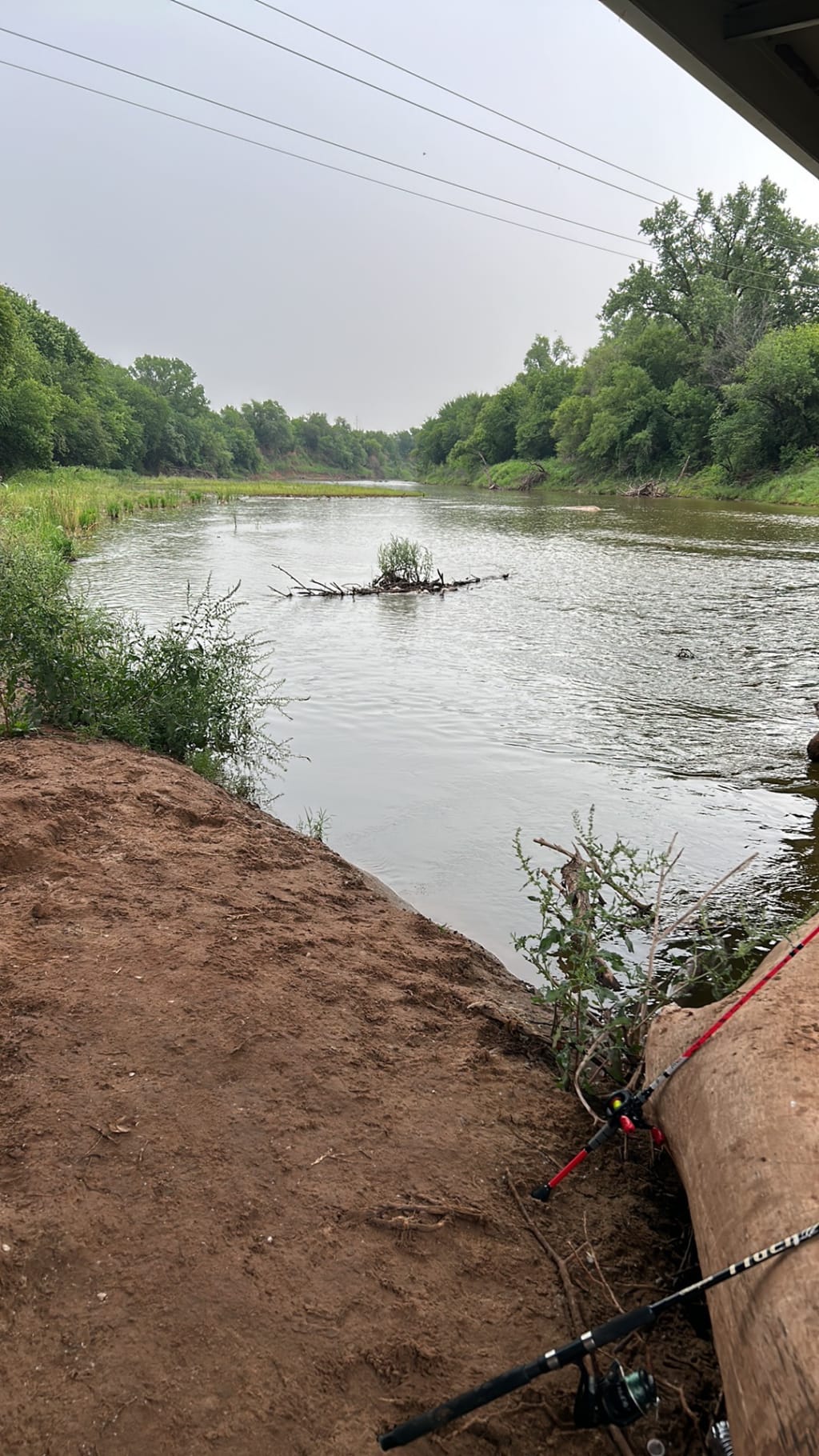
The Salt Fork of the Arkansas River refers to a tributary of the Arkansas River located in northwestern Oklahoma, United States. It originates in the Texas County and flows through several counties in Oklahoma before joining the Arkansas River near the town of Muskogee. The Salt Fork, along with other tributaries, contributes to the overall flow and drainage of the Arkansas River system. If you have any further questions about the Salt Fork or the Arkansas River, Blue catfish (Ictalurus furcatus) is a species of catfish native to North America. It is named for its bluish-gray body coloration, which can vary in intensity depending on environmental factors and age. Blue catfish are primarily found in large rivers, reservoirs, and lakes throughout the Mississippi River drainage system and its tributaries.
These catfish are known for their impressive size and can reach lengths exceeding 5 feet and weigh over 100 pounds. They have a long lifespan, with some individuals living for several decades. Blue catfish are opportunistic predators, feeding on a variety of aquatic organisms, including smaller fish, crustaceans, and mollusks.
Blue catfish are highly sought after by anglers due to their size and challenging nature. They provide a thrilling fishing experience and are often targeted using specialized techniques such as drift fishing, jug fishing, or trotlining. In recent years, blue catfish have gained popularity as a sport fish and have been introduced to various bodies of water outside their native range.
Channel catfish (Ictalurus punctatus) is another species of catfish native to North America. They are widely distributed and can be found in various freshwater habitats, including rivers, lakes, ponds, and reservoirs throughout the United States and parts of Canada.
Channel catfish are known for their distinctive forked tail and scaleless bodies. They typically have a bluish-gray to olive-brown coloration on their back and sides, with a white or creamy belly. They have sharp spines on their pectoral and dorsal fins, which they use for defense.
These catfish are opportunistic feeders and have a diverse diet, consuming a wide range of food sources including insects, crustaceans, small fish, and plant matter. They are often caught by anglers using a variety of baits such as worms, prepared stink baits, or cut bait.
Channel catfish are highly prized for their sport fishing qualities and are also popular in aquaculture due to their rapid growth and tolerance to varying water conditions. They are an important species both for recreational fishing and commercial purposes.
Fishing is a popular recreational activity that involves catching fish from various bodies of water using different techniques and equipment. It can be enjoyed in freshwater or saltwater environments, and people fish for a variety of reasons, including sport, relaxation, and acquiring food.
Fishing methods can vary widely depending on the target species, location, and personal preference. Some common fishing techniques include casting and retrieving with lures or bait, fly fishing using artificial flies, trolling with a moving boat, ice fishing on frozen lakes, and bottom fishing using weights and bait.
Fishing equipment typically includes fishing rods, reels, fishing line, hooks, sinkers, and various types of bait or lures. Different types of fish require different gear and techniques, so it's important to match the equipment to the desired catch.
Anglers often practice catch-and-release, which means they release the fish back into the water after catching them, to preserve fish populations and promote conservation. Fishing regulations and licenses are often required to ensure sustainable fishing practices and protect fish populations.
Fishing can be a relaxing and enjoyable pastime, providing opportunities to connect with nature and spend time outdoors. It can also be a challenging and rewarding activity that requires skill and patience.When it comes to catfish, they are opportunistic feeders and can be caught using a variety of baits. Here are some popular bait options for catfish:
1. Live Bait: Common live baits for catfish include nightcrawlers (earthworms), minnows, and various types of fish such as shad, sunfish, or cut bait (pieces of fish). These can be effective for attracting catfish, especially when fished near the bottom.
2. Prepared Baits: There are commercially available prepared baits specifically designed for catfish, often referred to as "stink baits." These are usually dough or dip baits that contain strong-smelling ingredients like cheese, blood, or other attractants. They can be effective when used with a bait holder, dip bait tube, or sponge.
3. Chicken Liver or Gizzards: Many anglers swear by chicken liver or gizzards as effective catfish bait. They have a strong scent that can attract catfish from a distance. Secure them to your hook with thread or mesh to keep them in place.
4. Crawfish or Crayfish: Catfish are known to feed on crawfish, so using live or dead crawfish as bait can be productive. Secure them to your hook to prevent them from being stolen by smaller fish.
5. Dough Baits: Homemade or commercially available dough baits, often made with a combination of flour, cornmeal, water, and flavorings, can also attract catfish. Mold the dough around your hook, creating a ball that stays intact
About the Creator
Enjoyed the story? Support the Creator.
Subscribe for free to receive all their stories in your feed.
Comments
There are no comments for this story
Be the first to respond and start the conversation.