
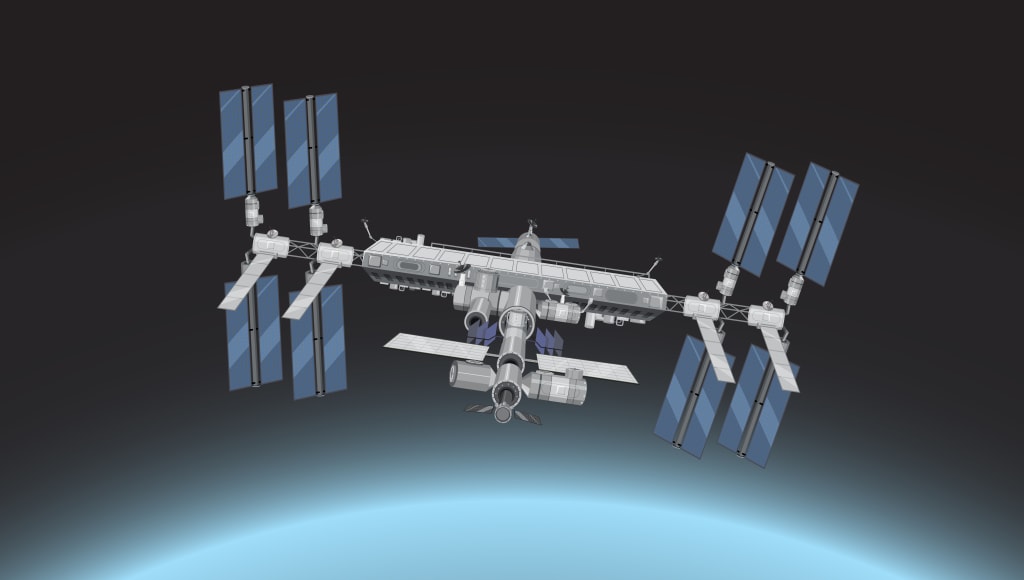
After over twenty years in space, the darling Global Space Station (ISS) is booked for retirement in 2030. Notwithstanding, it's critical to explain that, similar to its noteworthy introduction, the ISS's last section vows to similarly awe-inspiring. All in all, the inquiry emerges: how would you securely resign an enormous design the size of a football field without creating any setbacks? Be that as it may, prior to digging into the mind boggling subtleties, it merits investigating the purposes for NASA and its accomplices' choice to say goodbye to the ISS.
The ISS, which has been in ceaseless activity since November 2000, finishes a circle around Earth like clockwork, rushing through space at an amazing pace of eight kilometers each second. During its broad residency, the ISS has worked with more than 3,000 exploration examinations, including commitments from 108 nations. In any case, regardless of its distinguished history, the ISS is showing indications of maturing, intensified by its presence in one of the most deceptive conditions known to humankind, continually under danger from expected crashes with space garbage.
In view of assessments, the ISS is projected to stay functional until 2028. Notwithstanding, a few convincing variables have prompted the choice to resign it. One essential element is the impressive functional expense, a yearly consumption drawing nearer $4 billion. Additionally, the ISS's locally available abilities have become compelled, requiring different yearly moves to forestall an inauspicious plunge back to Earth.
Anyway, when the opportunity arrives to decommission the ISS in 2030, why not just allowed it to float endlessly in the universe? There are various legitimate reasons against such a recommendation. One of the principal concerns is the Kessler disorder, an idea setting that even the littlest section of room garbage plunging at velocities of as much as 28 million kilometers each hour could set off a devastating chain response. Luckily, engineers have conceived an arrangement to deflect this expected catastrophe by tackling Earth's gravitational draw.
More than quite a while, specialists will deliberately bring down the ISS's functional height. This exact moving will situate its reemergence point over a locale known as the South Pacific Maritime Uninhabited Region, all the more conversationally known as Point Nemo. This area in the Pacific Sea is very remote, distant from human progress. As a matter of fact, the nearest people to Point Nemo at some random time are the ISS team individuals. During reemergence, most of the station is supposed to crumble in the air, with just select parts arriving at Point Nemo. This region is picked for its optimal area inside the South Pacific Gyre, a tremendous means of turning sea flows that limits the presence of marine life.
The ISS won't be the main space apparatus to meet this destiny. It will join a list of more than 250 others, tracing all the way back to NASA's Skylab in 1979 and Russia's Mir space station in 2001. This change denotes the beginning of another time in space investigation, with manned missions stretching out past Earth's circle. NASA plans to keep a presence in low Earth circle by presenting another confidential space station before the ISS resigns in mid 2021. Three organizations — Blue Beginning, Nanoracks LLC, and Northrop Grumman — have been chosen to spearhead the up and coming age of business space stations. Nanoracks, specifically, imagines the debut trip of "Diva," its new ad space station, by 2027.
While the world says a fairly nostalgic goodbye to the ISS, the tradition of human space investigation is nowhere near finished. With aggressive ventures not too far off, we're ready to drive the limits of room investigation farther than at any other time. What parts of the ISS did you see as generally intriguing?
About the Creator
Enjoyed the story? Support the Creator.
Subscribe for free to receive all their stories in your feed.
Comments
There are no comments for this story
Be the first to respond and start the conversation.