
Evolution: Unraveling the Wonders of Life's Grand Narrative
Introduction
The concept of evolution is one of the most profound and captivating narratives in the realm of science and biology. It is the grand story of how life on Earth has developed, diversified, and adapted over billions of years. In this 1000-word exploration, we will delve into the fundamental principles of evolution, its historical context, the mechanisms that drive it, and the profound implications it has for our understanding of life and its origins.
I. Evolutionary Foundations
1. Historical Context
To understand evolution, one must appreciate its historical context. In the mid-19th century, Charles Darwin and Alfred Russel Wallace independently proposed the theory of natural selection as the mechanism driving evolution. Darwin's seminal work, "On the Origin of Species," published in 1859, laid the foundation for modern evolutionary biology.
2. The Tree of Life
At the core of evolutionary theory is the concept of a "tree of life." All living organisms, from the tiniest microorganisms to the most complex animals and plants, share a common ancestry. This implies that every species, including humans, is connected through a vast web of evolutionary relationships.
II. Mechanisms of Evolution
1. Natural Selection
Natural selection is the cornerstone of evolution. It posits that in any given population, individuals with advantageous traits are more likely to survive and reproduce, passing these traits to their offspring. Over time, these advantageous traits become more prevalent in the population, leading to adaptation and evolution.
2. Genetic Variation
Genetic variation is the raw material for evolution. It results from mutations, genetic recombination, and other processes. These variations can lead to the development of new traits and the diversification of species.
3. Speciation
Speciation is the process by which new species arise. It occurs when populations of a single species become isolated and gradually accumulate genetic differences over time. Eventually, they become distinct species, unable to interbreed.
III. Evidence of Evolution
1. Fossil Record
The fossil record provides a wealth of evidence for evolution. Fossils of long-extinct species show transitional forms, demonstrating how species have changed over time. Famous examples include the transitional fossils found in the evolution of whales from land-dwelling mammals.
2. Comparative Anatomy
Comparative anatomy reveals similarities in the anatomical structures of different species, suggesting shared ancestry. Homologous structures, such as the pentadactyl limb found in various vertebrates, are a testament to this shared evolutionary history.
3. Molecular Evidence
Advances in genetics have provided compelling molecular evidence for evolution. DNA sequencing allows scientists to compare the genetic codes of different species, revealing genetic similarities that align with evolutionary relationships.
IV. The Impact of Evolution
1. Understanding Biodiversity
Evolutionary theory offers insights into the astounding diversity of life on Earth. It explains how the process of speciation has led to the multitude of species we observe today, from the smallest microorganisms to the largest mammals.
2. Medicine and Antibiotic Resistance
Evolutionary principles are crucial in understanding and combating diseases. The emergence of antibiotic-resistant bacteria is a clear example of evolution in action, as bacteria evolve to survive exposure to antibiotics.
3. Conservation
Evolutionary biology informs conservation efforts. Understanding the genetic diversity within populations and the evolutionary history of species is essential for preserving biodiversity and protecting endangered species.
4. Human Evolution
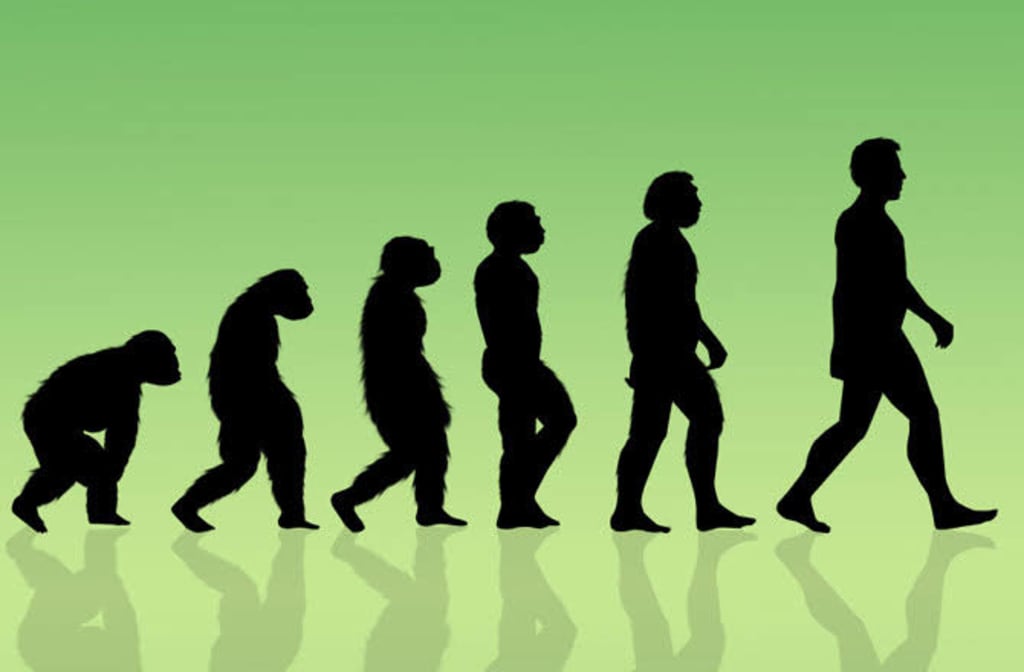
The study of human evolution has deepened our understanding of our own species. Through examining the fossil record and genetic evidence, we've uncovered our evolutionary journey from ancestral primates to modern humans.
V. Debates and Misconceptions
1. Creationism vs. Evolution
Despite overwhelming scientific evidence supporting evolution, debates persist, particularly in some religious communities that adhere to creationist beliefs. It's important to note that many religious groups accept evolution as compatible with their faith.
2. Misconceptions
Common misconceptions about evolution include the idea that it's a linear progression toward perfection or that it always leads to increased complexity. In reality, evolution is a complex, branching process influenced by environmental factors.
Conclusion
Evolution is the story of life itself—a narrative that spans billions of years and encompasses all living beings on Earth. It's a testament to the incredible diversity, adaptability, and interconnectedness of life. Understanding evolution is not just a scientific pursuit; it's a profound journey into the origins and development of life as we know it. It reshapes our perception of the natural world, influences medical and conservation practices, and offers a deeper understanding of our place within the grand tapestry of life. Embracing the science of evolution is to embrace the extraordinary story of life's enduring and wondrous journey.
About the Creator
Enjoyed the story? Support the Creator.
Subscribe for free to receive all their stories in your feed.
Comments
There are no comments for this story
Be the first to respond and start the conversation.