
Everything You Didn’t Know You Needed to Know About Hermit Crabs
Hermit Crab Trivia, Brought to You by Lee Saint-Evans’ House of Hermits!

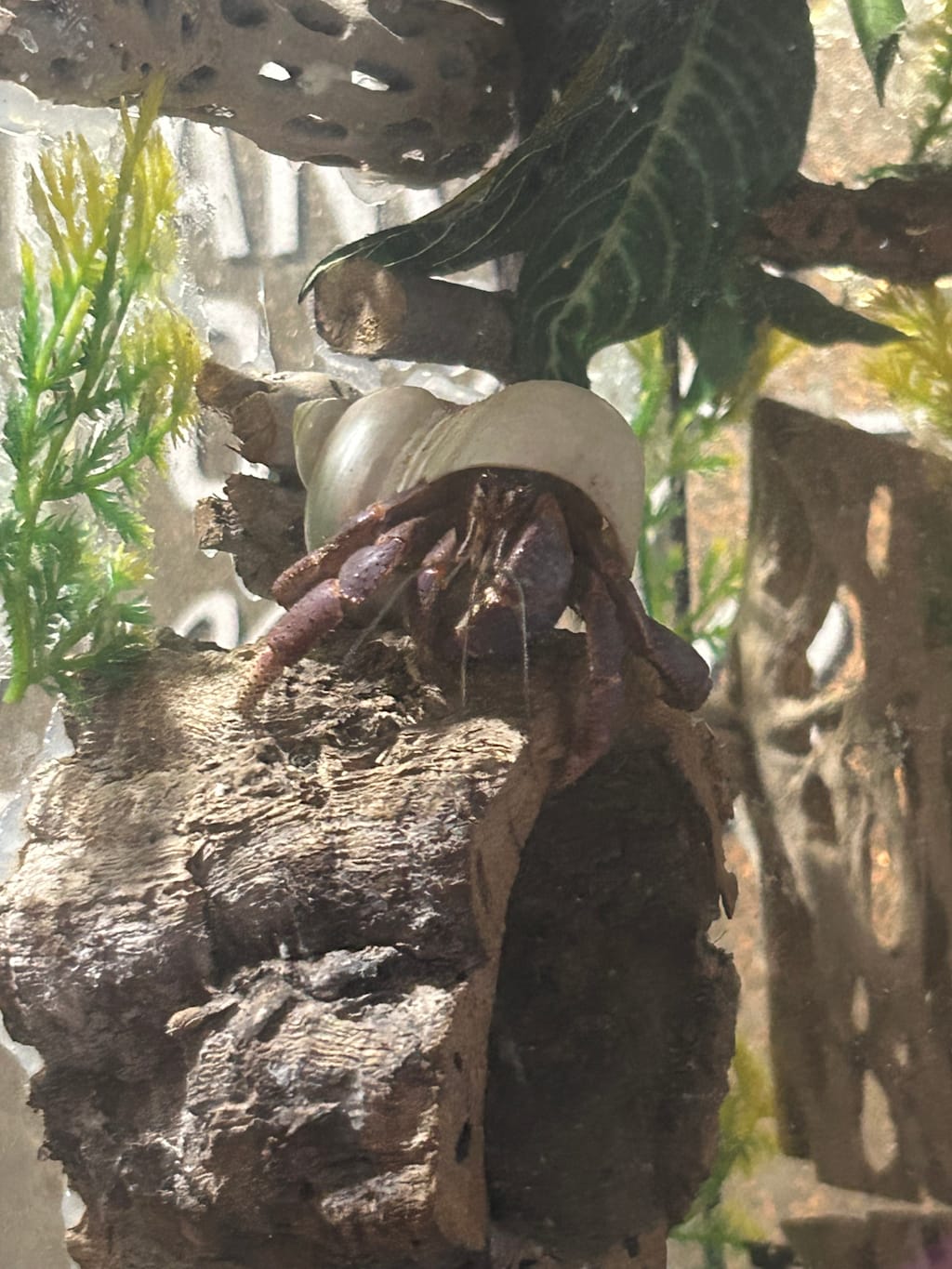
Hello, Lovelies, and welcome to your all-expenses-paid trip to Trivia City! In today’s article, we will be learning all about one of my personal favorite animals… the hermit crab!
Most people don’t realize how fascinating hermit crabs can actually be. Seen as your average crustaceans, hermit crabs aren’t usually the first pet to come to mind when you think to yourself, “What kind of pet do I want from the pet store?” Most people go with cats or dogs. Maybe fish or hamsters. Hermit crabs aren’t always at the top of the list, but they are a good addition to any family.
In the following article, we will be going over some of my favorite facts about hermit crabs! Hope you like being educated! We’ll dive into one of my favorites.
1. Hermit crabs run on wheels like hamsters do.
Have you ever seen a hermit crab run? Probably not. These sweetheart creatures aren’t the fastest, but they do enjoy having a wheel in their tank so they can work out!
2. In the wild, they live to be 30–50 years old!
It’s sadly true that most hermit crabs do not live quite that long in captivity, but out on the ocean floor, we’ve got some pretty old hermit crabs! People don’t realize what a commitment hermit crabs can be; however, they are so worth it!
3. They shed their skins like snakes.
Hermit crabs go underground to molt. Molting is the process in which they shed their skin. While they molt, they are at their most vulnerable. They come out of their shells and shed their exoskeleton, they eat it, and then they come back up to find a larger shell now that they’re bigger!
4. They disappear for months.
The molting process can take weeks to months, even. Your hermit crab will dig under the sand and substrate and will stay down there the whole time they molt. It can be weeks to months that you won’t see your sweet little crabby, but don’t worry… they aren’t dead under there. If they were, you would know. They stink up a storm when they die. If you can’t smell them, they’re alive. Just taking their time to grow.
5. Their limbs grow back.
If your hermit crab loses a leg or claw, it actually grows back! They grow back while your baby is underground molting, and they come back up with a shiny new limb!
6. They’re pack animals.
Hermit crabs are not solitary creatures. They do far better in groups, which is why you want to make sure your crab isn’t isolated and alone when you bring your sweet baby home!
7. A group of hermit crabs is called a cast.
A murder of crows? A shimmer of unicorns? What would you call a group of crabs? A cast! Additionally, they can be called a colony, but a cast is the technical term!
8. Like butterflies, hermit crabs smell through their antennae.
Hermit crabs have an amazing sense of smell they use to scavenge for food. Whether it’s on land or the ocean floor, they will find it!
9. There are over 1,000 different species of hermit crabs.
Purple pincher hermit crabs are the most popular species of hermit crab in America. They aren’t alone, though. There are also Ecuadorian hermit crabs, strawberry hermit crabs, and others. These are just a couple of species of land hermit crabs. There are also many species of marine hermit crabs, from blue-legged hermit crabs to Halloween hermit crabs or dwarf red-tip hermit crabs. There are way too many species to list them all here!
10. There’s a difference between land hermit crabs and marine hermit crabs.
Land hermit crabs breathe air with moist gills, whereas marine hermit crabs use the oxygen dissolved in water. Marine hermit crabs can die if taken out of the water for too long, whereas land hermit crabs can drown if submerged in too much water.
11. They have parties.
In the wild, hermit crabs line up on the beach. They wait until they have enough crabs in different-sized shells, and then they make little chirping and grunting noises like music while they all change out shells until everyone has a new shell that fits.
To make a long article short, hermit crabs are some pretty awesome animals. I hope you’ve had fun learning some new facts today about our cool crustacean friends!
About the Creator
Enjoyed the story? Support the Creator.
Subscribe for free to receive all their stories in your feed. You could also become a paid subscriber, letting them know you appreciate their work.
Comments
There are no comments for this story
Be the first to respond and start the conversation.