
Ever wondered to visit Antarctica ?
Lets dive into the exploration of Antarctica

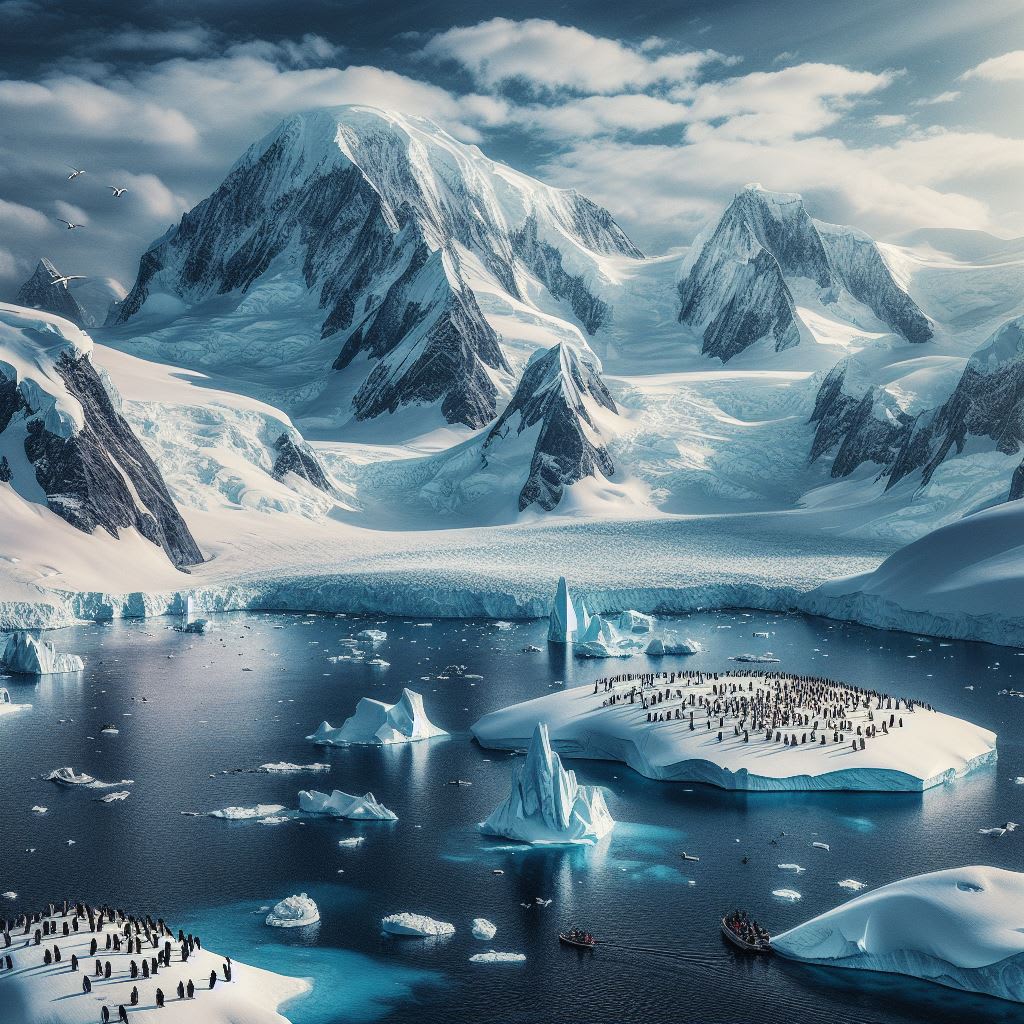
Dreaming of embarking on an Antarctic adventure? The allure of exploring the icy landscapes, witnessing polar bears on distant ice floes, and being mesmerized by the ethereal dance of the Aurora Borealis in the Arctic has captivated our collective imagination. However, if you've harbored hopes of extending this dream to Antarctica, I must gently break it to you – it's not a destination you'll find teeming with tourists anytime soon. Wondering why? Let's embark on an exploration of the intricacies that make Antarctica a unique and challenging destination.
Firstly, let's pinpoint Antarctica's geographical location – nestled in the southern hemisphere, precisely at the South Pole, embraced by the Southern Ocean. This massive landmass is predominantly cloaked in ice, rendering it one of the most remote and frigid places on Earth. Meeting someone who has set foot on this icy continent? Highly improbable. Antarctica stands as one of the least-visited places globally, with only a handful of intrepid explorers having had the privilege of glimpsing its glacier-laden interior. Yet, despite its desolation, the wildlife and scenery are said to be out of this world, a testament to the raw beauty of nature unspoiled by human presence.
So, why the reluctance to open up Antarctica to mass tourism? For starters, its environment is exceptionally fragile and susceptible to damage. With no native human populations, a visit to Antarctica would be akin to exploring an uninhabited island, a place where the echo of human footsteps is a rarity. Added to that, Antarctica is renowned as one of the most expensive destinations, a factor that further deters casual travelers. Despite its seeming inaccessibility, Antarctica is not impervious like a fortress; rather, it is protected by an international agreement known as the Antarctic Treaty.
The Antarctic Treaty, negotiated to prevent unwarranted activities on the continent, explicitly bans certain forms of testing by member states. This treaty, while not guarding Antarctica like a fortress, acts as a guardian of its delicate ecosystem. The treaty mandates that Antarctica should be utilized solely for peaceful purposes, ensuring that it remains free from any human activity that could potentially harm its pristine environment. Scientists are still in the process of unraveling the mysteries of the continent's unique ecosystem, and human interference could upset the delicate balance that exists there.
For those still itching to experience the enchantment of Antarctica, gaining permission is no walk in the park. U.S. citizens, for instance, need to complete a special form and submit it to the Office of Ocean and Polar Affairs. Once there, strict guidelines must be adhered to, ensuring the protection of the environment, wildlife, and the overall integrity of this frozen wonderland. Disturbing wildlife or souvenir-hunting for rocks, plants, or animals is strictly prohibited, reinforcing the commitment to preserving Antarctica's pristine state.
Now, can one entertain the idea of living in Antarctica? While there are no explicit laws prohibiting permanent habitation, the inhospitable environment poses a formidable challenge. With temperatures plunging to an unfathomable -76 degrees Fahrenheit and beyond, survival without the proper equipment and experience becomes nearly impossible. Additionally, the remoteness of Antarctica, with the nearest piece of land over a thousand miles away, means inhabitants would be completely cut off from the rest of the world, facing isolation on a scale that few could fathom.
Shifting gears to the historical narrative, unlike other places on Earth that were already inhabited, Antarctica never had a native human population. Ancient Greek philosophers conceptualized the continent, naming it "antarctos," meaning opposite the bear. Interestingly, the bear referred to here is not the polar bear but the great and little bear constellations, observable only in the northern hemisphere. The term signifies the opposite of the land of the bear.
Exploration voyages in the late 1700s and early 1800s ventured southward, particularly when rounding Cape Horn at the tip of South America. Captain James Cook, a pioneer in Antarctic exploration, was the first to cross the Antarctic Circle in 1773. However, the first undisputed sighting of Antarctica is widely attributed to Captain Fabian Gottlieb von Bellingshausen in January 1820 during a two-year exploratory expedition around the world. The first documented landing on Antarctica occurred much later, on January 24, 1895, at Cape Adare during a whaling voyage led by Henrik Bull.
Surprisingly, Antarctica is classified as a desert due to its low precipitation, averaging just over 0.4 inches in the past 30 years. In contrast to the conventional desert imagery of dunes and scorching heat, Antarctica's desolation is characterized by its frigid temperatures and vast ice expanses. The extreme cold, high altitude, and powerful winds make Antarctica the coldest, windiest, and highest desert on the planet.
Antarctica presents a temporal conundrum for its inhabitants, primarily scientists and researchers. Unlike the rest of us on this blue planet, Antarctica lacks a designated time zone. All lines of longitude converge at a single point at the South Pole, creating a puzzling scenario for keeping track of time. Researchers typically adhere to the time zone of the country they departed from. However, with research stations from various nations on the Antarctic Peninsula, coordinating activities can become a complex endeavor.
Despite its seemingly inhospitable conditions, Antarctica teems with life. It serves as a haven for billions of krill, a cornerstone species in the Southern Ocean's food web, attracting seals and more penguins than one could shake a fish at. The charismatic penguins, with their cute and cuddly appearance, are the ultimate swimmers. They come ashore to breed and chill, showcasing talents like stealing pebbles from each other and forming mathematically precise huddles to stay warm. Antarctica is also home to the largest species of penguin on Earth – the majestic emperor penguin.
Seals, with their furry bodies and unique songs, thrive in the cool waters of the Southern Ocean, protected by the Antarctic Treaty. However, the real stars of the show are the whales. During the Antarctic summer, these colossal creatures converge in droves to feast on the abundant krill, turning the Southern Ocean into a whale buffet.
In conclusion, Antarctica, with its icy landscapes and unique ecosystem, remains a destination that captivates the human imagination. It stands as a testament to the delicate balance of nature and the need for stringent conservation efforts. While visiting this frozen continent may remain a distant dream for many, it's a place that warrants admiration from afar, allowing its pristine beauty and fragile ecosystem to endure undisturbed.
About the Creator
Paul
Unveil the enigma of an anonymous wordsmith—an artist weaving originality, spontaneity, and endless curiosity into each article. An engaging journey beyond facts, leaving a lasting mark. 🌟 #Storyteller #Curiosity #Originality
Enjoyed the story? Support the Creator.
Subscribe for free to receive all their stories in your feed.
Comments
There are no comments for this story
Be the first to respond and start the conversation.