
Europe's Heatwave Crisis: As Temperatures Soar, Businesses Face a Growing Insurance Protection Gap
From Italian aperitivo hours to factory floors, extreme heat is reshaping the European economy and exposing a critical shortfall in coverage that traditional insurance models were never designed to address.

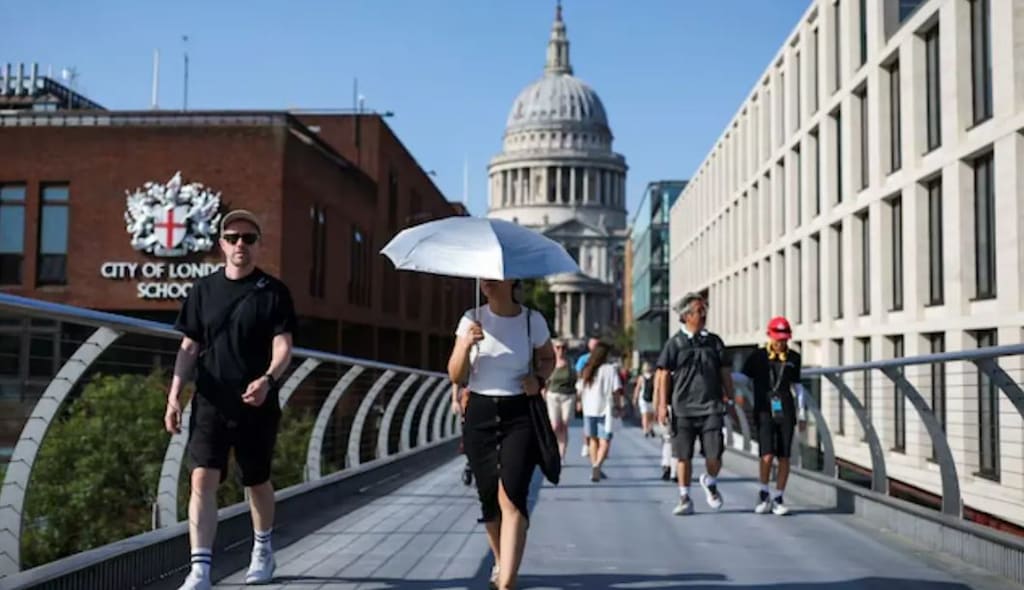
For more than a century, cafes in the Italian city of Padua have welcomed customers for an early evening drink, or aperitivo, encouraging them to sit outside and socialize before dinner. It is a ritual as old as the city itself—a cherished moment of relaxation and community that has defined the rhythm of daily life in this historic university town.
But as Europe bakes under its fifth heatwave of the year, the traditional 6-7 pm slot has all but disappeared. People are seeking refuge indoors, where air-conditioning offers a reprieve from the oppressive heat, leaving outdoor seating areas empty and cutting sales for many hospitality businesses. The romantic image of sun-drenched piazzas filled with laughing patrons has given way to shuttered terraces and deserted tables.
"We used to see a steady stream of customers between six and seven, but now people are waiting until much later. They want to avoid the heat," said Federica Luni, president of hospitality association APPE Padova. "The outdoor seating areas, the terraces, the spaces outside... are left unused and empty."
The Economic Toll of Extreme Heat
Adding to the pressure, extreme heat often falls outside traditional business interruption insurance, exposing a growing protection gap for companies across Europe. Moody's has published estimates that last summer's European heatwaves cost €43 billion (US$50 billion) in lost economic output while generating only about €500 million of insured payouts a staggering disparity that highlights the inadequacy of current coverage models.
According to a survey of about 600 hospitality businesses in Padua and its province, more than 80% reported turnover declines of around 20% during the recent heatwave. For businesses operating on thin margins, such a decline can be devastating. "A 20% decline wipes out your margin," Luni said bluntly.
The situation in Padua is not unique. Across the continent, heatwaves are increasingly taking a toll on Europe's economy, reducing productivity, curbing consumer spending, and raising operating costs. From the sun-baked streets of southern Spain to the industrial heartlands of Germany, businesses are grappling with the reality that extreme heat is no longer a rare anomaly but a recurring feature of the European summer.
Why Heat Is Difficult to Insure
For insurers, such losses can be difficult to cover because they often stem from indirect operational disruption rather than property damage. Unlike floods or storms, which cause visible physical destruction, heat's impact is more insidious. It seeps into every corner of the economy, slowing production, delaying shipments, and reducing customer activity.
"Heat in itself is not a traditionally insured risk," said Swenja Surminski, managing director for climate and sustainability at Marsh. "Extreme heat rarely causes catastrophic physical damage the way a flood or a storm does, but the financial operational disruption that it triggers can be just as severe."
This fundamental mismatch between risk and coverage has created a significant protection gap. A 2023 survey of 9,000 small and medium-sized firms for Europe's insurance regulator found that only 28% held business interruption cover as part of their property insurance, while just 17% had non-damage business interruption protection covering events such as strike action. The gap is widest for heat-related losses, which are rarely covered at all.
The Compound Risk Challenge
Heat often acts as a compound risk, interacting with drought, wildfire, and water shortages rather than triggering a single identifiable loss event. That makes it harder to model and insure than some other natural catastrophes. When a drought coincides with extreme heat, for example, the combined effect on agriculture can be far more severe than either hazard alone. Similarly, high temperatures exacerbate the risk of wildfires, which can cause extensive property damage, but the heat itself remains uninsured.
The challenge is particularly acute in Europe, the fastest-warming continent. Reuters Climate Monitor showed the average temperature across Western Europe was nearly 10 degrees Celsius (18 degrees Fahrenheit) above the 1961 to 1990 average on August 11. These are not just statistical curiosities; they are reshaping the operating environment for businesses across the continent.
Businesses Feeling the Heat
Companies across multiple sectors are already feeling the impact. Those that flagged a hit from hot weather or warned about its potential future impact when reporting second-quarter earnings included Swedish shop-fitting provider ITAB Group, Italian cement producer Buzzi, and French payments firm Worldline. The diversity of these companies underscores the broad reach of heat-related disruptions; it is not just outdoor or tourism industries that suffer.
Data compiled by environmental disclosure platform CDP showed that 35% of companies it tracks identified heatwaves as a risk driver, led by businesses in manufacturing, services, infrastructure, and food-related sectors. For these companies, the costs include increased cooling expenses, reduced worker productivity, disrupted supply chains, and the need to invest in adaptation measures.
The Productivity Drain
Trains are delayed as tracks buckle in the heat. Agricultural yields fall as crops wither in the fields. Factory cooling costs rise as machinery struggles to operate at optimal temperatures. Workers often struggle to maintain productivity during prolonged spells of extreme temperatures, with studies showing that cognitive function and physical performance decline significantly in high-heat conditions.
The cumulative effect of these disruptions is substantial. The €43 billion estimate from Moody's represents just a fraction of the true cost, as many businesses absorb losses without reporting them or simply pass them on to consumers through higher prices. The protection gap is widening as the economic costs of extreme heat mount, creating a vicious cycle that threatens to undermine Europe's economic resilience.
The Emerging Solution: Parametric Insurance
To bridge the gap, insurers are increasingly exploring parametric products that pay out automatically when temperatures exceed predefined thresholds. Unlike traditional indemnity-based insurance, such policies do not require a lengthy loss-adjustment process. Instead, payment is triggered by an objective measure such as a specific temperature reading and disbursed quickly, allowing businesses to respond rapidly to the financial impact of extreme heat.
The European market for parametric insurance is expected to reach US$7.93 billion by 2031, according to a report by KBV Research, with compound annual growth of 9.5% between 2025 and 2032. Such policies are already being used in agriculture, where heat can reduce crop yields or livestock productivity, and industry experts see scope for expansion into sectors including transport and workforce protection.
"Parametric insurance can really play a role," said Aidan Kerr, head of UK and Ireland public sector solutions at Swiss Re. The appeal is clear: it offers a simple, transparent, and fast-acting solution to a problem that traditional insurance struggles to address.
Adaptation Over Insurance
Even so, many companies will need to focus primarily on adapting their operations to withstand more frequent periods of extreme heat through measures such as investing in cooling technologies, redesigning workplaces, and stress-testing supply chains. "Take action to avoid the losses rather than address them once they've occurred," Surminski advised.
For the cafes of Padua, adaptation might mean investing in better cooling systems, shifting operating hours to later in the evening, or redesigning outdoor spaces to offer more shade. For manufacturers, it might mean relocating operations to cooler climates or investing in heat-resistant equipment. For workers, it might mean adjusting shift patterns to avoid the hottest parts of the day.
The Human Cost
Beyond the economic calculations, there is a human dimension to the heatwave crisis. Vulnerable populations the elderly, children, and those with pre-existing health conditions are disproportionately affected by extreme heat. In cities across Europe, heat-related mortality has been rising, and the strain on healthcare systems is growing.
The social fabric of communities like Padua is also fraying. The loss of the evening aperitivo ritual is more than an economic blow; it is the erosion of a cultural tradition that has defined the city's identity for generations. When people retreat indoors, they lose the spontaneous social connections that make urban life vibrant and fulfilling.
A Wake-Up Call for Policymakers
The heatwaves of recent years have served as a wake-up call for European policymakers. The European Union has launched several initiatives aimed at addressing climate risk, including the development of a Climate Resilience Framework and increased funding for adaptation measures. However, progress has been slow, and the gap between policy ambition and on-the-ground reality remains wide.
The insurance industry also faces a reckoning. As the frequency and severity of heatwaves increase, insurers will need to rethink their business models, develop new products, and collaborate more closely with governments and businesses to close the protection gap. The alternative continuing to ignore the problem is simply not sustainable.
The extreme heat gripping Europe is not merely a weather event; it is a systemic economic challenge that exposes the inadequacy of traditional risk management approaches. From the cafes of Padua to the factories of Germany, businesses are grappling with a new reality in which heat is a persistent and costly hazard. The insurance protection gap is widening, and the cost of inaction is rising.
As temperatures continue to climb, the urgent question is not whether Europe will adapt, but how quickly and at what cost. For the cafes of Padua and countless other businesses across the continent, the answer will determine whether they survive the century's defining challenge or become casualties of a warming world.
About the Creator
Mark Lim
Hi I am mark an automotive student and a car, tech and food enthusiast ! Im gonna try and post daily & hope you enjoy what I write and do share my page with people you know. I would gladly appreciate it! Cheers
Enjoyed the story? Support the Creator.
Subscribe for free to receive all their stories in your feed.
Comments
There are no comments for this story
Be the first to respond and start the conversation.