
Europe Sugar Confectionery Market Continues to Evolve as Healthier Indulgence Gains Momentum
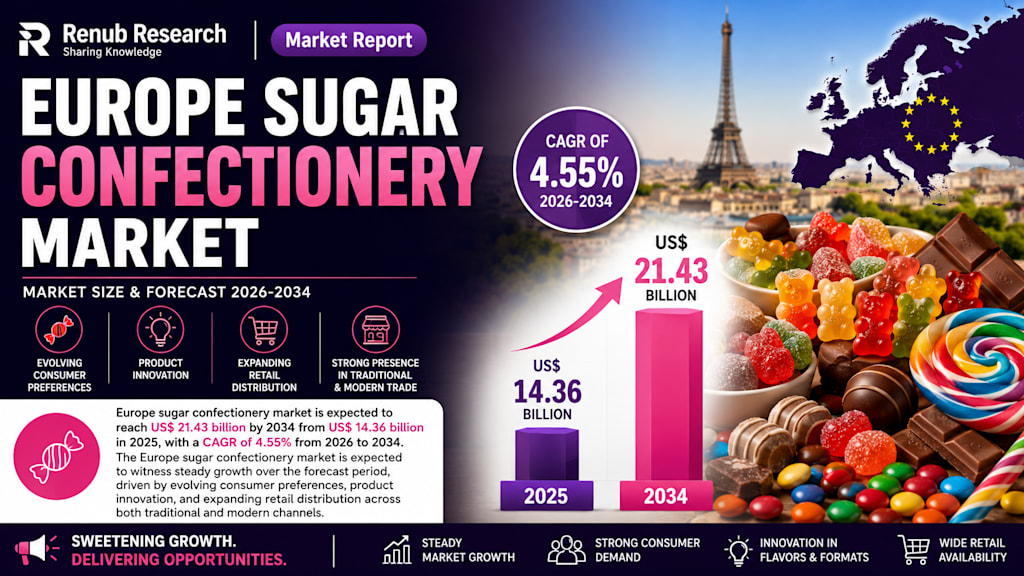
Europe’s sugar confectionery industry is balancing tradition with innovation as consumers increasingly seek premium flavors, healthier alternatives, and sustainable packaging. The market is forecast to grow from US$ 14.36 billion in 2025 to US$ 21.43 billion by 2034, expanding at a CAGR of 4.55% during the forecast period.

Europe’s confectionery market is adapting to a new generation of consumers
The Europe sugar confectionery market has long been one of the most culturally rooted segments within the food and beverage industry. From traditional hard candies and gummies to seasonal sweets and premium artisan products, confectionery remains deeply connected to celebrations, gifting habits, and impulse purchases across the region. Yet despite being a mature industry, the market is undergoing significant transformation as changing consumer preferences reshape how confectionery products are developed, marketed, and consumed.
Modern European consumers are looking for more than just sweetness. Today’s buyers increasingly expect confectionery products to offer premium ingredients, innovative textures, visually appealing packaging, and even health-conscious positioning. As wellness trends continue to influence purchasing decisions, manufacturers are being pushed to reformulate products with lower sugar content, natural flavors, organic ingredients, and cleaner labels. This shift is creating a new generation of confectionery products that attempt to balance indulgence with moderation.
According to Renub Research, the Europe Sugar Confectionery Market is expected to reach US$ 21.43 billion by 2034, rising from US$ 14.36 billion in 2025 at a compound annual growth rate of 4.55% from 2026 to 2034. The market’s steady expansion reflects how manufacturers are successfully adapting to changing lifestyles, evolving taste preferences, and growing demand for healthier indulgence.
Product innovation is driving category growth
Innovation has become one of the strongest competitive tools in the European confectionery industry. Brands are constantly introducing new flavors, seasonal editions, textures, and formats to keep consumers engaged in an increasingly crowded marketplace. Gummies with layered flavors, premium toffees, functional candies, and novelty confectionery are becoming more common as companies compete for shelf visibility and consumer attention.
Premiumization is also transforming the market. Consumers are increasingly willing to pay more for products that feel artisanal, luxurious, or differentiated. This trend is particularly strong in Western Europe, where buyers value quality ingredients, creative packaging, and unique taste experiences. Companies are responding with gourmet confectionery, natural flavor profiles, and limited-edition launches designed to create excitement and boost impulse purchases.
Packaging innovation is another important growth factor. Resealable packs, portable formats, portion-controlled products, and environmentally friendly packaging are helping brands appeal to modern lifestyles while addressing sustainability concerns. These packaging improvements not only enhance convenience but also reinforce premium positioning.
Health-conscious consumers are reshaping the market
One of the biggest shifts affecting the industry is the growing focus on health and wellness. European consumers are becoming increasingly aware of sugar intake and its connection to obesity, diabetes, and lifestyle-related health issues. As a result, demand for sugar-free, reduced-sugar, vegan, gluten-free, and clean-label confectionery products is growing steadily across the region.
Manufacturers are actively reformulating existing products while also launching healthier alternatives that still deliver taste and indulgence. Natural sweeteners, plant-based ingredients, and organic formulations are becoming more common as brands attempt to maintain relevance among health-conscious buyers. Transparency is also playing a larger role, with consumers paying closer attention to ingredient lists, sourcing practices, and nutritional information.
Government regulations are accelerating this transition. Several European countries are implementing stricter sugar reduction policies, labeling rules, and advertising restrictions aimed at improving public health outcomes. These measures are forcing confectionery companies to rethink product development strategies while balancing taste expectations and profitability.
E-commerce and modern retail are expanding accessibility
The rise of e-commerce has significantly changed the distribution landscape for confectionery products in Europe. While supermarkets, hypermarkets, and convenience stores remain dominant sales channels, online retail platforms are growing rapidly as consumers increasingly shop digitally for snacks, sweets, and specialty products.
Digital channels provide brands with opportunities to reach broader audiences, launch targeted campaigns, and collect valuable consumer insights. Subscription services, direct-to-consumer models, and social-media-driven marketing are becoming more common in the confectionery sector, particularly among premium and niche brands. E-commerce also allows smaller manufacturers to compete more effectively against multinational companies by improving visibility and accessibility.
Seasonal campaigns continue to remain crucial. Holidays, festivals, and special occasions generate major sales spikes across Europe, especially during Christmas, Easter, Halloween, and regional celebrations. Limited-edition launches tied to these events often help brands increase consumer engagement and maintain excitement throughout the year.
Key challenges facing the market
Despite its positive outlook, the Europe sugar confectionery market faces several challenges. The most significant is the growing negative perception associated with high sugar consumption. Consumers are becoming more cautious about traditional confectionery products, especially as public awareness regarding health risks continues to increase.
Regulatory pressure is intensifying across Europe, with governments introducing sugar taxes, nutritional labeling requirements, and advertising restrictions aimed at reducing sugar consumption. These regulations increase compliance costs and force manufacturers to invest heavily in reformulation and product innovation. Balancing health expectations with taste remains one of the industry’s biggest difficulties because consumers still expect confectionery products to deliver indulgence and enjoyment.
Competition is another major challenge. The European confectionery market includes global giants, regional players, private-label products, and niche brands competing simultaneously for market share. This intense rivalry creates pricing pressure and requires continuous investment in branding, product development, and marketing campaigns. Companies that fail to innovate risk losing visibility in a highly saturated marketplace.
Country-level trends across Europe
France continues to maintain strong demand for premium and artisanal confectionery products. Consumers in the country value quality ingredients and sophisticated presentation, which supports premiumization trends. Health-conscious consumption is also influencing product reformulation and demand for natural ingredient-based sweets.
Germany remains one of Europe’s largest confectionery markets due to high consumption levels and strong retail infrastructure. German consumers are increasingly interested in sugar-free, organic, and functional products, encouraging manufacturers to diversify their offerings. Seasonal consumption remains particularly important in Germany, especially during festive periods.
Italy’s confectionery market blends strong traditional consumption habits with modern innovation. Artisanal sweets and culturally rooted products remain popular, while younger consumers are showing greater interest in premium packaging and healthier formulations. Spain is also witnessing growing demand, particularly among younger consumers and during festive occasions where confectionery products continue to play an important role.
Across Europe, sustainability is becoming increasingly influential. Consumers are rewarding companies that use responsibly sourced ingredients and environmentally friendly packaging. As environmental concerns continue to shape purchasing behavior, sustainability initiatives are expected to become a major competitive differentiator in the coming years.
10 Recent Developments in the Europe Sugar Confectionery Market
Roly’s Fudge launched its seasonal Toffee Apple flavor in September 2025, targeting Bonfire Night celebrations in the UK. The handmade confectionery product used natural ingredients and nostalgic flavor positioning to attract seasonal demand.
Premier Foods introduced McDougalls No Added Sugar Vegan Jelly in July 2025, offering HFSS-compliant, gluten-free, and allergy-free jelly variants for schools in flavors including strawberry, raspberry, orange, and lime.
World of Sweets and Bobby’s launched Gumi Yum Surprise in June 2025, a novelty gummy candy egg featuring eight fruit-flavored layers and collectible toys from Zuru. The launch highlighted the growing popularity of interactive confectionery products among younger consumers.
Ruly introduced caffeine-infused candies in the UK in May 2025, offering energy-support confectionery aimed at professionals and fitness enthusiasts. The candies included guarana caffeine and B vitamins for “microdosed” energy support.
Ferrero continued expanding its premium confectionery portfolio across Europe in 2025, increasing focus on gifting categories and premium seasonal launches to strengthen consumer engagement during holiday periods.
Mars Incorporated accelerated sugar-reduction initiatives across several European confectionery brands, aligning with stricter regional nutritional guidelines and changing consumer preferences toward healthier indulgence.
Nestlé expanded clean-label confectionery development in Europe, emphasizing natural flavors, simplified ingredient lists, and sustainable sourcing practices to strengthen consumer trust.
Perfetti Van Melle increased innovation in mint and functional candy categories, introducing products targeting freshness, convenience, and lower-sugar consumption trends across European markets.
Cloetta AB strengthened its focus on vegan and gelatin-free candy formulations, responding to rising demand for plant-based confectionery alternatives among younger consumers.
Mondelez International continued investing in sustainable packaging initiatives in Europe, aiming to reduce plastic waste while improving shelf visibility and convenience-oriented packaging formats.
Sustainability is becoming a long-term priority
Sustainability is no longer just a marketing trend within Europe’s confectionery sector. Consumers increasingly expect brands to demonstrate responsible sourcing, ethical ingredient procurement, and reduced environmental impact. Companies are now investing in recyclable packaging, sustainable cocoa sourcing, and environmentally conscious manufacturing practices to meet both regulatory requirements and consumer expectations.
This shift is particularly important among younger demographics, who are more likely to support brands that align with environmental and ethical values. As sustainability continues to influence purchasing decisions, companies that fail to adapt may struggle to maintain long-term loyalty in the European market.
Final thoughts
The Europe sugar confectionery market is proving that even mature industries can evolve successfully when they respond to changing consumer behavior. While traditional sweets continue to hold cultural significance across the region, modern consumers are demanding products that combine indulgence with better ingredients, healthier positioning, premium experiences, and sustainability.
Renub Research’s forecast highlights the sector’s continued resilience and growth potential. As brands continue investing in product innovation, healthier formulations, digital retail expansion, and sustainability initiatives, the European confectionery industry is expected to remain competitive and dynamic over the next decade.
About the Creator
Enjoyed the story? Support the Creator.
Subscribe for free to receive all their stories in your feed.
Comments
There are no comments for this story
Be the first to respond and start the conversation.