
Energy sector, “cheap and simple” can easily be confused with “universal service.”
But household energy is rarely that simple. Governments could shift away from fossil‑fuel revenue and instead support citizens by incentivizing solar installations on individual buildings and community zones.

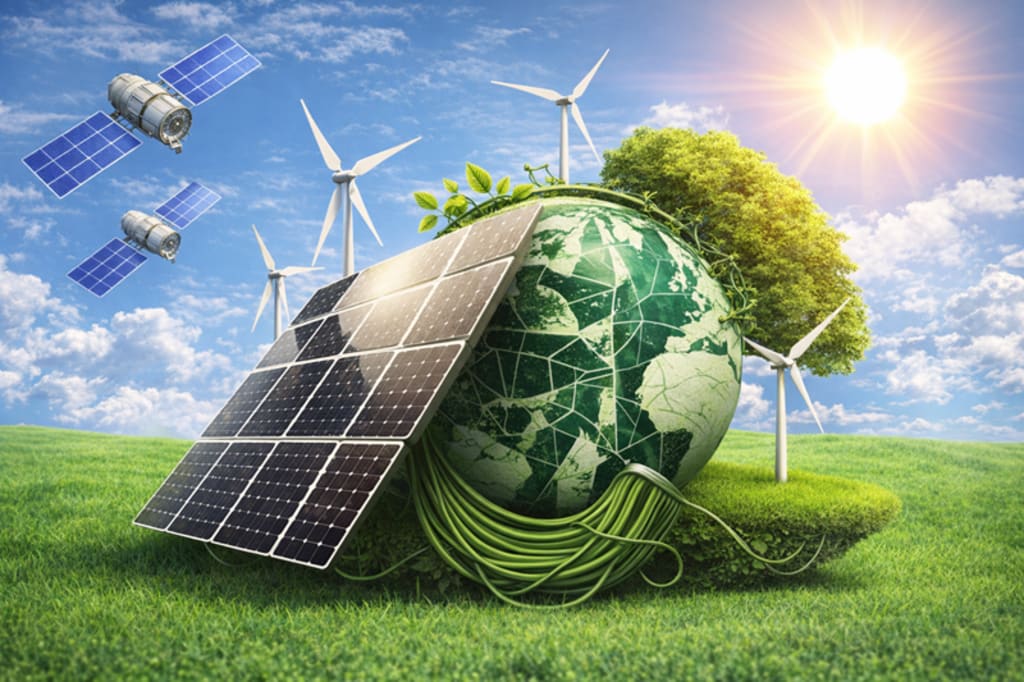
Solar power has traditionally been marketed as a home improvement suited only to people with the “right” circumstances: a suitable roof, enough money to pay upfront, and the willingness to commit to a full installation. In reality, that has excluded a large portion of households.
This is why the recent attention on plug‑in solar panels is notable. It’s easy to focus on the novelty of supermarkets and high‑street shops selling small solar kits alongside everyday items. But the more meaningful development is what this trend represents. Solar technology isn’t shrinking in ambition — it’s shrinking in size and complexity. It’s becoming cheaper, easier to use, and potentially accessible to people who have never been part of the solar conversation.
For years, rooftop solar has mainly been an option for homeowners with the right roof orientation, long‑term stability, and the ability to invest thousands upfront. For those who fit that profile, solar has been a sensible choice. But despite its benefits, it has often felt like a solution designed for a limited group rather than something most households could consider.
As a result, many people have been left out: renters, flat owners, people with only small outdoor areas, and households interested in generating some electricity but not ready for a full installation. For them, solar has often felt like something other people can do. Plug‑in solar offers a possible shift.
This doesn’t mean plug‑in systems will revolutionize home energy costs. They won’t. The units being discussed for the UK are small, and so are the savings they can deliver. Anyone expecting a dramatic drop in their electricity bill will likely be disappointed. These devices are not replacements for full rooftop systems, nor are they substitutes for broader measures like insulation or tackling heating costs.
Still, plug‑in solar panels matter for another reason.
They make solar feel less like a major home renovation and more like a normal consumer purchase. That shift in perception is important. Heat pumps, full solar arrays, and home batteries all require quotes, installers, disruption, and significant upfront spending. Plug‑in solar suggests a different category of energy technology — smaller, cheaper, lower‑commitment, and easier for people to imagine themselves buying.
This kind of cultural shift often comes before big numerical impacts. Sometimes the real breakthrough is not a huge leap in performance, but a technology becoming familiar, affordable, and ordinary enough that people stop seeing it as specialist.
That’s why the idea of plug‑in solar as a democratizing force is meaningful, even if the savings are modest.
For renters with balconies or flat owners with a bit of outdoor space, the appeal is clear. A small setup that lets you generate some of your own electricity lowers the barrier to entry and makes self‑generation feel less exclusive. This matters because the energy transition has not always felt fair or accessible.
Often, the technologies that reduce bills require the most money, control, and permanence to install — and the people who would benefit most are not always the ones who can access them. This helps explain why enthusiasm for green technology can feel uneven.
Plug‑in solar doesn’t fix that, but it points in a better direction. It introduces a new category of products that can sit alongside full installations and give many more households a way to participate, even at a small scale.
The UK should still be cautious. Plug‑in systems won’t suit every home, won’t match the output of rooftop arrays, and won’t work in all spaces or conditions. And as with any new consumer energy product, hype can outpace reality.
The best way to view plug‑in solar is not as a universal solution, but as a new option for homes that previously had none. Its significance lies in widening access to a technology that has long been shaped around a narrow idea of who it is for — and that shift may matter as much as the electricity it produces.
A recent cost calculation for Greece shows that a minimum investment of around €2,500 is required to have 75% of your electricity bill covered for about nine months per year.
Despite this, solar power adoption in Greece remains surprisingly low. In most households, solar energy is used almost exclusively for water heating, which typically costs around €500 to install.
When it comes to portable solar systems, the return is even more limited. With an investment of €1,000, you generally get only basic emergency coverage — enough to power small appliances, fans, and a computer for roughly six months of the year.
In the end, portable solar panels are still far from becoming a mainstream household solution in Greece. Their limited output, higher upfront cost, and the lack of widespread awareness keep them in the niche category of “nice to have” rather than “essential.”
For now, they remain a practical backup option — useful in emergencies, camping, or reducing a small portion of your energy use — but not yet a fully reliable or common facility for the average home. As technology improves and prices drop, this may change, but today the gap between potential and actual adoption is still very visible.
Looking at today’s numbers, it’s hard not to wonder when portable solar panels will finally become a standard part of everyday life. The technology is here, the sun is free, and the need for energy independence is only growing. Yet adoption remains slow.
Ultimately, the shift depends on three key players:
Manufacturers, who must make portable systems more efficient, durable, and affordable.
Governments, whose incentives, subsidies, and regulations can accelerate or delay adoption.
Consumers, who will embrace solar once it becomes both economically attractive and easy to integrate into daily life.
Until these forces align, portable solar will stay in the “early adopter” zone — useful, promising, but not yet universal. The potential is enormous; the question is how long it will take for the market, policy, and public mindset to catch up!
The number one “responsible party” for Europe’s slow solar adoption is not a single person or company — are the European governments and regulatory systems themselves, because the main barriers are policy‑driven, not technological.
This is not an opinion — it is what the data from European energy agencies and industry reports consistently shows. This includes ministries of energy, national regulators, and EU institutions that set the rules for electricity markets and permitting. It is not mainly the fault of citizens, technology, or lack of interest — Europe actually has record‑low solar costs and high public support.
Are energy companies to blame?
Energy companies do play a role, but the data shows the biggest obstacles are structural and regulatory, not corporate:
Solar is already cheap and profitable.
Companies are ready to build more.
But they cannot proceed without permits, grid access, and stable policy.
This is why industry groups warn that EU leaders must act, because the slowdown is happening despite strong industry capacity. Governments could shift away from fossil‑fuel revenue and instead support citizens by incentivizing solar installations on individual buildings and community zones. By empowering private solar generation, countries could reduce dependence on centralized fossil systems while creating a cleaner, more resilient energy network. But that will mean wealth fare for common people right?
©Ca De Luce> MINDFUL MIND MEDIUM Blog 2025. Unauthorized use of text or media is not allowed. All images and photo are fulfilling the copyrights regulations. Much obliged to you all!
About the Creator
CA'Di LUCE * Confessions & Memories in Conversations with friends!/ It’s not a revolution—it’s a quiet evolution.
I speak of spirit, soul, and flame,
Of humanity’s quest, our endless aim.
*Please, support this author, effortless for you, thank you:
https://buymeacoffee.com/ca_de_luce_blog /
https://ko-fi.com/cadeluce/
.
Enjoyed the story? Support the Creator.
Subscribe for free to receive all their stories in your feed.
Comments
There are no comments for this story
Be the first to respond and start the conversation.